
Chapter 4 · Keeping up the CRT · Case 9
Exercise, anti-PMT algorithm and LV sensing
Patient and episode
Patient
- AUTOGEN CRT-D in a 73-year-old man with dilated cardiomyopathy and left bundle branch block
- At interrogation, a PMT episode diagnosed by the device
The recording
Tap a number on the trace, or an entry in the list below
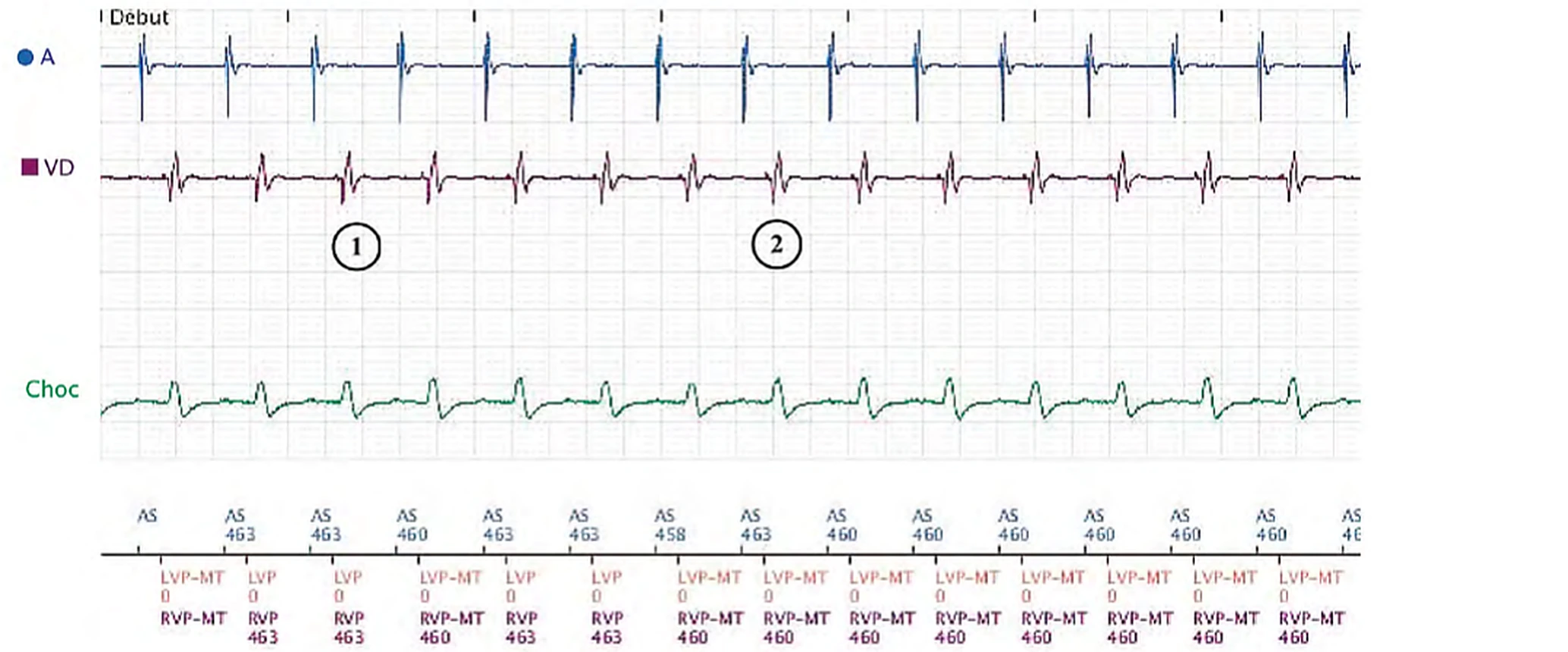
- Stored “PMT” episode (A 131, V 130 bpm). Sinus tachycardia: AS, then RVP and LVP together (LVP 0); each atrial event is tracked, at 458 to 463 ms
- AS, then LVP-MT and RVP-MT at 460 ms: BiV pacing at the maximum tracking rate (460 ms, about 130 bpm)
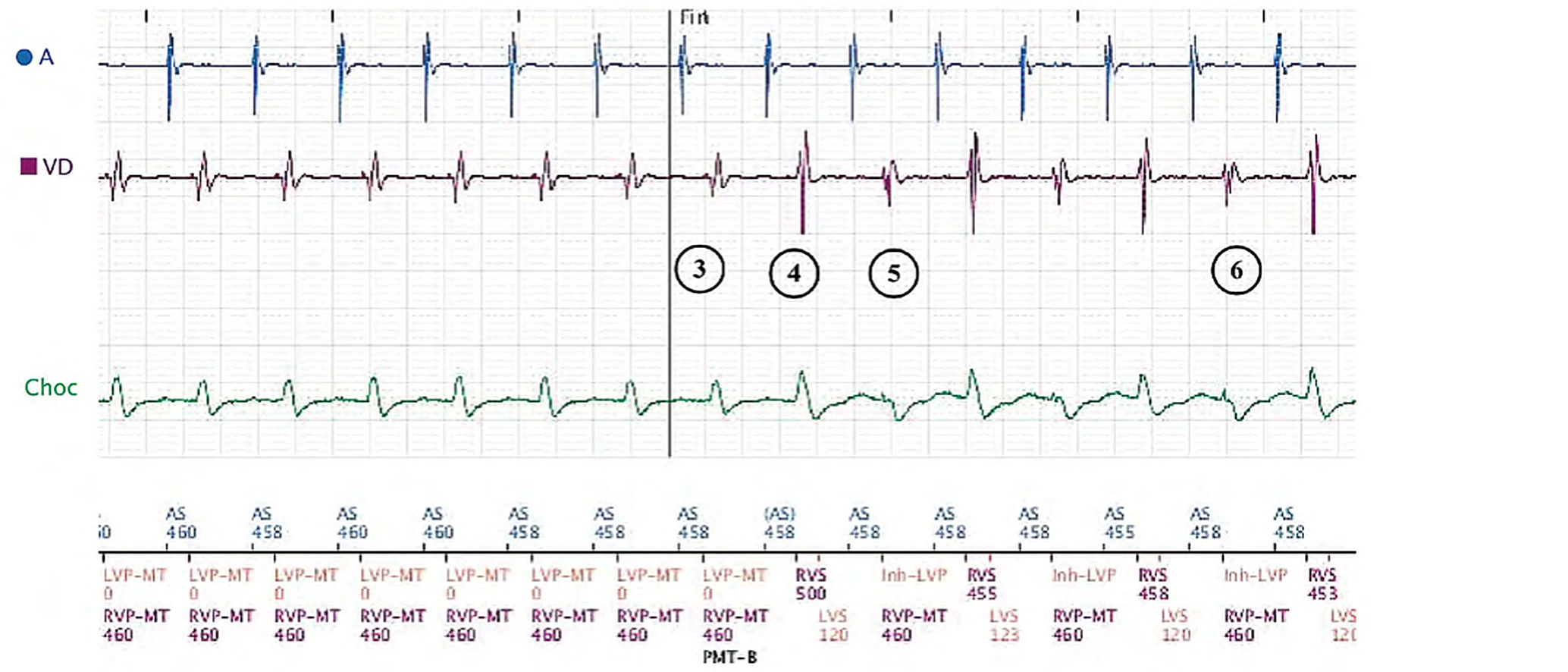
- PMT-B: after 16 consecutive AS – VP-MT cycles, the device diagnoses a PMT
- The PVARP is extended to 500 ms for one cycle: the next atrial event falls in it ((AS) 458) and starts no AV delay. This patient is not pacemaker-dependent: the beat is conducted, with the LBBB pattern: RVS 500, then LVS 120 ms later (late LV activation)
- The sinus tachycardia goes on: the next atrial event (AS) is tracked and the RV is paced after a long AV delay, so as not to exceed the MTR (RVP-MT 460). The LV pace is inhibited (Inh-LVP): it would fall only 460 − 120 = 340 ms after the previous LVS, inside the LV protection period
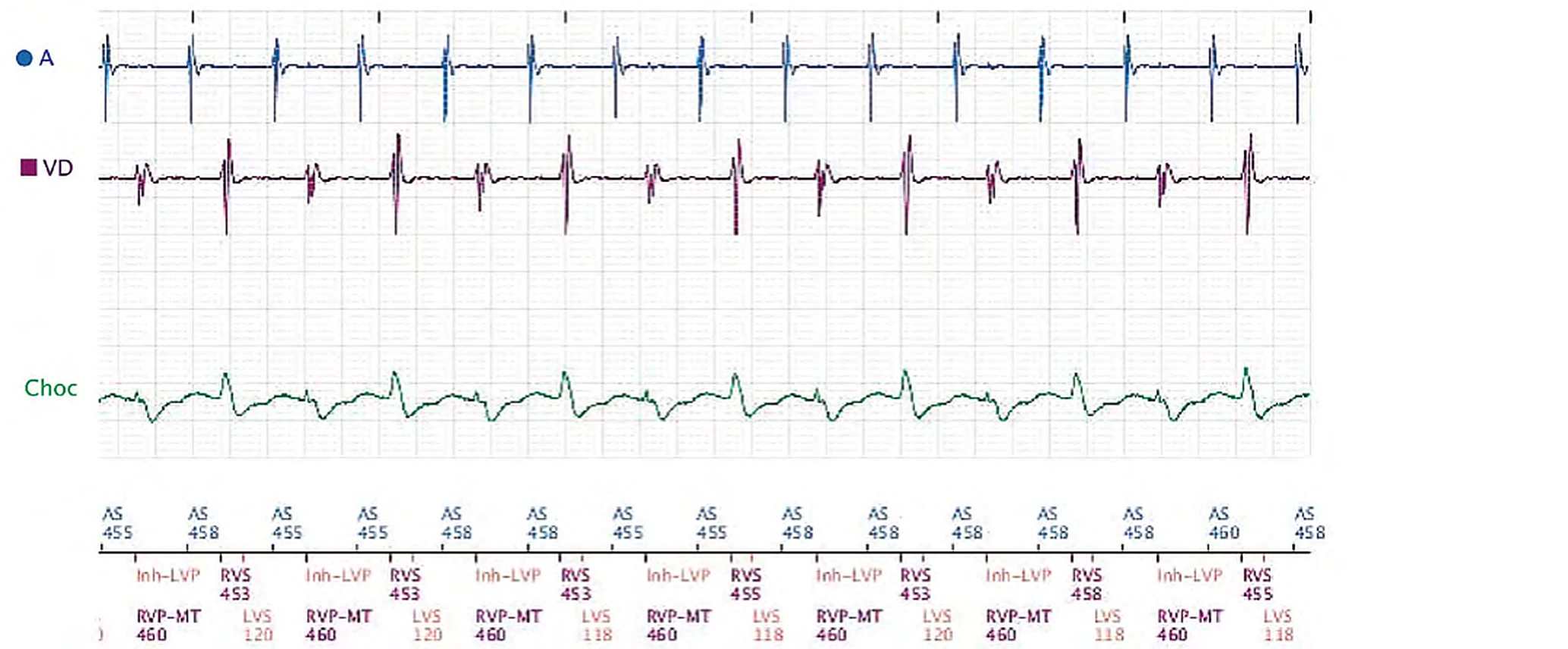
- Sustained loss of CRT, the same sequence again and again: a sensed beat in both ventricles (RVS 453 to 458, LVS 118 to 123 ms later), then RV pacing alone with the LV pace inhibited (RVP-MT 460 – Inh-LVP). The lower strip shows it going on
Points to remember
- The stored “PMT” is an exercise sinus tachycardia that reached the MTR: in this patient the MTR is programmed too low
- Read the LV markers: RVS with LVS is a conducted beat, RVP-MT with Inh-LVP is RV-only pacing. When the two alternate, no beat is BiV paced
- LV sensing protects the LV from a pace in its vulnerable period, after an LV PVC sensed late by the RV lead. Its downside, above all on exertion in left bundle branch block: after a conducted beat the LV is sensed late, and the next LV pace falls inside the LV protection period and is inhibited
- What to do here: raise the MTR, so that exercise sinus tachycardia is no longer taken for a PMT; switch LV sensing off or shorten the LV protection period
Summary
- Not a PMT but an exercise sinus tachycardia at the MTR. After the anti-PMT intervention, the late LV sense of each conducted beat (LBBB) inhibits the next LV pace (LV protection period): conducted beats and RV-only paced beats alternate, and no beat is BiV paced
Clinical pearl
LV sensing has a cost: on exertion in left bundle branch block, the late LV sense of each conducted beat inhibits the next LV pace, and CRT can stay lost while the RV is still paced
Practice out loud
Just describe the tracing. What do you think is going on? Describing the numbers can help.
00:00
0%
—
From Boston Scientific CRT — clinical cases by M. Strik. Published by Cardiocases. Every numbered marker on a recording is explained in the list beneath it; tap a marker on the trace or an entry in the list.