
Chapter 2 · Therapies · Case 2
Defibrillation threshold and upper limit of vulnerability
Patient and episode
Patient
- Patient with very severe ischaemic cardiomyopathy implanted with a triple chamber defibrillator (Viva XT CRT-D) hospitalised for prolonged loss of consciousness and according to witnesses, several shocks delivered by the device.
The recording
Tap a number on the trace, or an entry in the list below
Rate / interval plot
EGM
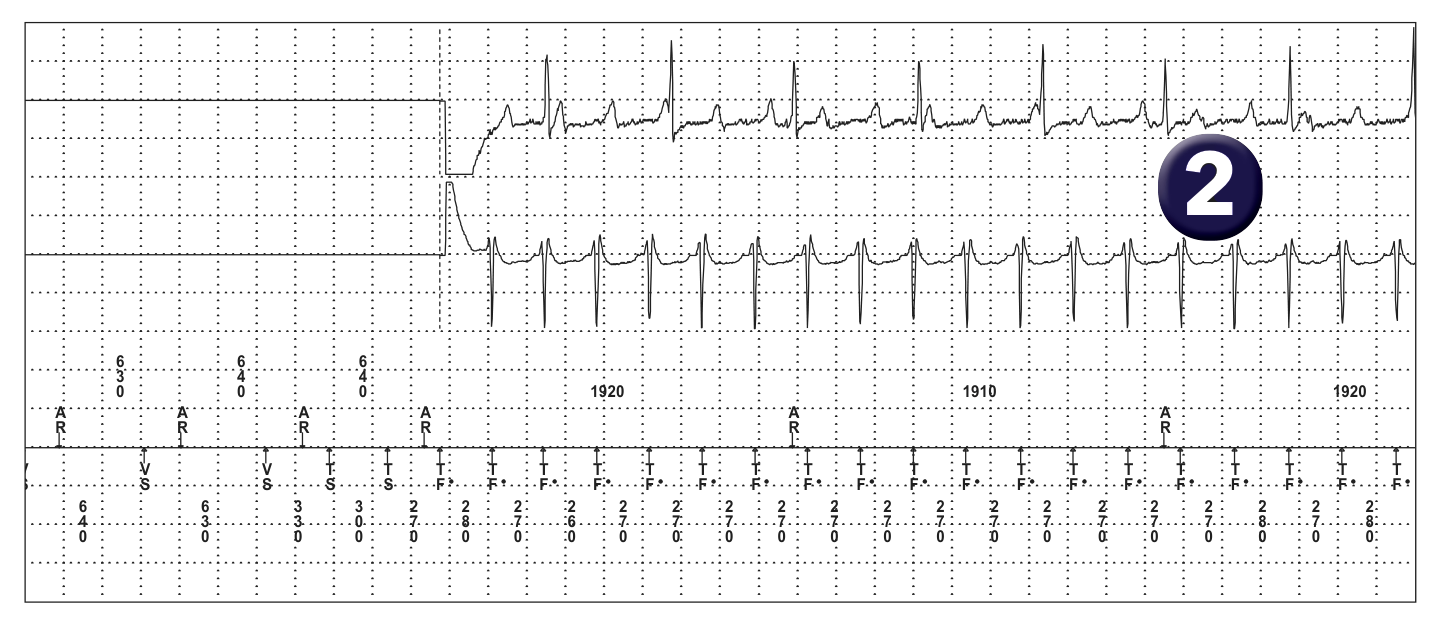
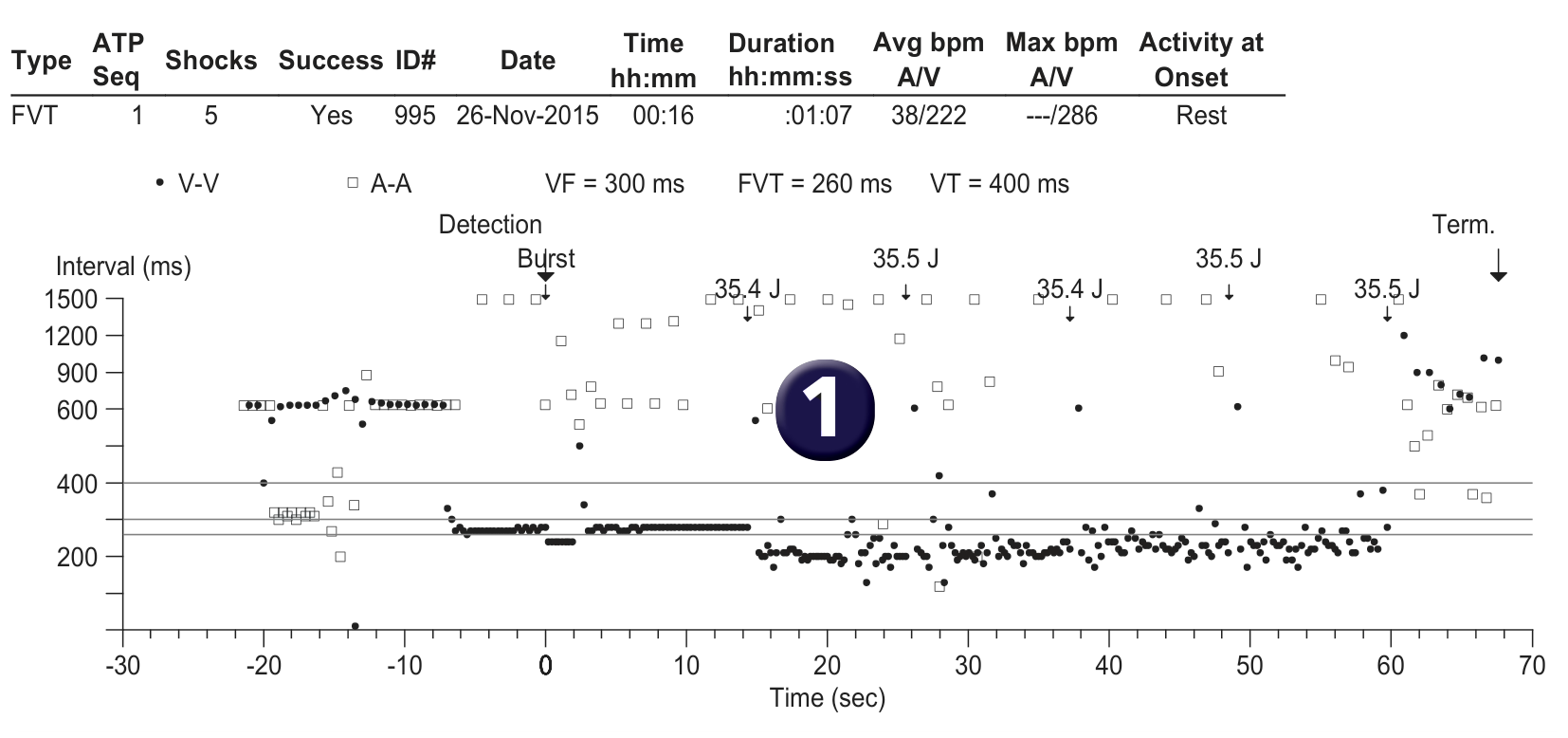
- What diagnosis is suggested by the interval plot? The plot shows a sudden acceleration of the ventricular rhythm in the FVT zone, followed by a sequence of anti-tachycardia pacing (ATP) which does not terminate the arrhythmia; a first shock is delivered, which does not revert the arrhythmia but instead causes it to accelerate and become more disorganised, with detection in the VF zone; the next 3shocks are ineffective; the fifth shock is effective, terminating the arrhythmia.
- What type of arrhythmia is this? It is a regular, monomorphic ventricular tachycardia (atrioventricular dissociation) detected in the FVT zone.
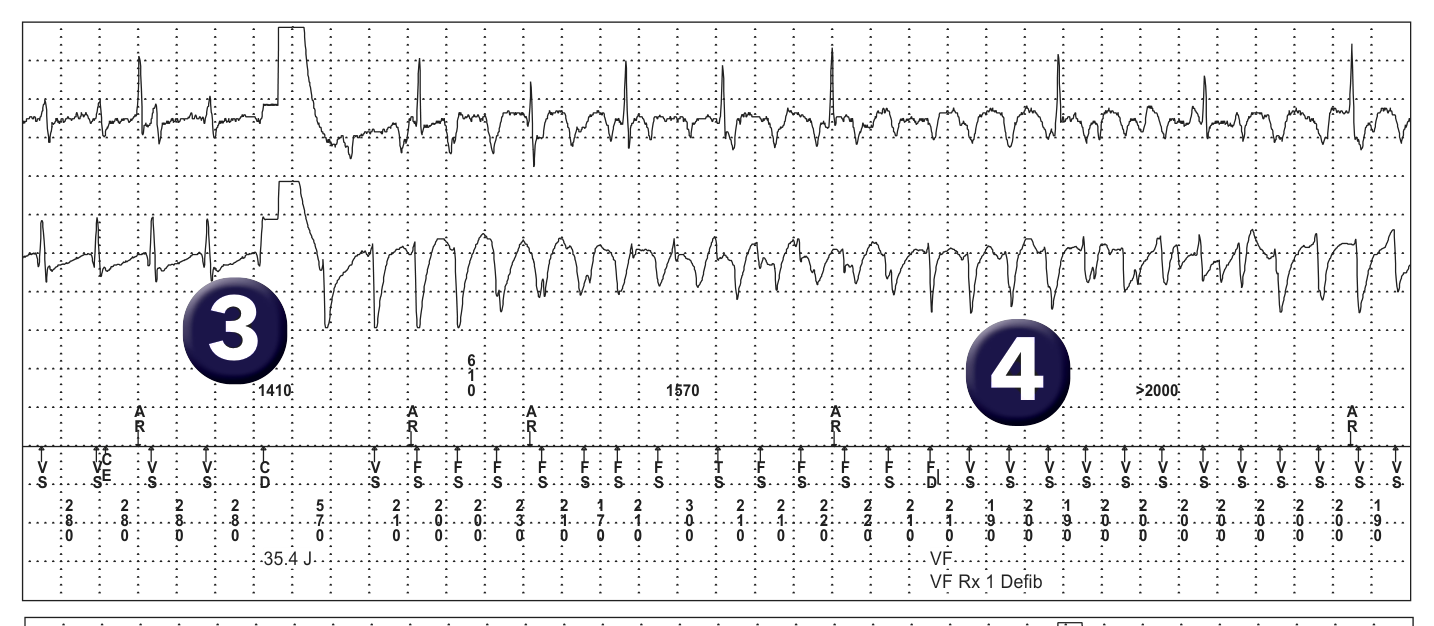
- Why is the shock delivered on the third rapid cycle after the end of charging? As this is the first shock of the episode, there is a confirmation phase at the end of charging; the shock is usually delivered on the second rapid ventricular cycle; in this example, the shock is synchronised to the third instead of the second cycle following the end of charging because this cycle falls within the vulnerable atrial period; this window, which lasts from 150 to 400 ms after a sensed atrial signal, was created to avoid inducing atrial fibrillation (ventricular shock delivered during the atrial vulnerable period).
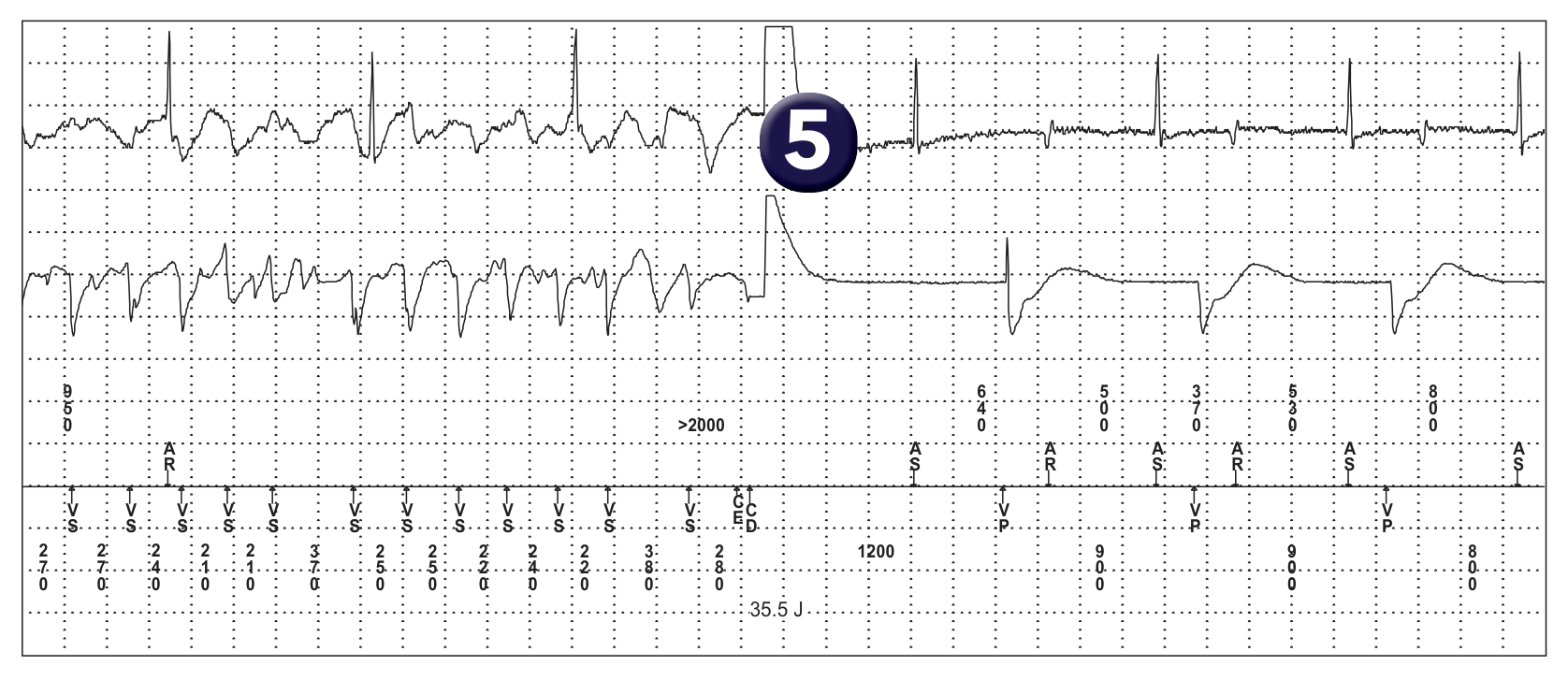
- What is the effect of the first shock? Not only does the shock fail to terminate VT, it causes worsening of the arrhythmia, which becomes very rapid, polymorphic and irregular (VF).
- What is the effect of the following shocks? The next 3 shocks (shocks 2-4) are ineffective, the fifth is effective.
Points to remember
- The arrhythmia episode in this patient is extremely worrying because it was only terminated by the fifth maximum output shock, the penultimate therapy available; in fact in Medtronic defibrillators, the maximum number of shocks for a single episode is limited to 6; the probability of a successful shock after 6 maximum unsuccessful attempts is low; conversely, it is preferable to limit the number of shocks if the therapies are inappropriate.
- This case illustrates one of the main problems encountered in patients implanted with a defibrillator: patients with a high defibrillation threshold are also those in whom an appropriate or inappropriate shock is most likely to induce a polymorphic ventricular arrhythmia that may compromise the patient’s survival (with a significant risk that subsequent shocks may be ineffective...).
- There is a direct relationship between the amount of energy required to induce ventricular fibrillation and the energy required to terminate it (concept of upper limit of vulnerability); in this patient, the first shock degrades a monomorphic, organised arrhythmia into a polymorphic, chaotic arrhythmia, suggesting the existence of a high upper limit of vulnerability; the shock did not capture a sufficient quantity of ventricular myocardium, but instead created sufficiently pro-arrhythmogenic myocardial heterogeneity to generate multiple reentry circuits; it is therefore not surprising that the subsequent delivery of the same amount of energy does not terminate the VF episode induced by the first shock and that several shocks are necessary (high defibrillation threshold).
- Therefore this tracing highlights 2 important points: 1) a shock from the device usually terminates episodes of ventricular arrhythmia and is the basic treatment of the defibrillator; however, a shock can sometimes be pro-arrhythmogenic and, as in this patient, transform an organised VT into a potentially lethal VF; 2) the defibrillation threshold is not a fixed value; in this case, several shocks at maximum energy were ineffective whereas the fifth shock of equal energy averted a dangerous situation.
- This patient’s safety was compromised with few reprogramming options available; a coil positioned in the coronary sinus was added; a shock delivered between two coils in contact with, or in the immediate vicinity of the myocardium is more likely to be effective by extending the electric field induced over a larger volume of myocardium.
What therapy is delivered by the device?
- The episode is detected in the VF zone; when the initial VF counter is filled, a burst during charging is delivered.
What does the «abandon» message mean?
- Charging of capacitors began as soon as the VF counter was filled; the burst was effective with termination of the arrhythmia; after 4 consecutive paced ventricular cycles, the criterion for confirming persistence of the arrhythmia is not met (criterion of 2/5 rapid cycles) and charging is interrupted (therapy abandoned).
Key messages
Practice out loud
Just describe the tracing. What do you think is going on? Describing the numbers can help.
00:00
0%
—
From Medtronic ICD — clinical cases by P. Bordachar, A. Thiyagarajah, L. Fontagne, M. Strik, S. Ploux. Published by Cardiocases. Every numbered marker on a recording is explained in the list beneath it; tap a marker on the trace or an entry in the list.
Order hardcopyon Amazon