
Chapter 1 · Counters · Case 9
New recommandations and number cycles in initial detection
Patient and episode
Patient
- Male patient implanted with a single-chamber Ellipse defibrillator for severe ischemic cardiomyopathy with repeated episodes of non-sustained VT; consultation for episode of syncope with electric shock
The recording
Tap a number on the trace, or an entry in the list below
Episode 1
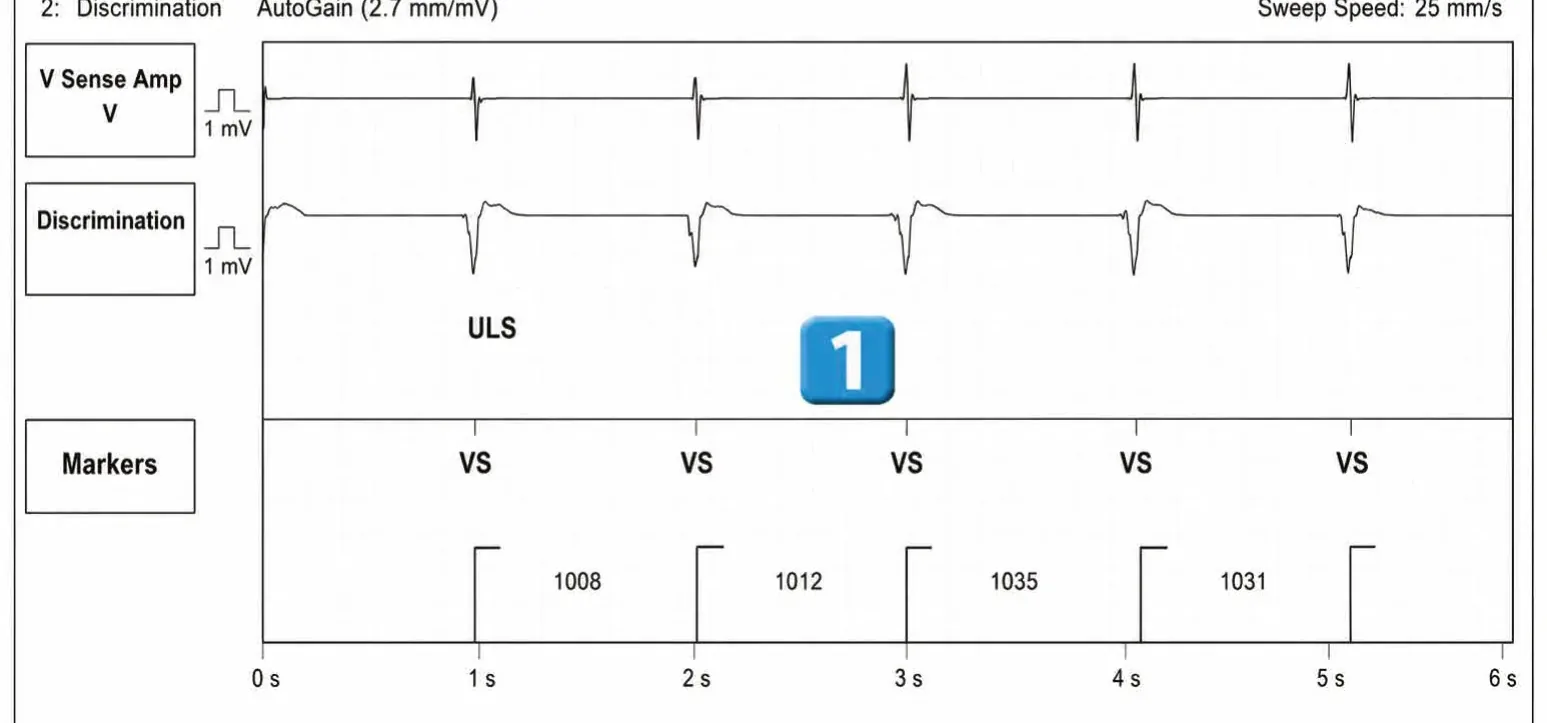

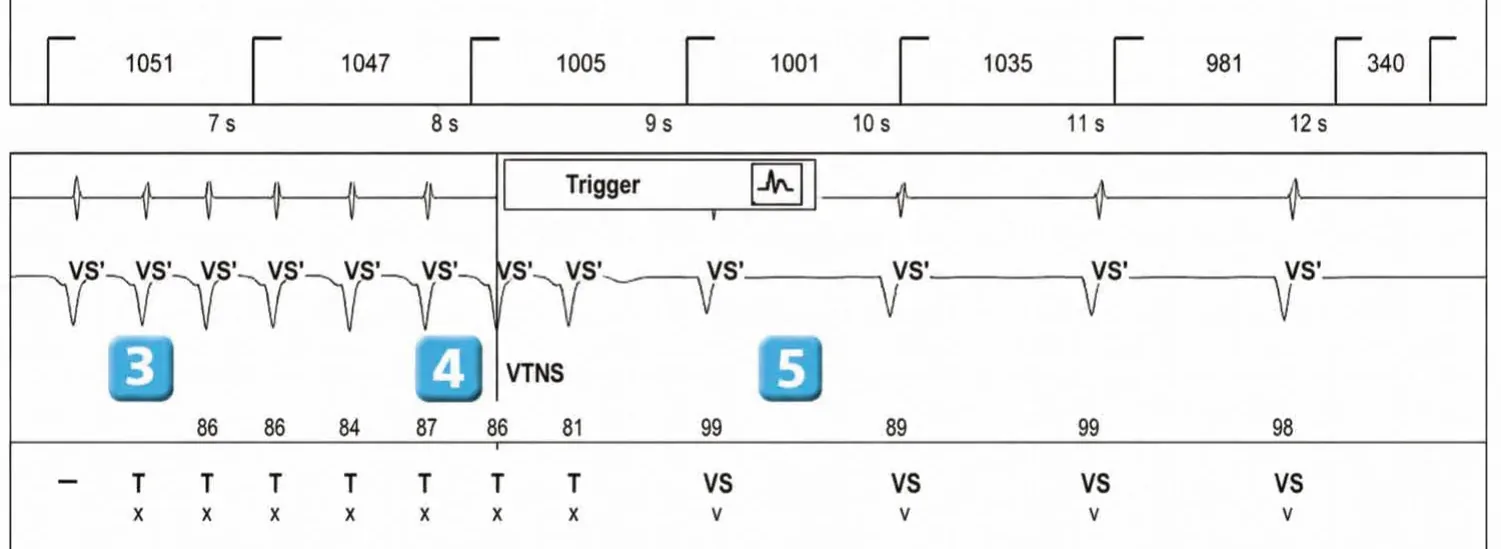
- sinus rhythm
- onset of sudden, regular monomorphic tachycardia with morphological changes; probable VT; first cycles classified as (-)
- first cycle classified as T
- after 6 cycles classified as T, recording of the episode in the device’s memory
- spontaneous reduction; the VT counter was not completed
Episode 2
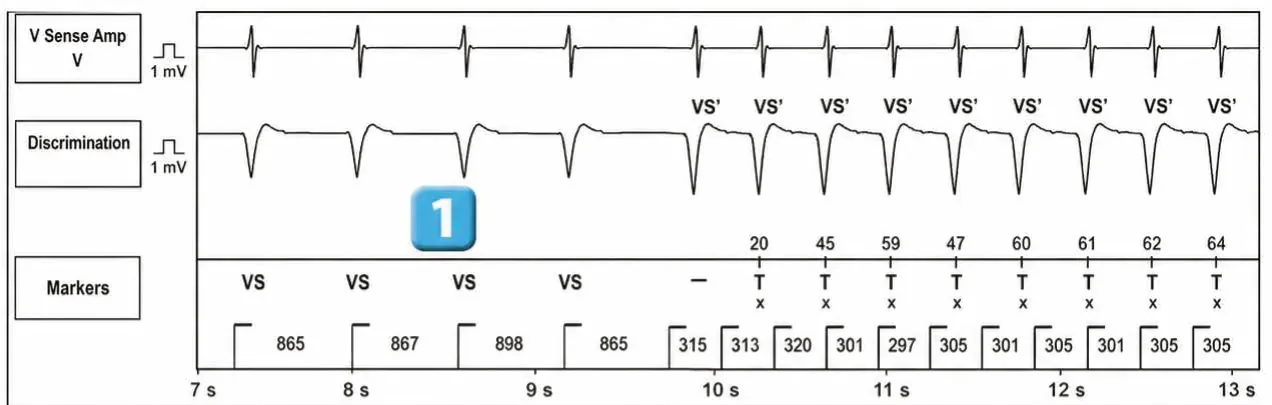
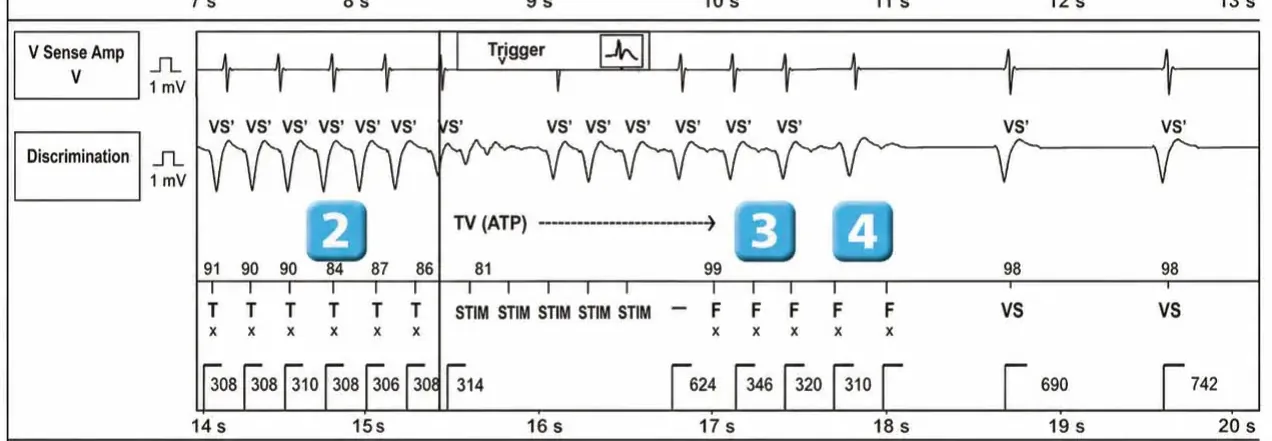
- Identical episode
- after 16 cycles classified as T, the VT counter is completed
- first therapy (ramp)
- frequency acceleration then reduction
Episode 3
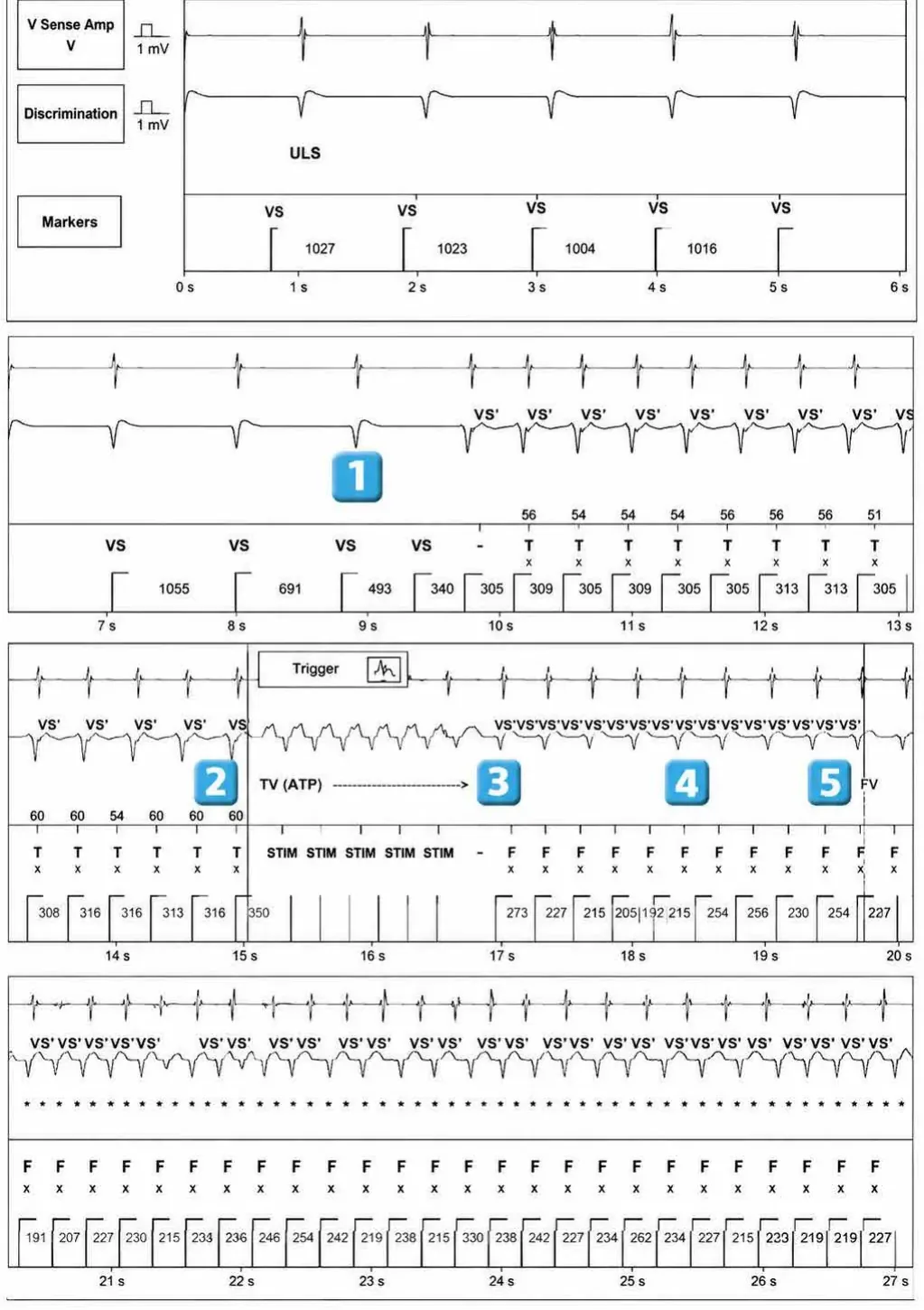
- identical episode
- after 16 cycles classified as T, the VT counter is completed
- first therapy (ramp)
- no reduction and acceleration of ventricular rate; arrhythmia becomes very rapid and is detected in the VF zone
- PV meter completed after 12 cycles classified as F
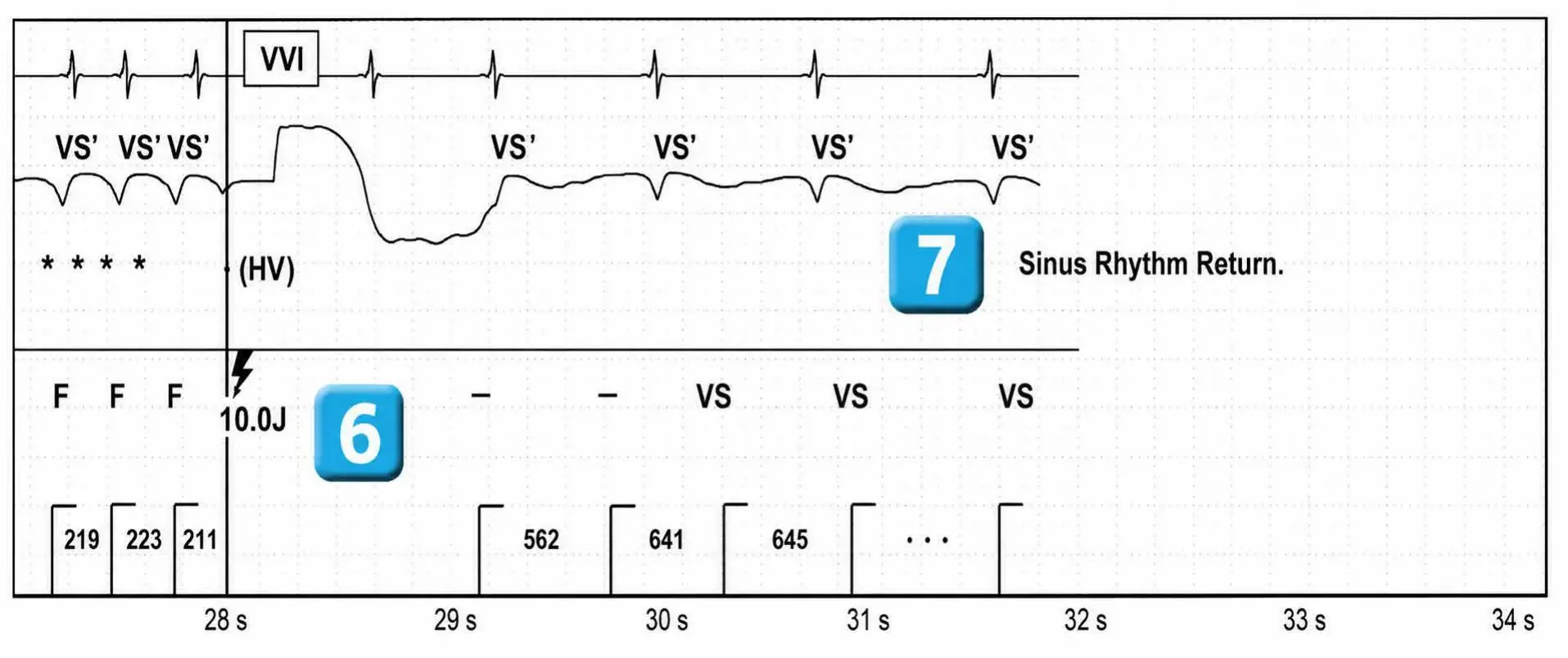
- 6 30 joules electric shock
- Effective shock and sinus return diagnosis
From the interrogation
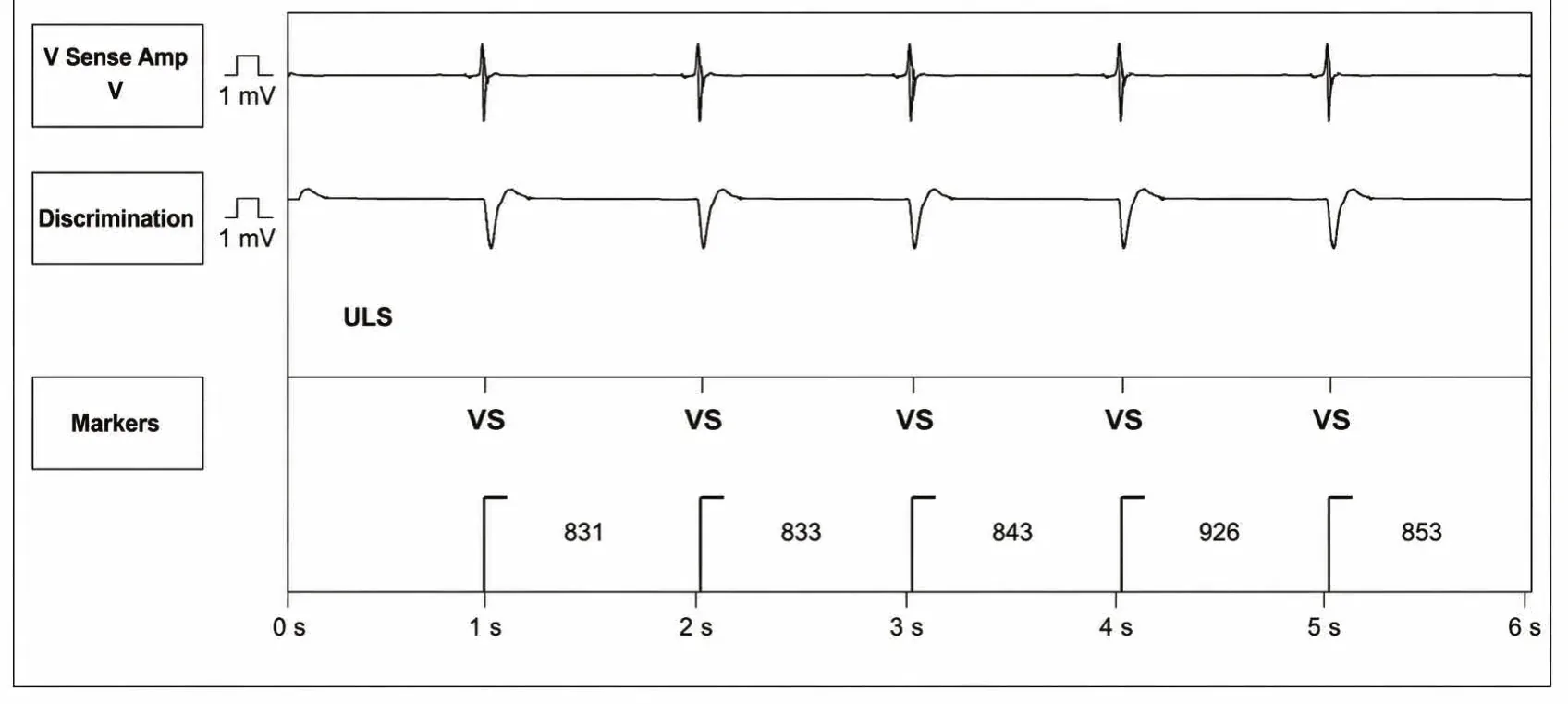
Points to remember
- This tracing also shows an example of proarrhythmogenic ventricular pacing, which degrades monomorphic ventricular tachycardia into polymorphic ventricular arrhythmia with syncope, requiring an electric shock to restore a viable rhythm.
- This patient had multiple episodes of non-sustained VT prior to implantation. The priority in programming is to avoid any therapy for these spontaneously resolving episodes of arrhythmia. Two options may be preferred: programming lower limits for tachycardia zones above the frequency of clinical VT, or programming a significant number of cycles in initial detection to promote spontaneous reduction.
- The risk of monomorphic VT accelerating and compromising the patient’s short-term survival in potentially lethal VF if electric shocks are subsequently ineffective explains the shift observed in international recommendations, namely the first-line programming of a high number of cycles in initial detection
- One of the main objectives of programming the first devices implanted (in the 1980s and 1990s) was to treat the various detected arrhythmias (VT or VF) without delay. There are several reasons for this initial strategy and culture of rapid treatment with electric shocks: most of the first patients were implanted for secondary prevention, the risk of undersensing of VF was a concern, and various studies had shown an increase in the defibrillation threshold for monophasic shocks in parallel with the duration of the episode; similarly, documentation documentation of inappropriate therapies was limited insofar as the very first devices did not record tracings
- Various technological advances, the increase in the proportion of patients implanted for primary prevention, the widely publicized problems of inappropriate therapies due to lead breakage, and the results of various large-scale studies have contributed to a significant change in the way modern defibrillators are programmed. The PREPARE study was the first to show that extending detection times reduced the number of shocks delivered without increasing complications (syncope, sudden death, etc.). The Multicenter Automatic Defibrillator Implantation Trial: Reduce Inappropriate Therapy (MADIT-RIT) study demonstrated the positive impact of programming with a single high VF zone ( > 200 beats/minute) or programming with extended durations (1 minute for the zone between 170 and 200 beats/minute and 12 seconds between 200 and 250 beats/minute) compared to conventional programming; Other studies and meta-analyses have confirmed a benefit in terms of reducing appropriate or inappropriate therapies and a benefit in terms of mortality, suggesting the decisive importance of programming.
- The nominal settings recommended by manufacturers have gradually evolved; in 2015 and then in 2019, the main learned societies issued recommendations for the programming of implantable defibrillators, reiterating the need to program high detection zones by default with extended initial durations.
- For a patient implanted with an Abbott™ defibrillator for primary prevention, it is recommended to program a VT zone starting at 187 beats per minute with 30 cycles in initial detection and a VF zone starting at 240 or 250 beats per minute with 30 cycles in initial detection.
- For patients implanted with a secondary prevention device, it is recommended to add a VT zone VT zone at a frequency 10 to 20 beats slower than the clinical tachycardia
Practice out loud
Just describe the tracing. What do you think is going on? Describing the numbers can help.
00:00
0%
—
From Implantable Cardioverter Defibrillator — clinical cases based on tracings by P. Bordachar, M. Strik, A. Thiyagarajah, S. Ploux. Published by Cardiocases. Every numbered marker on a recording is explained in the list beneath it; tap a marker on the trace or an entry in the list.