
Chapter 1 · Counters · Case 10
New recommendations and non-sustained tachycardia
Patient and episode
Patient
- Male patient implanted with a single-chamber Ellipse defibrillator presenting with multiple non-sustained and non-syncopal VT
The recording
Tap a number on the trace, or an entry in the list below
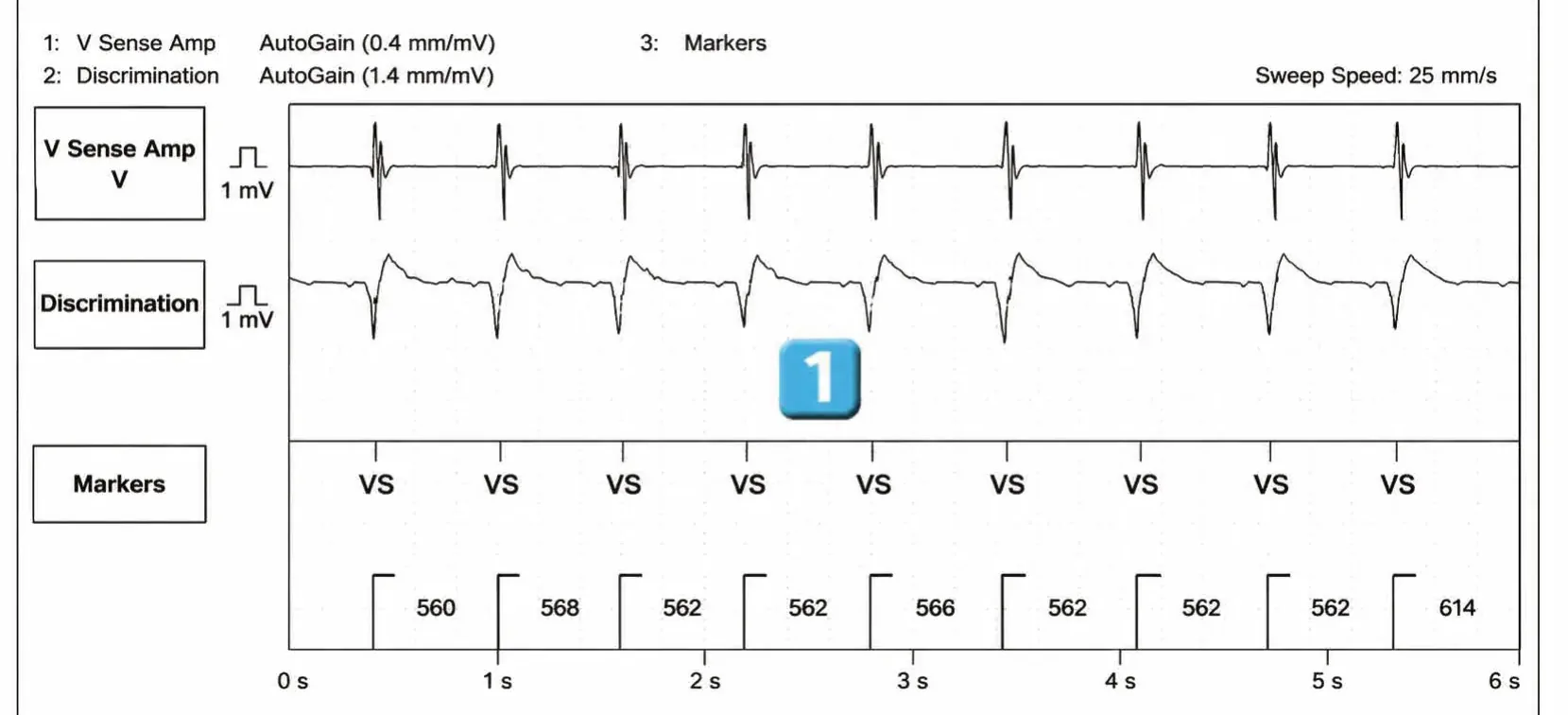
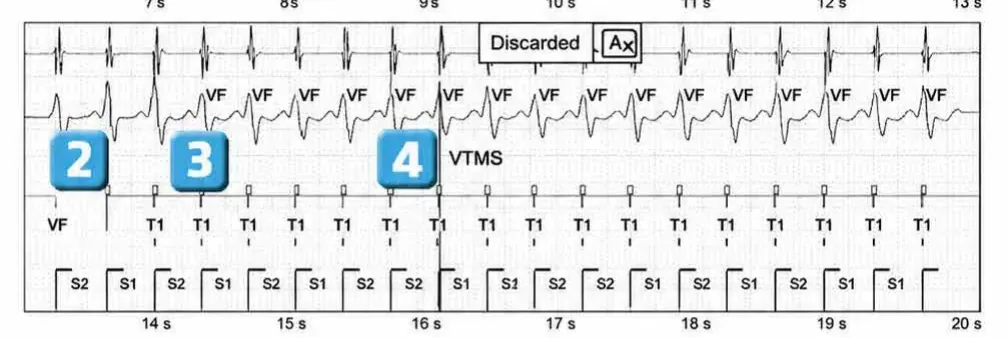
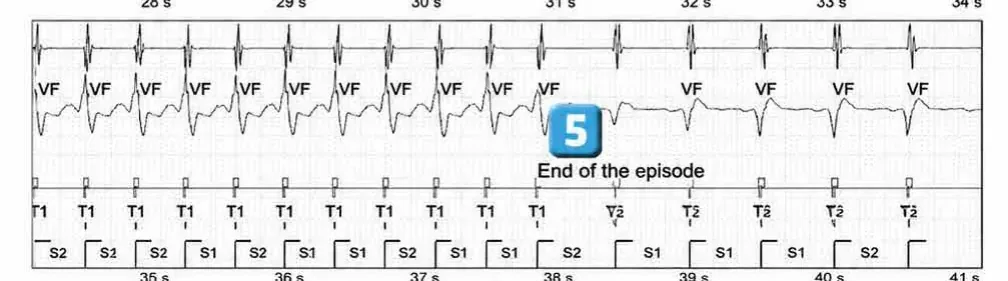
- sinus rhythm
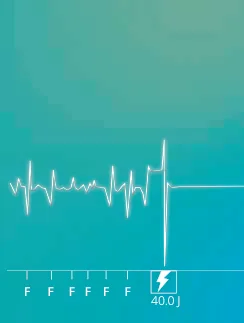
- onset of sudden, regular monomorphic tachycardia with morphological changes; probable VT; first cycles classified as (-)
- first cycle classified as T
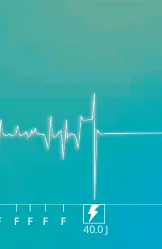
- after 6 cycles classified as T, recording of the episode in the device memory
- spontaneous reduction after 24 seconds of arrhythmia; the VT counter was not completed
From the interrogation
Points to remember
- This patient had undergone secondary prevention implantation for ischemic cardiomyopathy (ejection fraction of 35%) with multiple episodes of non-sustained VT and a few episodes of sustained non-syncopal VT (lasting just over 30 seconds) recorded by the department’s telemetry system.
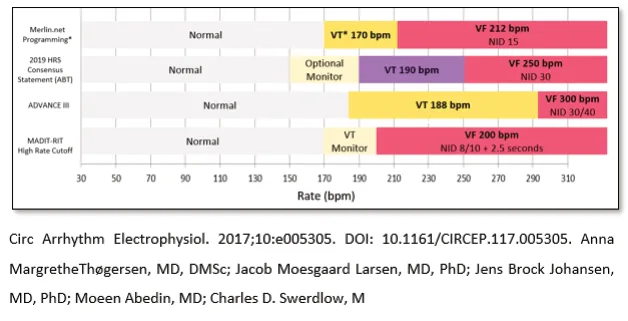
- This trace illustrates the main idea behind the new international recommendations on defibrillator programming: to maximize the spontaneous reduction of ventricular arrhythmia episodes and to treat only those episodes that compromise the patient’s survival or are poorly tolerated hemodynamically.
- The dual objective of defibrillator programming in this patient is to avoid untimely defibrillator interventions in spontaneously resolving and well-tolerated tachycardias while protecting the patient from the risk of sudden death
- The treatment of this patient’s non-sustained tachycardias is based primarily on medical treatment and possibly ablation, rather than on the first-line programming of anti-tachycardia pacing sequences, which could potentially be effective but are associated with a non-zero risk of acceleration into a potentially lethal arrhythmia. The results of medical treatment + ablation procedure were imperfect in this patient, which explains the recording of VT episodes in the device’s memory.
- With regard to programming for this patient, one option would be not to offer a therapy zone corresponding to this clinical VT (possibility of programming a monitor zone to quantify the arrhythmia burden and assess the duration of episodes); the main advantage is that it eliminates the risk of unnecessary intervention for arrhythmias that resolve spontaneously; the disadvantage of this option is that if an episode of tachycardia does not resolve spontaneously and lasts for several hours/days, the hemodynamic situation may deteriorate and lead to an episode of decompensation cardiac
- A second option would be to program a detection/therapy zone corresponding to this clinical tachycardia, but programming a sufficiently large number of intervals to allow spontaneous reduction. The new recommendations propose a minimum of 30 cycles. In this example, given the duration of the episodes, a much larger number of intervals was programmed. The advantage is that this allowed spontaneous reduction of the recorded episodes while leaving the device the possibility of intervening if spontaneous reduction did not occur
Practice out loud
Just describe the tracing. What do you think is going on? Describing the numbers can help.
00:00
0%
—
From Implantable Cardioverter Defibrillator — clinical cases based on tracings by P. Bordachar, M. Strik, A. Thiyagarajah, S. Ploux. Published by Cardiocases. Every numbered marker on a recording is explained in the list beneath it; tap a marker on the trace or an entry in the list.