
Chapter 1 · Counters · Case 2
Operating principles, specific features of the Gallant platform
Patient and episode
Patient
- Male implanted with a Gallant cardiac resynchronization defibrillator (CRT-D), a more recent device with several modifications (increased maximum output, new algorithms, Bluetooth® connectivity, remote monitoring, new markers, etc.)
Summary
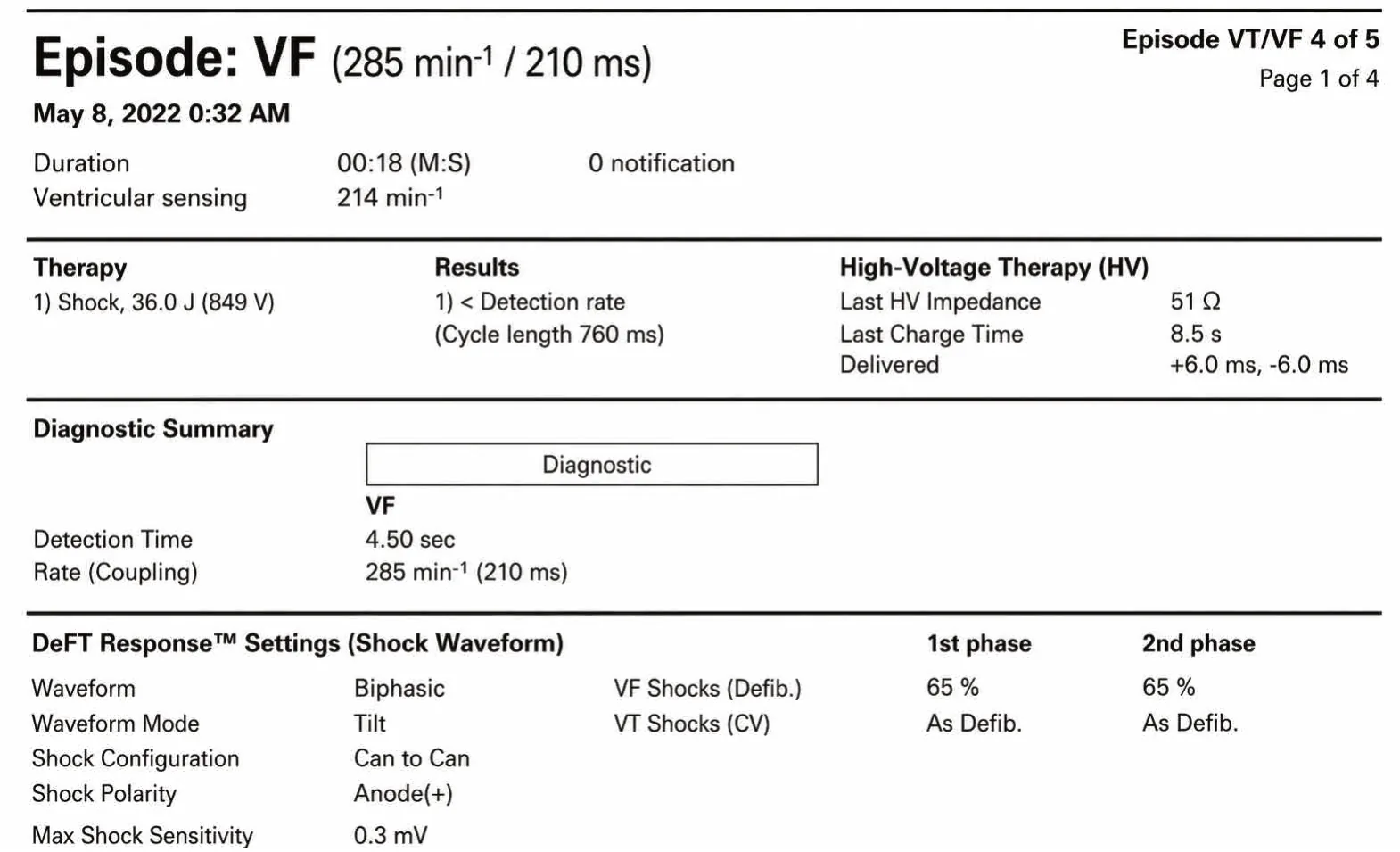
- Episode recorded in May 2022, classified in the VF zone and treated with a 36-joules electric shock Shock impedance of 51 Ohms; charge time of 8.5 seconds
The recording
Tap a number on the trace, or an entry in the list below
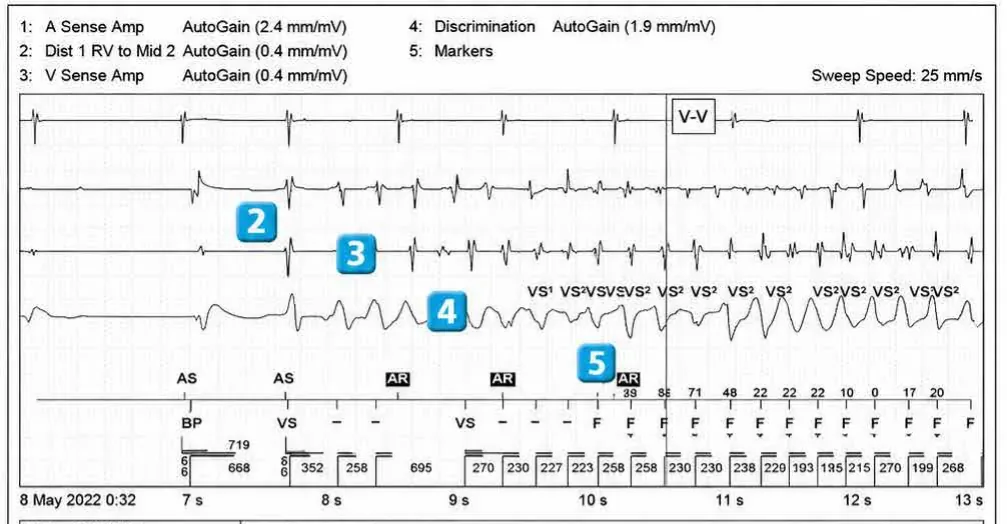

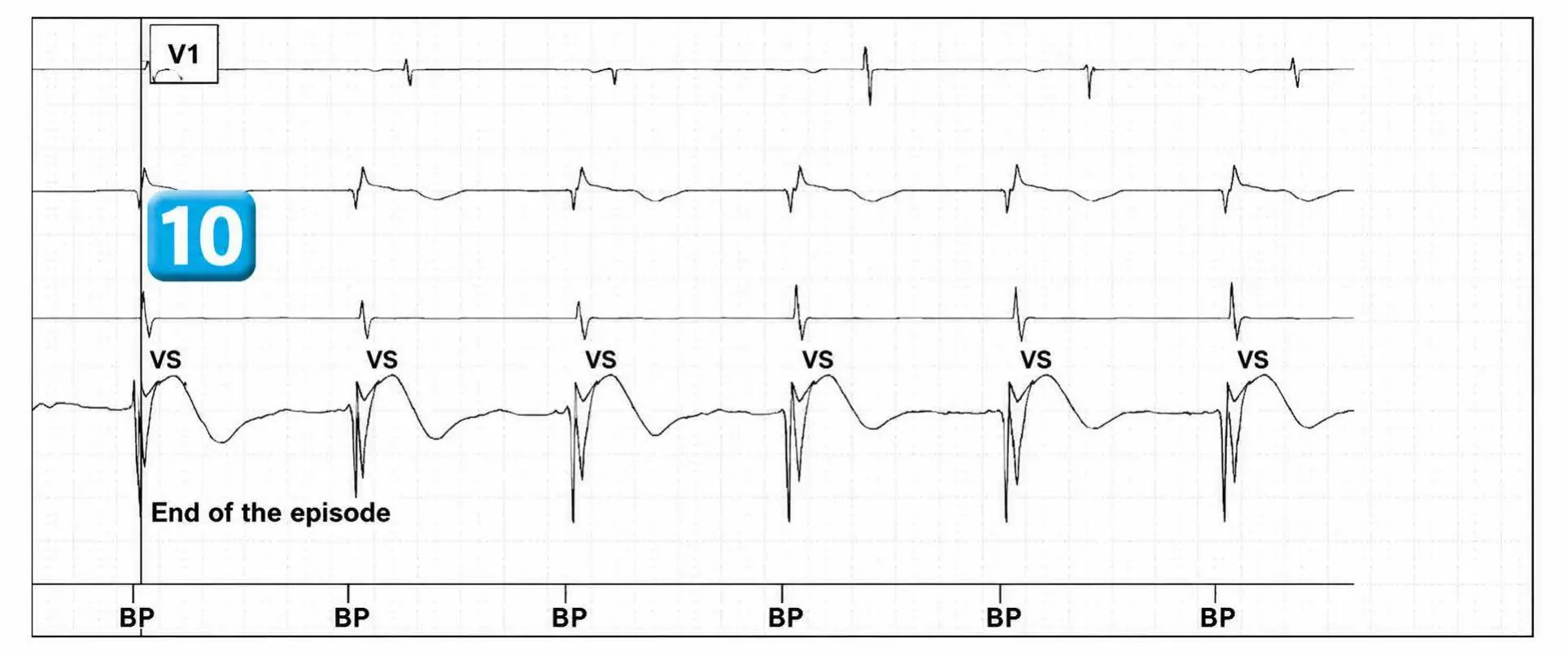
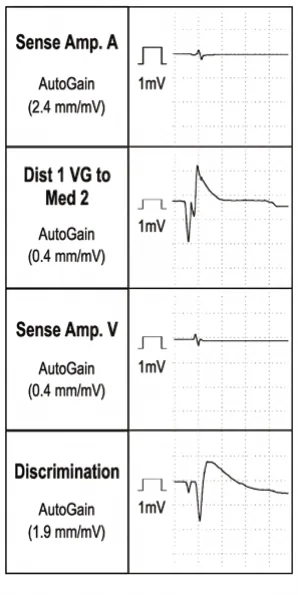
- A sense amplifier channel
- Distal 1 to Mid 2 channel (quadripolar left ventricular lead)
- V sense amplifier channel
- Discrimination channel; automatically activated for 16 tachy episodes but not for other episodes (e.g., AMS) unless explicitly programmedSinus rhythm with biventricular pacing
- Onset of polymorphic ventricular arrhythmia. The first 2 cycles are unclassified (discordance between the current interval and the 4 interval average)
- Ventricular undersensing
- As a result of undersensing, the next cycle is classified as VS
- First cycle classified as ‘F’ (Concordance between current cycle and the 4 cycle average)
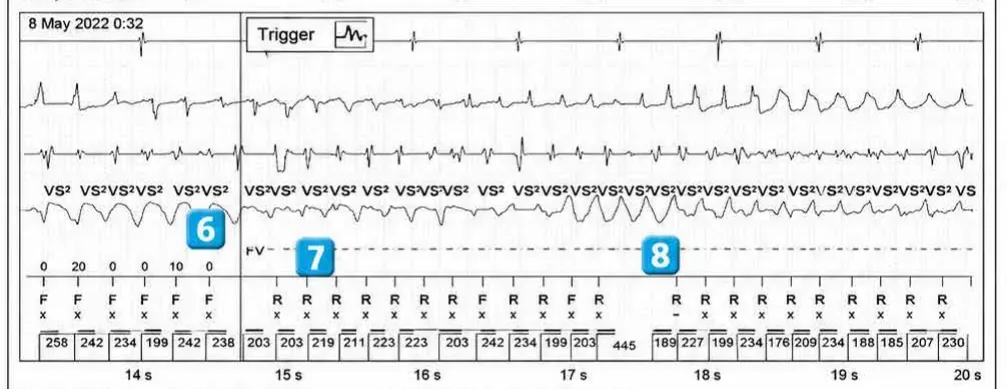
- After 20 cycles classified as ‘F’, detection of a VF episode
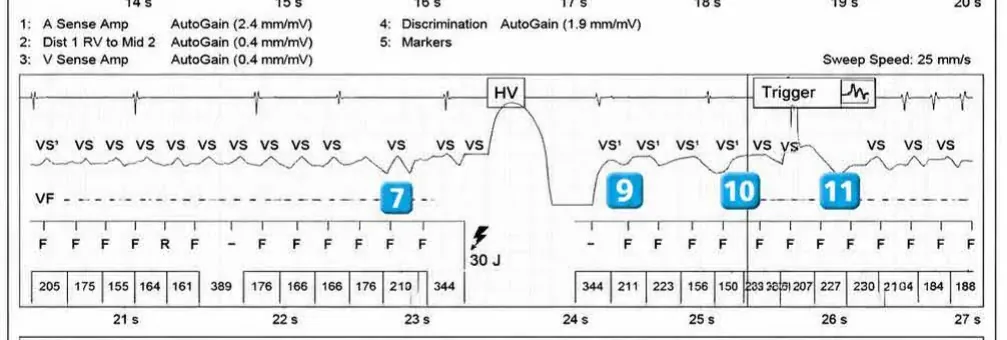
- Start of capacitor charging. During charging, fast cycles are labeled with an underlined ‘R’ marker
- Undersensing. The next cycle is unclassfied
- Electric shock
- Termination of arrhythmia; after 3 VS or BP cycles, the device diagnoses the end of the episode
- This trace is an example of a VF episode that is correctly detected and treated by a Gallant defibrillator, Abbott’s latest ICD. This model incorporates some new changes, but the main operating principles remain the same. The mechanisms for detecting, classifying, counting, and treating arrhythmia constitutes the DNA of a brand’s devices and consequently has remained relatively constant over time
- In Gallant devices rapid cycles are labeled with an underlined ‘R’ during capacitor charging instead of the underlined ‘F’ used in older devices. Although the return to sinus criterion has not been modified, the label «return to sinus» is no longer displayed on the trace and has been replaced by the label «end of episode». The term «return to sinus» can be considered a misnomer, since the cessation of ventricular tachycardia is not necessarily accompanied by a return to sinus rhythm (for example, the rhythm may be AF).
- Other changes in Gallant devices include an increase in the energy delivered to 40 joules with a stored energy of 45 joules in single and dual chamber ICDs (CRT-D devices were already at 40 J), an increase in the number of left ventricular pacing vectors available, and the integration of new algorithms (Sync-AV Plus,VFTA). Devices can also be interrogated using Bluetooth® technology (the telemetry head can be removed once the connection has been initiated) and remote monitoring can be performed using an app available on the patient’s mobile phone
From the interrogation
Points to remember
Practice out loud
Just describe the tracing. What do you think is going on? Describing the numbers can help.
00:00
0%
—
From Implantable Cardioverter Defibrillator — clinical cases based on tracings by P. Bordachar, M. Strik, A. Thiyagarajah, S. Ploux. Published by Cardiocases. Every numbered marker on a recording is explained in the list beneath it; tap a marker on the trace or an entry in the list.