
Chapter 4 · Oversensing · Case 10
Oversensing of a 50 Hz signal
Patient and episode
Patient
- Man implanted with an Abbott Gallant CRT defibrillator; episodes of unsustained V oversensing recorded in memory; SecureSense™ algorithm ON (RV coil to housing)
Summary
- Episode of non-sustained ventricular oversensing
The recording
Tap a number on the trace, or an entry in the list below
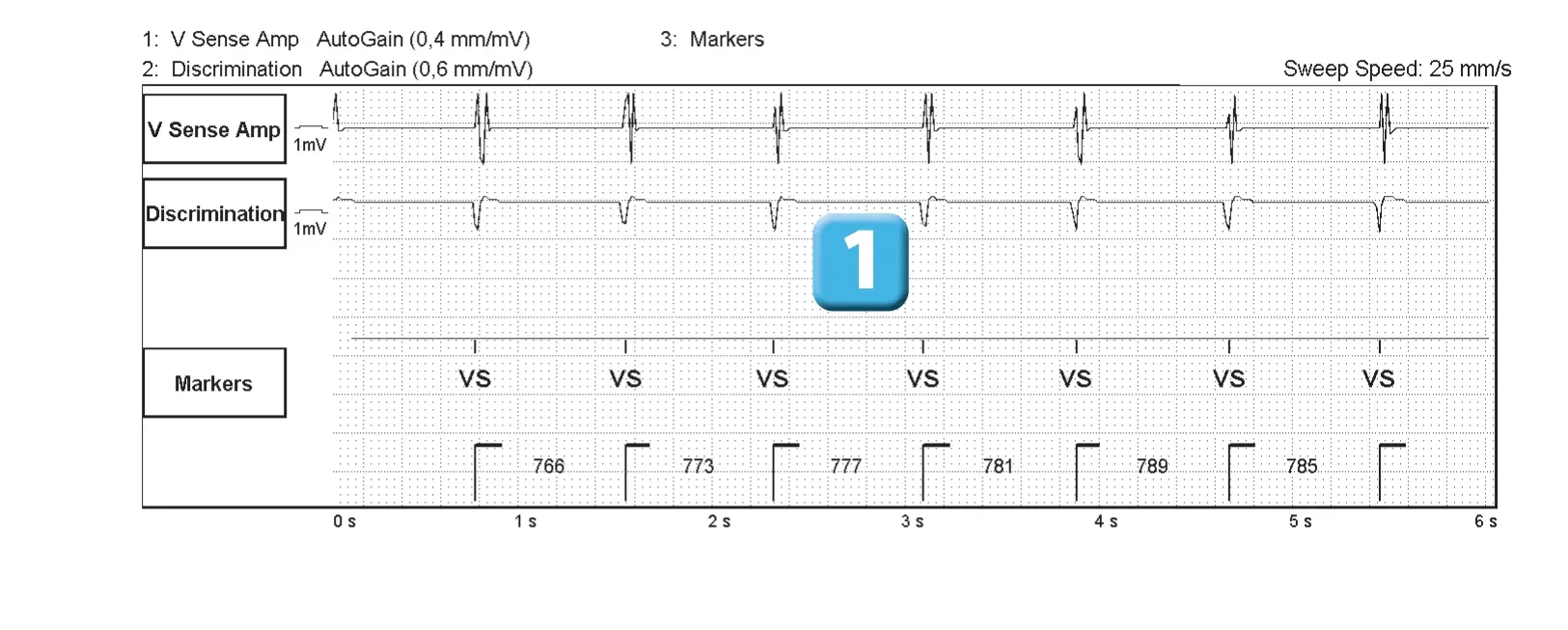
- sinus rhythm
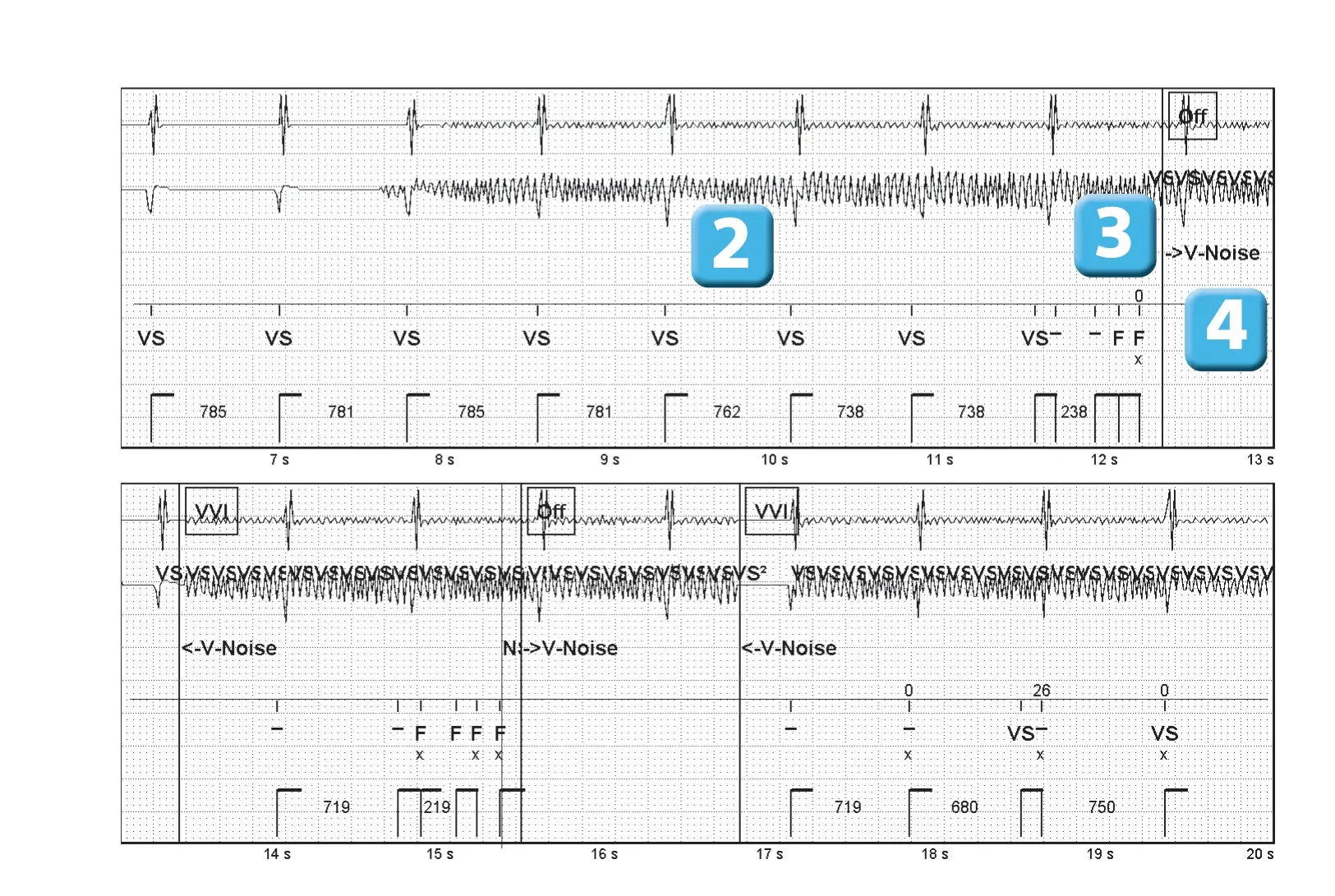
- very rapid signals, observed on the bipolar channel and on the discrimination channel, saturating the baseline, sinusoidal in appearance; spontaneous ventricular activity (QRS complexes) remains visible on both channels
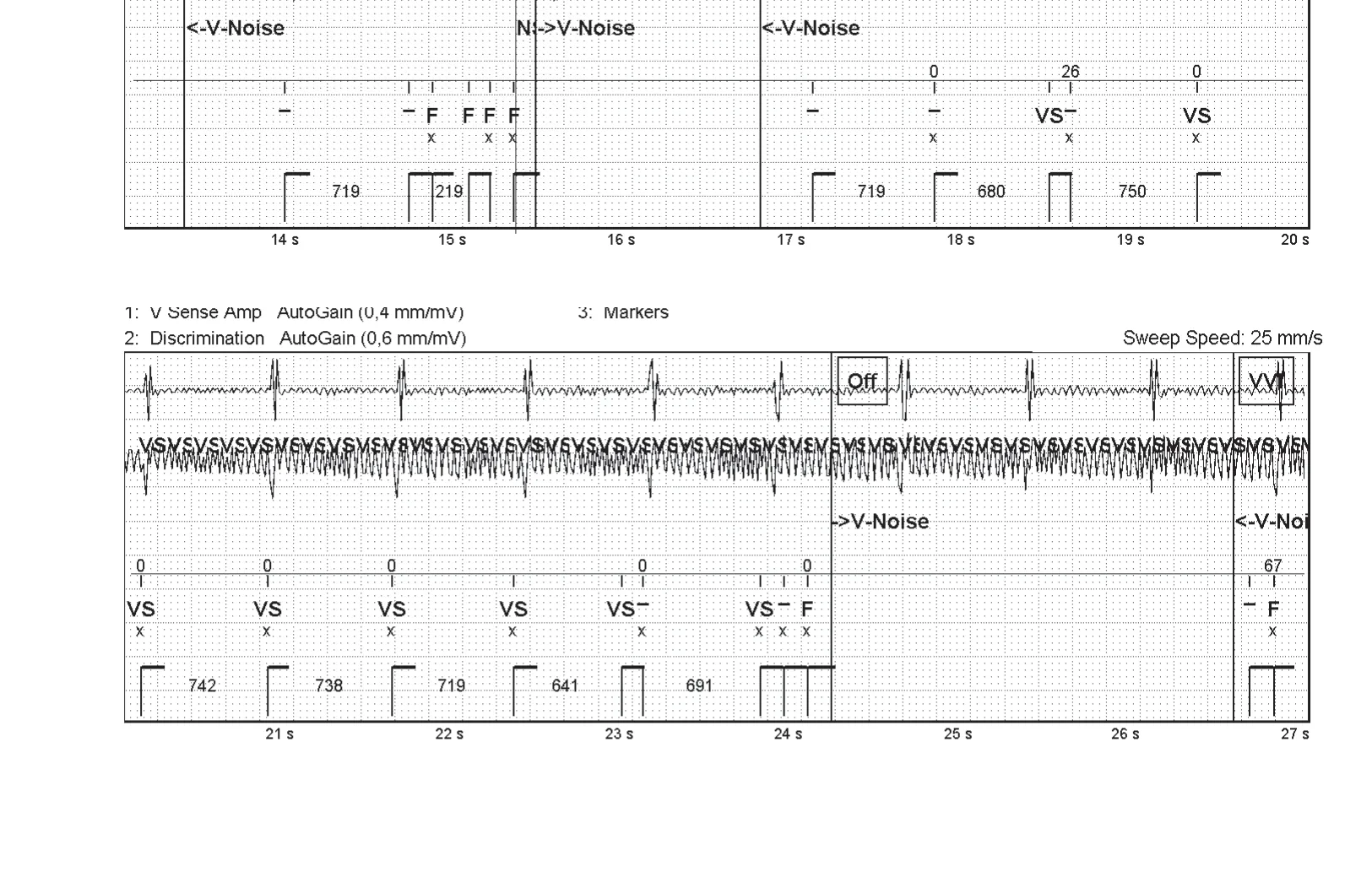
- oversensing on the bipolar channel (cycles classified as F)
- noise reversal; permanent oversensing on the discrimination channel
From the interrogation
Points to remember
- This trace illustrates an example of oversensing of 50 Hz activity (use of a poorly insulated household appliance) with no inappropriate therapy following the intervention of the noise reversal algorithm.
- The potential risk of electromagnetic interference with an implantable defibrillator has been frequently described in hospital settings, in the patient’s home, or during work activities. Interference can occur through conduction if the patient is in direct contact with the emitting source, or through radiation if the patient is located within an electromagnetic field. The latest defibrillators are protected against the vast majority of sources of interference that patients may encounter in their everyday lives. Interference signals are typically filtered out, with analysis restricted to a narrow bandwidth corresponding to physiological signals (high-pass and low-pass filters). However, the high and adaptive sensitivity required in a defibrillator for the correct detection of signals during ventricular fibrillation may promote the detection of non-physiological signals corresponding to the same bandwidth.
- Signals corresponding to electromagnetic interference may not be filtered appropriately and may lead to consequences ranging in severity from the delivery of inappropriate therapies to inhibition in a dependent patient, inappropriate reversion due to false diagnosis of supraventricular arrhythmia, rapid ventricular pacing synchronized with atrial oversensing, suspension of therapy detection, or reversion to asynchronous mode. In exceptional cases, interference with a high-intensity field may cause permanent damage to the circuits.
- This trace reveals the characteristics usually found in patients with electromagnetic interference: 1) exposure to an emitting source at the time of the episode; 2) high-frequency signals that are clearly non-physiological and remain constant throughout the cardiac cycle; on Abbott defibrillators, it is possible to modify the scroll speed to highlight the characteristic sinusoidal pattern of exposure to 50 Hz alternating current, with a spacing of 20 ms between each signal (definite diagnosis)
- the signals are generally visible on the different channels (possible diagnosis of bitachycardia on a dual or triple chamber, AF + VF); most often, the signals have a greater amplitude on the discrimination channel than on the bipolar detection channel
- The interference reversal algorithm can reduce the risk of inappropriate therapy, but cannot eliminate it completely
- The SecureSense™ algorithm does not inhibit therapies in this context, as oversensing is also present on the discrimination channel (short cycles and noise counter reset).
- The main preventive measure is to identify the source of the emissions and avoid using certain poorly insulated instruments.
- As this patient was being monitored remotely, we received an alert the next day and were able to link the detected episode to the use of a poorly insulated household appliance
Practice out loud
Just describe the tracing. What do you think is going on? Describing the numbers can help.
00:00
0%
—
From Implantable Cardioverter Defibrillator — clinical cases based on tracings by P. Bordachar, M. Strik, A. Thiyagarajah, S. Ploux. Published by Cardiocases. Every numbered marker on a recording is explained in the list beneath it; tap a marker on the trace or an entry in the list.