
Chapter 4 · Oversensing · Case 11
Surgery and use of an electric scalpel
Patient and episode
Patient
- Man undergoing a device replacement with implantation of a single-chamber Abbott Gallant defibrillator; recording of contemporary VT tracings during the procedure
Summary
- episode of VF with an ATP sequence and a deflected load
The recording
Tap a number on the trace, or an entry in the list below
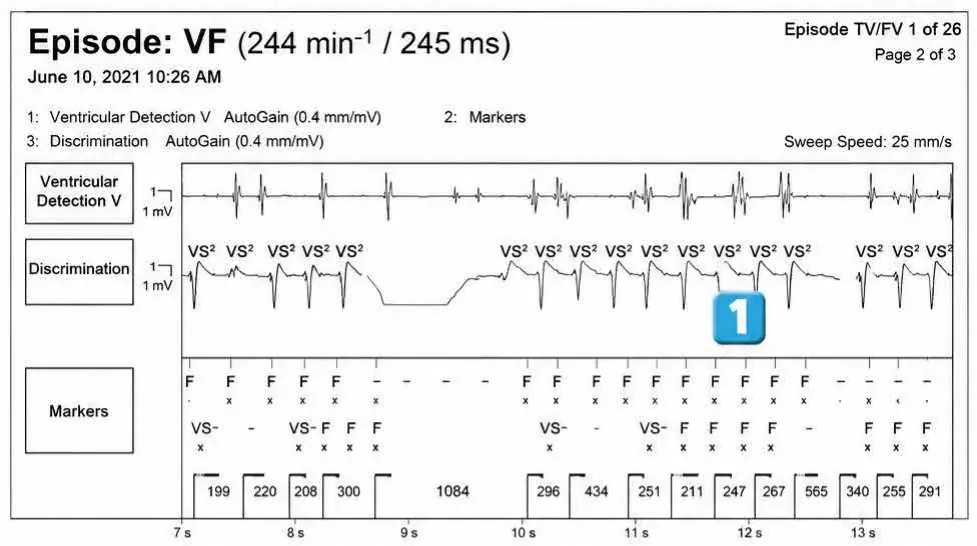
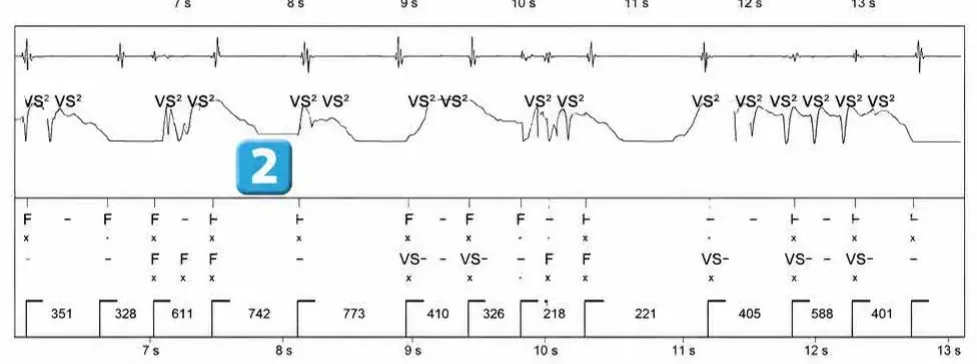
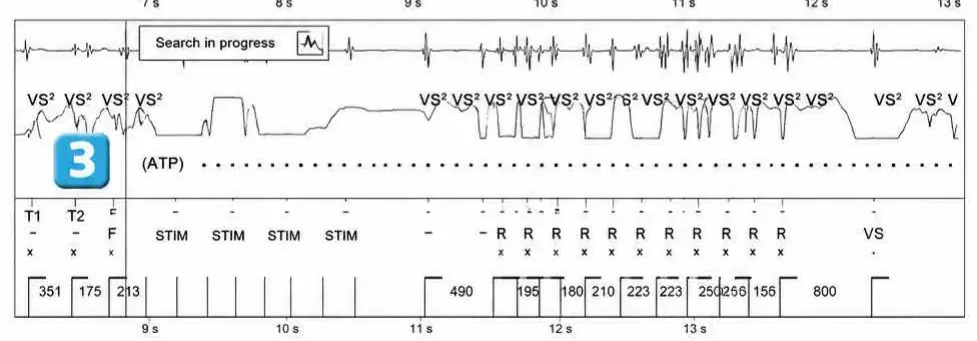
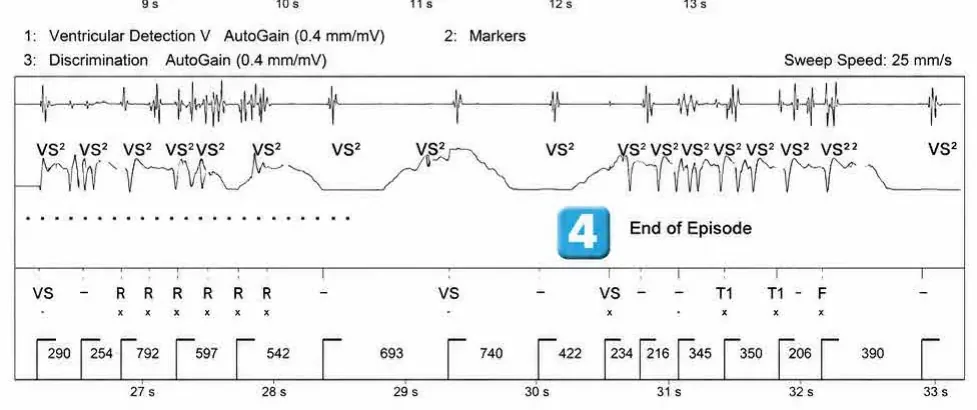
- Simultaneous detection on both channels (bipolar and discrimination) of very fast, chaotic signals of variable amplitude and morphology (classified as VF zone)
- intermittent oversensing
- VF diagnosis (VF counter completed); ATP during load
- intermittent oversensing and load deviation (end-of-episode diagnosis)
Points to remember
- The trace is characteristic of oversensing of the signal emitted by an electric scalpel.: simultaneous detection on all channels of rapid, anarchic signals of variable amplitude and morphology; the diagnosis is clear, as the episode was recorded during the procedure to change the device
- When changing the device, it is standard practice to deprogram detection and therapies in order to avoid inappropriate therapies and the recording of tracings that unnecessarily overload the device’s memory.
- in a patient with an implanted defibrillator undergoing non-cardiac surgery, the surgeon should be advised to use the electric scalpel in bipolar mode, to limit its use to very short periods, and to place the scalpel plates at a distance from the defibrillator device; To completely eliminate the risk of harmful interference, one option is to deprogram detection and therapies; a second option is to hold a magnet over the device to inhibit all therapies; the effect of the magnet is reversible, and therapies and episode memory are once againoperational once the magnet is removed. During the procedure, scope monitoring must be maintained, as the patient is no longer protected by their defibrillator.
- The Gallant emits a beep when it detects the magnet (and therefore when therapy is deactivated); there is a different tone if the magnet is no longer detected (except during interrogation, and therapies must be activated for this to sound).
- The SecureSense™ algorithm does not allow therapies to be inhibited in this context, as oversensing is also present on the discrimination channel (short cycles and noise counter reset).
Practice out loud
Just describe the tracing. What do you think is going on? Describing the numbers can help.
00:00
0%
—
From Implantable Cardioverter Defibrillator — clinical cases based on tracings by P. Bordachar, M. Strik, A. Thiyagarajah, S. Ploux. Published by Cardiocases. Every numbered marker on a recording is explained in the list beneath it; tap a marker on the trace or an entry in the list.