
Chapter 4 · Oversensing · Case 13
SecureSense™ algorithm and loss of right ventricular capture
Patient and episode
Patient
- 76-year-old male implanted with an SJM Ellipse™ DR dual-chamber defibrillator for ischemic cardiomyopathy with long PR interval on ECG; episode of unsustained V lead noise in memory
Summary
- episode of VF lasting more than one minute
The recording
Tap a number on the trace, or an entry in the list below
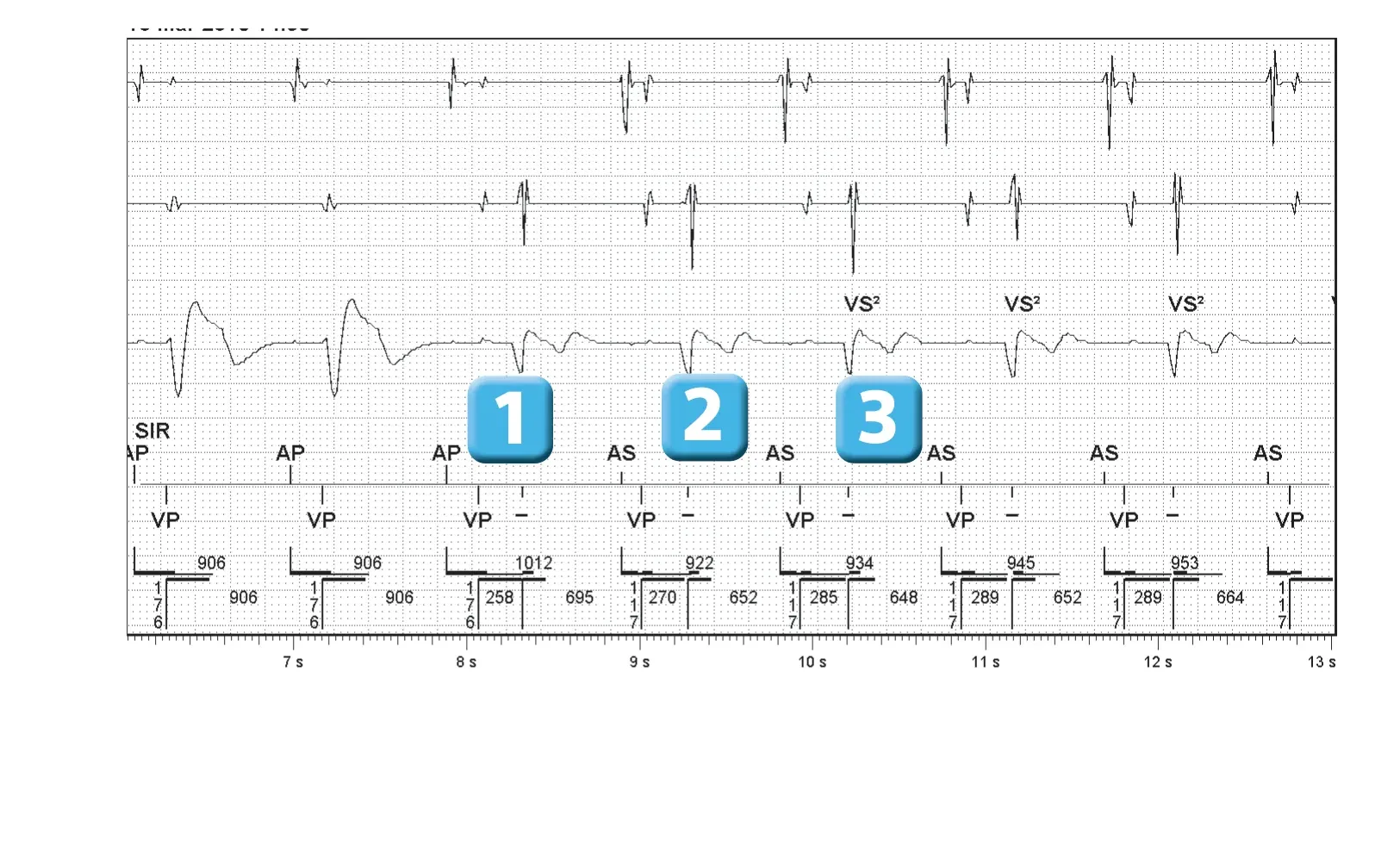
- ventricular stimulation and probable absence of capture (absence of ventricular depolarization on the discrimination channel); atrioventricular conduction with prolonged PR interval and detection of spontaneous ventricular activity on the bipolar channel (short cycle, -)
- identical sequence with second short cycle; noise counter activated 350 ms after this second short cycle
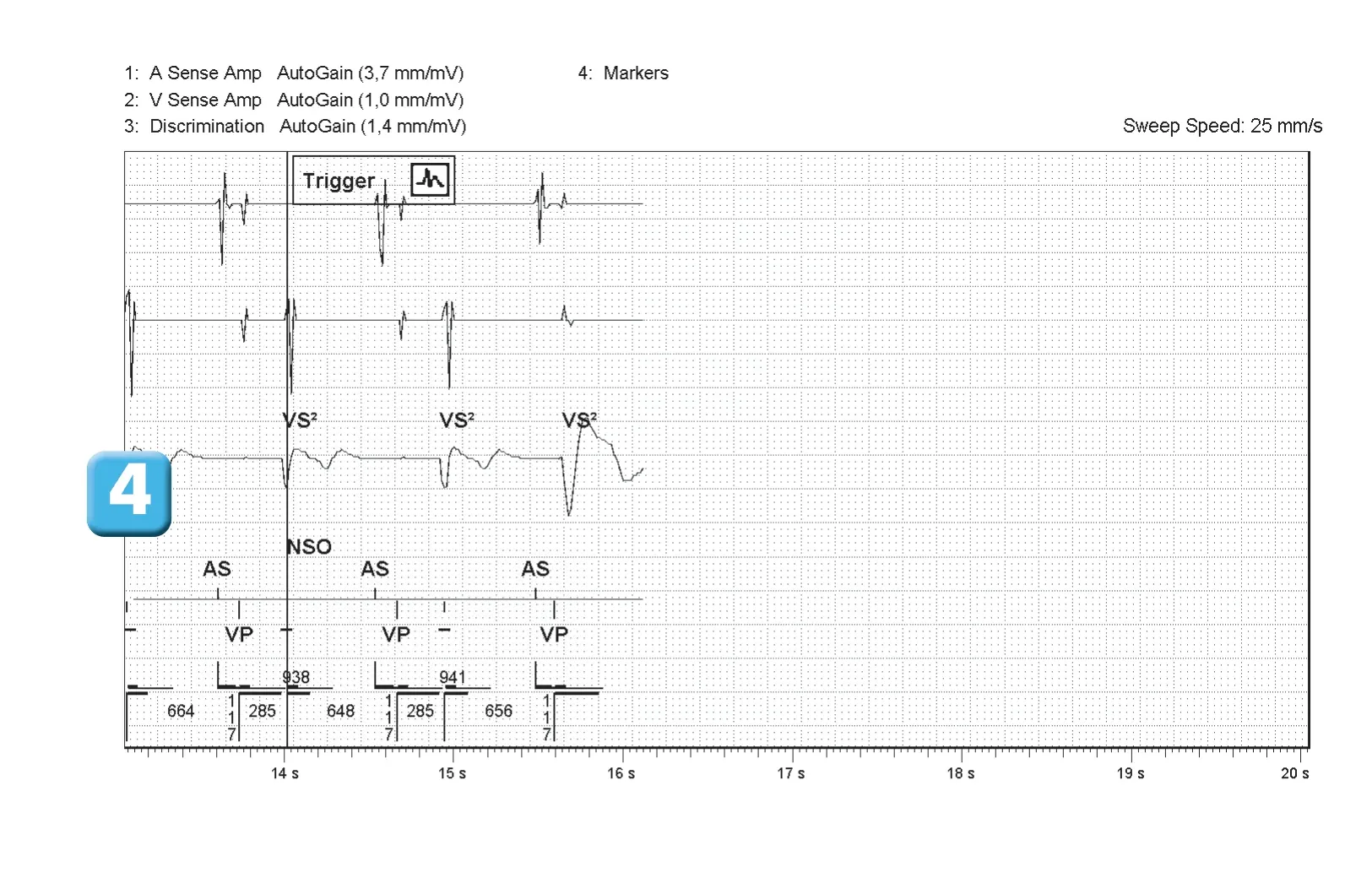
- identical sequence; spontaneous QRS is detected on the discrimination channel and marked VS2
- the noise counter is at 5, the VT or VF counter is not filled; diagnosis of non-sustained lead V noise (NSLN); the number 5, the terms unsustained V lead noise, NSLN correspond to older platforms; in newer platforms, a noise counter of 10 is required to record an episode, and the terms used are: diagnosis of unsustained V oversensing and SNS
From the interrogation
Points to remember
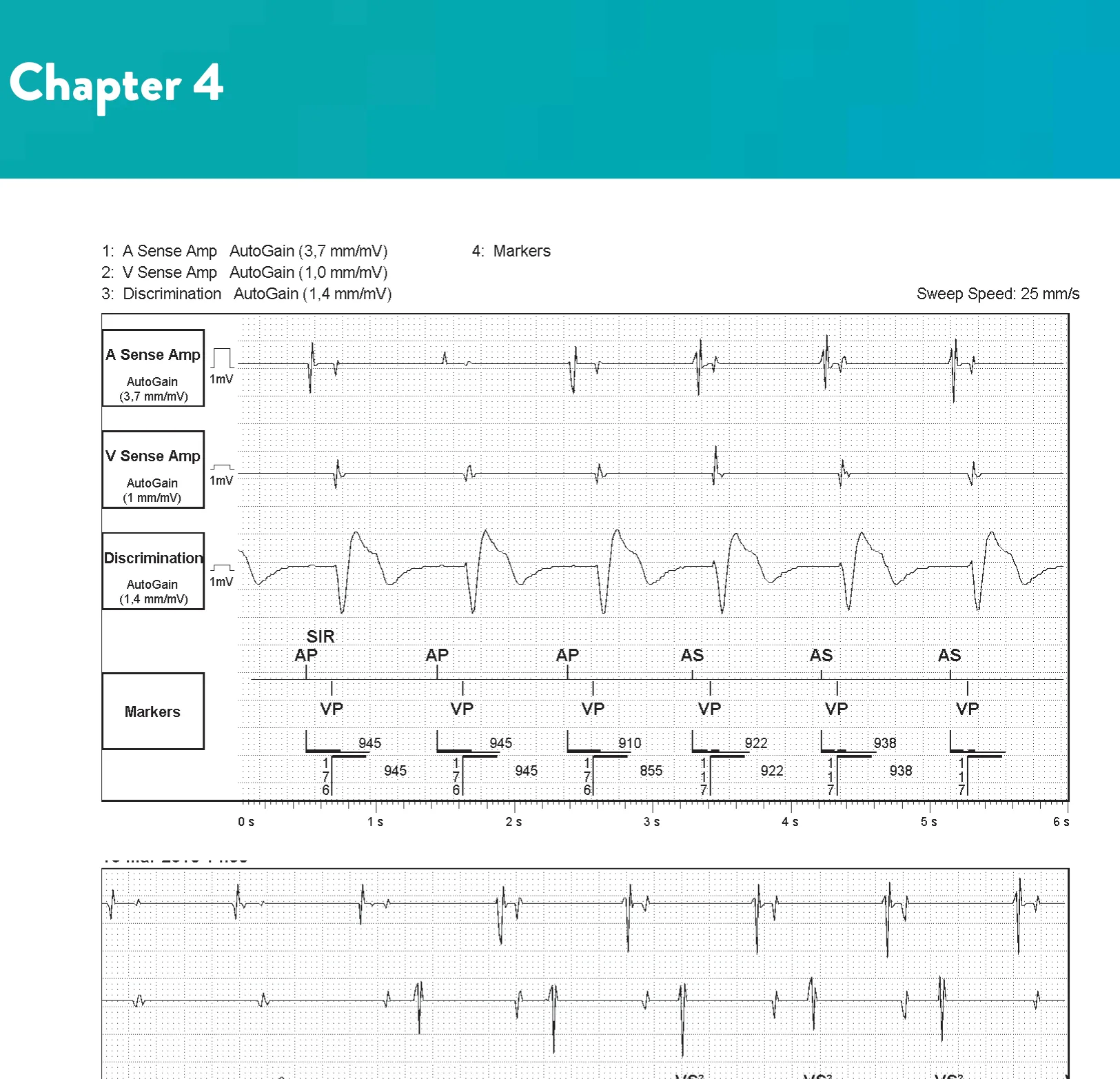
- Activating the SecureSense™ algorithm enables diagnoses that are sometimes unexpected, such as intermittent right ventricular capture loss in this case. In this patient, the programmed pacing amplitude was too low, at the threshold limit with no safety margin. Each time capture was lost, a SecureSense™ alert was recorded.
- In fact, the delay between the ineffective ventricular stimulus and detection of spontaneous activation exceeded the value of the post-stimulation ventricular refractory period and resulted in detection of a short cycle on the bipolar channel; in contrast, only the spontaneous ventricle was detected on the discrimination channel, which explained the absence of a short cycle (no ventricular depolarization after the ventricular stimulus).
- adjusting the stimulation amplitude programming solved the problem
Practice out loud
Just describe the tracing. What do you think is going on? Describing the numbers can help.
00:00
0%
—
From Implantable Cardioverter Defibrillator — clinical cases based on tracings by P. Bordachar, M. Strik, A. Thiyagarajah, S. Ploux. Published by Cardiocases. Every numbered marker on a recording is explained in the list beneath it; tap a marker on the trace or an entry in the list.