
Chapter 2 · Therapies · Case 8
Acceleration of VT by anti-tachycardia pacing and high defibrillation threshold
Patient and episode
Patient
- Female patient implanted with a Unify CRT defibrillator for primary DCM discovered in 1996; hospitalization for multiple electric shocks. Device replaced in 2022 while awaiting transplant.
Summary
- Episode classified as VT2
The recording
Tap a number on the trace, or an entry in the list below
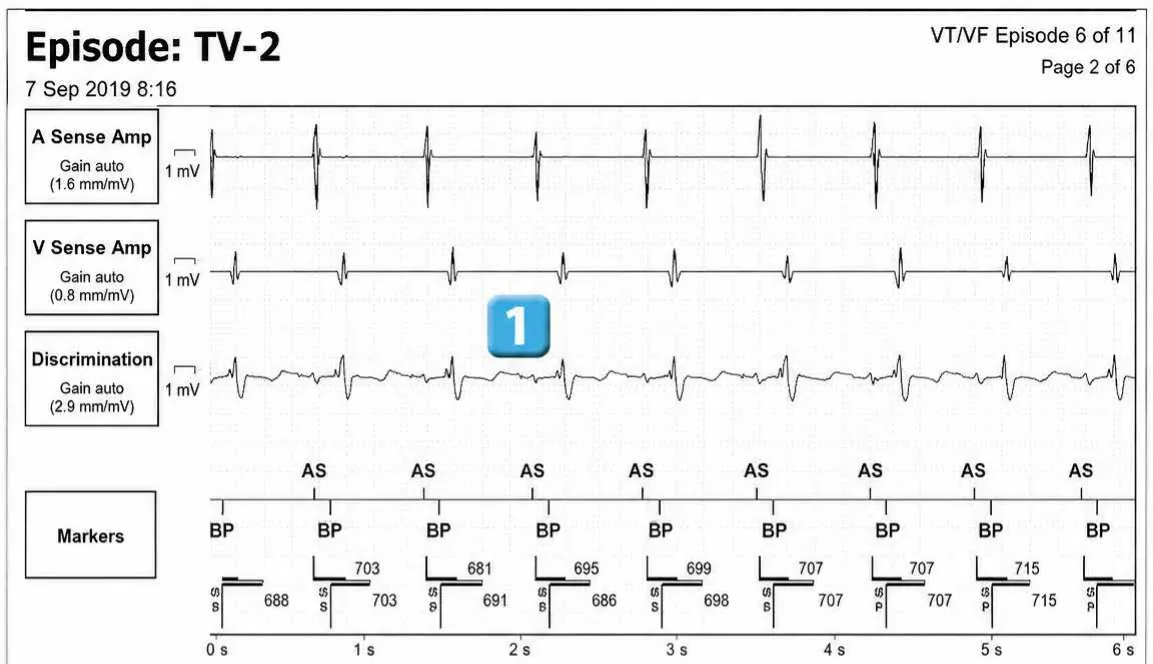
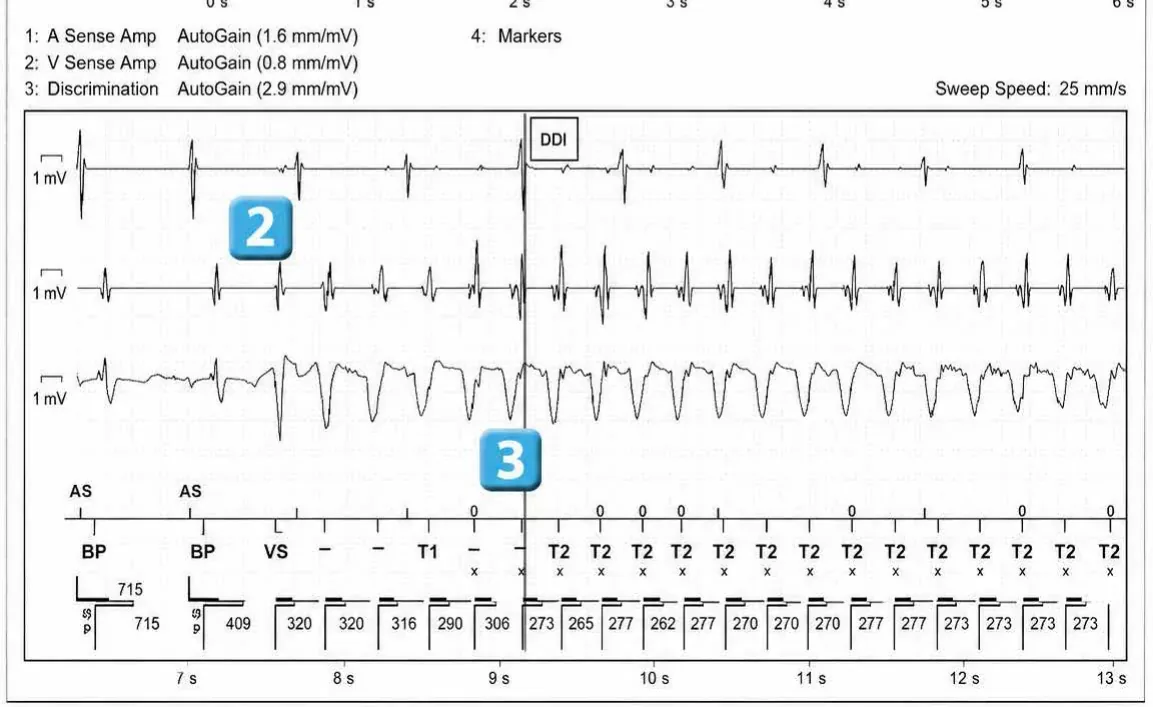
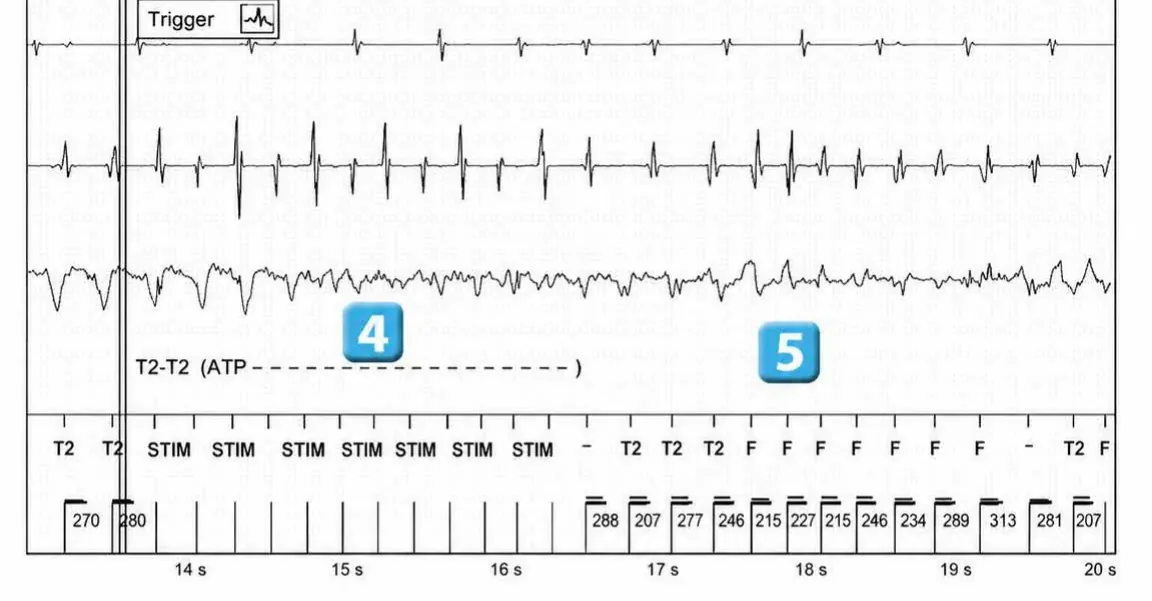
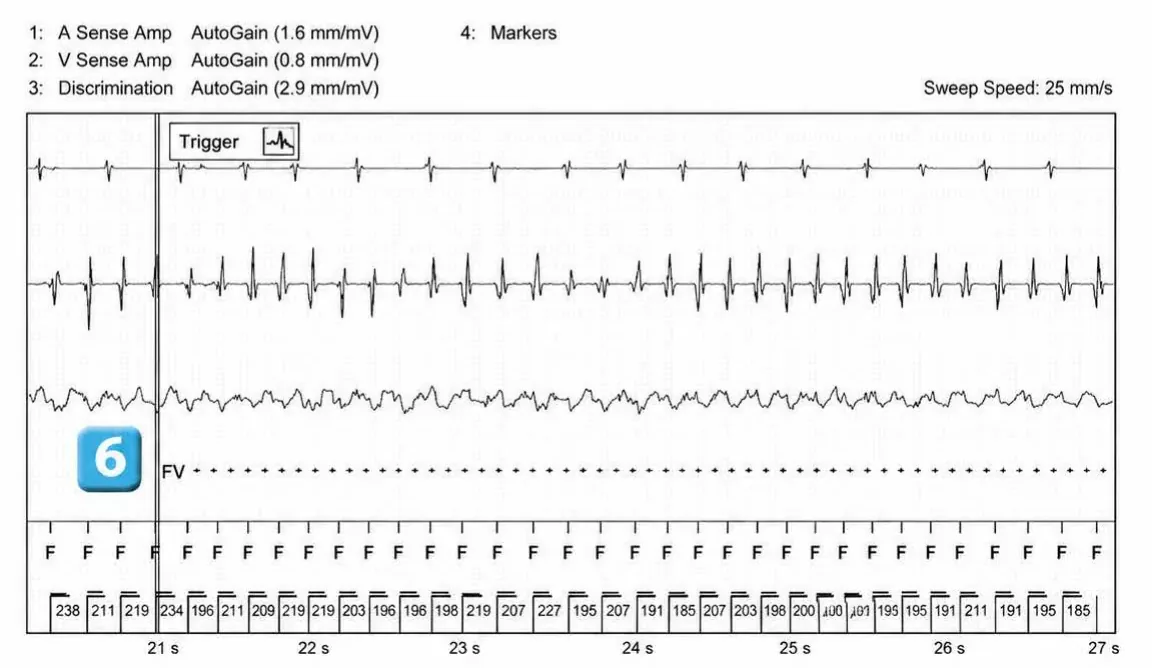
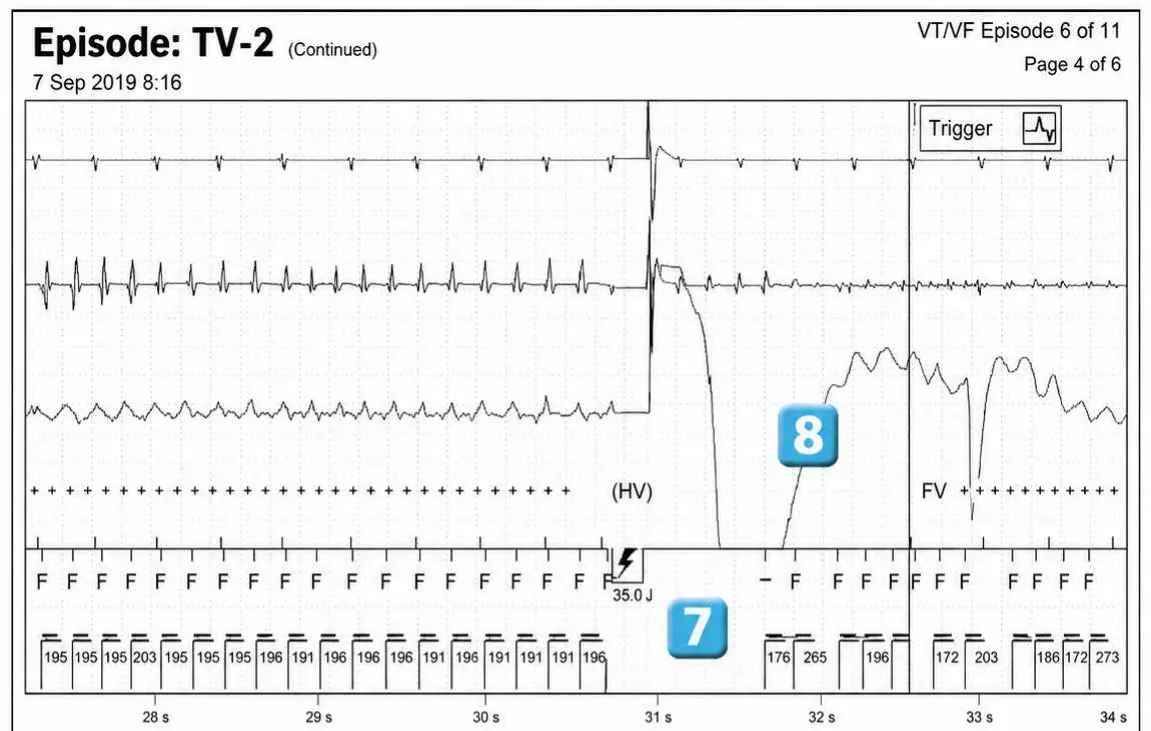
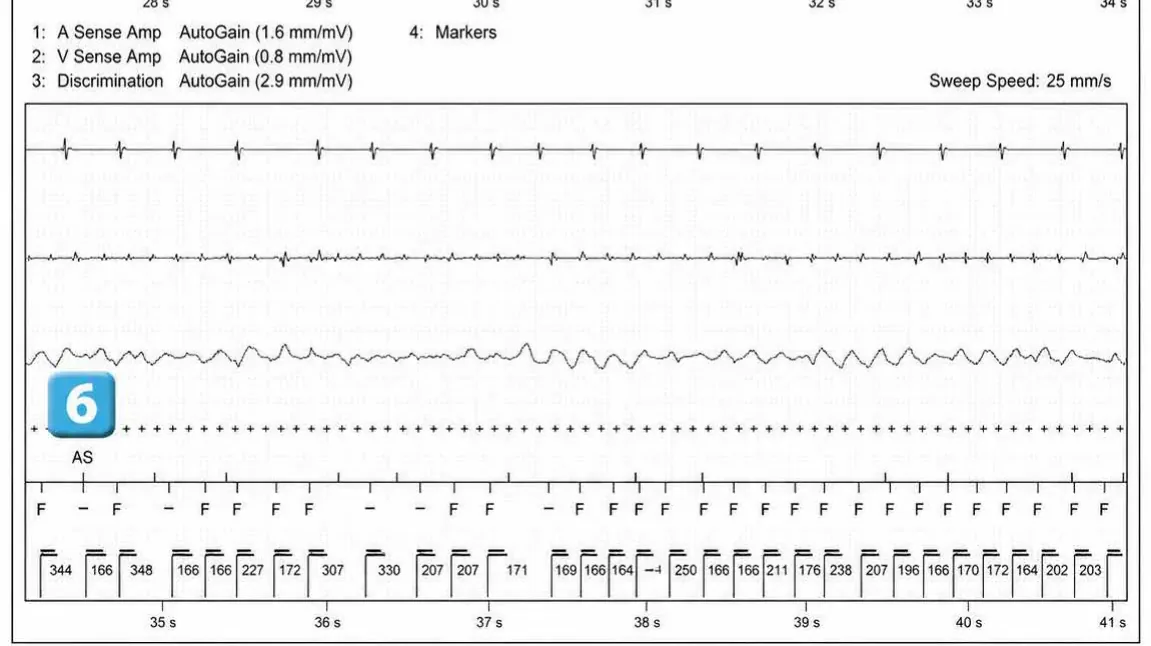
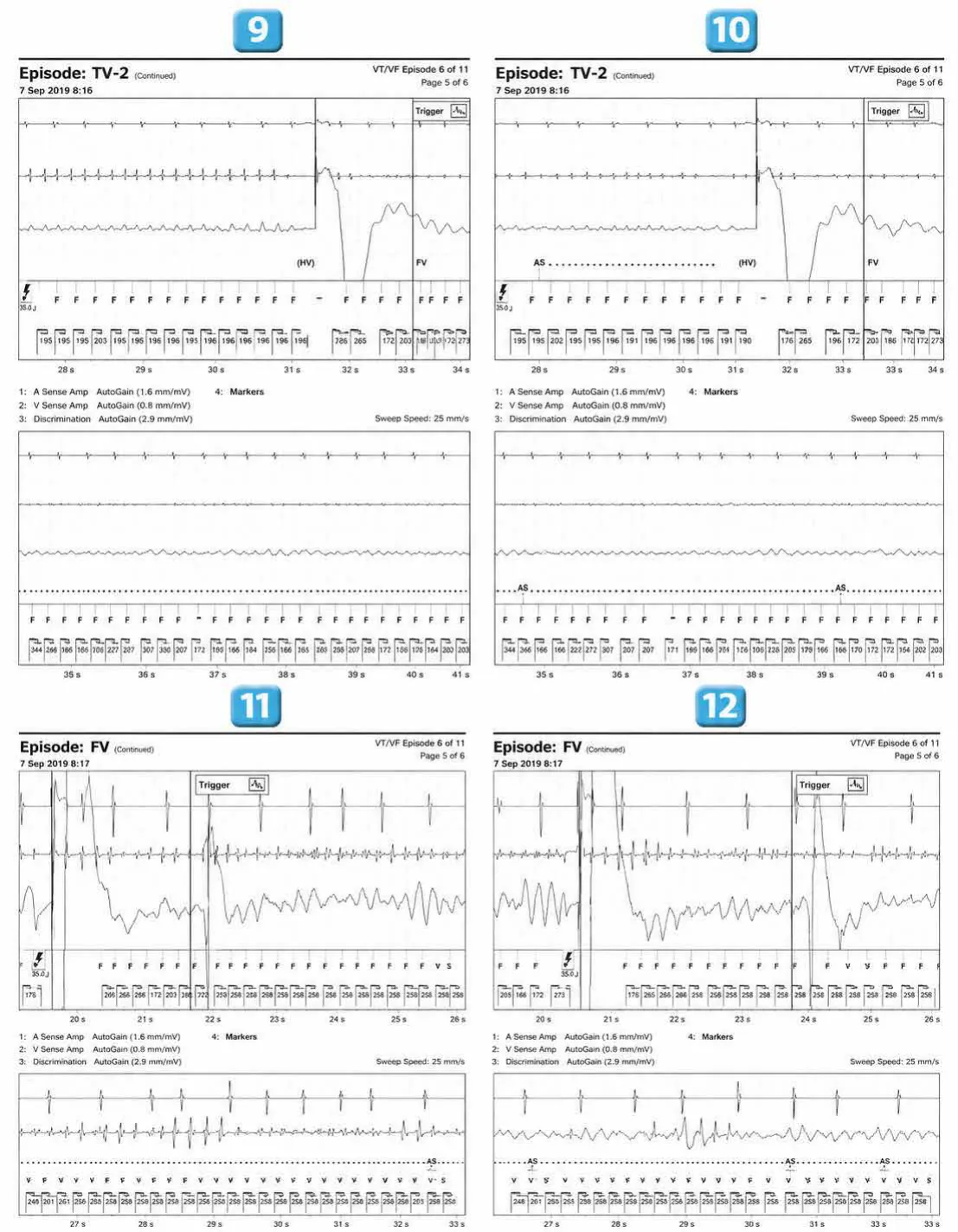
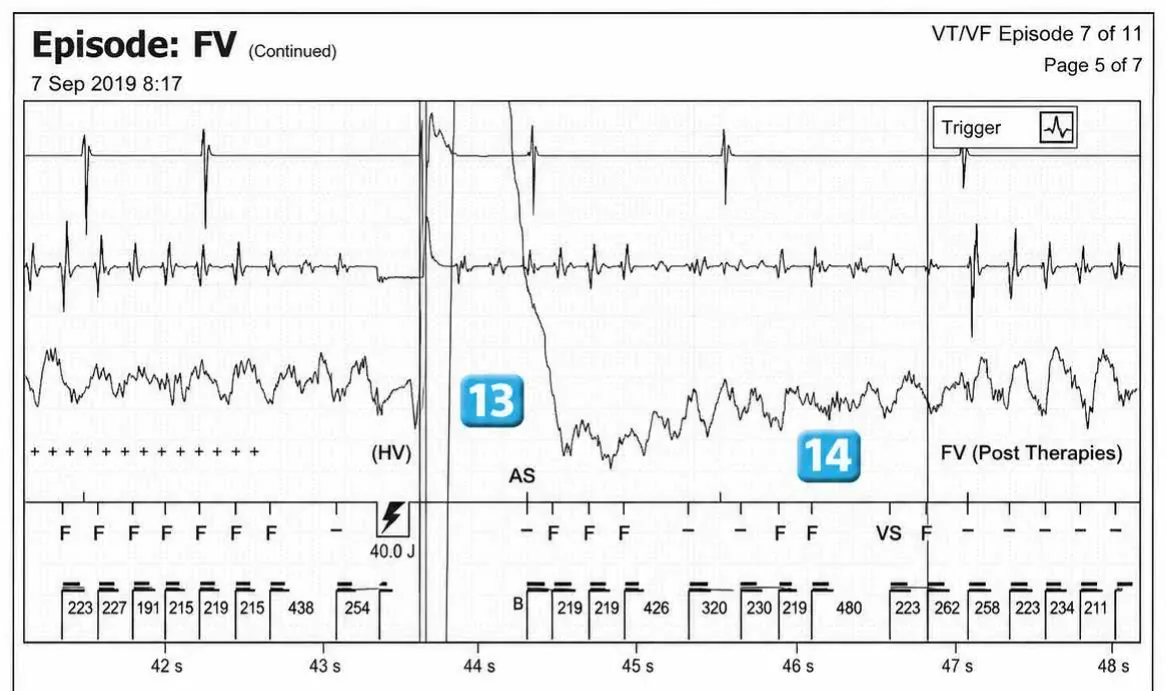
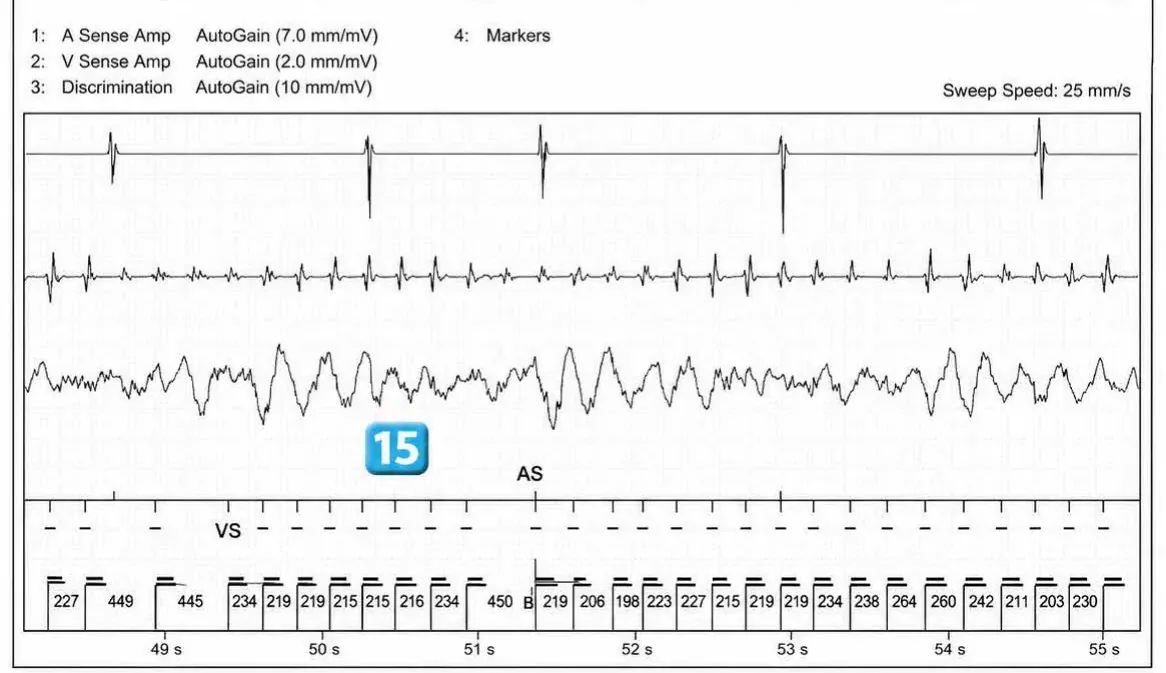
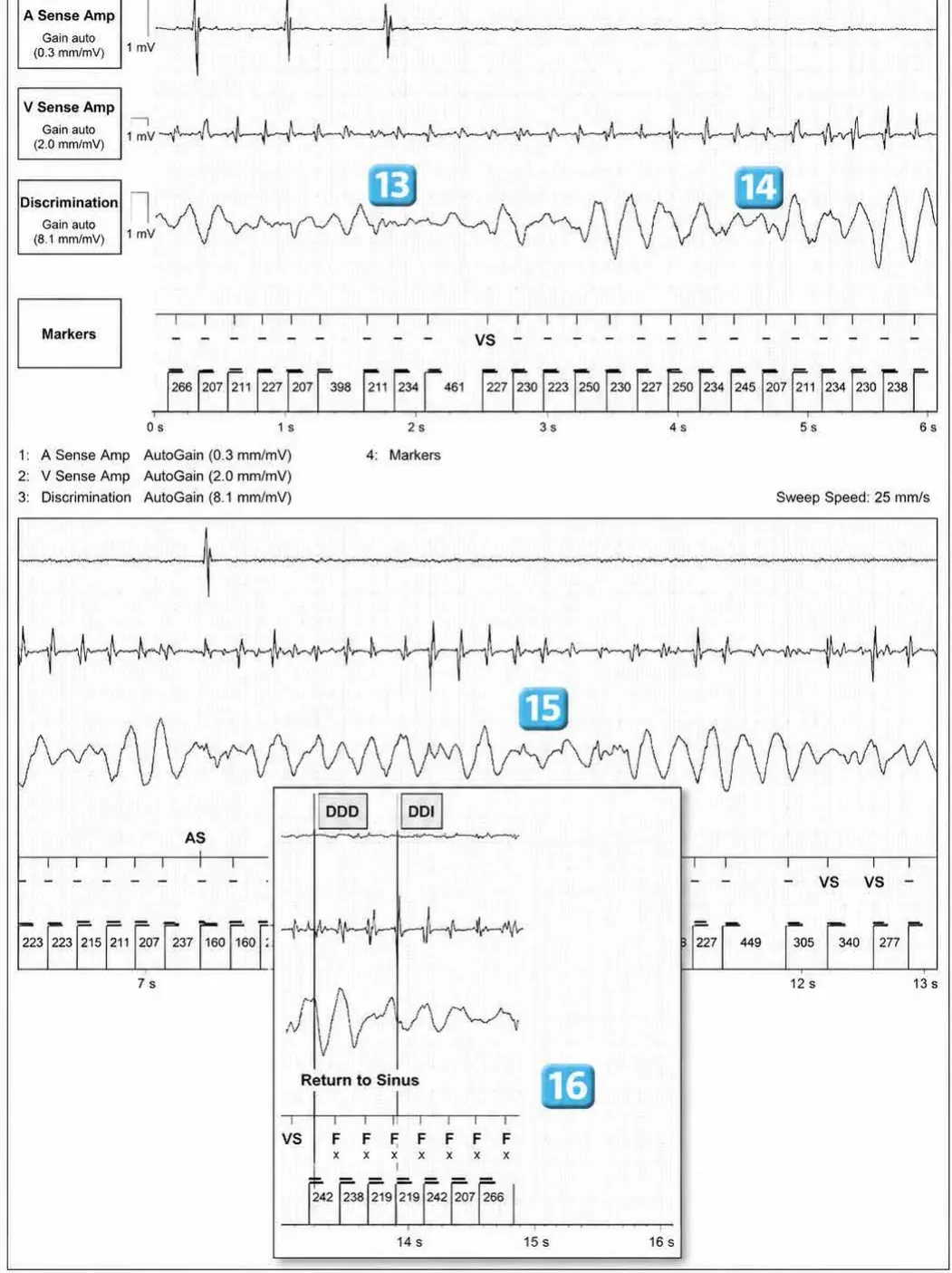
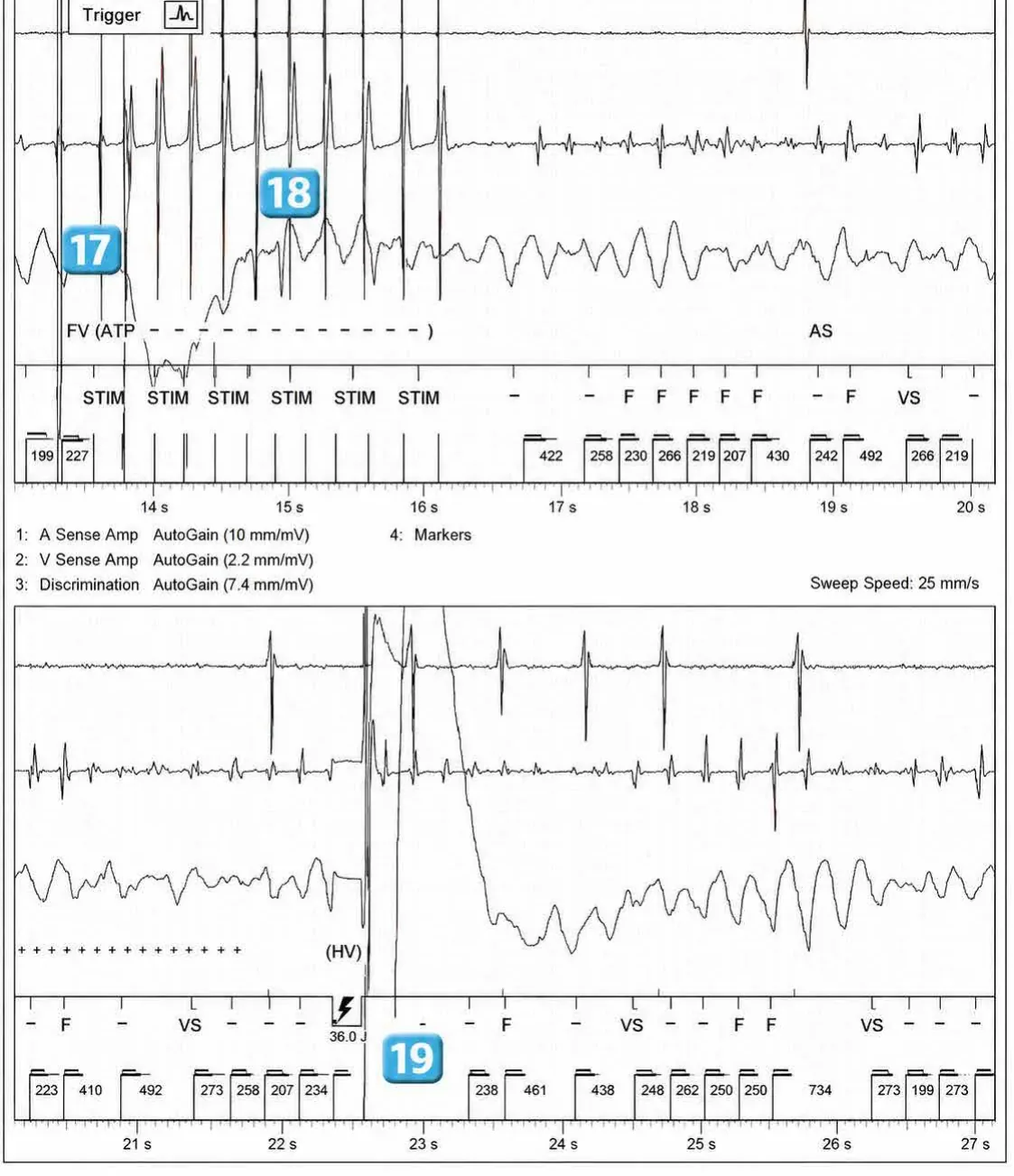
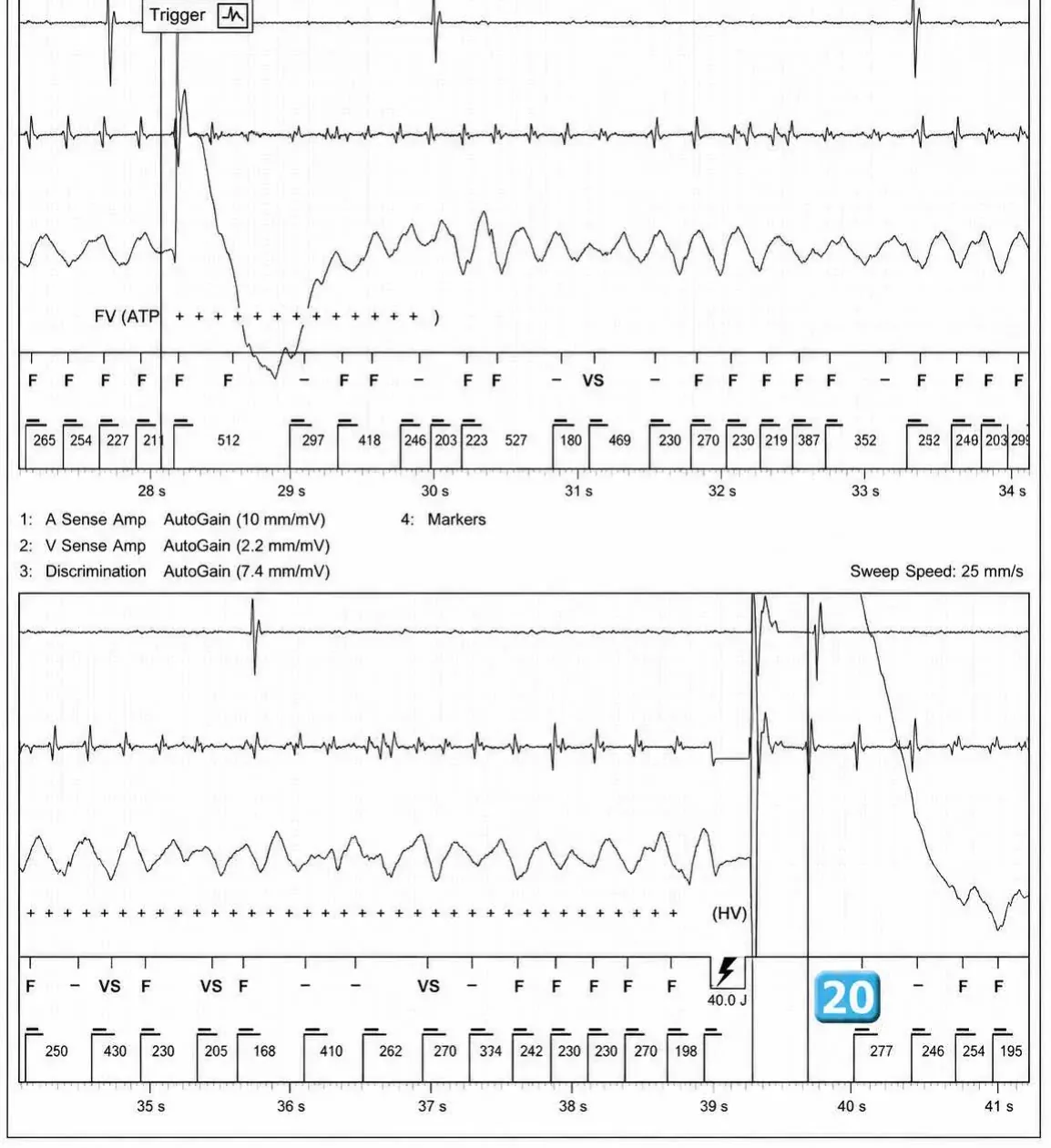
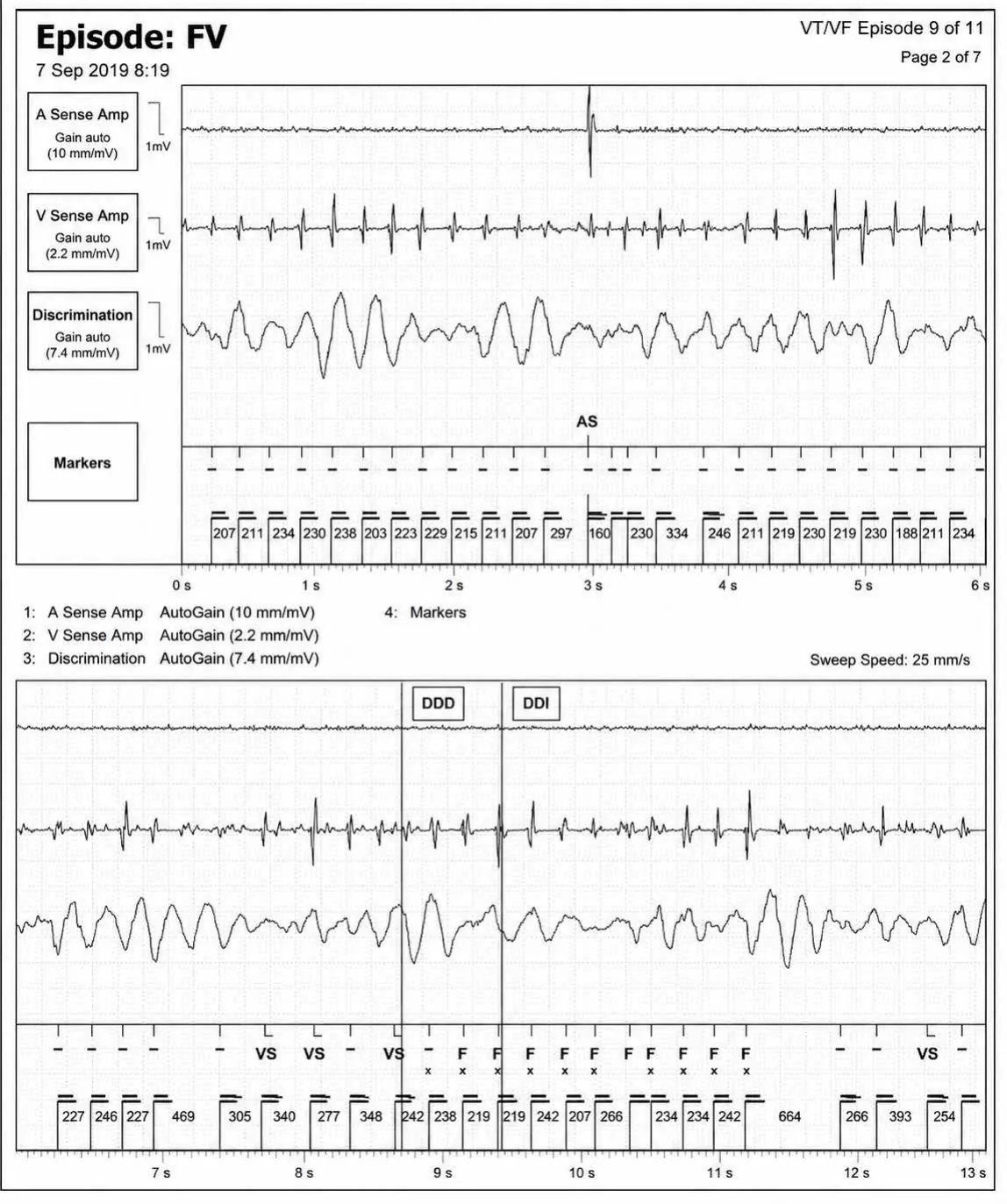
- sinus rhythm and biventricular pacing
- onset of monomorphic ventricular arrhythmia detected in the VT2 zone
- after 16 cycles classified as T2, detection of a VT2 burst episode
- burst, initial therapy of the VT2 zone
- acceleration of arrhythmia with VF (rapid, polymorphic) detected alternating between the VT2 zone and the VF zone; competition between the VT2 redetection counter (6 intervals) and the initial VF detection counter (12 intervals)
- VF counter filled and capacitors begin charging
- first electric shock of 36 joules
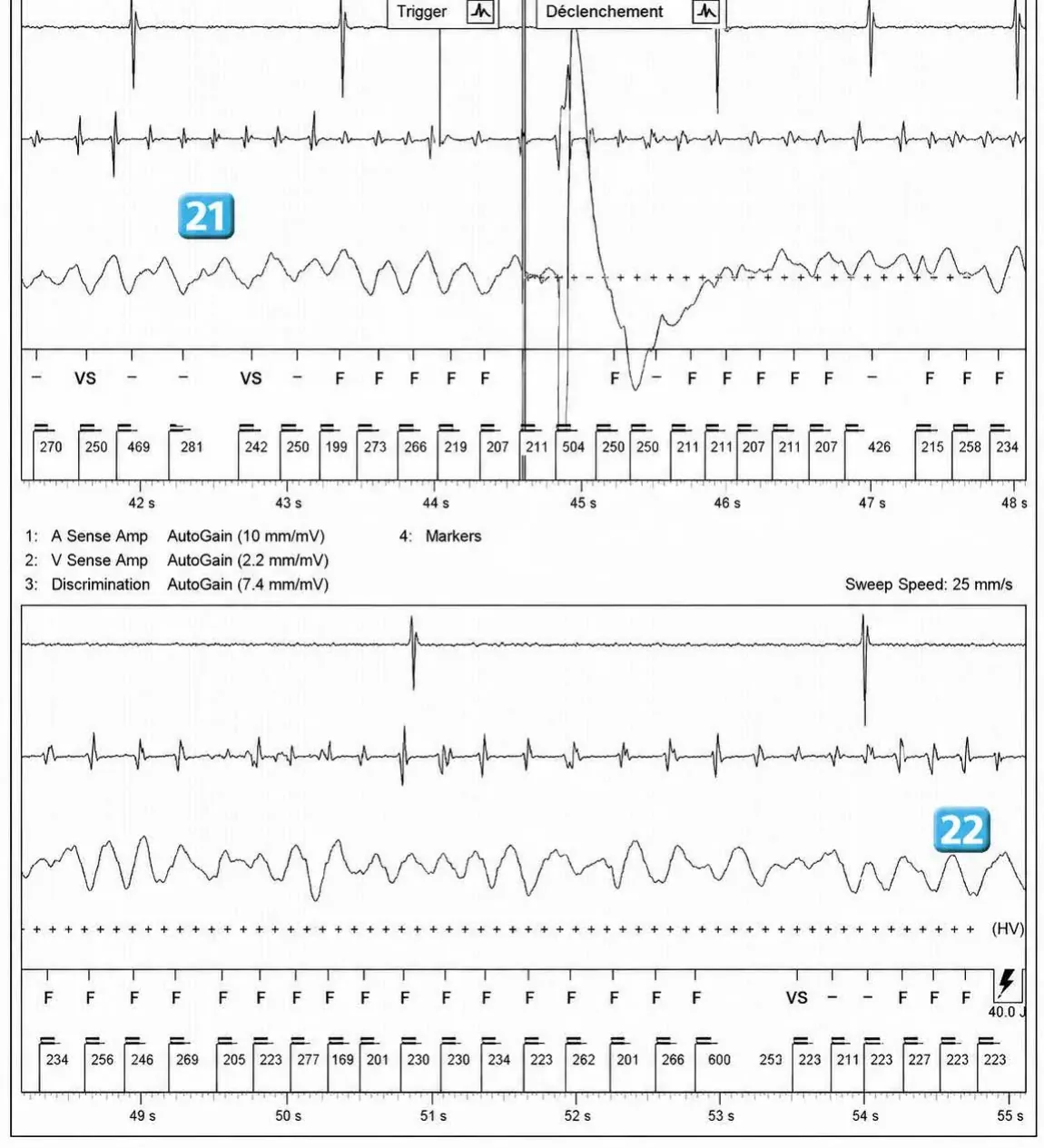
- ineffective shock and redetection in the VF zone (6 intervals)
- second electric shock (40 joules)
- Third electric shock (40 joules)
- fourth electric shock (40 joules)
- fifth electric shock (40 joules)
- sixth electric shock
- redetection in the VF zone but no further therapy available for this episode
- ventricular sensing continues but all rapid cycles are labeled - ; however, the classification of VS cycles continues
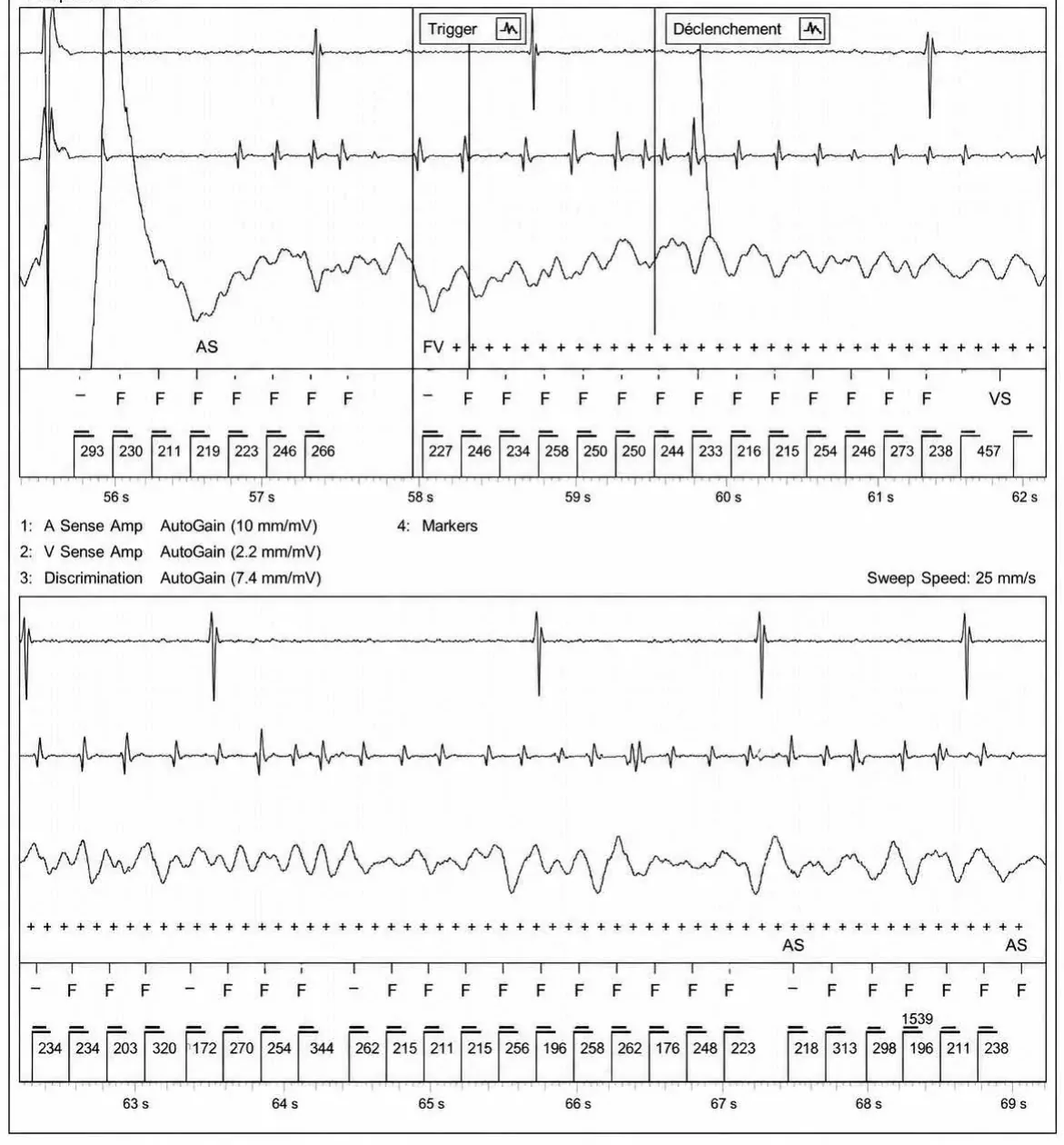
- after 3 cycles classified as VS, the criterion for sinus return (end of episode) is met
- after 12 cycles classified as F, initial diagnosis of VF (new episode); therapies resume at 0
- burst during charging
- first shock of this episode (seventh overall)
- second shock of this episode (eighth overall)
- Note that due to imperfect detection, cycles classified as VS; sinus return counter at 2, therefore not completed
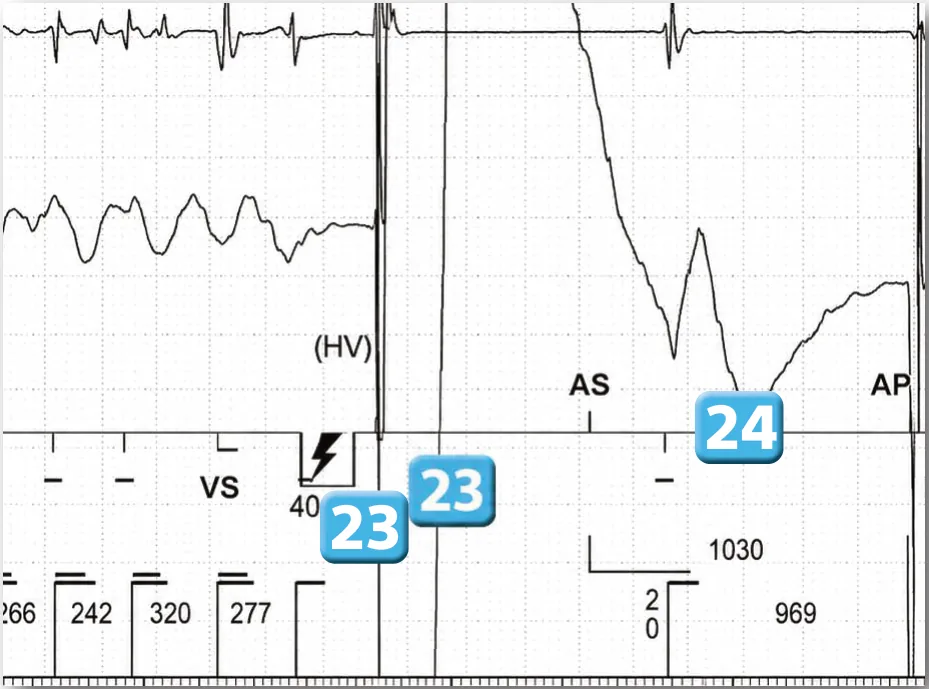
- third shock of this episode (ninth overall)
- fourth shock in this episode (tenth overall)
- effective shock and termination of arrhythmia
From the interrogation

Points to remember
- This tracing illustrates a dramatic example of acceleration by a burst of monomorphic VT into refractory VF, requiring 10 electric shocks to restore a viable rhythm.
- The number of electric shocks is limited to 6 in the VF zone for Abbott devices in order to avoid situations where shocks are delivered endlessly when they are inappropriate; once the device has delivered 6 shocks, it interrupts its therapies while the episode is ongoing; «Fortunately» for this patient, detection, as is often the case when a prolonged episode of VF occurs, becomes imperfect, with a false return to sinus rhythm delivered by the device, which allows a series of several shocks and save the patient’s life. At this point in the trace, when the therapies have been exhausted, having programmed a sinus return at 3 is favorable (easier to a false diagnosis of sinus return when the VF is still ongoing); conversely, a false diagnosis of sinus return when there are still therapies to be delivered can prove catastrophic (it is therefore advantageous to set this counter to 7).
Practice out loud
Just describe the tracing. What do you think is going on? Describing the numbers can help.
00:00
0%
—
From Implantable Cardioverter Defibrillator — clinical cases based on tracings by P. Bordachar, M. Strik, A. Thiyagarajah, S. Ploux. Published by Cardiocases. Every numbered marker on a recording is explained in the list beneath it; tap a marker on the trace or an entry in the list.