
Chapter 1 · Counters · Case 6
Diversion window at end of a charge
Patient and episode
Patient
- Male with ischemic cardiomyopathy; implanted with a Resonate triple-chamber defibrillator; paroxysmal AF
Summary
- Episode classified in the VF zone
- 41 Joule shock with a charge time of 11 seconds
- 64 Ohm shock impedance
The recording
Tap a number on the trace, or an entry in the list below
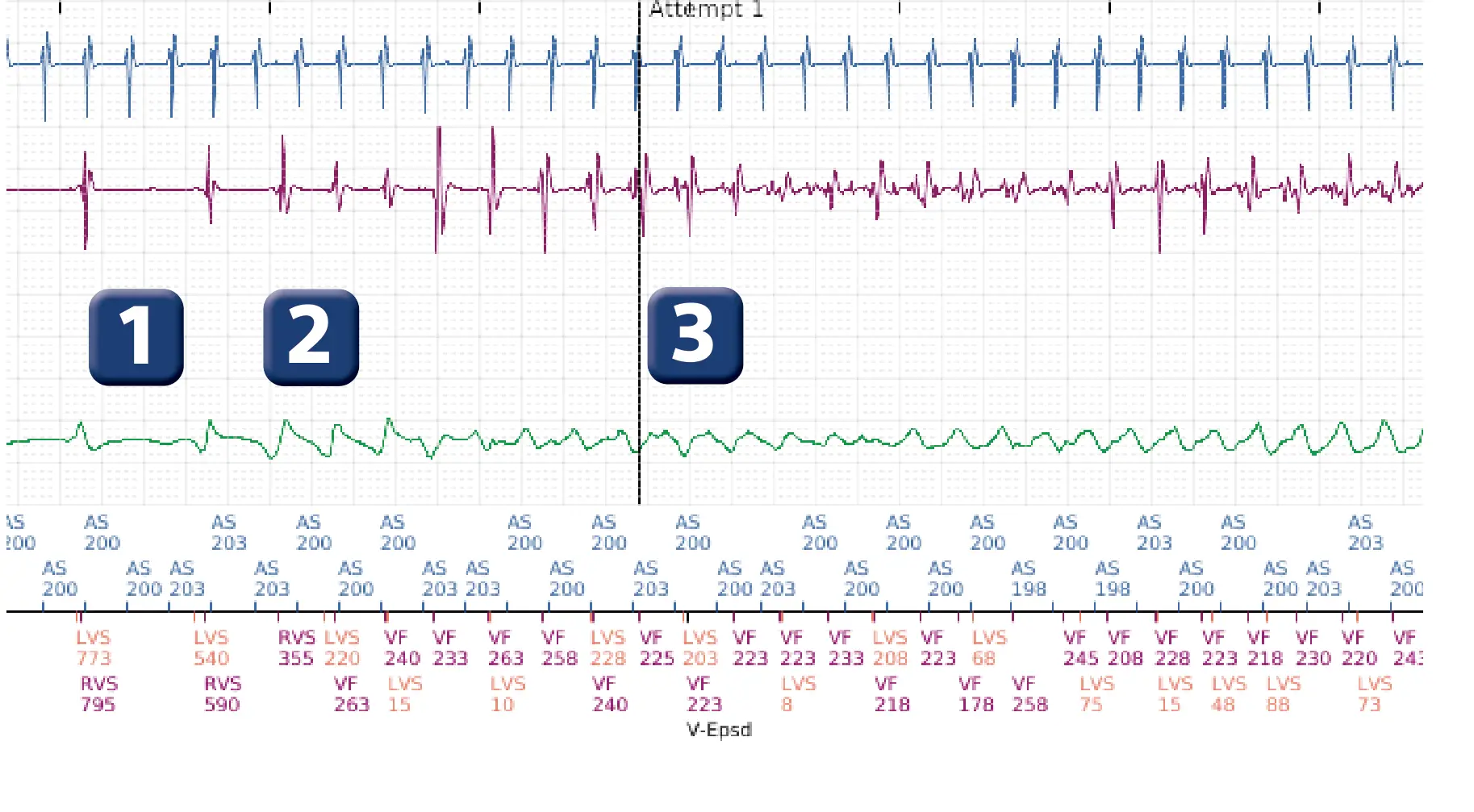
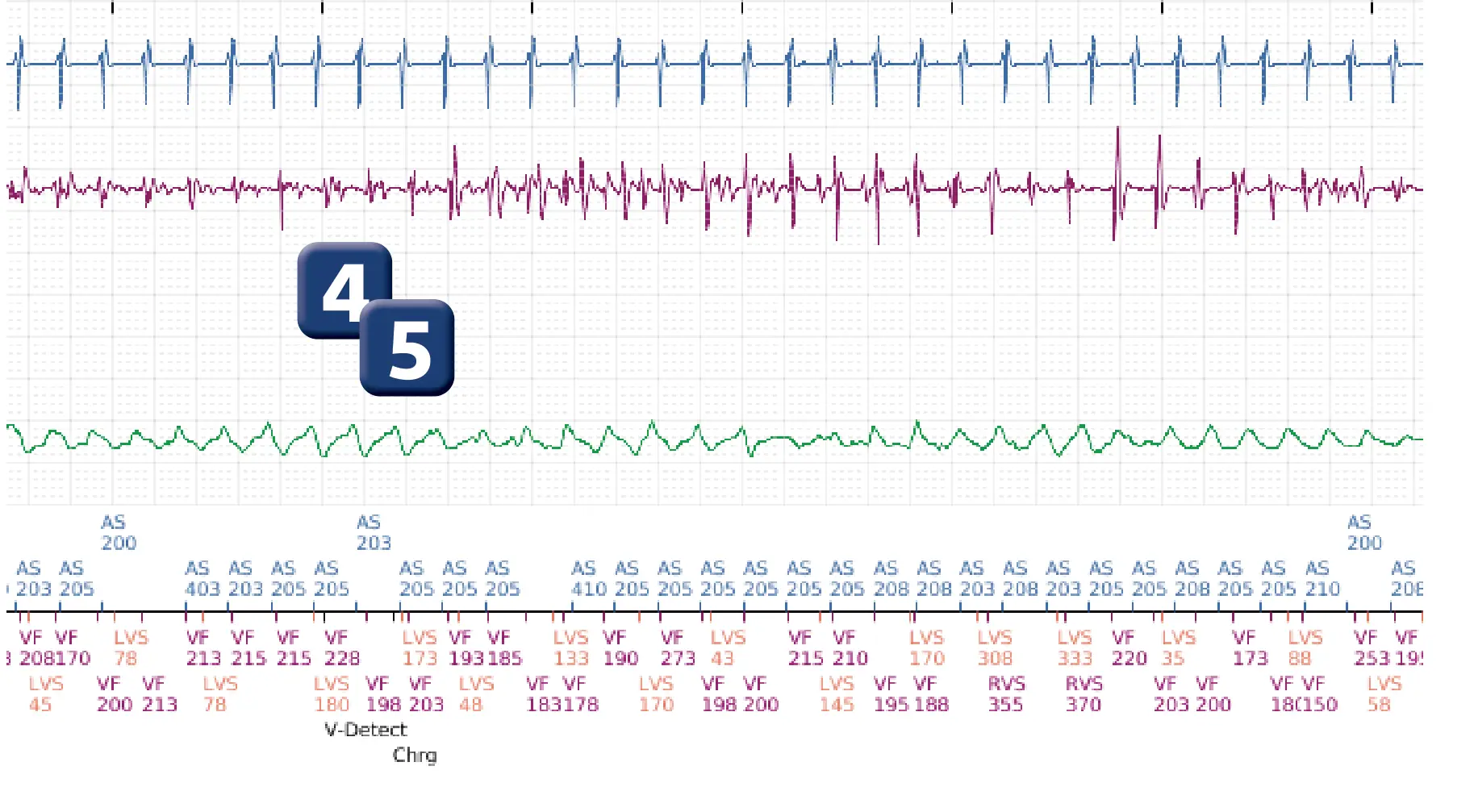
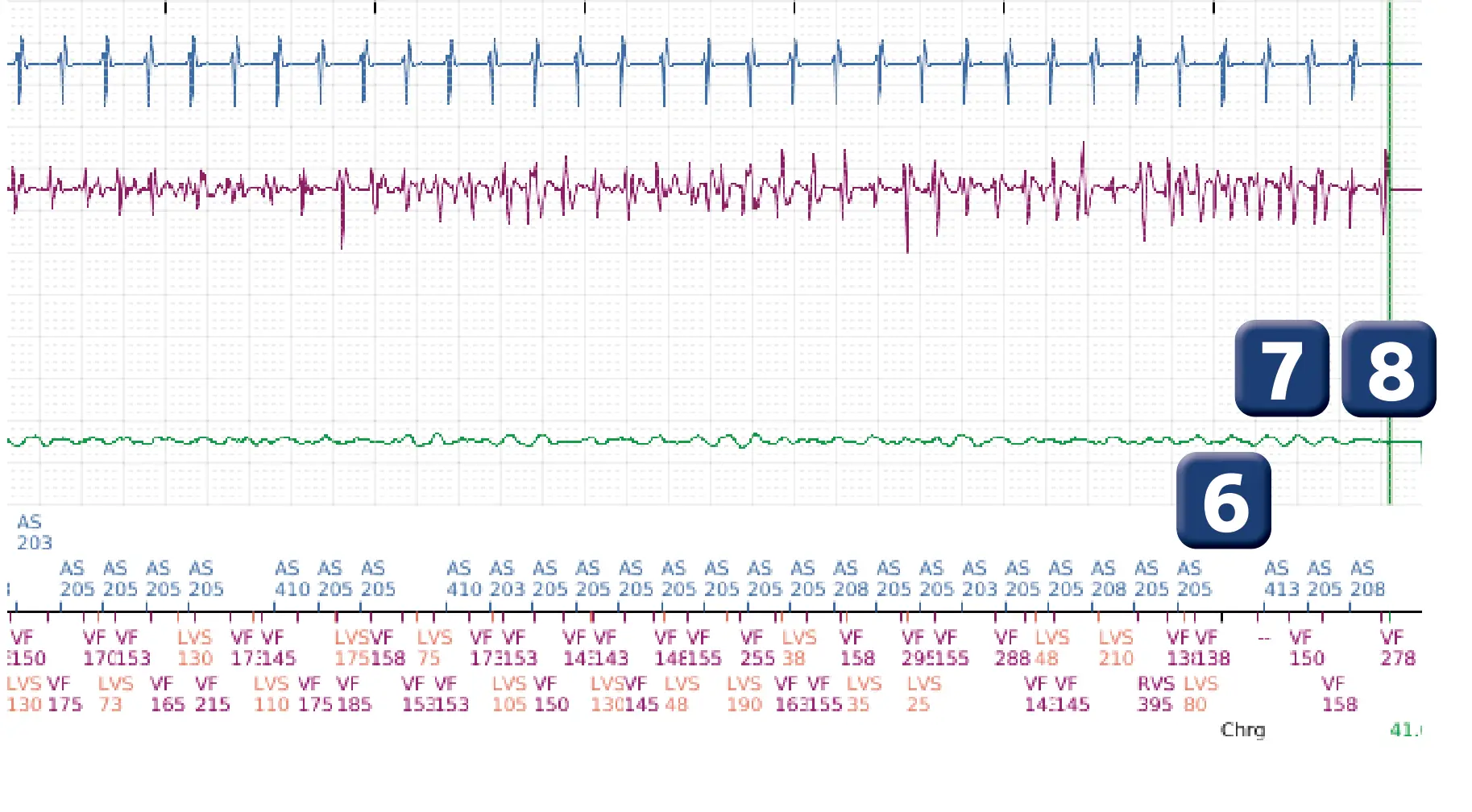
- AF and bi-ventricular pacing
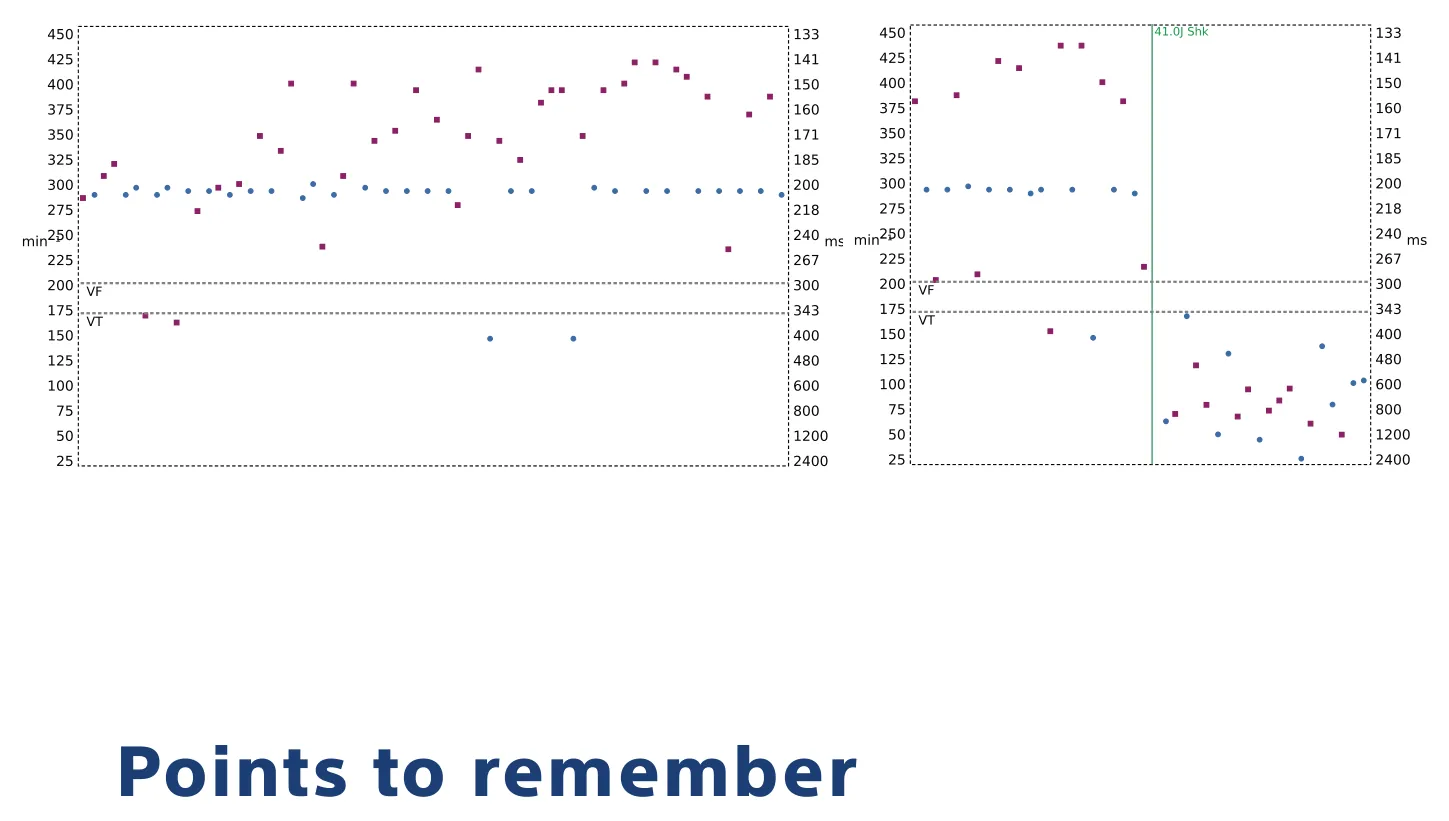
- Spontaneous, very rapid, polymorphic ventricular arrhythmia detected in the VF zone
- V-Epsd marker (criterion 8/10 fulfilled) for the VF zone; initial detection time for the VF zone begins
- End of duration (V-Detect)
- Start of capacitor charging
- End of charge; this charge lasted approximately 11 seconds, with the magnitude of the shock delivered corresponding to the maximum output of the device
- A refractory period of 135 ms begins at the end of the charge; the first cycle following this refractory period is not counted (--)
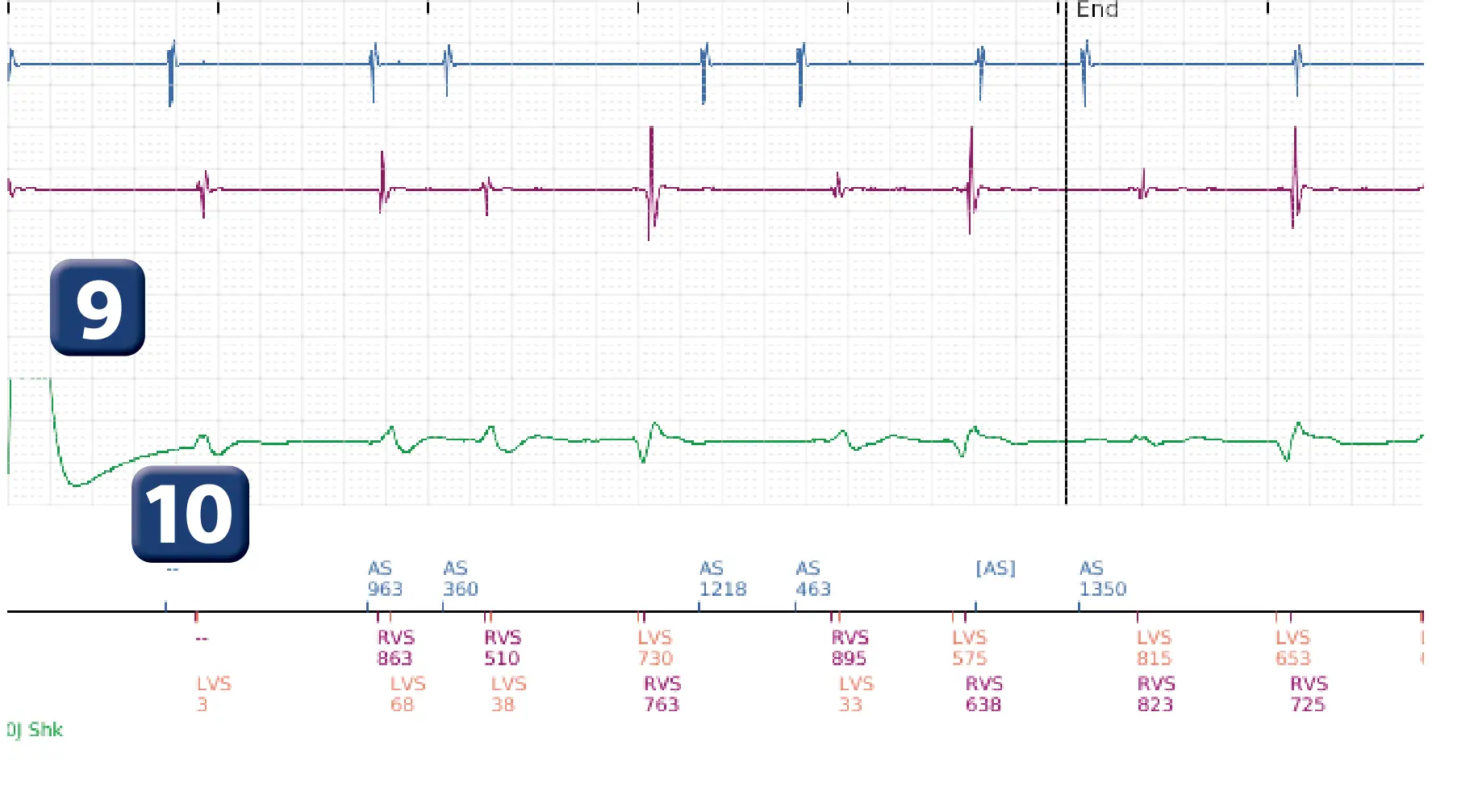
- The following 2 cycles are fast (VF) but the charge diversion window has not elapsed (500 ms after the end of the charge); the shock cannot be delivered during this window and the device waits for the next cycle (the third) to deliver a synchronized shock.
- Shock terminates ventricular and atrial arrhythmias
- The first atrial cycle and the first ventricular cycle following the post-shock refractory period (500 ms) are not counted (--)
From the interrogation
Points to remember
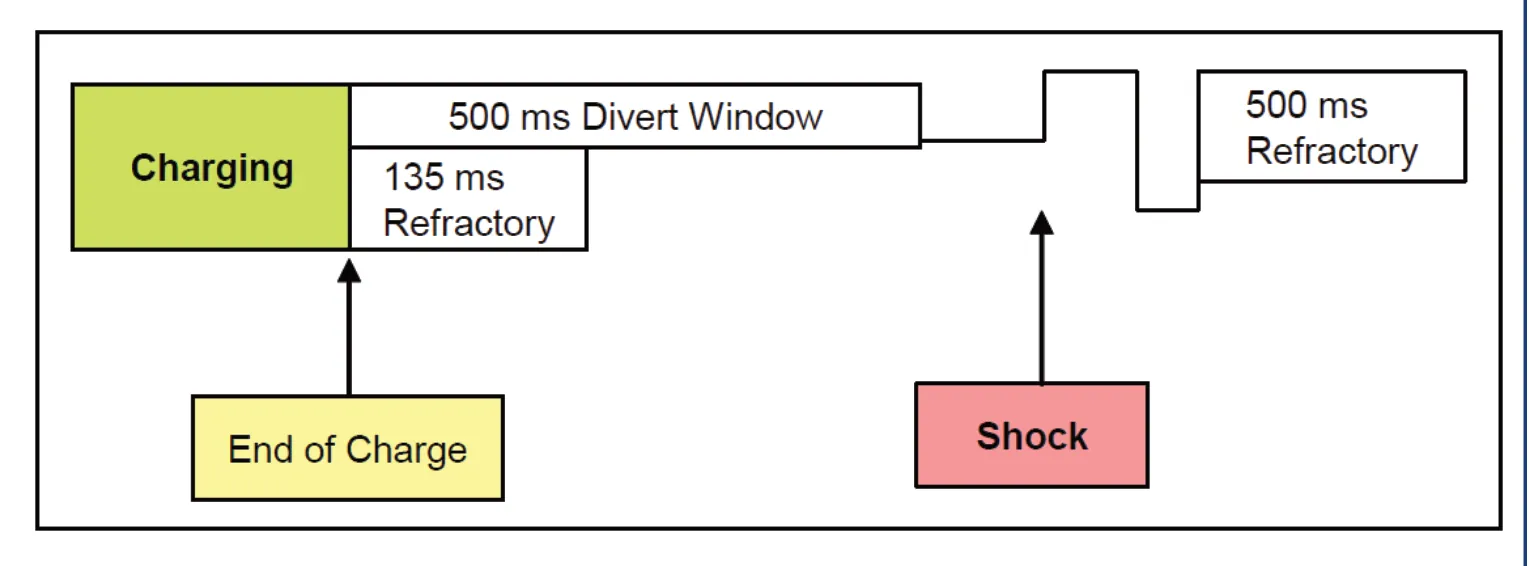
- At the end of capacitor charging, the diversion window begins, which lasts 500 ms; this 500 ms delay provides a minimum reaction time to activate the divert command on the programmer (opportunity for the doctor to cancel the shock from the programmer)
- The first 135 milliseconds of this diversion window corresponds to a refractory period when no atrial or ventricular sensing is possible; the ventricular cycle following this refractory period is not counted (--); operation then differs according to programming (Shock not reconfirmed On or Off)
- If the Shock not reconfirmed function is set to On, the shock is systematically delivered synchronized to the first sensed R-wave following the 500 ms delay at the end of capacitor charging (whether the arrhythmia is sustained or not); if no R-wave is sensed within 2 seconds of the end of charging, the ventricular shock is administered asynchronously at the end of the 2-second delay
- If the Shock not reconfirmed function is set to Off, following the uncounted cycle, the device measures the next 3 intervals and compares them with the minimum rate threshold ; if 2 of the 3 intervals have a rate higher than the lowest rate threshold (lowest programmed tachycardia zone: VF zone if only 1 zone programmed, VT zone if 2 zones and VT-1 zone if 3 zones), the shock is delivered synchronized to the second rapid event; if 2 of the 3 intervals have a rate below the lowest rate threshold, the shock is not delivered; if there is no sensed beat, pacing begins at the programmed lower rate after a period of 2 seconds and the charge is diverted.
- In this example, it can be seen that the shock is synchronized to the third fast cycle; in fact, even if the 2 cycles that follow are fast (VF), the charge diversion window has not elapsed when the second fast cycle occurs (less than 500 ms after the end of charging); the shock cannot be delivered during this diversion window; the device therefore waits for the next cycle (the third) to deliver a synchronized shock.
- Following a shock, there is a non-programmable refractory period of 500 ms
Practice out loud
Just describe the tracing. What do you think is going on? Describing the numbers can help.
00:00
0%
—
From Boston Scientific ICD — clinical cases by P. Bordachar, M. Strik, A. Thiyagarajah, S. Ploux. Published by Cardiocases. Every numbered marker on a recording is explained in the list beneath it; tap a marker on the trace or an entry in the list.
Order hardcopyon Amazon