
Chapter 2 · Therapies · Case 13
Low-amplitude shock and acceleration of arrhythmia
Patient and episode
Patient
- 80-year-old male implanted with an Incepta CRT defibrillator
Summary
- Episode classified in the VT zone
- 4 bursts + 3 ramps + 1 shock of 11 Joules + 1 shock of 41 Joules
The recording
Tap a number on the trace, or an entry in the list below
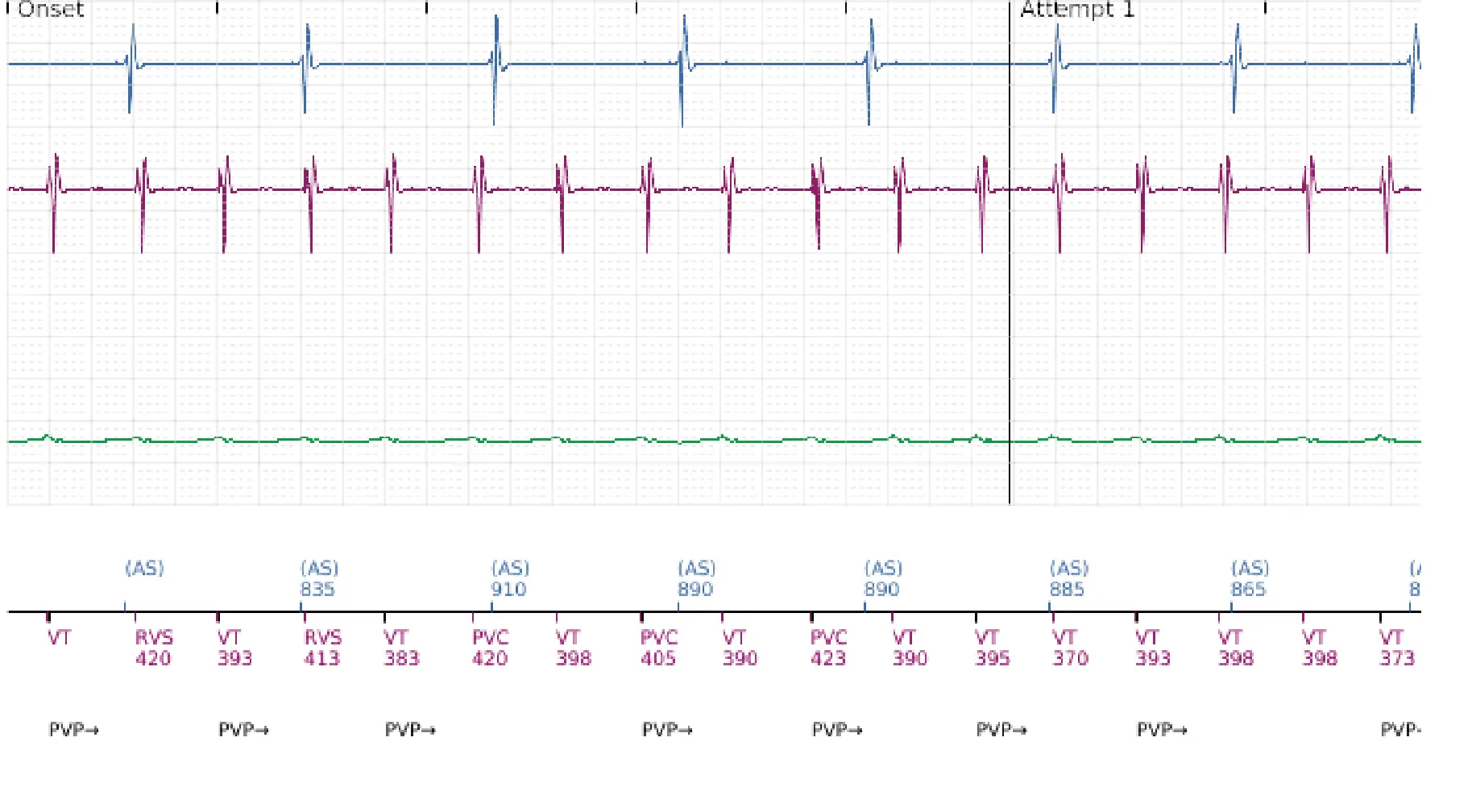
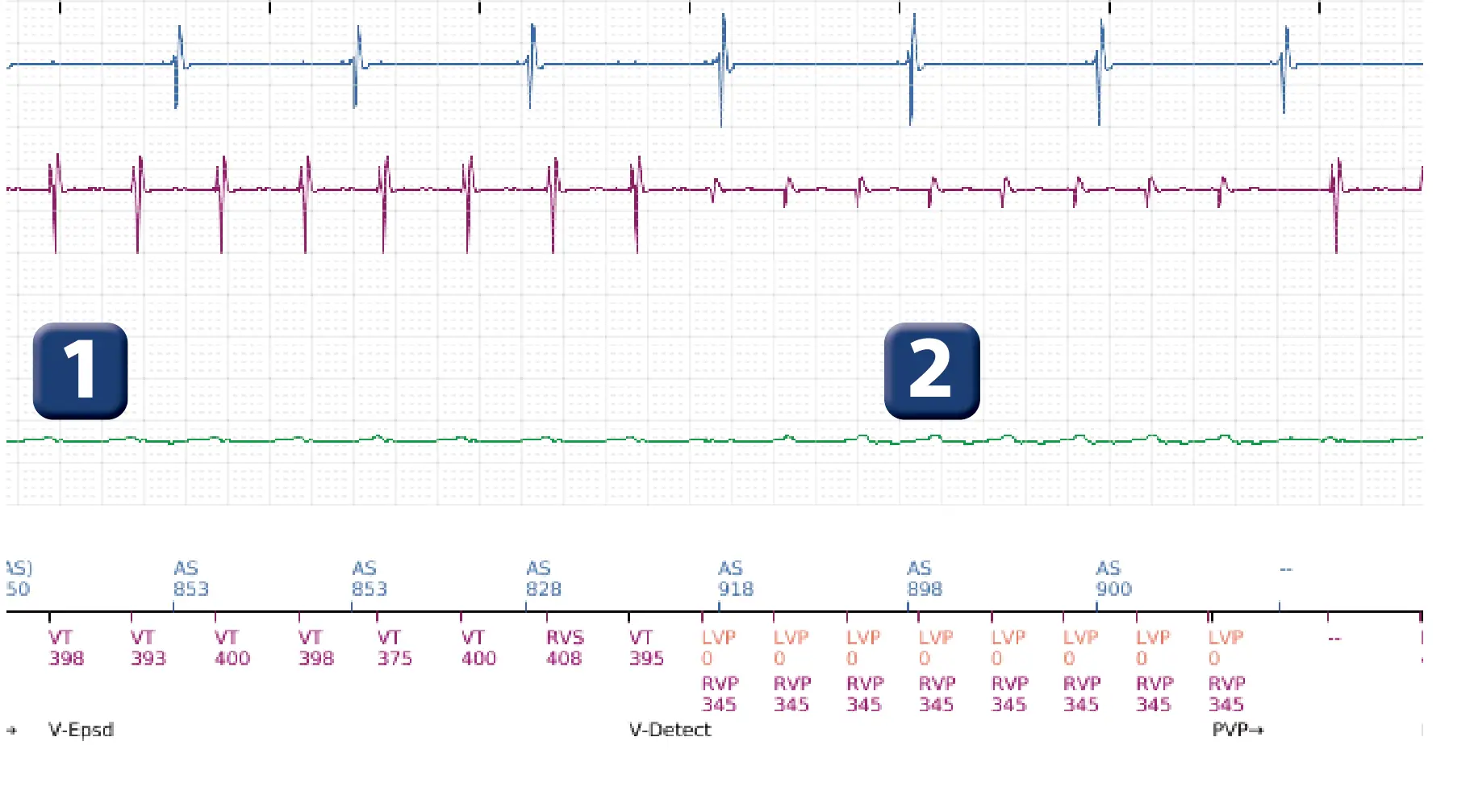
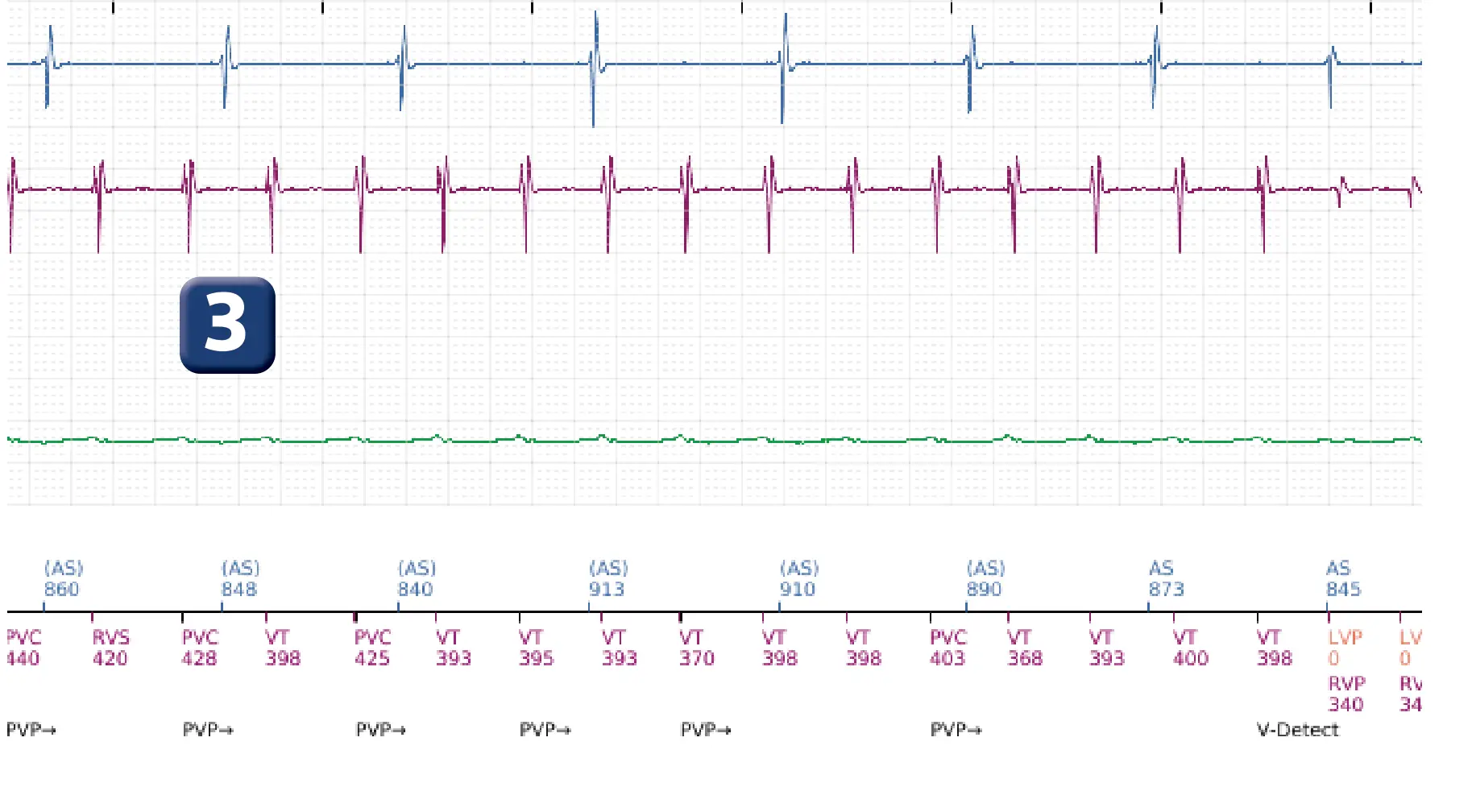
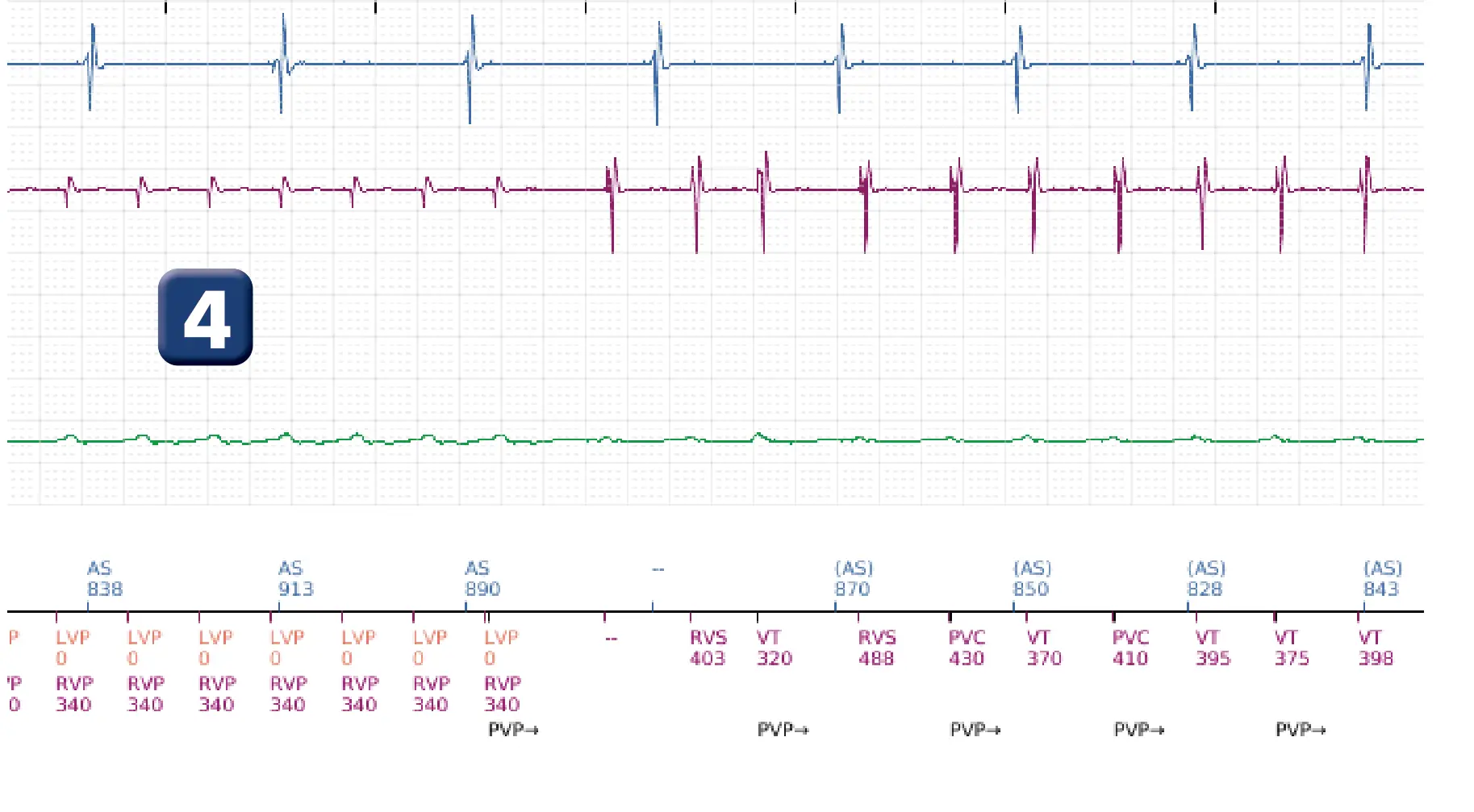
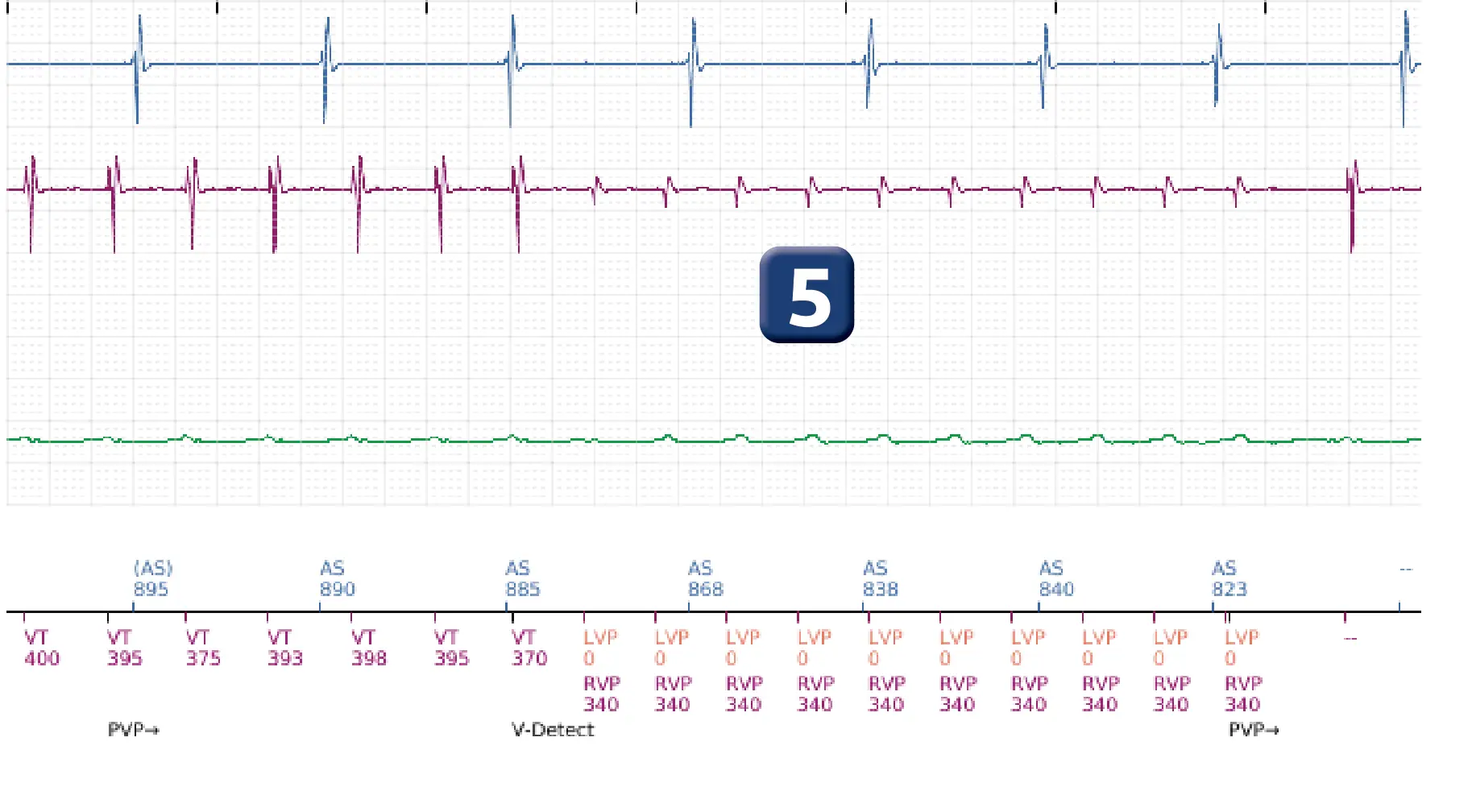
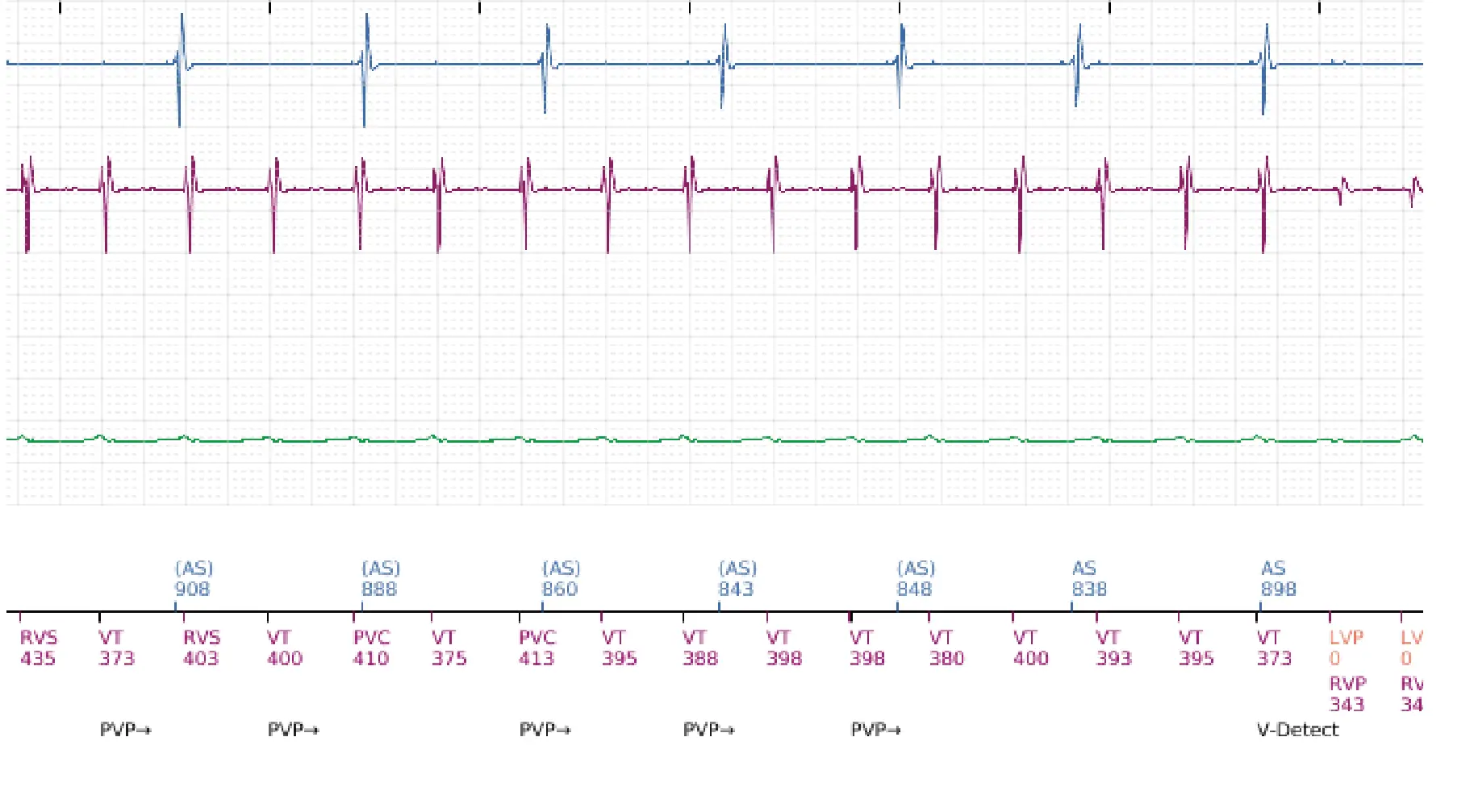
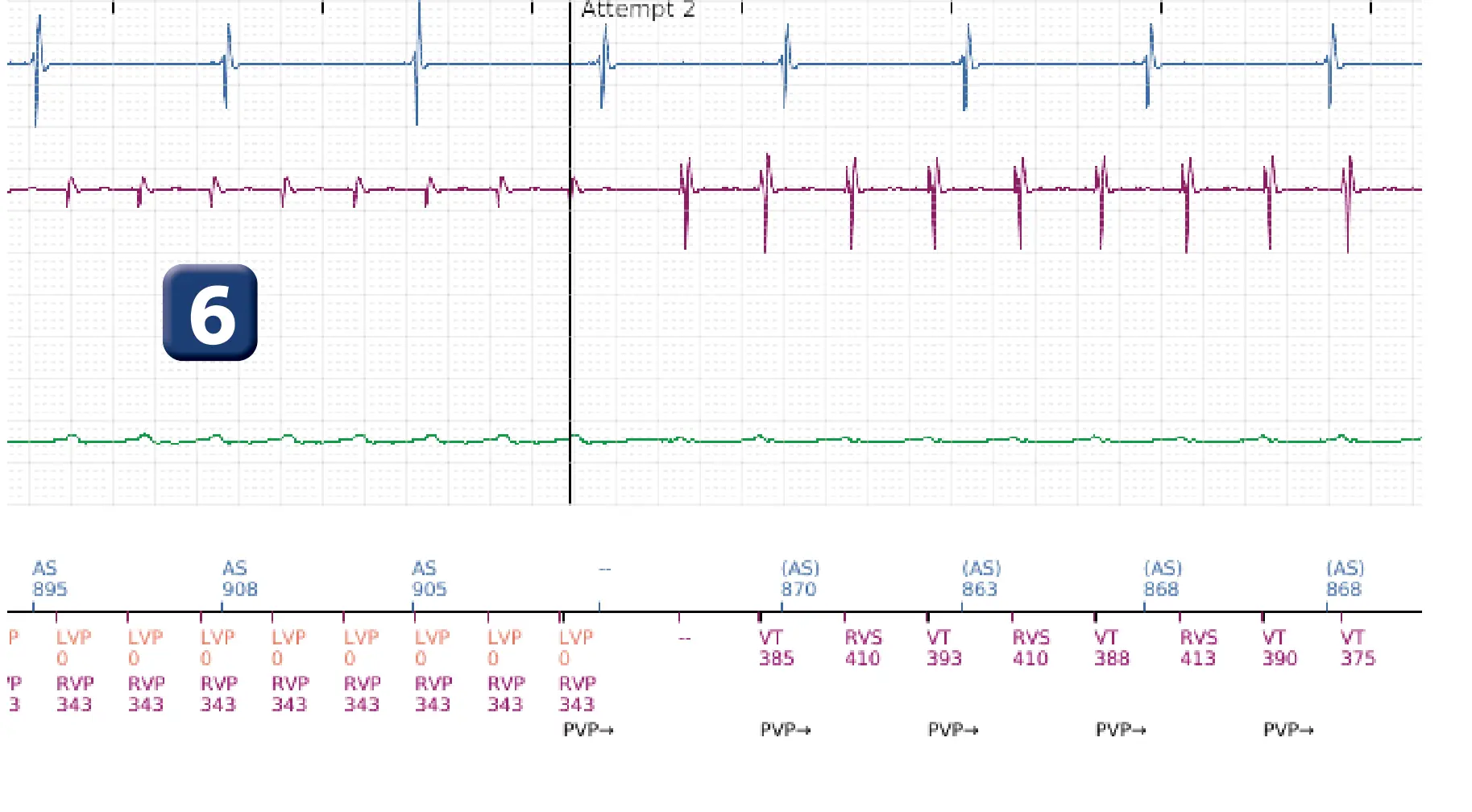
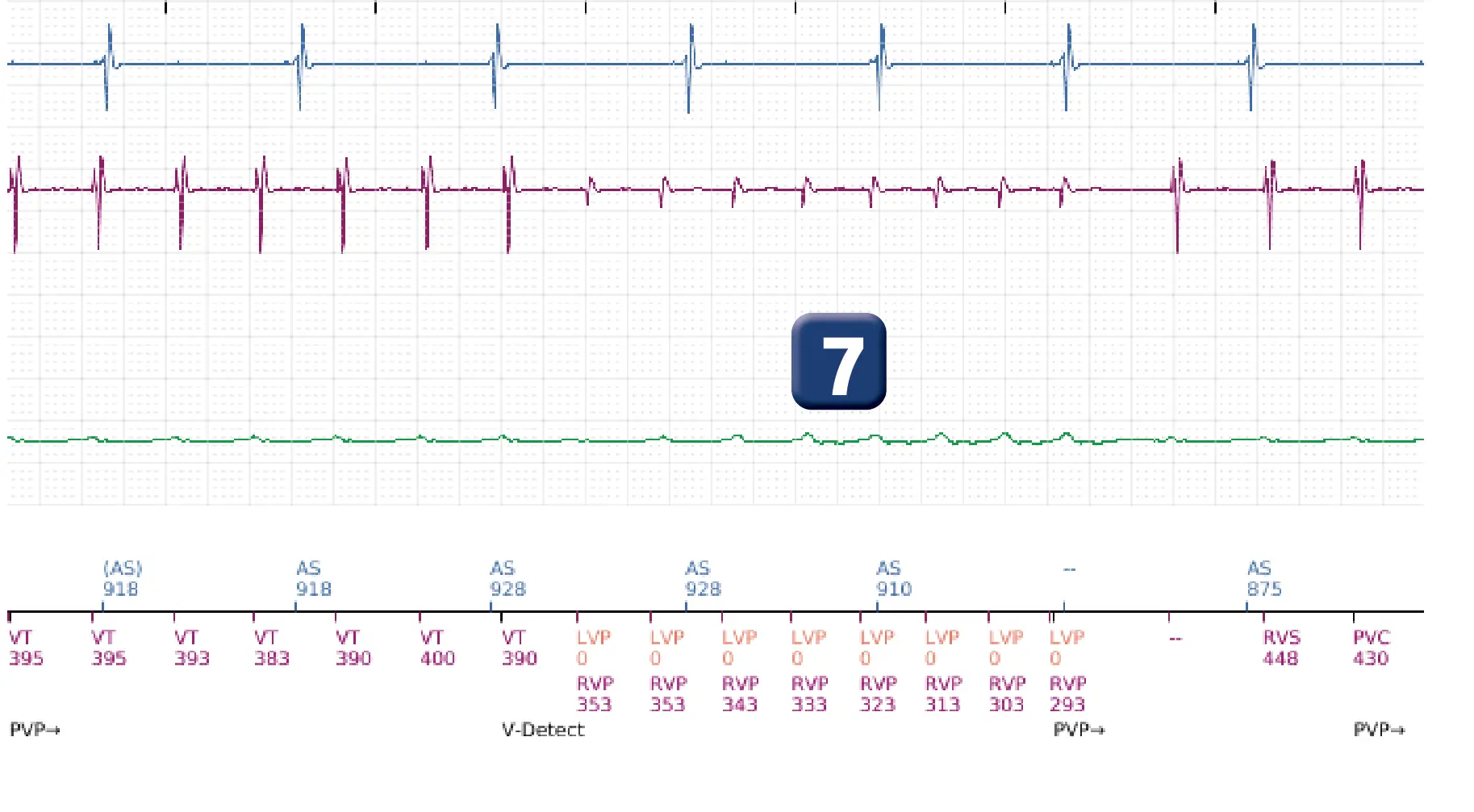
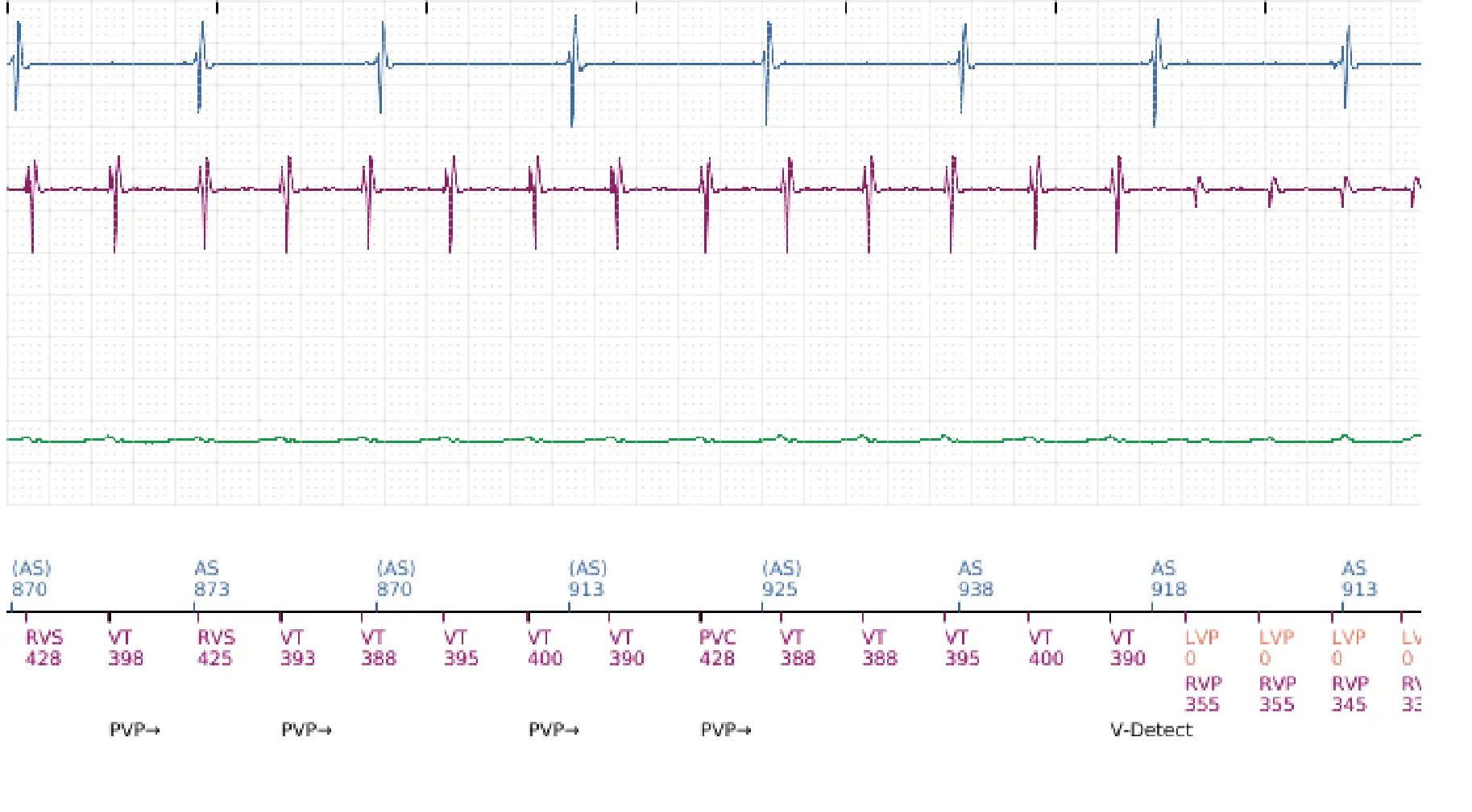
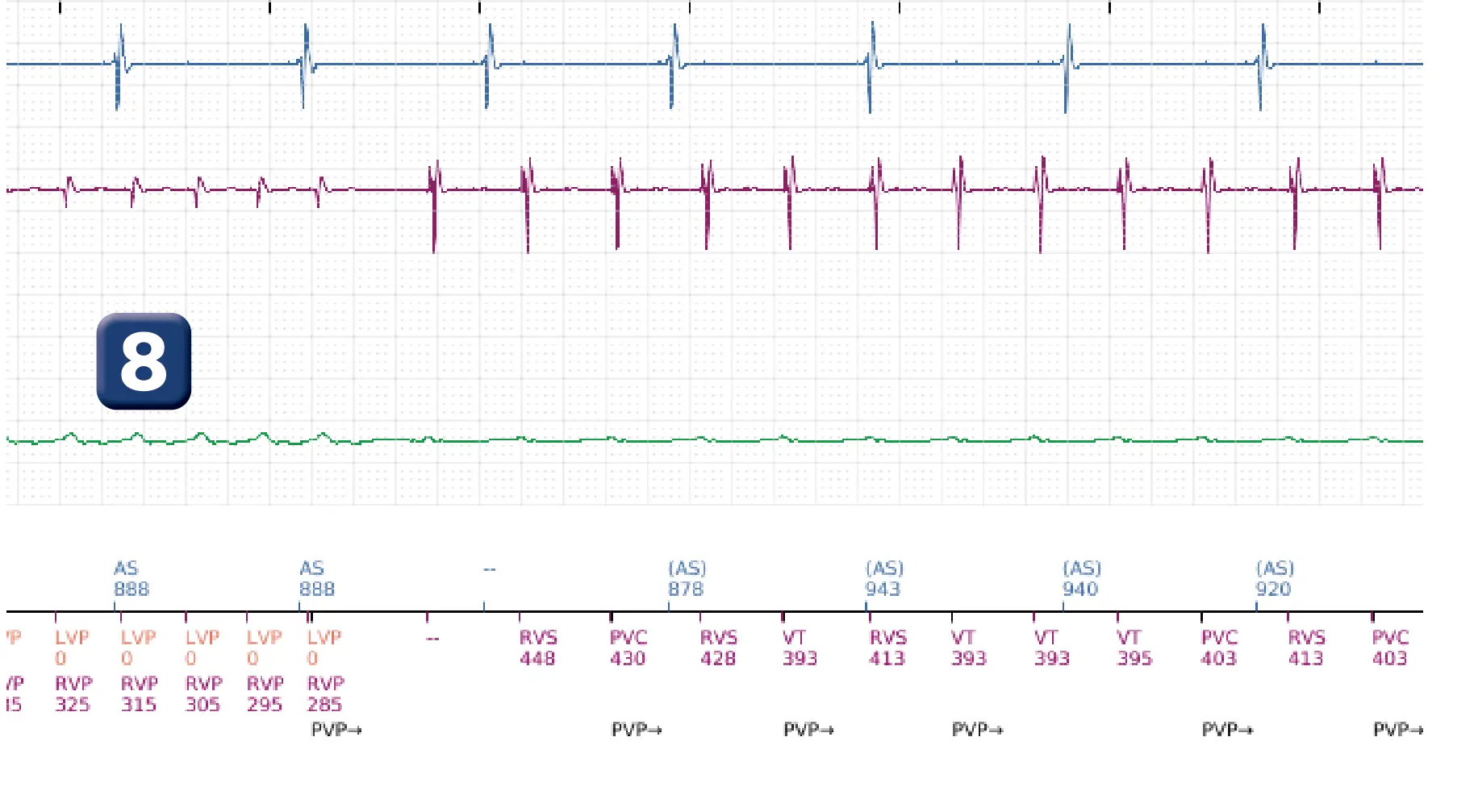
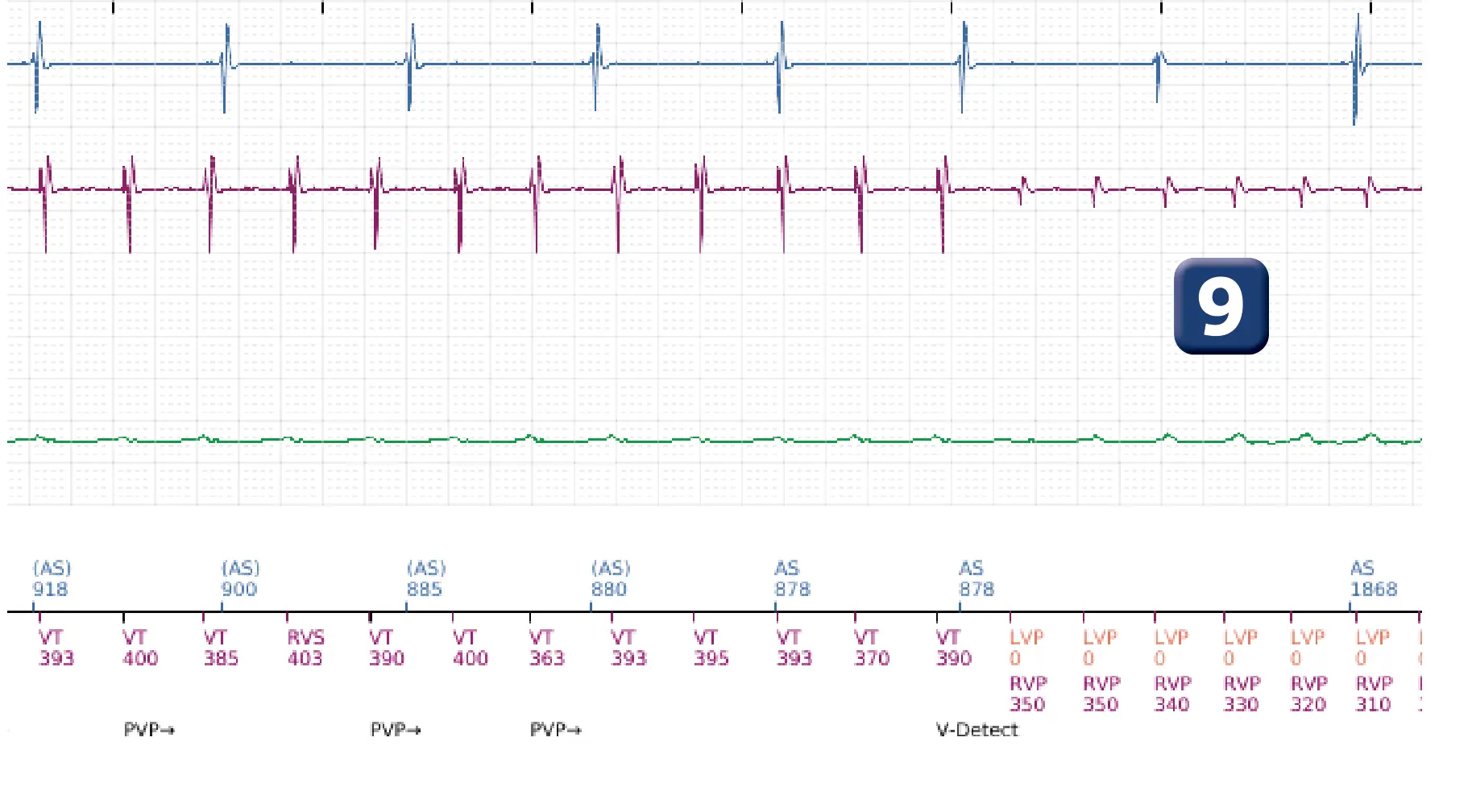
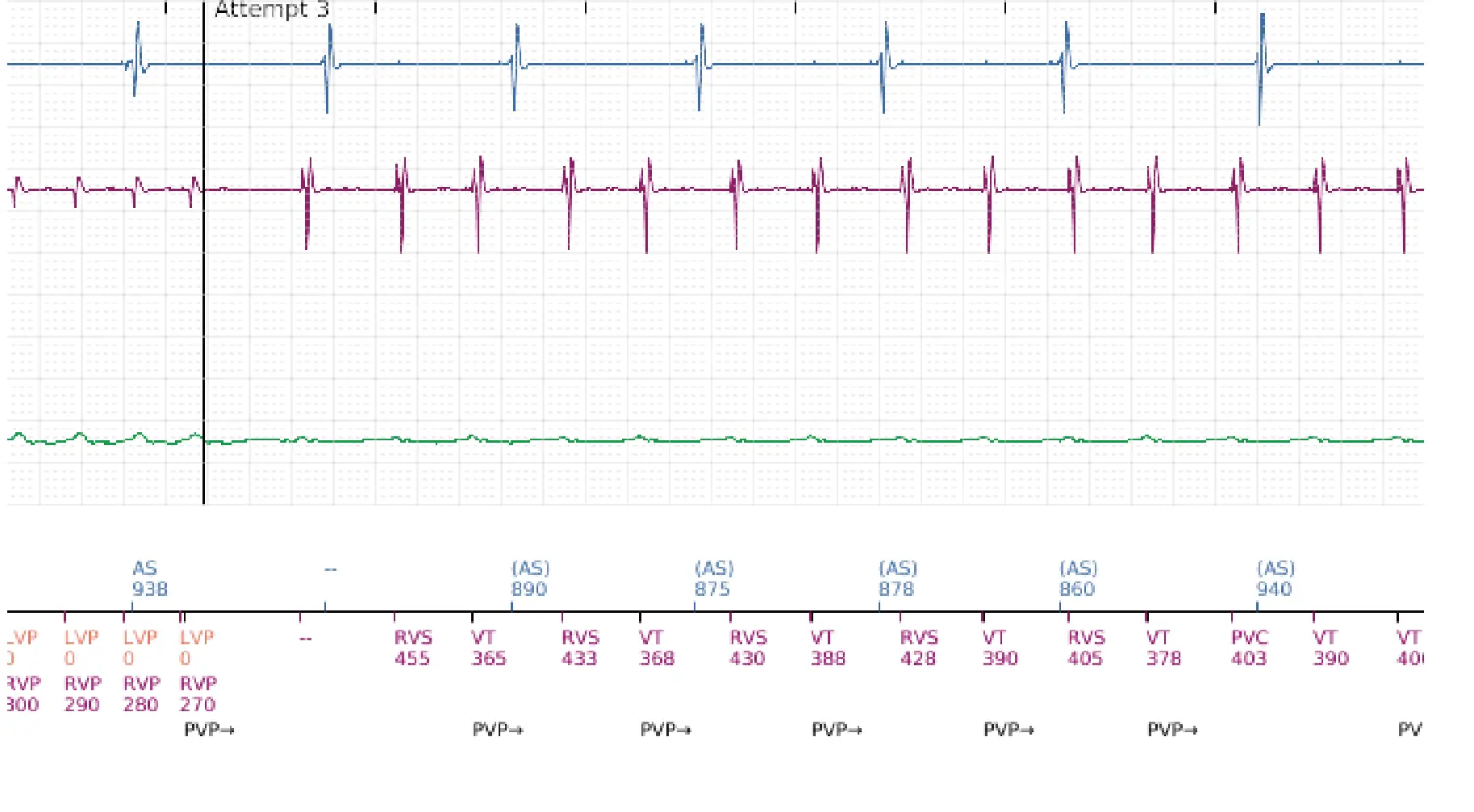
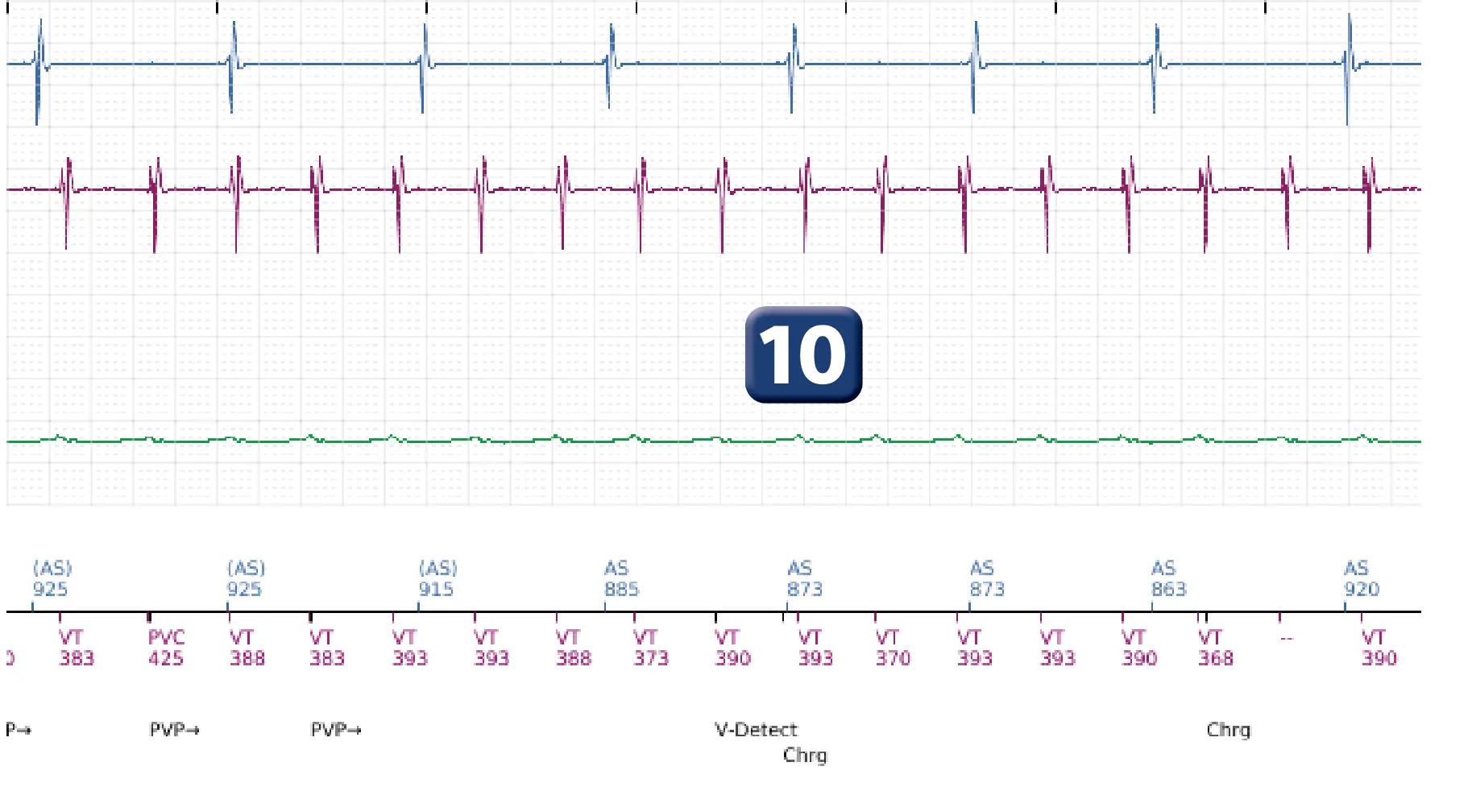
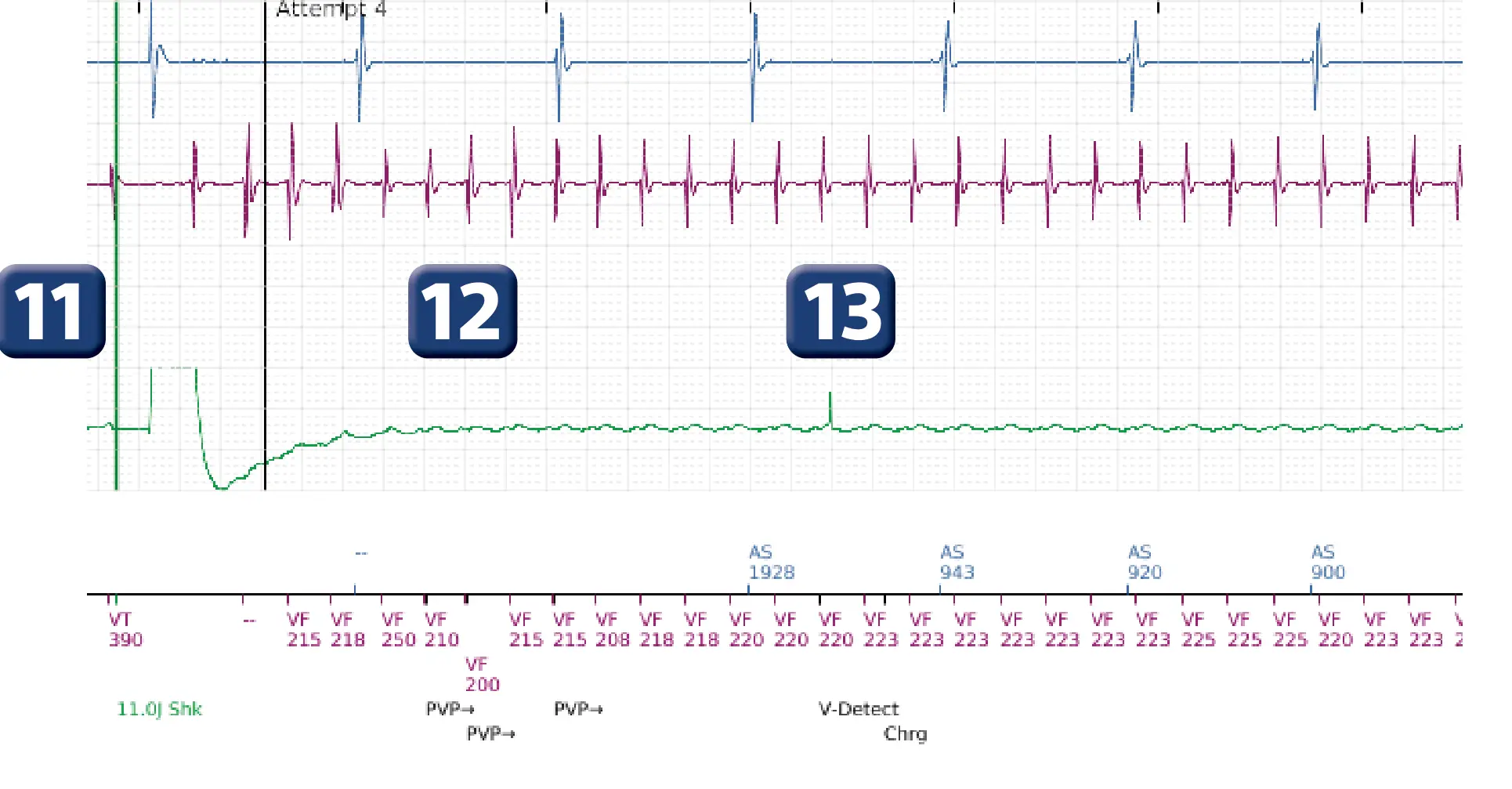
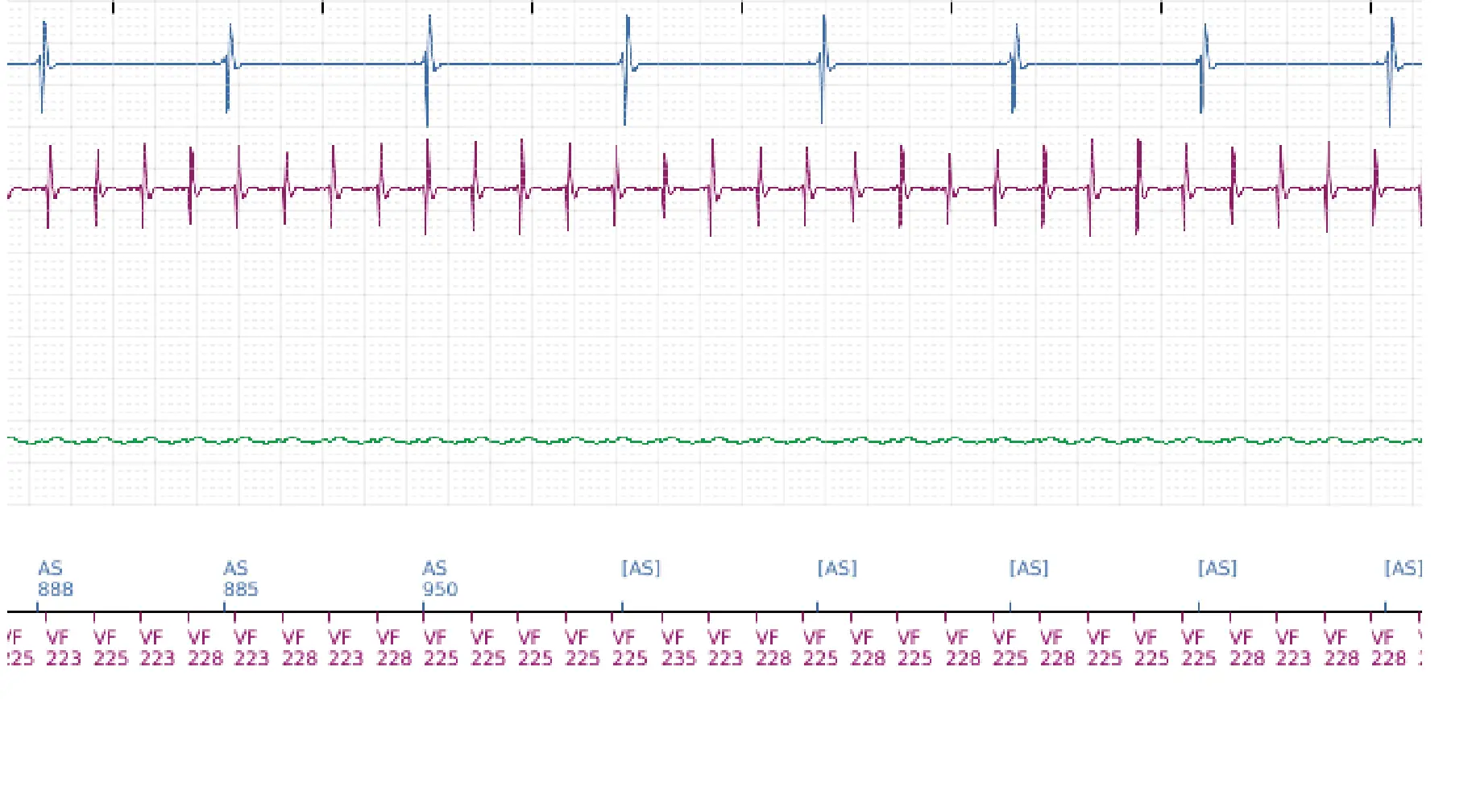
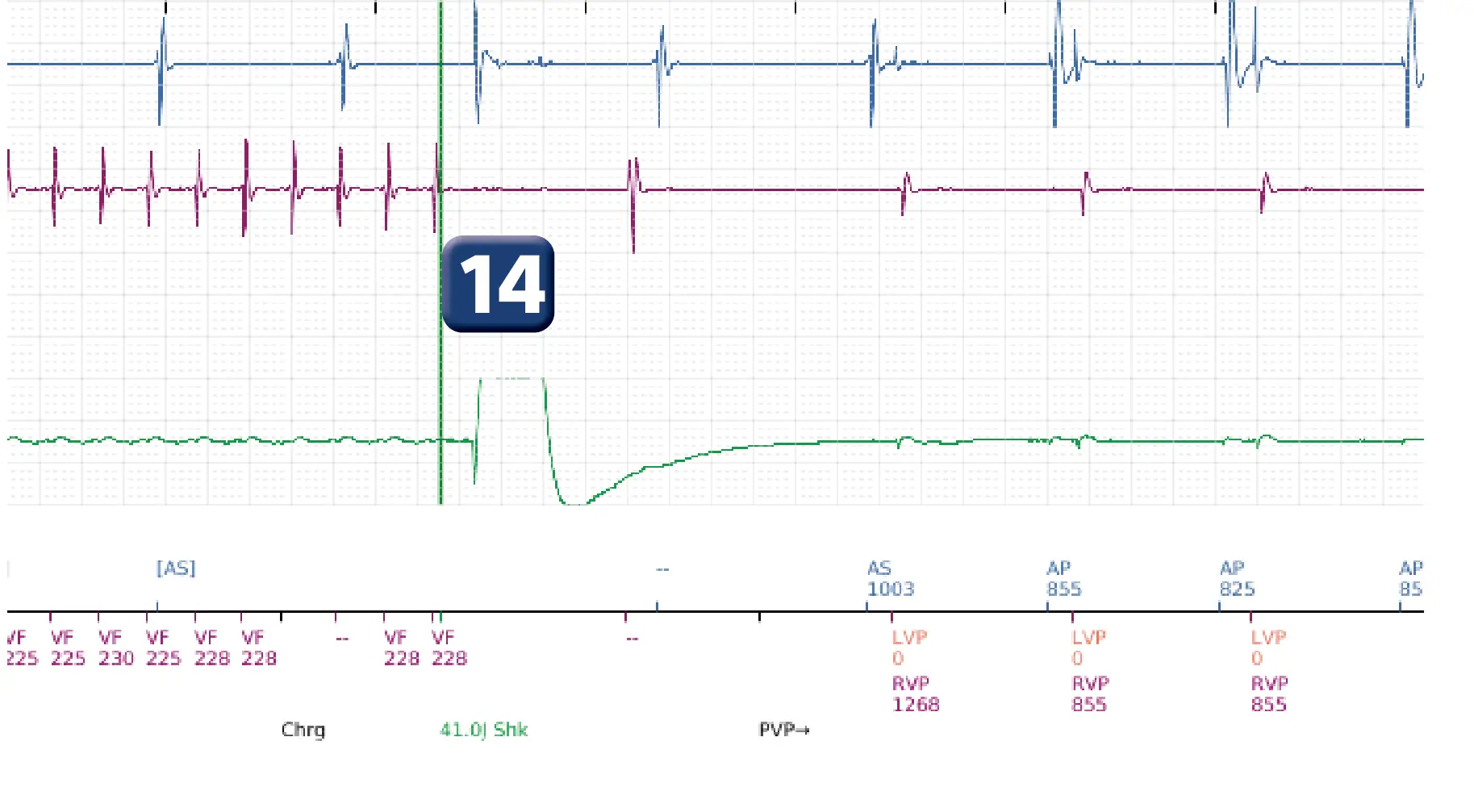
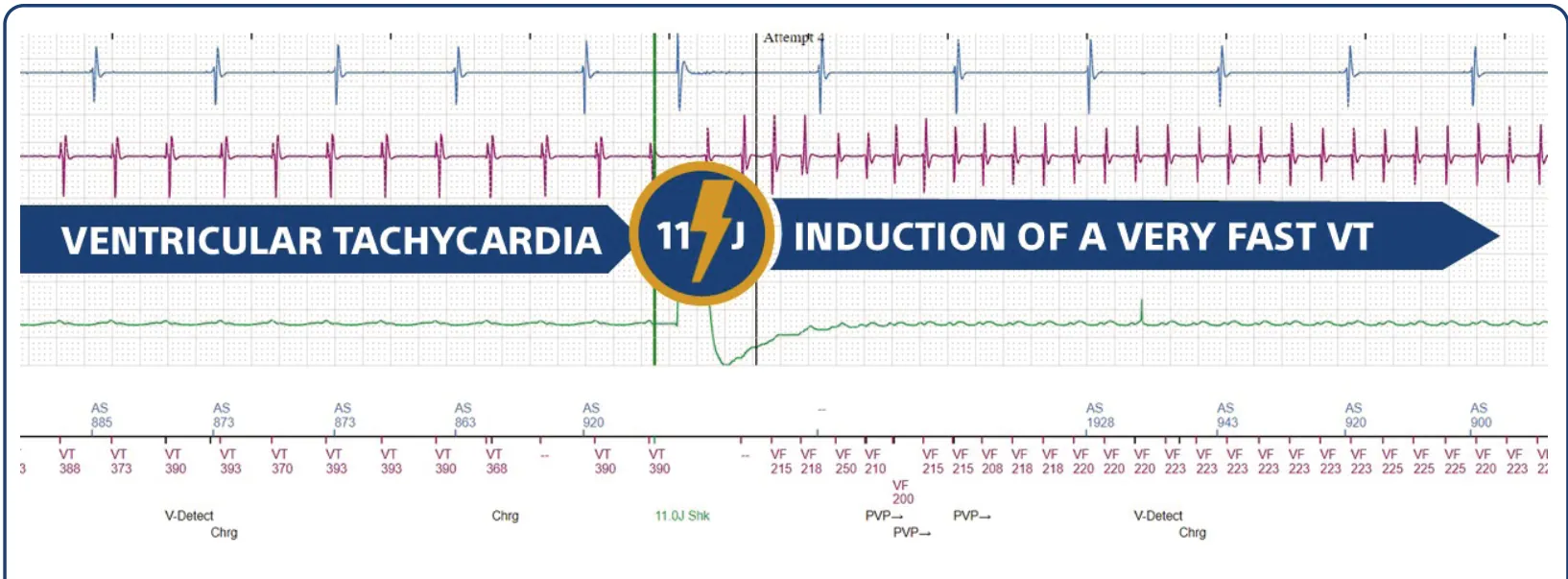
- Regular monomorphic ventricular tachycardia (atrioventricular dissociation) diagnosed in the VT zone
- Burst of 8 complexes at fixed rate; biventricular pacing
- Ineffective burst and ongoing arrhythmia
- Second burst with additional paced impulse
- Third burst
- Fourth burst
- First ramp
- Second ramp
- Third ramp
- Next therapy is a shock; capacitor charging begins
- 11 Joule shock delivered after the end of the diversion window on the second rapid ventricular cycle (2/3 rapid cycle criterion verified)
- Accelerated ventricular rate with very fast VT detected in the VF zone
- VF episode detection and capacitor charging
- 41 Joule effective shock
Points to remember
- The amplitude of the first shock in the VT zone can be programmed at maximum energy or at a lower amplitude (in the order of 10 to 15 Joules)
- There are a number of advantages to programming a first shock of moderate amplitude (10-15 Joules): 1) this amplitude is very often sufficient to terminate a VT episode; 2) the charge time for this amplitude is very short, even if the few seconds difference in comparison to a maximum amplitude shock may not be clinically important when the shock occurs after 3 burst +/- 3 ramp sequences (more than one minute of arrhythmia); 3) power consumption is lower for a shock at 10 Joules versus 41 Joules, even if battery usage is only slightly affected if a limited number of shocks are delivered; 4) even though for most VT episodes the shock is delivered while the patient is still conscious, the painful nature of the shock contributes minimally to decision-making regarding the amplitude of the first shock, since it is difficult to demonstrate a direct relationship between the amplitude of the shock delivered and the amplitude of the pain caused; 5) various studies have demonstrated the deleterious nature of an electric shock and its association with an adverse prognosis ; it therefore seems logical to think that a 10-15 Joule shock will have fewer negative consequences than a 41 Joule shock, and it seems advisable to choose the least traumatic therapy possible.
- This tracing shows the main drawback of programming a low-amplitude shock (11 Joules) in the VT zone: pro-arrhythmogenic risk and acceleration of the arrhythmia (concept of upper limit of vulnerability); in this patient, the shock has the opposite effect to what was intended; below a certain value, which varies according to the patient and is directly linked to the defibrillation “threshold”, not only can a shock prove ineffective in terminating an arrhythmia, but it can also accelerate and cause degeneration of a monomorphic VT into a polymorphic arrhythmia, compromising the patient’s short-term prognosis.
Practice out loud
Just describe the tracing. What do you think is going on? Describing the numbers can help.
00:00
0%
—
From Boston Scientific ICD — clinical cases by P. Bordachar, M. Strik, A. Thiyagarajah, S. Ploux. Published by Cardiocases. Every numbered marker on a recording is explained in the list beneath it; tap a marker on the trace or an entry in the list.
Order hardcopyon Amazon