
Chapter 2 · Therapies · Case 14
Maximum output shock in the VT zone
Patient and episode
Patient
- 51-year-old man implanted with an Incepta single-chamber defibrillator
Summary
- Episode classified in the VT zone
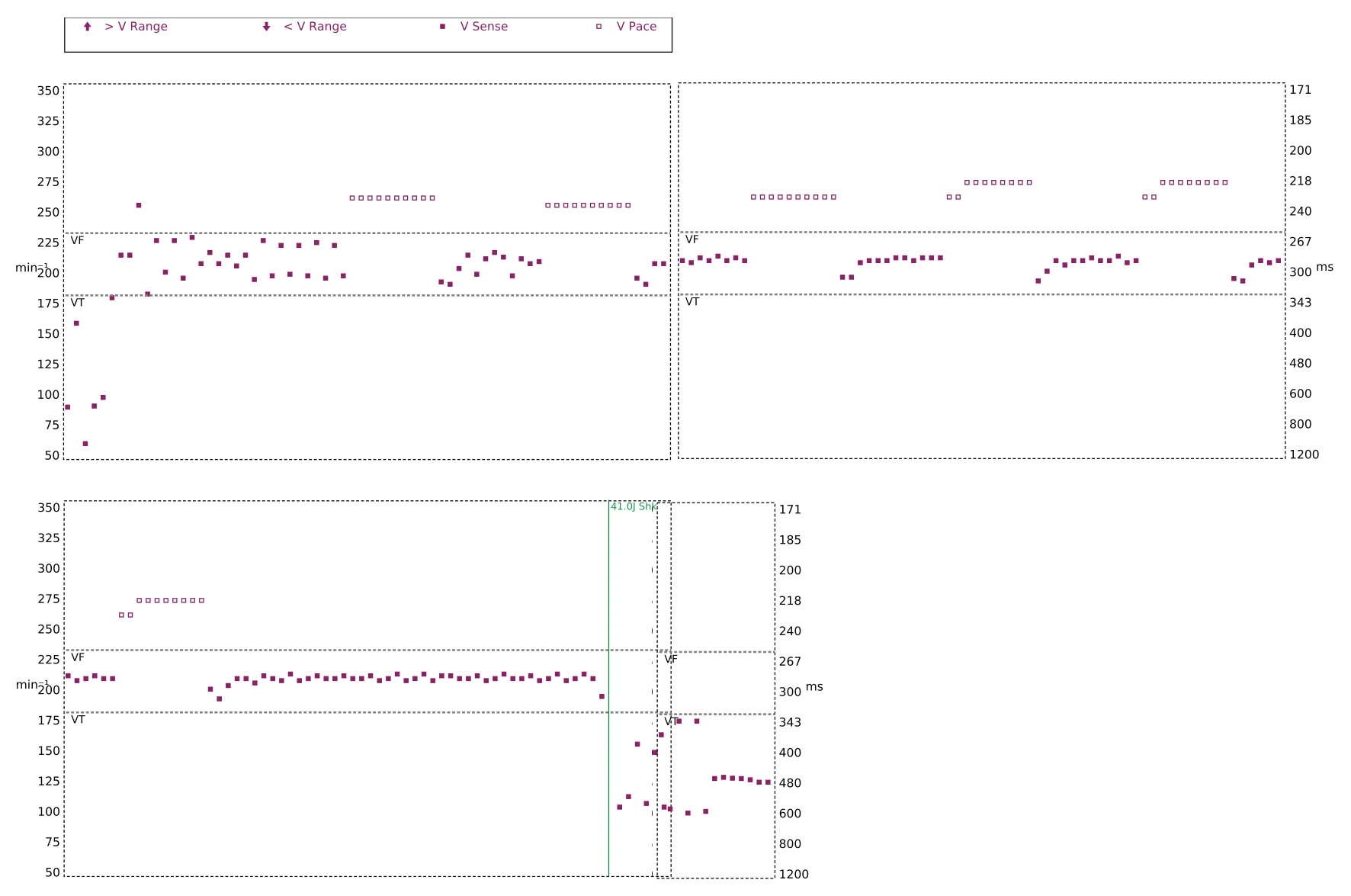
- 3 bursts + 3 ramps + 1 shock of 41 Joules
The recording
Tap a number on the trace, or an entry in the list below
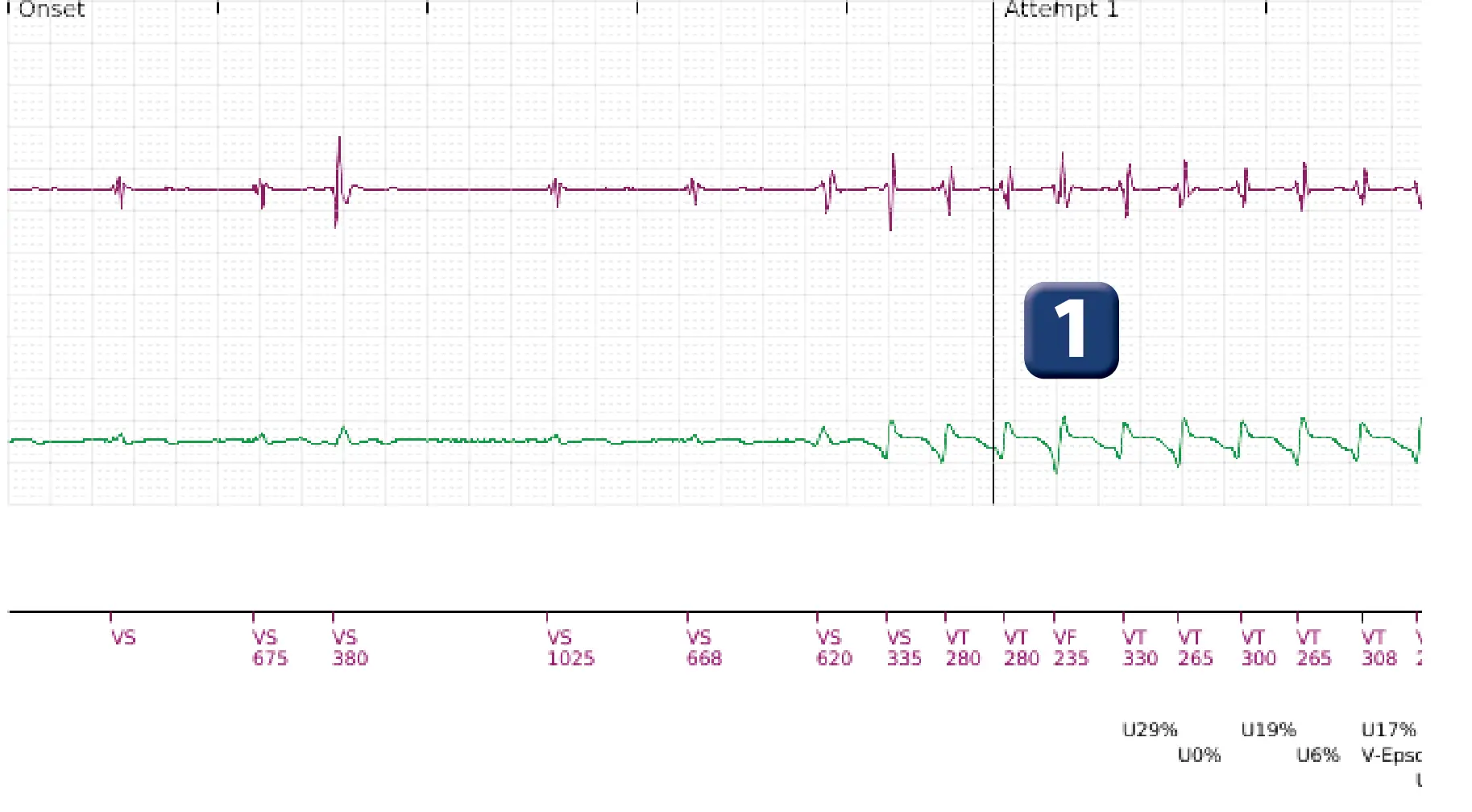
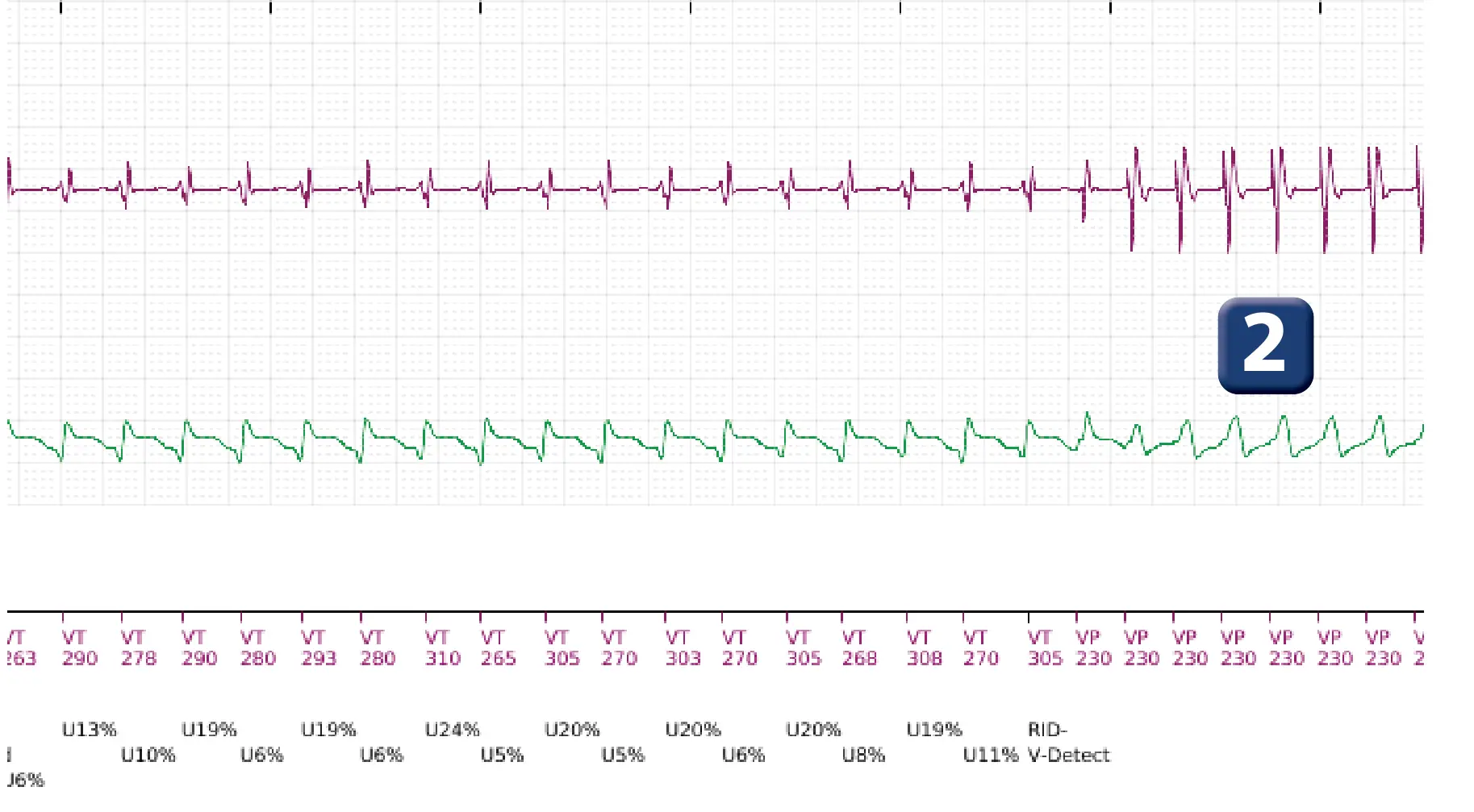
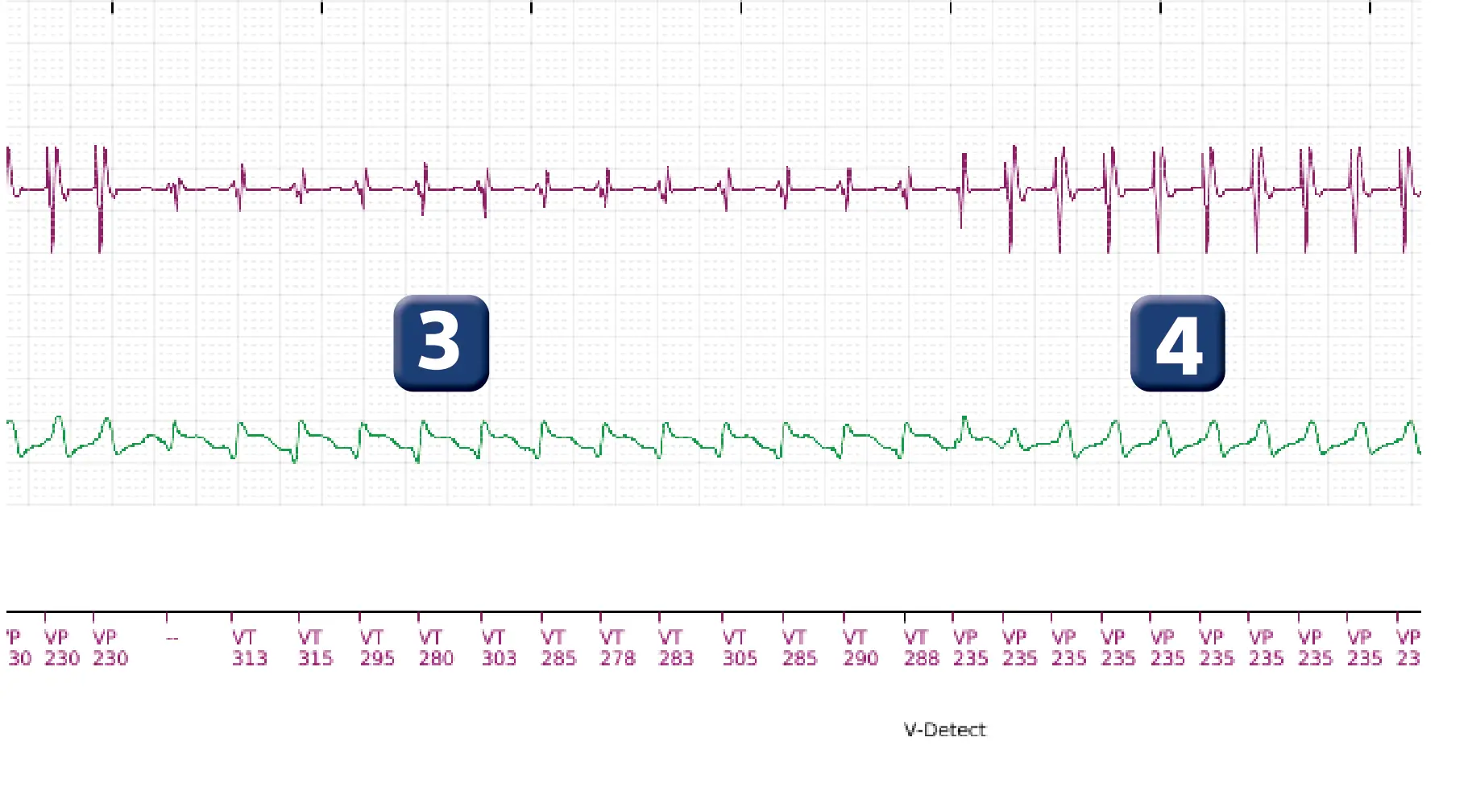
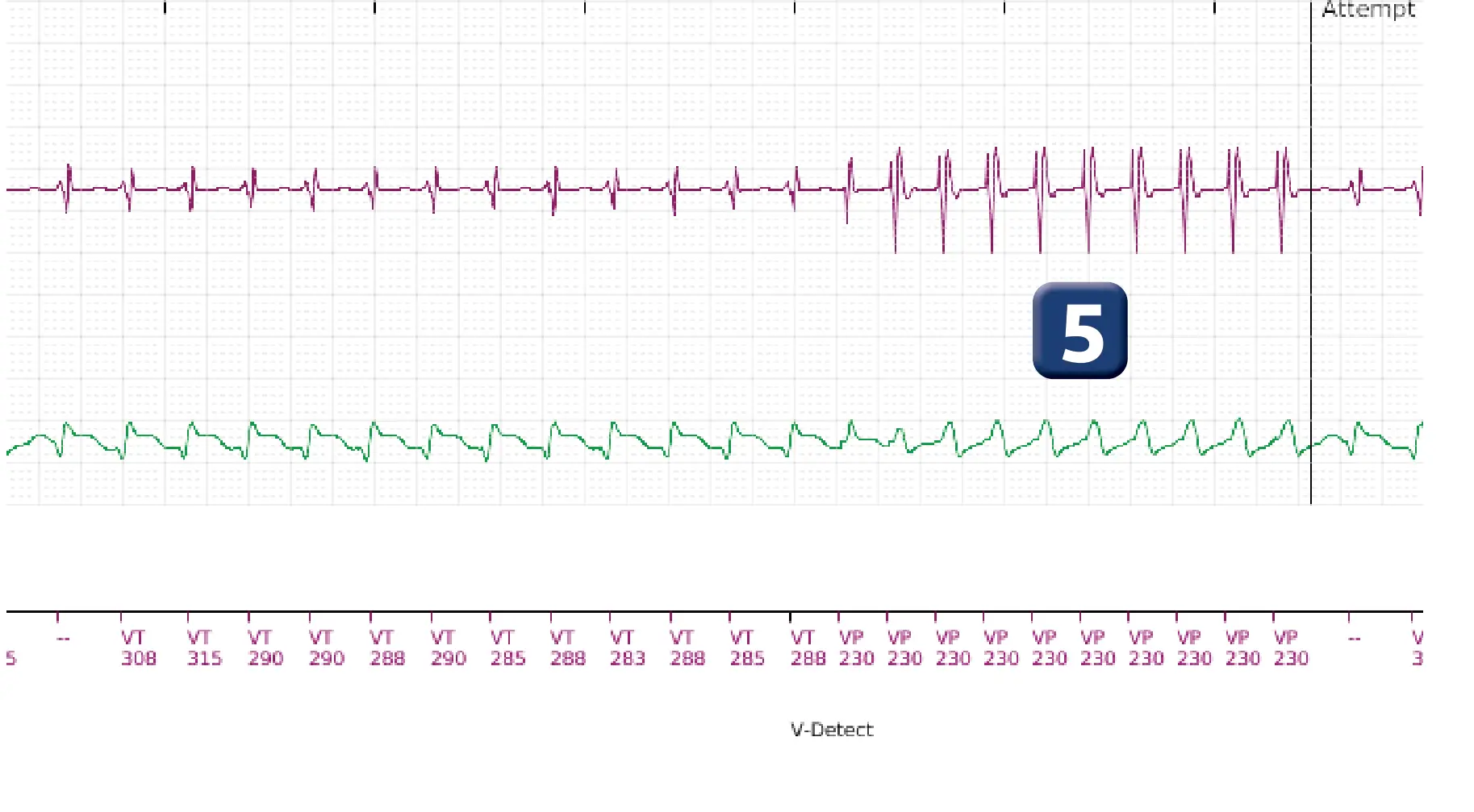
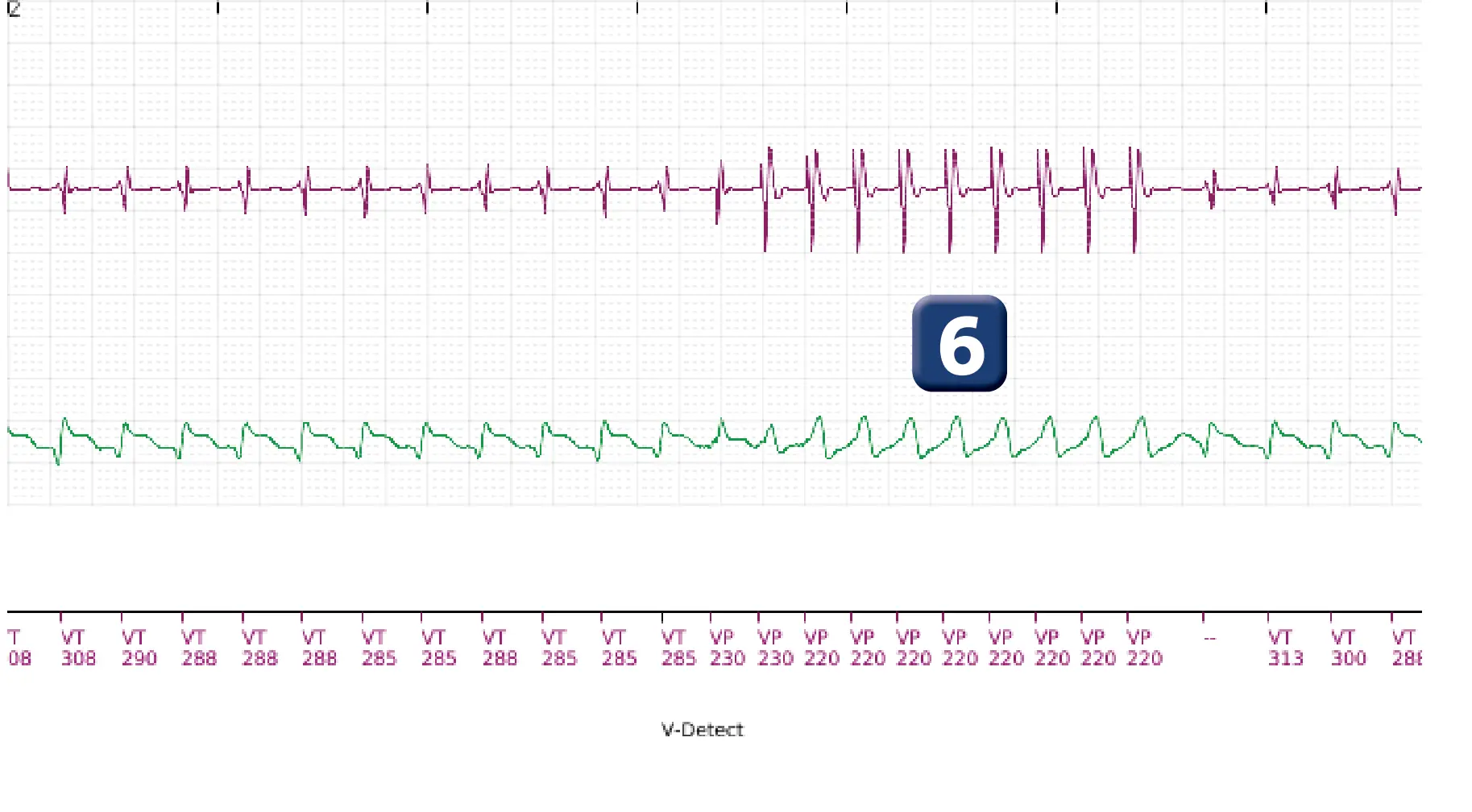
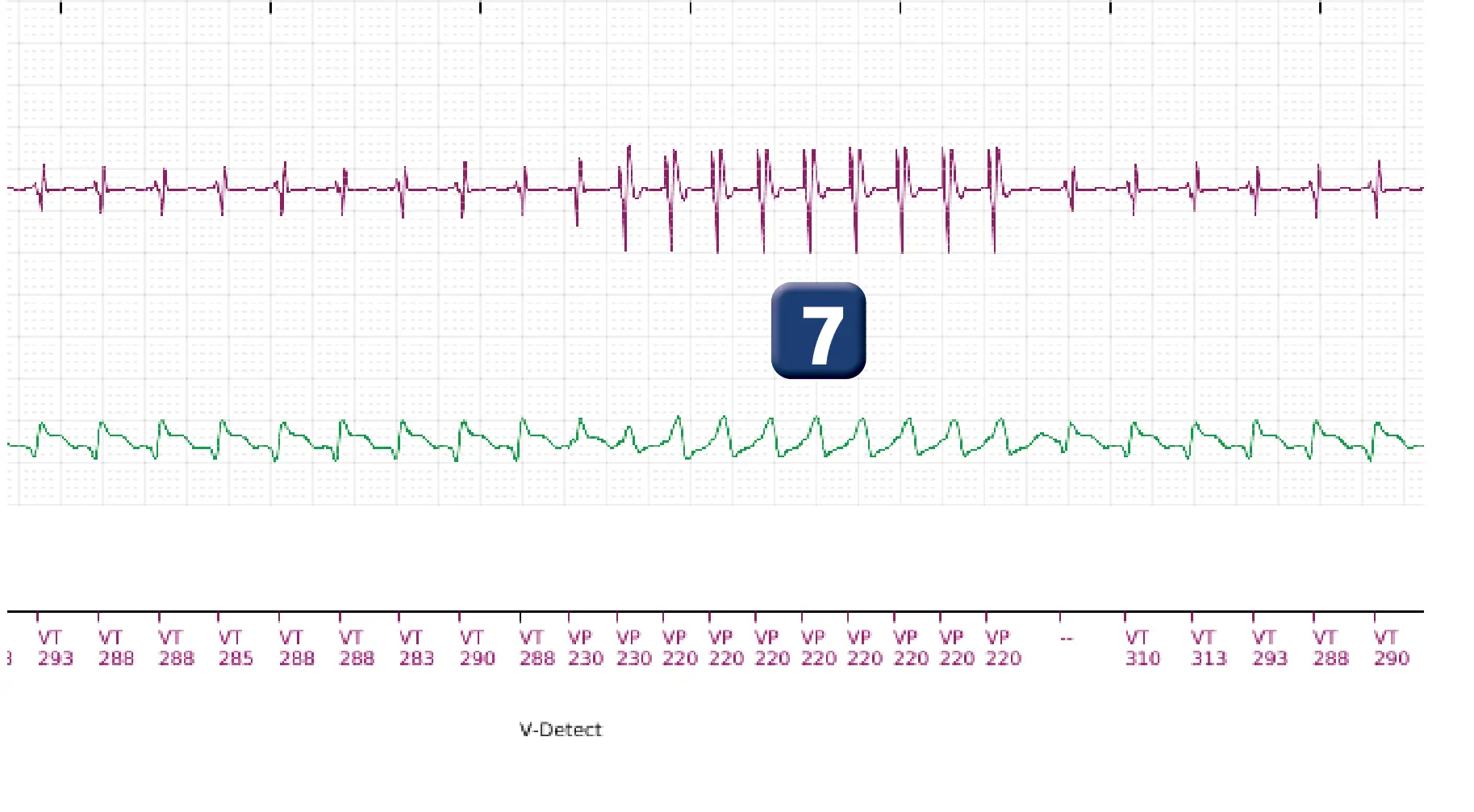
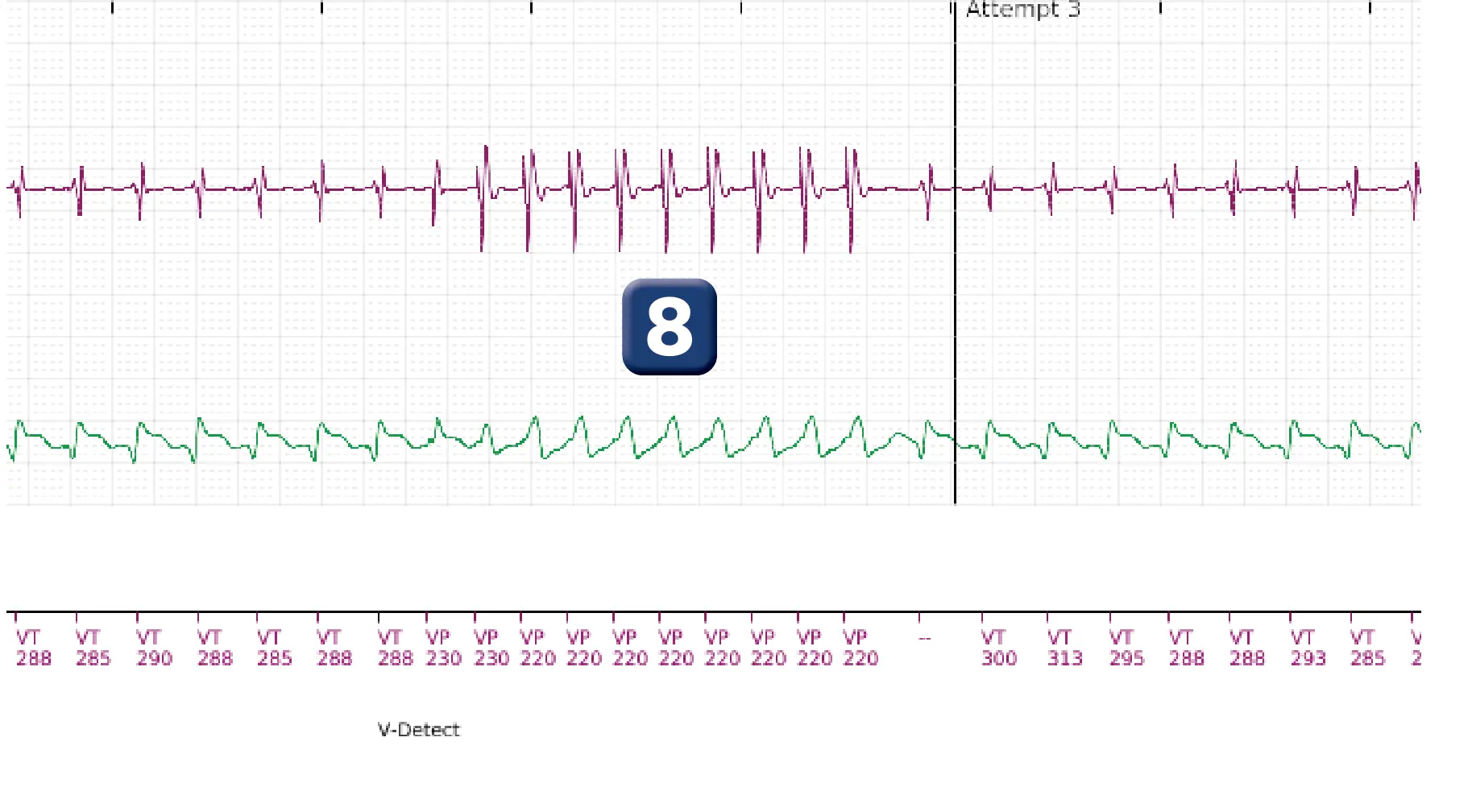
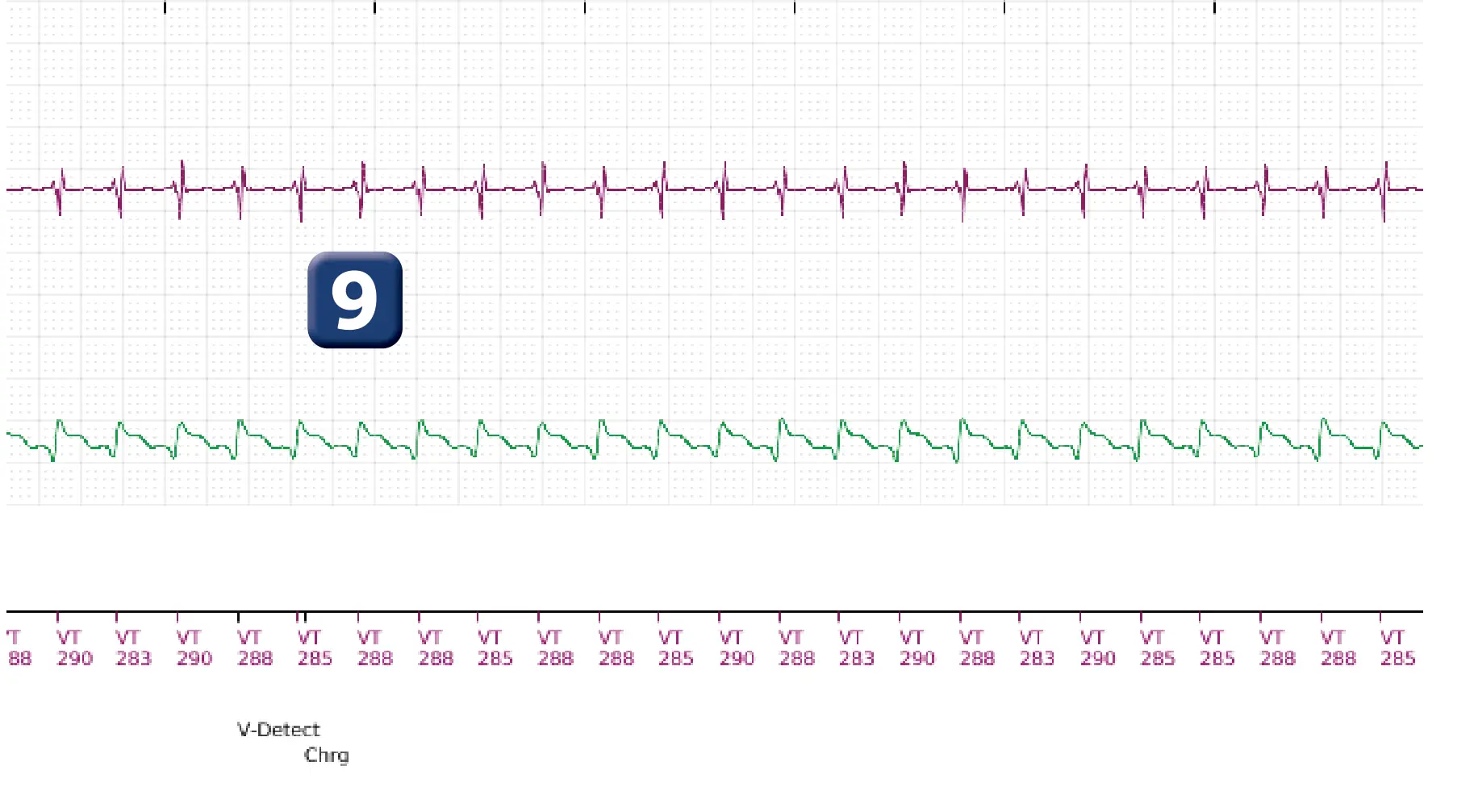
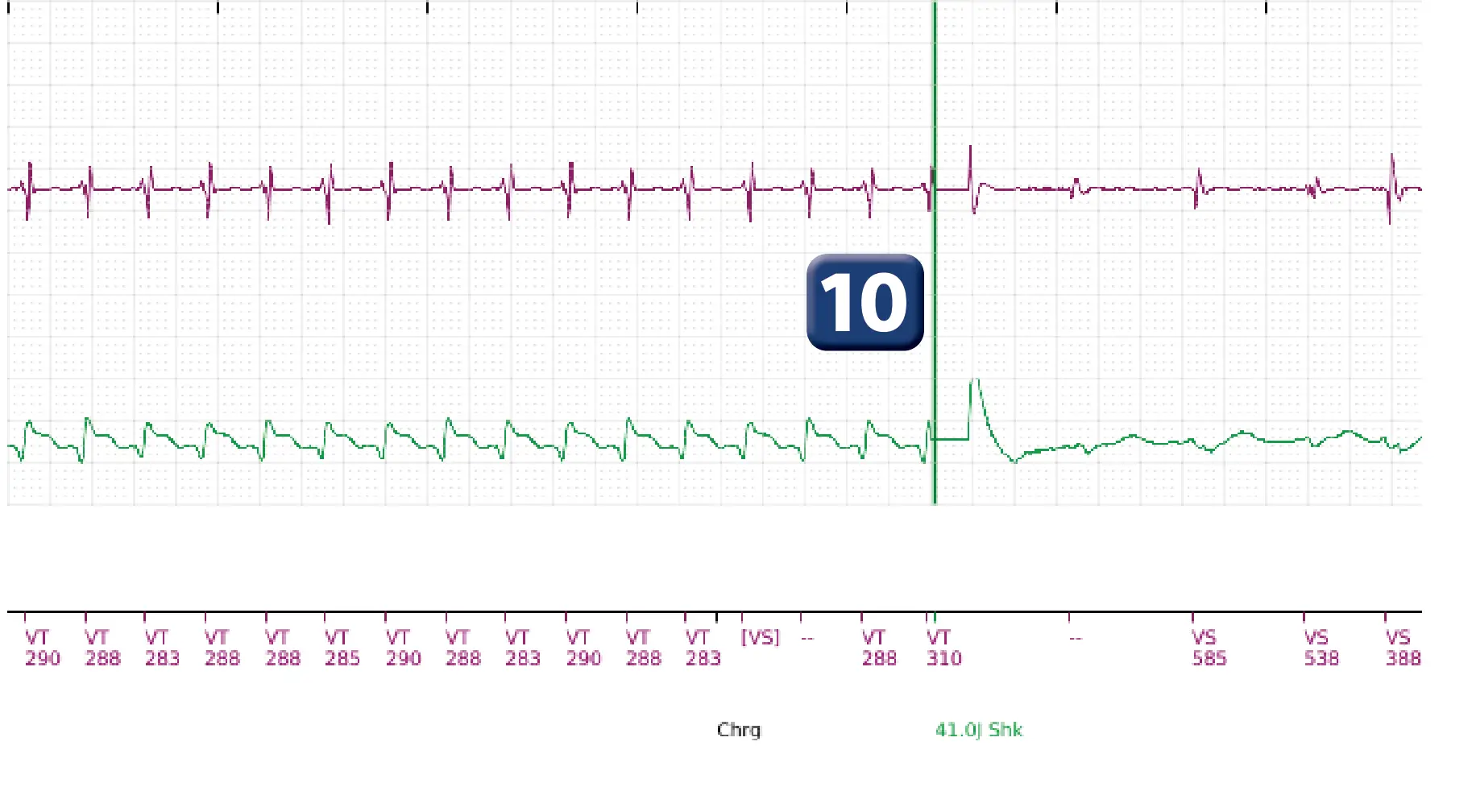
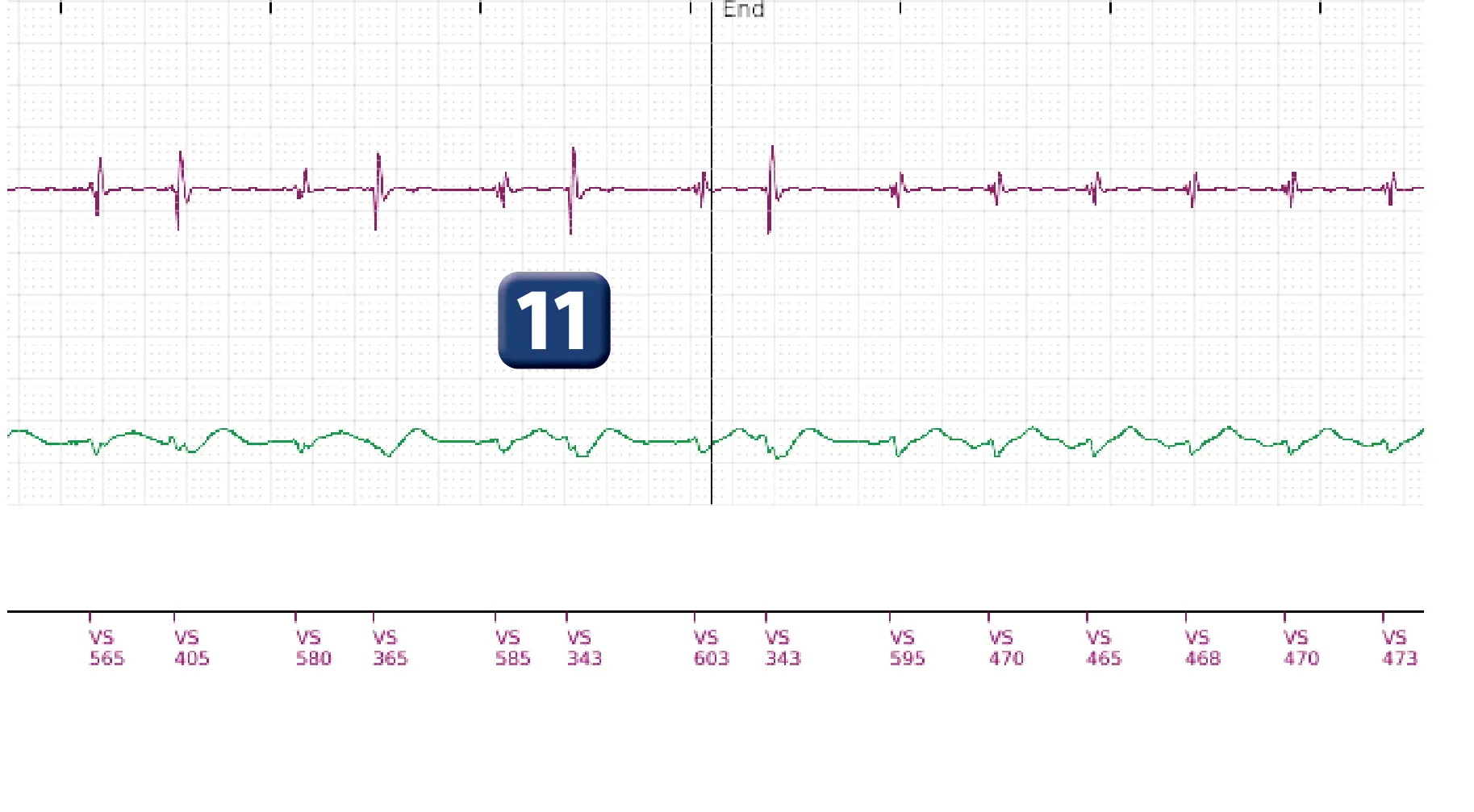
- Probable ventricular tachycardia (clear change in morphology on the shock channel)
- At the end of the duration, a burst of 10 complexes at a fixed rate
- Ineffective burst and ongoing arrhythmia
- Second burst
- Third burst
- First ramp
- Second ramp
- Third ramp
- Next therapy is an electric shock; capacitor charging begins
- 41 Joule electric shock delivered on the second rapid ventricular cycle (2/3 rapid cycle criterion verified) at the end of the diversion window
- Effective shock
From the interrogation
Points to remember
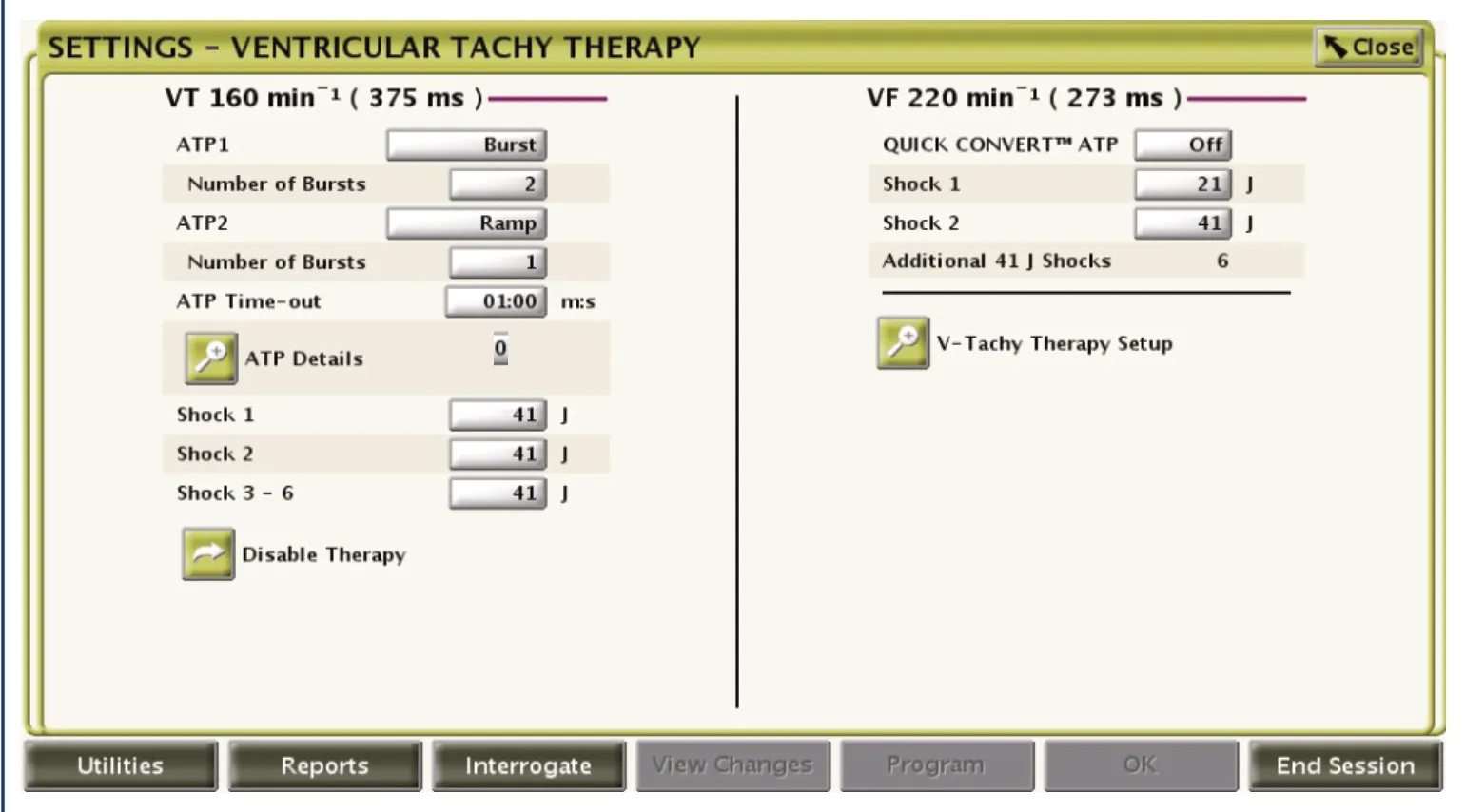
- This plot illustrates the other option for programming the amplitude of the first shock in the VT zone
- Empirical programming of a first shock of maximum amplitude reduces the risk of pro-arrhythmogenic effects and increases the probability of terminating VT on the first attempt, thereby minimizing the number of shocks delivered and increasing the probability of terminating AF if the shock is inappropriate
Practice out loud
Just describe the tracing. What do you think is going on? Describing the numbers can help.
00:00
0%
—
From Boston Scientific ICD — clinical cases by P. Bordachar, M. Strik, A. Thiyagarajah, S. Ploux. Published by Cardiocases. Every numbered marker on a recording is explained in the list beneath it; tap a marker on the trace or an entry in the list.
Order hardcopyon Amazon