
Chapter 2 · Therapies · Case 8
Undersensing, rate calculation error and ATP burst in the VF zone
Patient and episode
Patient
- 43-year-old female with idiopathic VF; implanted with an Autogen dual-chamber defibrillator
Summary
- Episode classified in the VF zone
- ATP in the VF zone and 41 Joule shock
The recording
Tap a number on the trace, or an entry in the list below
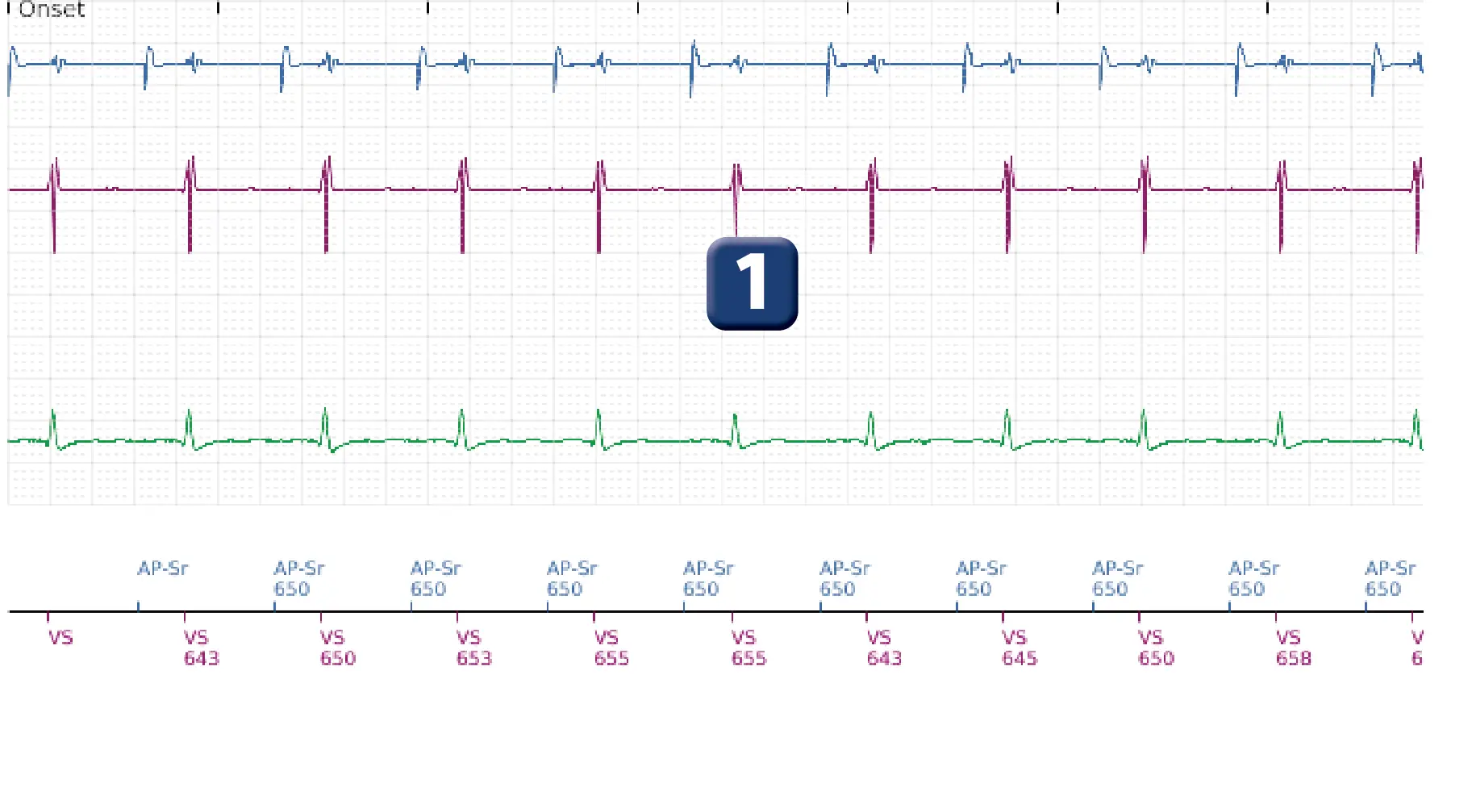
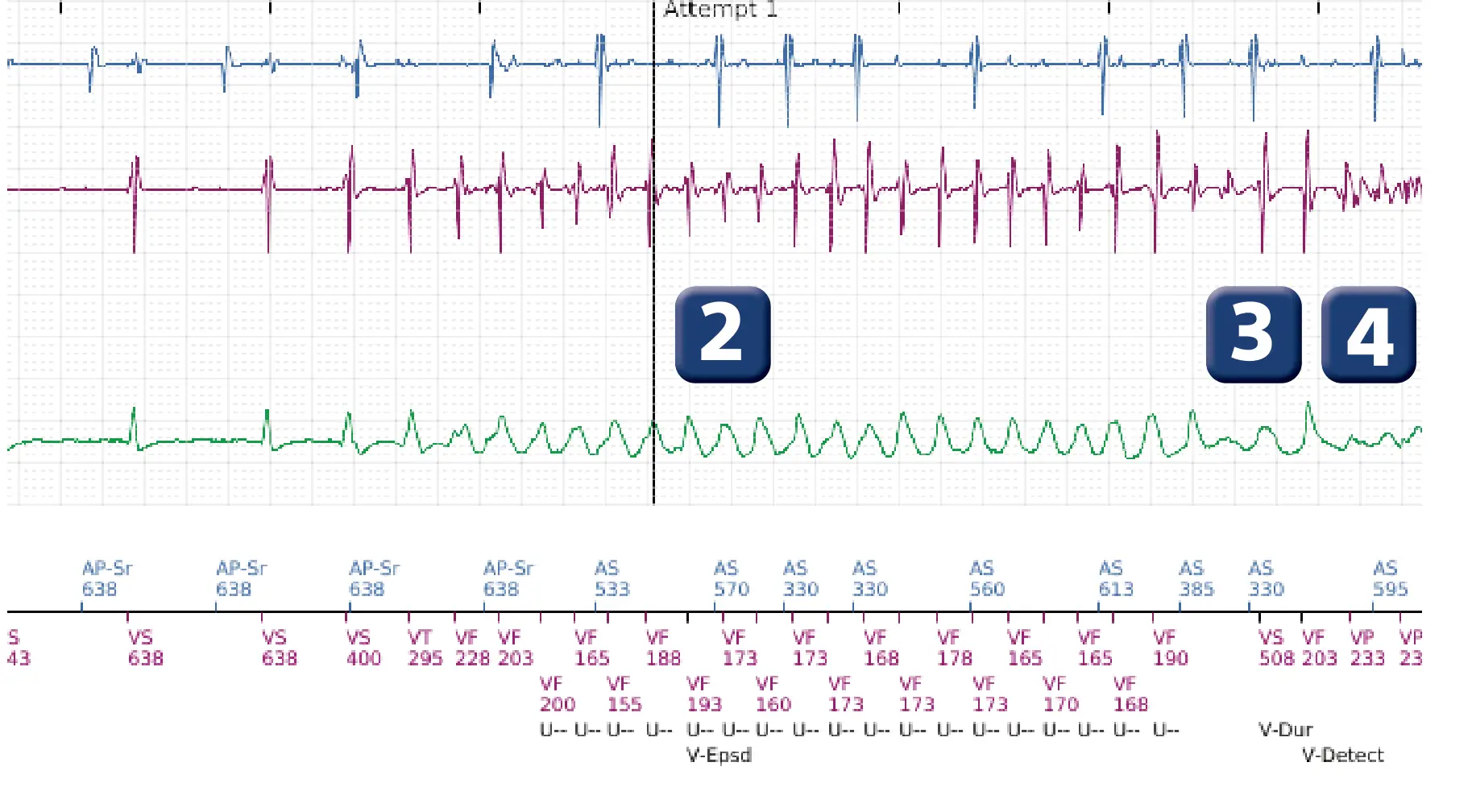
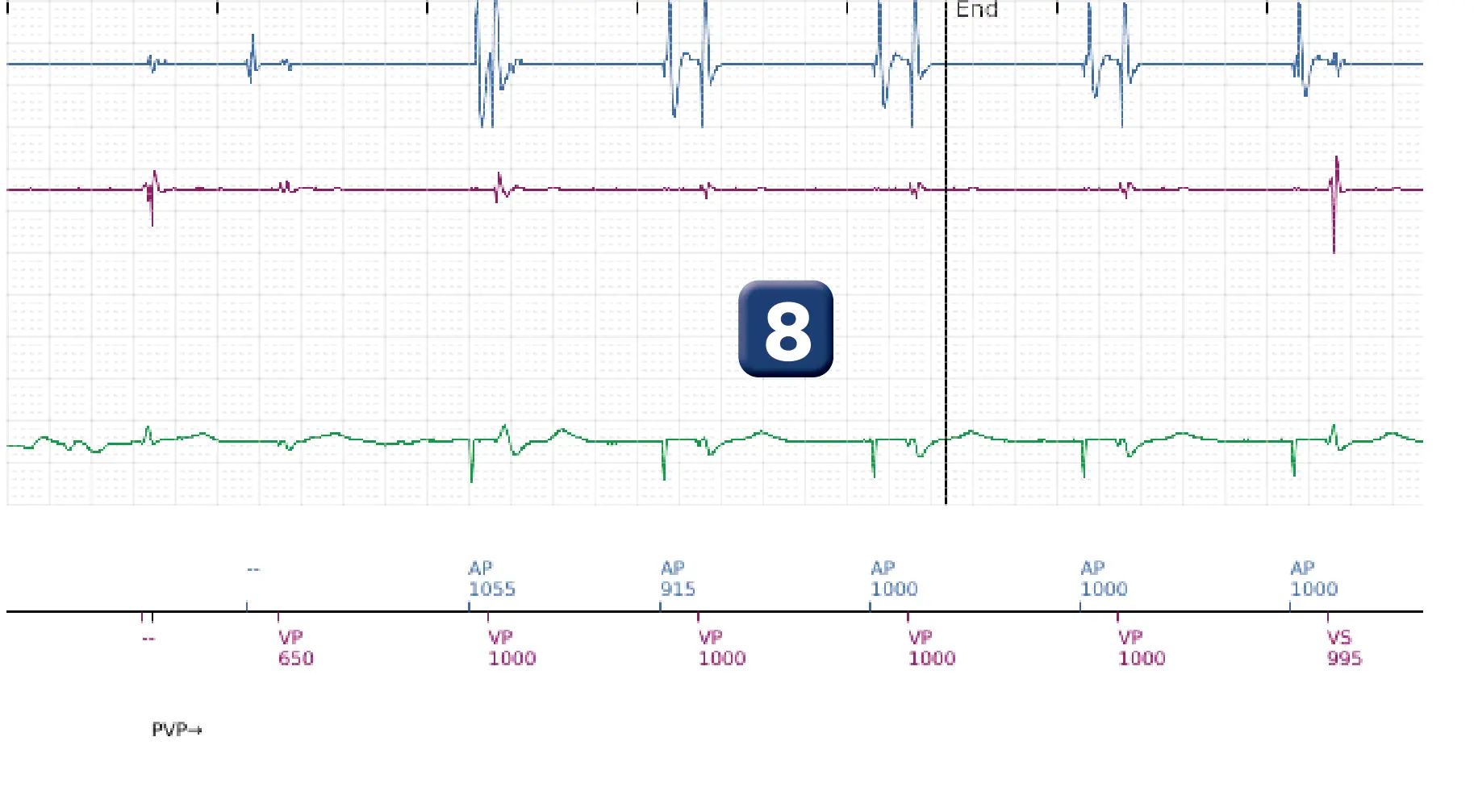
- Atrial pacing at the sensor indicated rate and ventricular sensing
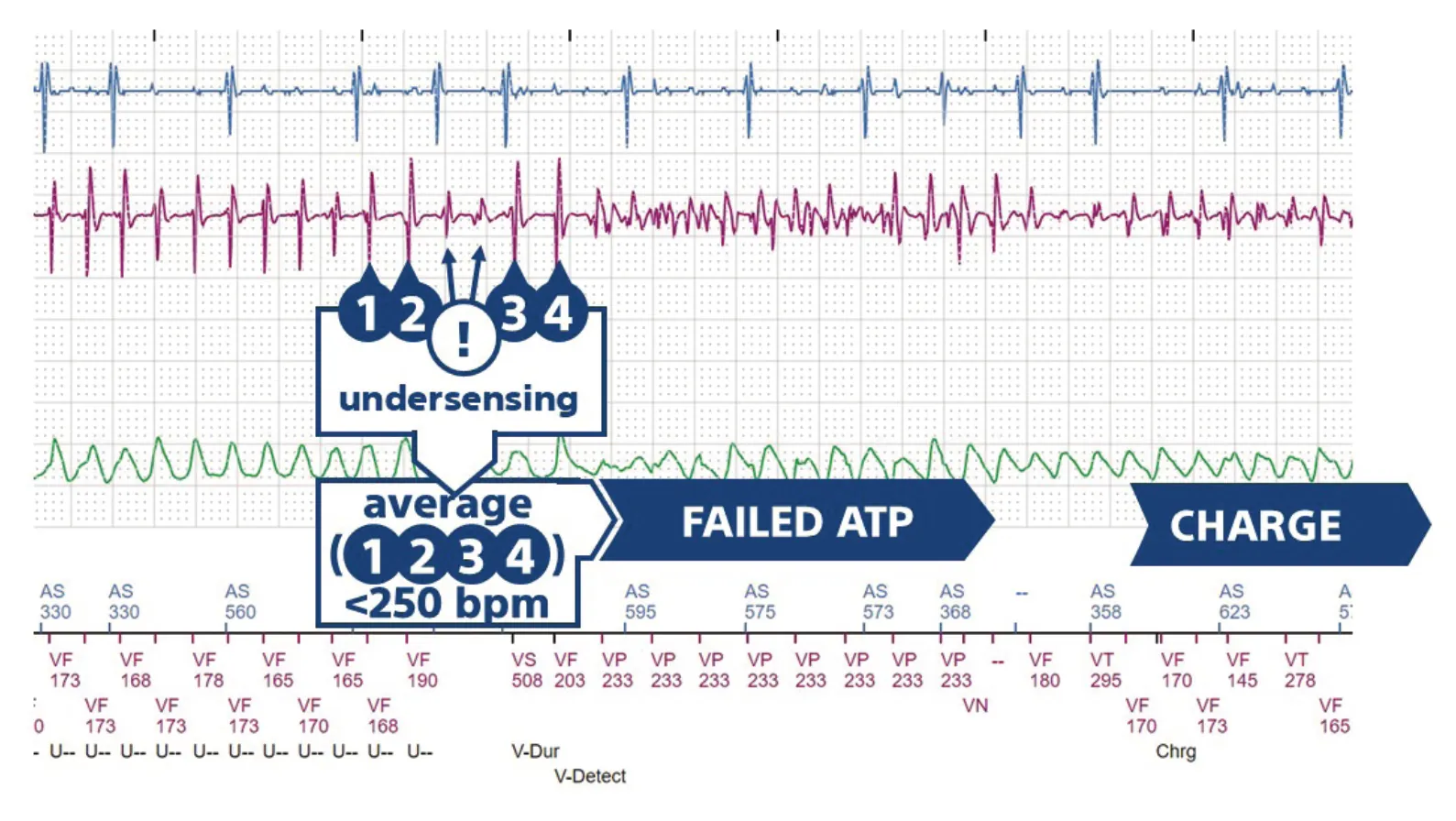
- Onset of very rapid polymorphic tachycardia
- Ventricular undersensing; cycle classified VS
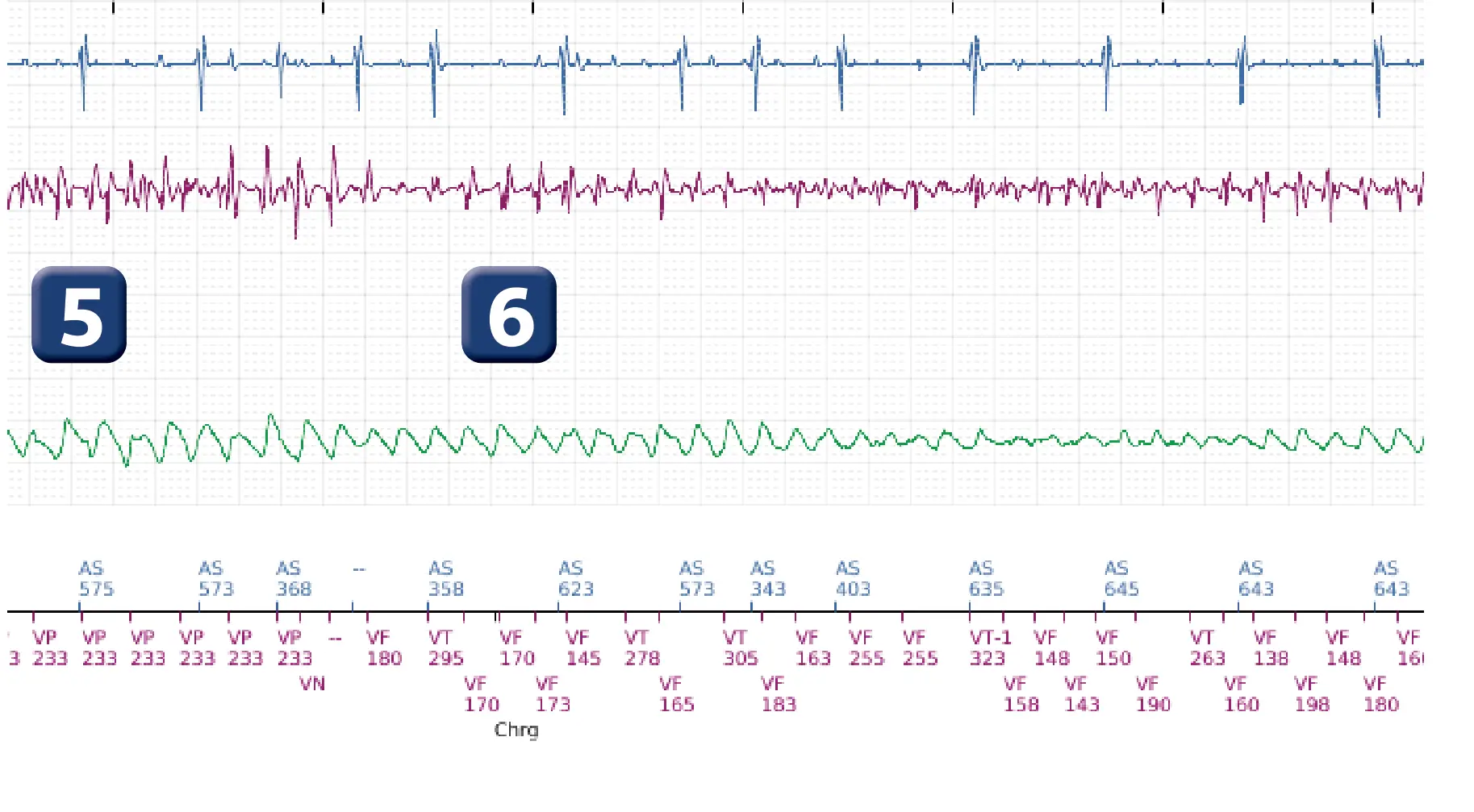
- V-Detect marker; the calculation of the rate found in the summary (225 bpm, i.e. < 250 bpm) is distorted by this undersensing (calculated over the last 4 cycles preceding the V-Detect marker).
- ATP Quick Convert without ventricular capture
- Ineffective ATP and capacitor charging
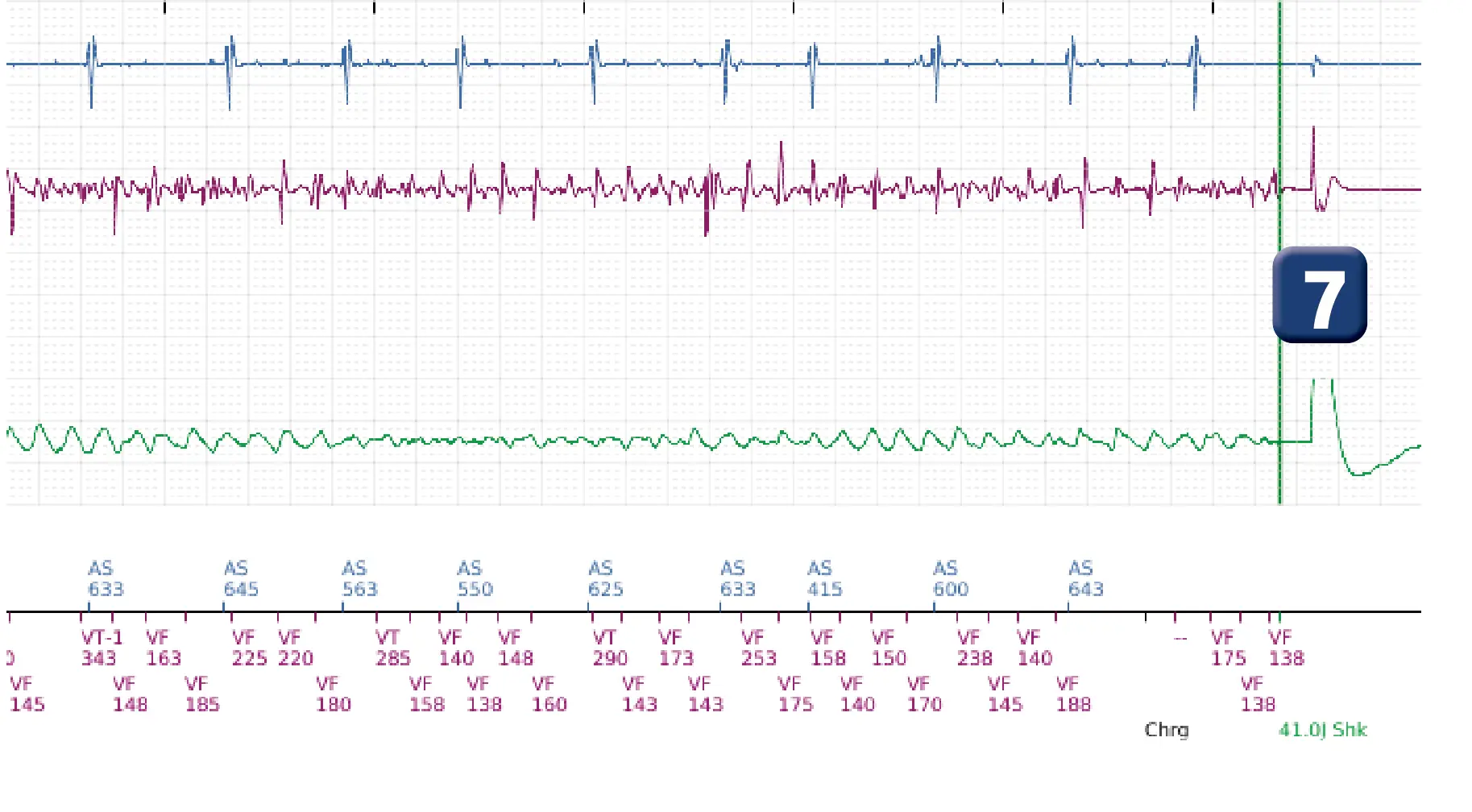
- Shock delivered on the third VF cycle (at the time of the second sensed event, the 500 ms post-charge diversion window has not yet elapsed)
- Effective shock and arrhythmia termination
Points to remember
- 2 programming options are available for ATP Quick Convert in VF zones: ATP delivered for tachycardias of less than 250 beats/minute or for tachycardias of less than 300 beats/minute.
- In guideline recommendations, the lower limit of the VF zone is 250 beats/minute; programming ATP Quick Convert up to 300 beats/minute could be considered
- The ventricular rate is calculated as the average of the 4 ventricular cycles preceding the V-Detect marker; in this example, ATP is delivered while the ventricular rate is very fast due to the presence of undersensing; this ATP is ineffective (no effective ventricular capture) and does not terminate the arrhythmia
- The level of evidence for the efficacy of ATP for tachycardias above 250 beats/minute is weak; indeed, for this rate range, a majority of ventricular arrhythmias are disorganized and polymorphic and therefore theoretically less likely to be terminated by anti-tachycardia pacing : unpublished data from our center does indicate that there is an interest in performing ATP at these high rates
Practice out loud
Just describe the tracing. What do you think is going on? Describing the numbers can help.
00:00
0%
—
From Boston Scientific ICD — clinical cases by P. Bordachar, M. Strik, A. Thiyagarajah, S. Ploux. Published by Cardiocases. Every numbered marker on a recording is explained in the list beneath it; tap a marker on the trace or an entry in the list.
Order hardcopyon Amazon