
Chapter 4 · Discrimination · Case 7
Discrimination and atrioventricular conduction disorders
Patient and episode
Patient
- Male implanted with a triple-chamber defibrillator (Amplia Quad CRTD) for ischaemic cardiomyopathy with complete atrioventricular block.
The recording
Tap a number on the trace, or an entry in the list below
Rate / interval plot
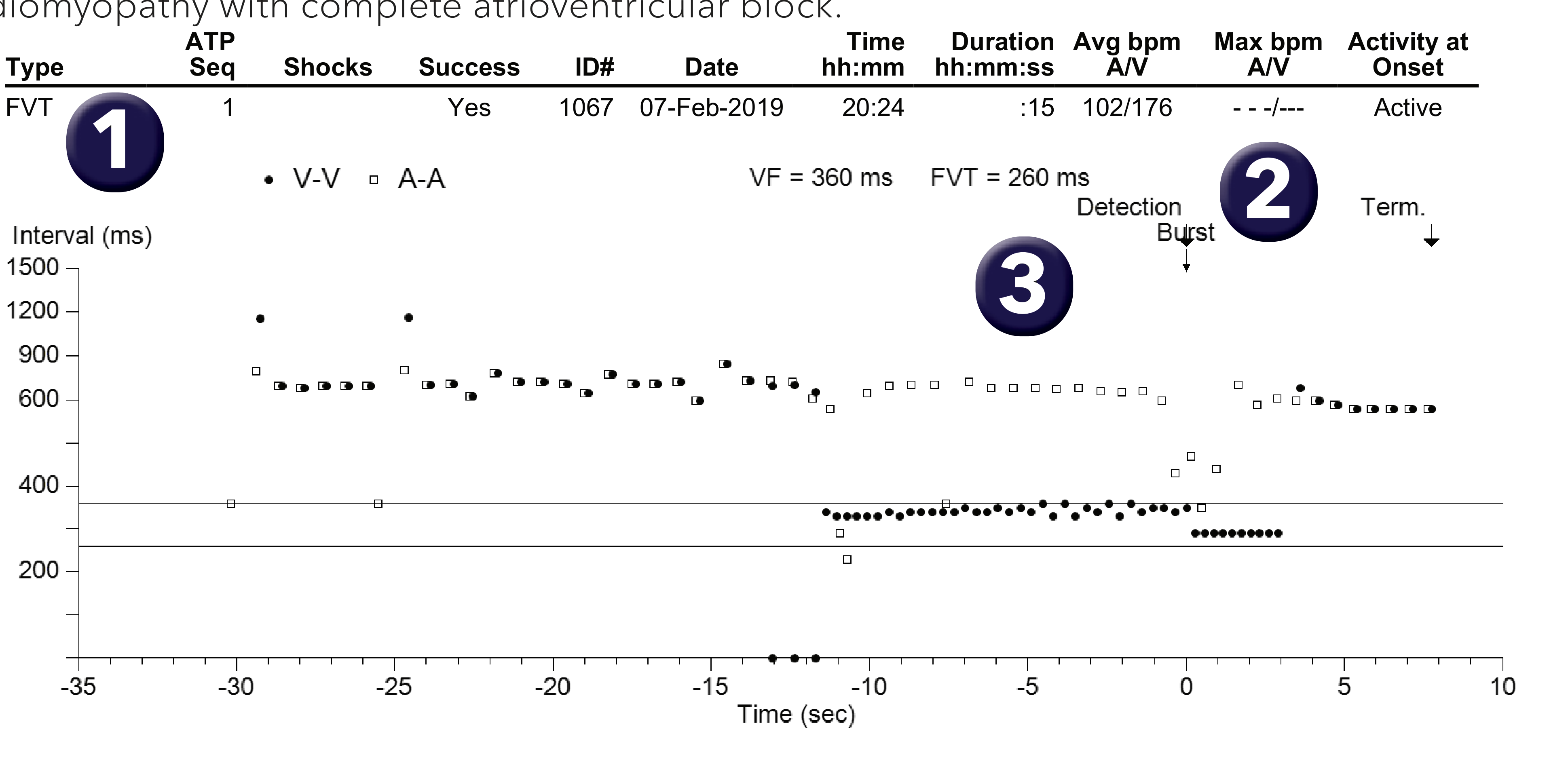
From the interrogation
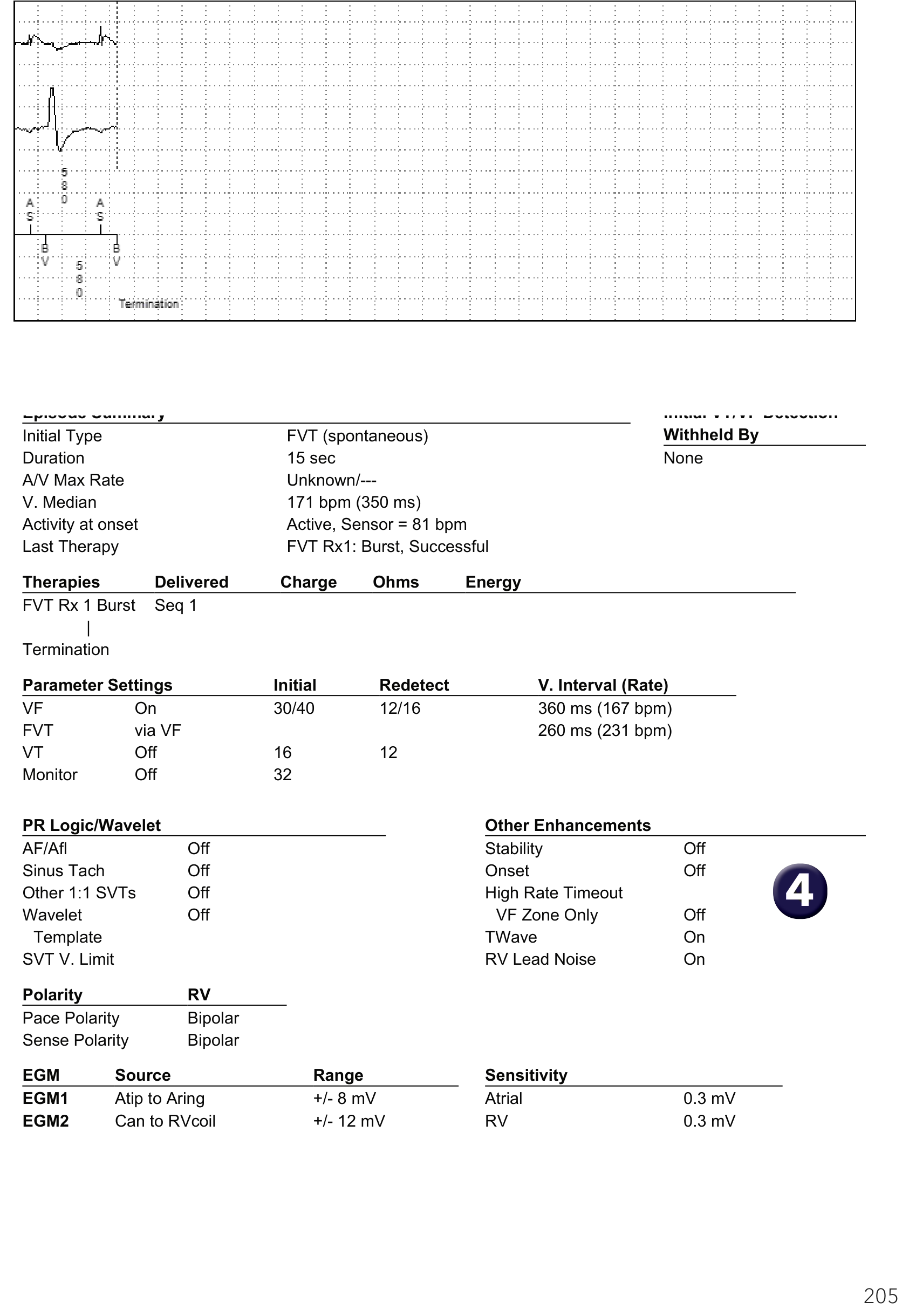
EGM

- What is the diagnosis made by the defibrillator for this episode? This episode has been classified as FVT by the device.
- How many detection zones are programmed? Two detection zones have been programmed.
- What diagnosis does the interval plot suggest? The graph initially shows a synchronised atrioventricular rhythm, then acceleration of the ventricular rhythm into the FVT zone with atrioventricular dissociation; a burst interrupts the tachycardia.
- How many discrimination parameters are programmed? All discrimination parameters (stability, sudden onset, PR Logic, Wavelet) are set to Off.
- What is the initial rhythm? As expected in a resynchronised patient, the patient is initially sensed in the atrium and paced biventricularly.
- What is your diagnosis? It is a VT with atrioventricular dissociation
- What is the effect of the burst? The burst terminates the arrhythmia.
Points to remember
- This patient had been implanted for primary prevention of ischaemic cardiomyopathy; he also had complete atrioventricular block justifying permanent ventricular pacing and the implantation of a triple-chamber defibrillator.
- There are now international recommendations for defibrillator programming, but these need to be tailored to the specific needs of each patient.
- In this patient, the discrimination had been programmed ‘Off’; in fact, the discrimination algorithms should only be programmed in patients likely to present with conducted supraventricular tachycardia and should therefore be deactivated in patients with complete and permanent atrioventricular block; in this case, any rapid spontaneous rhythm can only be of ventricular origin.
Practice out loud
Just describe the tracing. What do you think is going on? Describing the numbers can help.
00:00
0%
—
From Medtronic ICD — clinical cases by P. Bordachar, A. Thiyagarajah, L. Fontagne, M. Strik, S. Ploux. Published by Cardiocases. Every numbered marker on a recording is explained in the list beneath it; tap a marker on the trace or an entry in the list.
Order hardcopyon Amazon