
Chapter 3 · Discrimination · Case 3
Preferred PARAD+ pathway
Patient
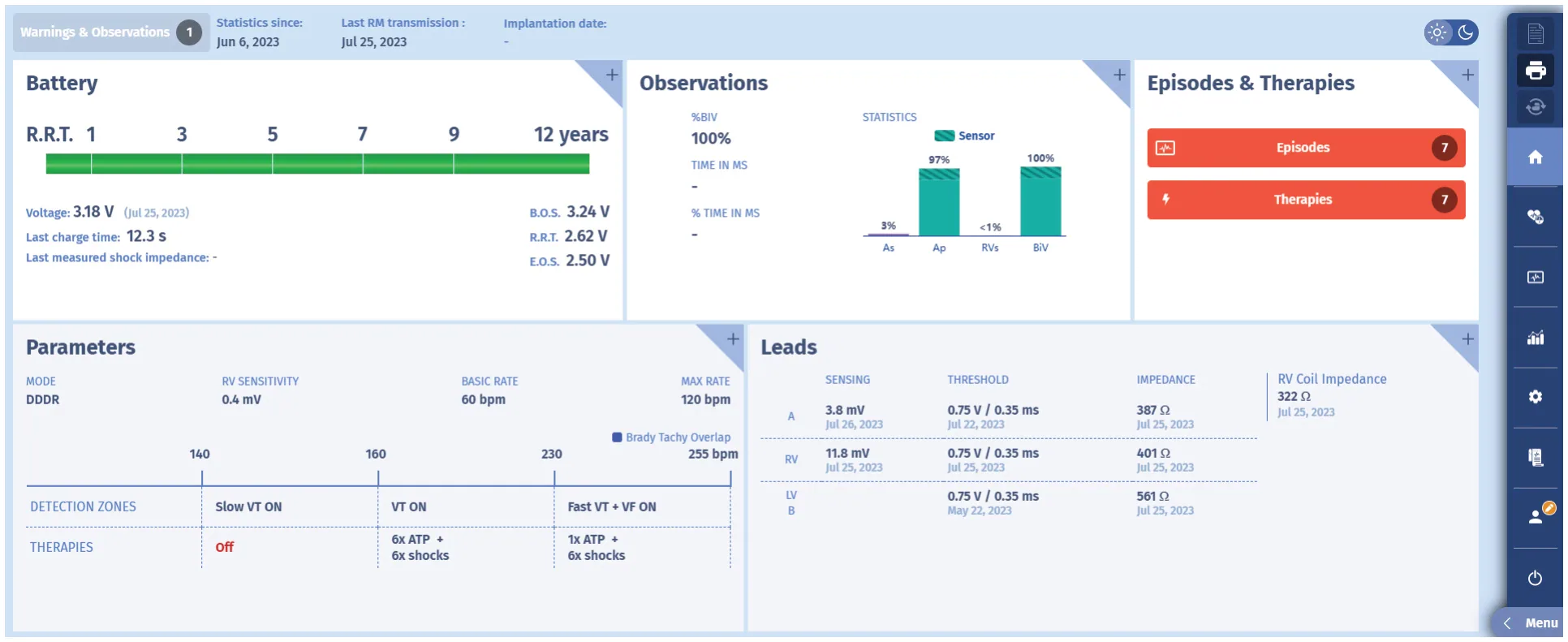
- A 60-year old patient implanted with a CRT-D because of dilated cardiomyopathy with left bundle branch block, visits our clinic for a device check. The patient has sensed short bursts of palpitaitons lately.
You interrogate the ICD
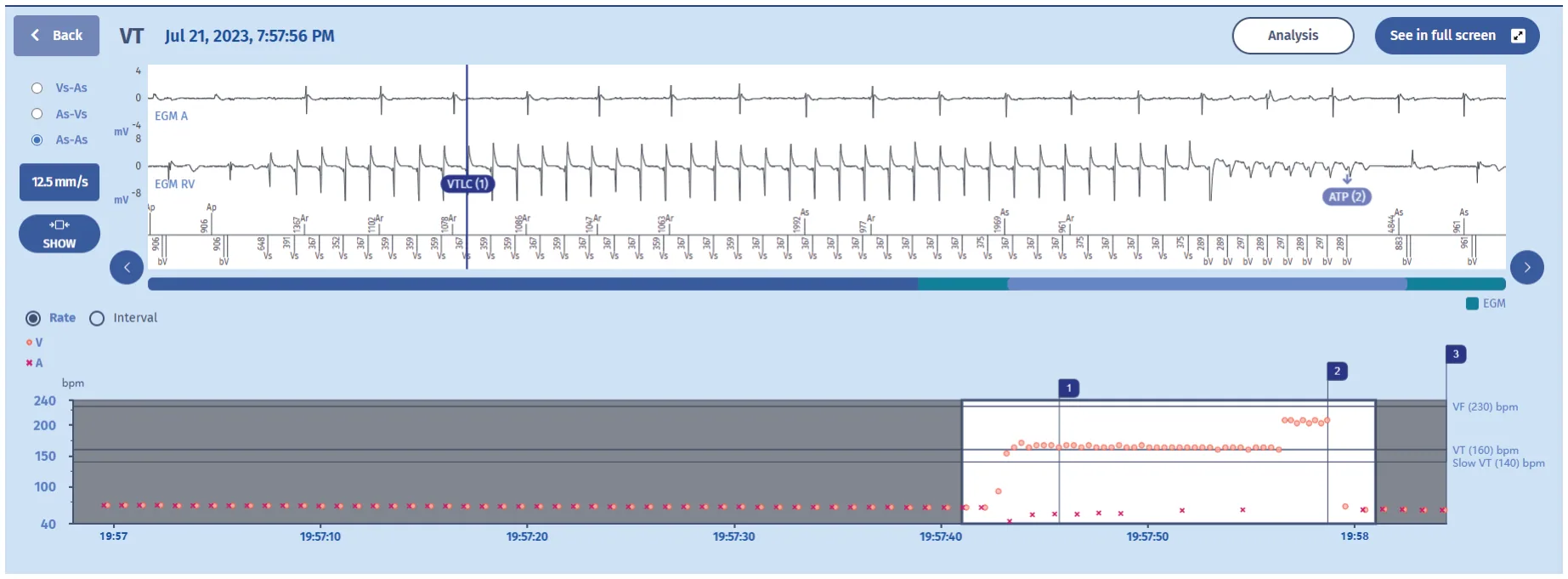
This is one of the episodes responsible for palpitations, set to 12,5 mm/sec:
Your turn
What is the correct PARAD+ statement?
- As the rythm is stable, it checks for PR association, finds none, and therefore declares VT
- As there are more ventricular events than atrial events, it declares VT direcly, without checking onset or stability
- The morphology on the discrimination channel is different than the reference, therefore declaring VT
- There is no discrimination for this zone, so the ICD declares VT immediately.
Interval plot and EGM
The initial rhythm (we only see two beats) is atrial pacing and biventricular pacing. We see two pacing markers as there is a significant interventricular delay in favor of the left ventricle. Suddenly a ventricular tachycardia initiates. For us, we diagnose VT quite easily since there are more ventricular events than atrial events. After the VT majority (VTCL marker) and persistence counter have been filled, an ATP is delivered which terminates the tachycardia.
Comments
Most ventricular tachycardia episodes will be discriminated according to this example. To understand how the PARAD+ algorithm functions (only possible when atrial lead is present and reliable), it is always easy to go to Parameters, Tachy and then click on PARAD+ to acquire the following screen.
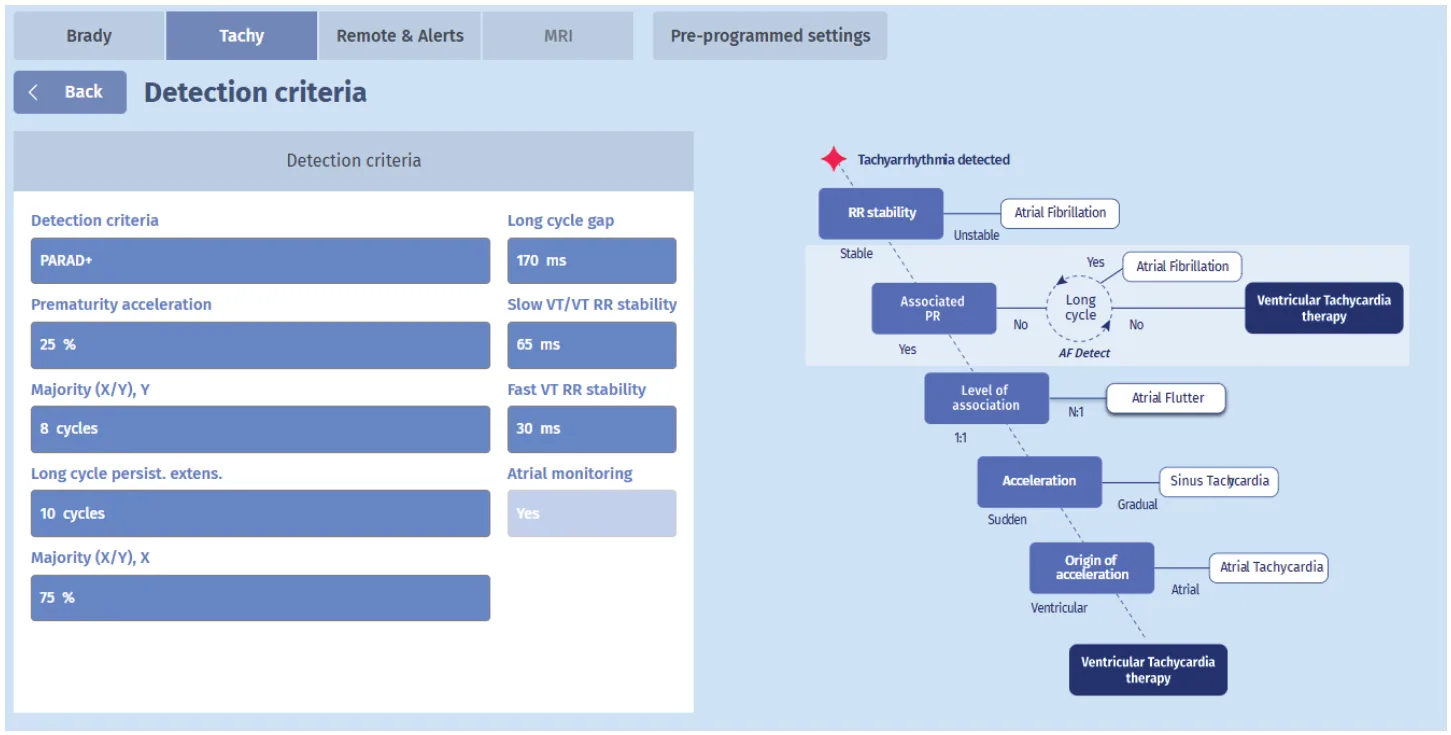
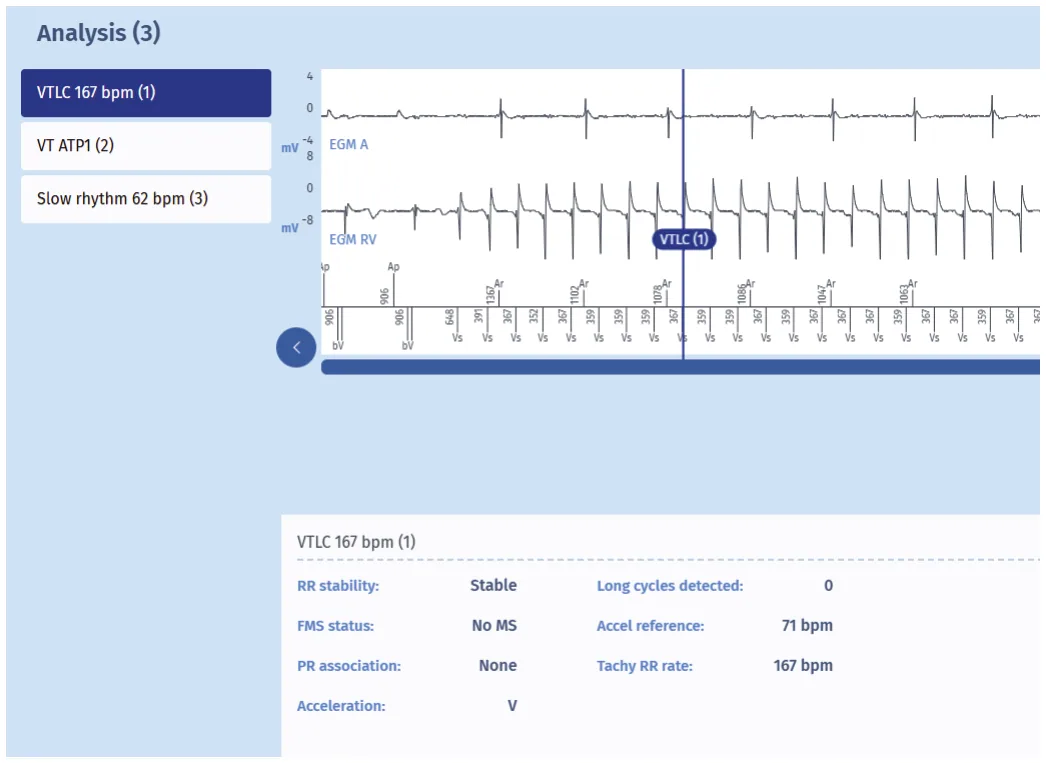
We see that when a Tachyarrhythmia is detected, the PARAD+ will first check whether the rhythm is stable. Since AF is the most important supraventricular tachycardia to cause inappropriate therapies, this is the first step in the PARAD+ algorithm. The second step is to verify whether the atria and ventricles are associated. In the case of most VTs, there is no association and therefore this is a good criterion to distinguish between VT and SVT. To verify which route the PARAD+ algorithm took in this example, we can click on Analysis on the programmer screen and it will display the following information.
We can see that the ventricular rhythm was indeed considered as stable (PARAD+ step 1) and that there is no PR association (step 2). This is how the diagnosis of VT is made.
Why the “LC” in VTLC?
Stability and lack of PR association is a powerful combination for discrimination but the pitfal remains AF with soo rapid ventricular conduction that it may become quite “stable”. This is when the engineers decided to upgrade PARAD to PARAD+ with the search for long cycles. A cycle is considered long when it is 170 ms (programmable) longer than the mean coupling interval of the VT. This serarch is associated to an increase of the initial persistence counter by 10 cycles (programmable, see PARAD+ figure). If PARAD+ is programmed and the diagnosis of VT has been made following these steps, the VTLC marker appears to show that it has used the long cycle criterion. We can consider it as another safety measure against inappropriate therapies due to AF with fast ventricular conduction.
Take-home messages
Most of the VT will follow the PARAD+ steps such as in this example: 1) it is considered stable, 2) there is no PR association. Long cycles extend the persistence counter, adding the + to PARAD+ algorithm.
Practice out loud
Just describe the tracing. What do you think is going on? Describing the numbers can help.
—
From Implantable Cardioverter Defibrillator — Clinical cases from patients with MicroPort™ ICDs by M. Strik, A. Thiyagarajah, S. Ploux, P. Bordachar, P. Ritter. Published by Cardiocases. Each case is a question on real device interrogations: pick your answer, check it, then read the authors’ interpretation. Tap any figure to open it full screen.