
Chapter 3 · Discrimination · Case 1
Stability as the great discriminator
Patient
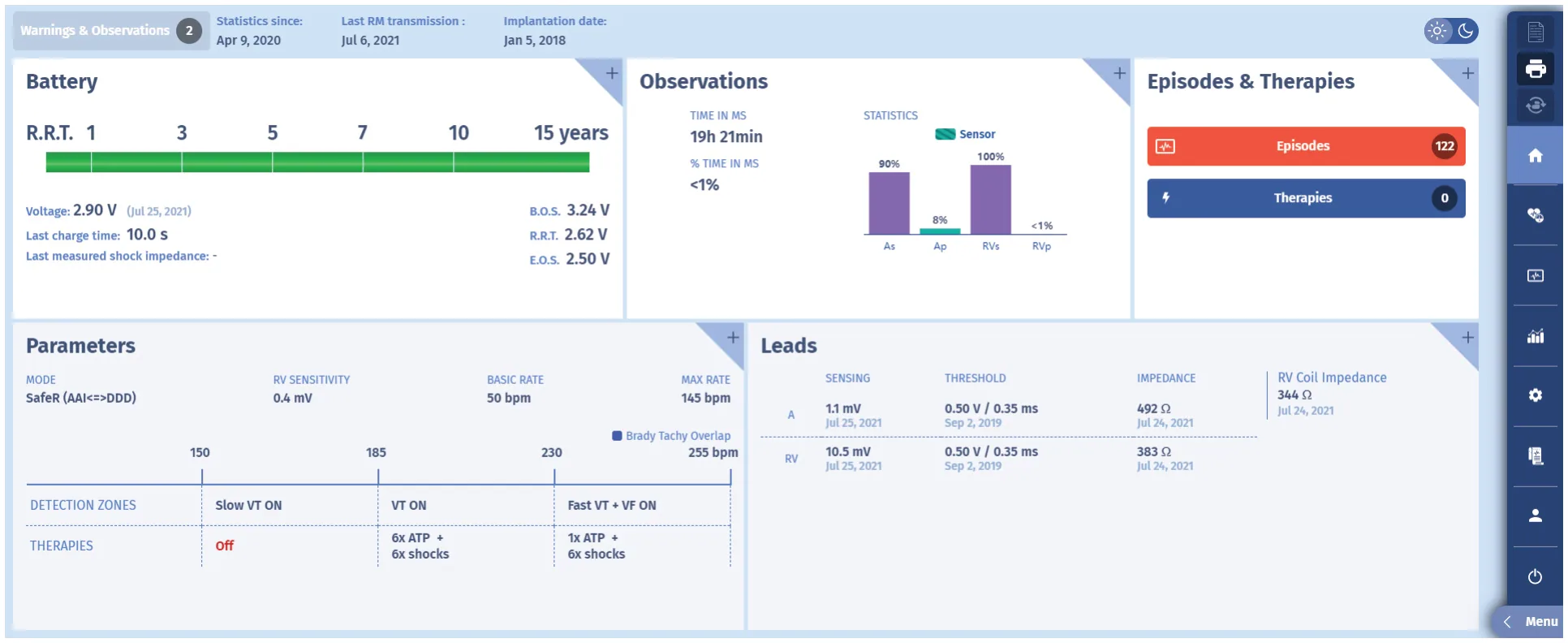
- 66-year old patient with ischemic cardiomyopathy implanted with a dual chamber defibrillator for primary prevention undergoes routine device interrogation.
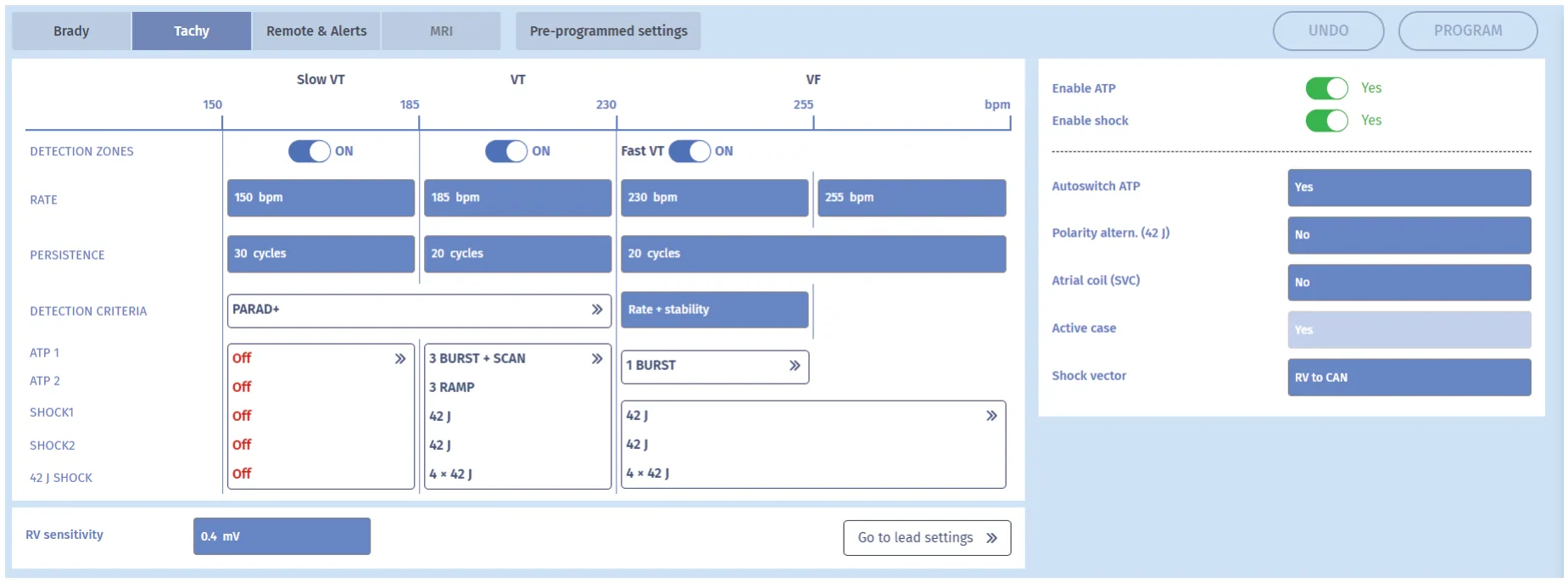
Programming
EGM
Your turn
What is the correct diagnosis?
- Ventricular tachycardia
- Ventricular fibrillation
- Atrial fibrillation with rapid ventricular response
- Bitachycardia (atrial fibrillation + ventricular tachycardia)
- Sinus tachycardia
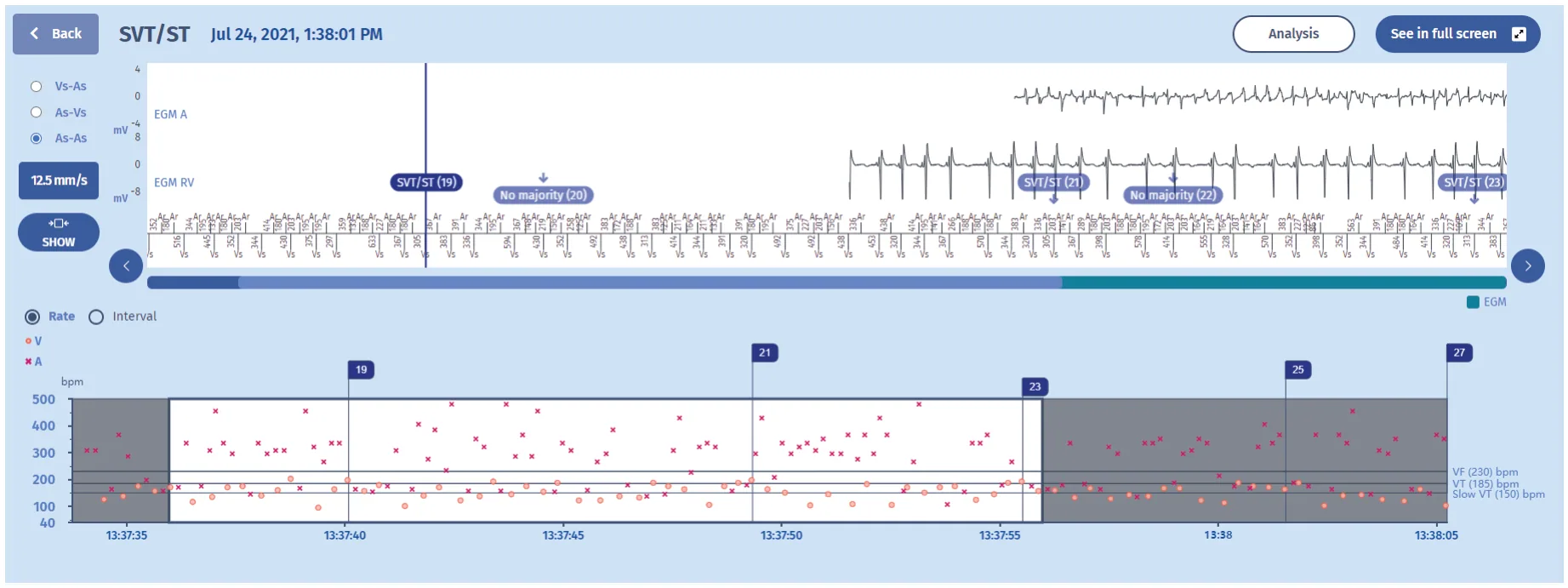
EGM
The interval plot and EGM show very rapid and irregular atrial arrhythmia on the atrial channel which confirms the diagnosis of AF. The ventricular EGM and markers also show rapid ventricular events which may give the suspicion of ventricular arrhythmia. However, the events are highly irregular and together with the co-existence of AF, the diagnosis of AF with rapid ventricular response can be made.
Discrimination
Discrimination in the context of ICDs is used to describe all efforts to exclude inappropriate diagnoses and therapys of supraventricular arrhythmia. While today, these algorithms are considered as being the most complicated onboard ICDs, in the past they were based mostly on stability (regularity of ventricular events) and sudden onset (to exclude sinus tachycardia). As AF is a major risk factor for inappropriate therapies and as it is most often irregular, the stability criterion is still considered as an important part of any discrimination algorithm. In MicroPort devices, it is even the first step of the PARAD+ algorithm.
When we click on Analysis we will find out which criteria were made to get to the conclusion of SVT/ST during the episode. As the analysis is continuous over a sliding window of 8 cycles, the diagnosis may change rapidly and it is therefore not uncommon to see multiple labels (“diagnoses”) during an episode in MicroPort ICDs.
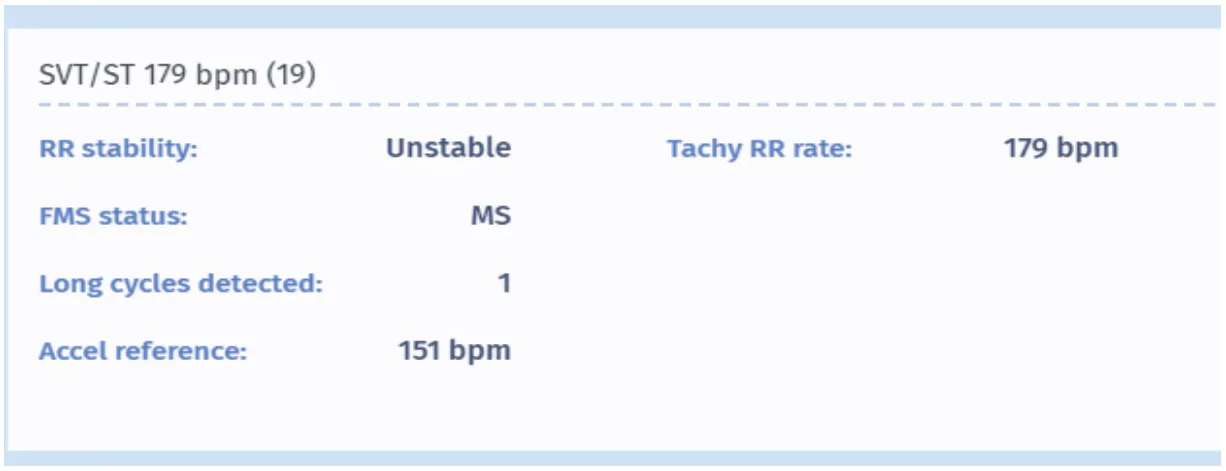
For marker 19, we can appreciate that the diagnosis of “SVT/ST” was made as the ventricular events were considered “unstable”. Again working with the “majority” method, 6 out of 8 ventricular events surpassed the 65 ms threshold, as programmed in the discrimination screen:
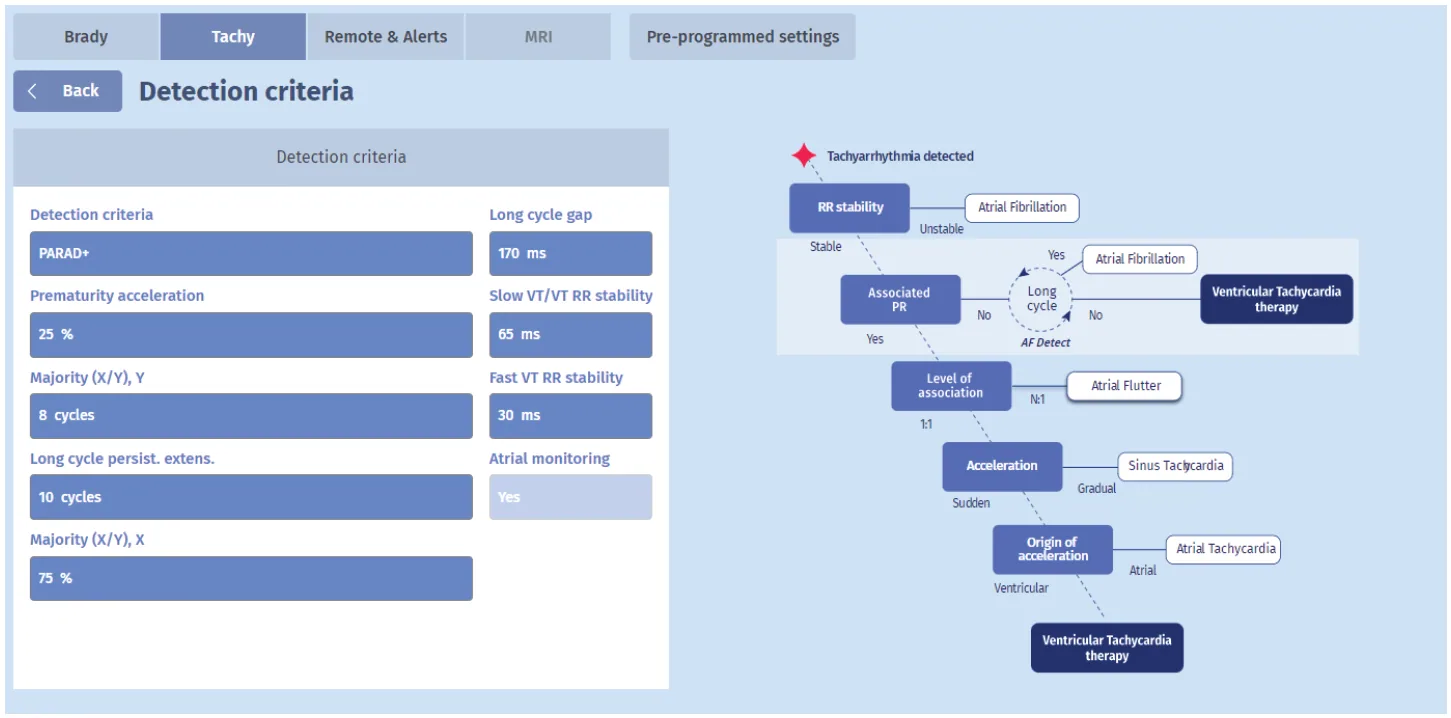
We can appreciate the importance of “Stability” in the PARAD+ discrimination algorithm tree on the right of the figure, as it is the first step. When the VT criteria are met but RR is instable, it is considered as AF, the episode is saved as “SVT/VT” and therapy is withheld. This also holds true for slow VT zones without therapies, such as in this case.
As the episode continues, we can imagine that in some instances, the rapid ventricular events in fact become stable enough to not cross the 65 ms threshold. This is indeed true in this episode for example for marker 21.
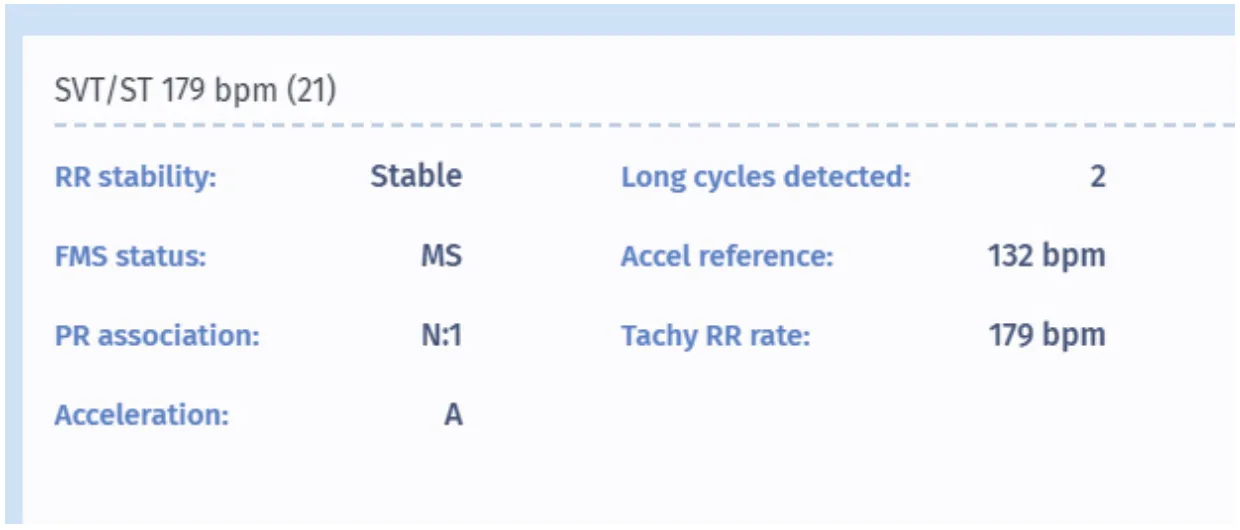
We can learn from the figure that marker 21 is considered as “Stable”. Fortunately, the PARAD+ has more criterion which protects against inappropriate diagnosis of VT in case of AF with rapid ventricular response. It is actually looking for atrioventricular association and in this case, finds that the relation is N:1, declaring it as supraventricular. It also correctly identified the origin of the tachycardia as atrial, which can also help in correctly discriminating the episode as supraventricular.
Take-home messages
Stability is one of the most common discriminators. While it has its pitfalls (as VTs may be unstable and ventricular response during AF may be stable), it is still quite powerful in distinguishing between VT and AF with rapid ventricular response.
Practice out loud
Just describe the tracing. What do you think is going on? Describing the numbers can help.
—
From Implantable Cardioverter Defibrillator — Clinical cases from patients with MicroPort™ ICDs by M. Strik, A. Thiyagarajah, S. Ploux, P. Bordachar, P. Ritter. Published by Cardiocases. Each case is a question on real device interrogations: pick your answer, check it, then read the authors’ interpretation. Tap any figure to open it full screen.