
Chapter 1 · Counters · Case 7
Sinus return counter and non-sustained ventricular tachycardias
Patient and episode
Patient
- male patient implanted with a single-chamber Ellipse defibrillator with multiple episodes of SVT and anti-tachycardia pacing treatments
Summary
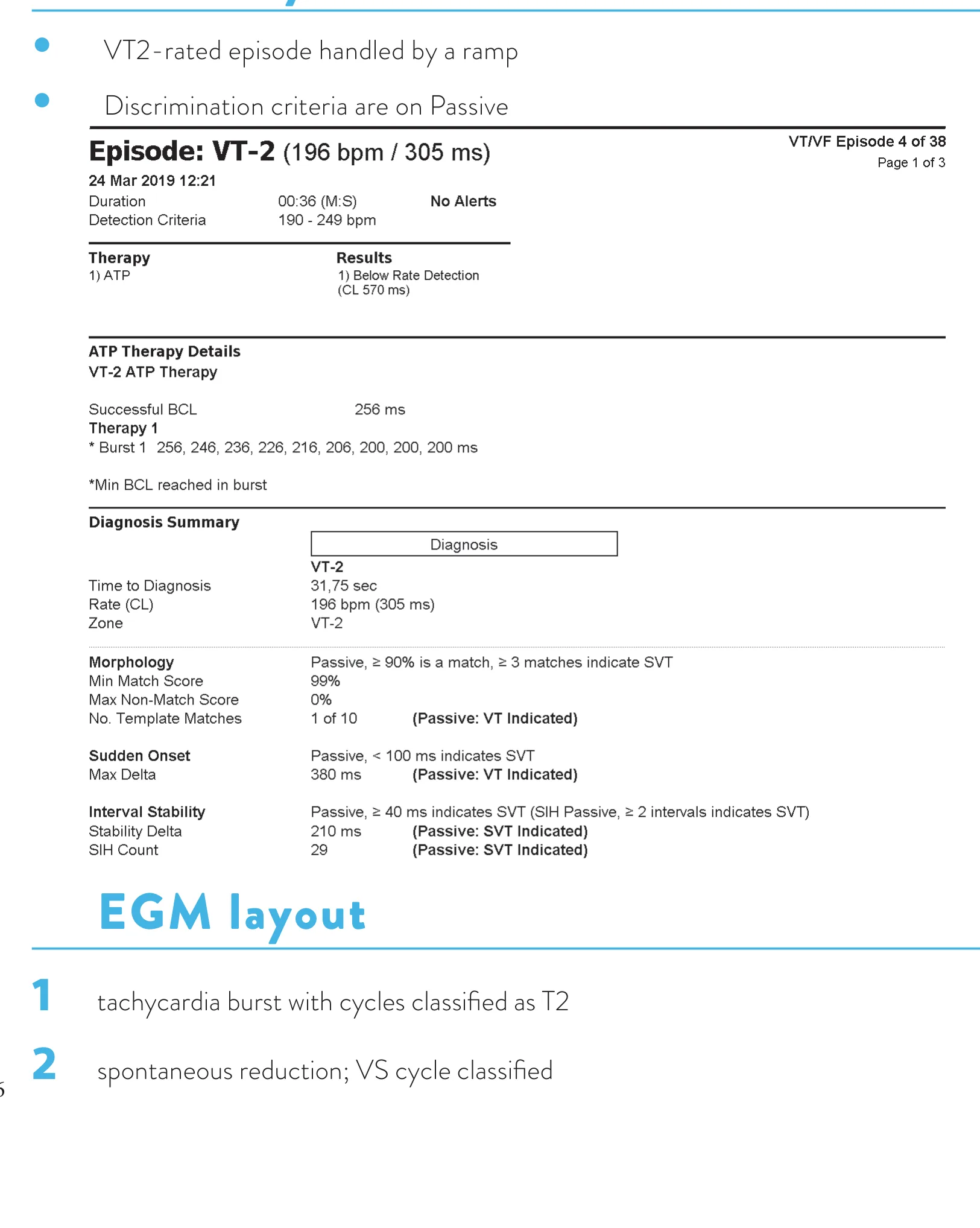
- VT2-rated episode handled by a ramp Discrimination criteria are on Passive
The recording
Tap a number on the trace, or an entry in the list below
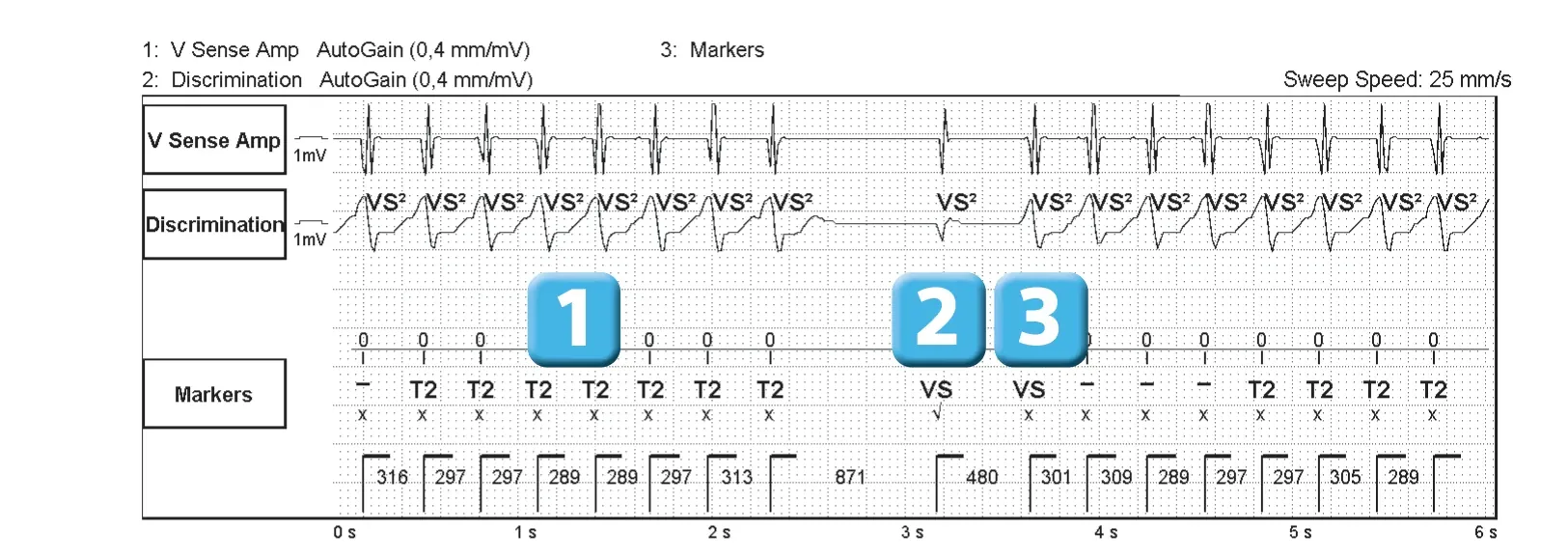
- tachycardia burst with cycles classified as T2
- spontaneous reduction; VS cycle classified
- second cycle classified as VS (sinus return counter not completed); restart of the same arrhythmia; the VT2 counter continues to increment (not reset to 0 by the 2 VS cycles)
- new spontaneous reduction but the sinus return counter is not completed
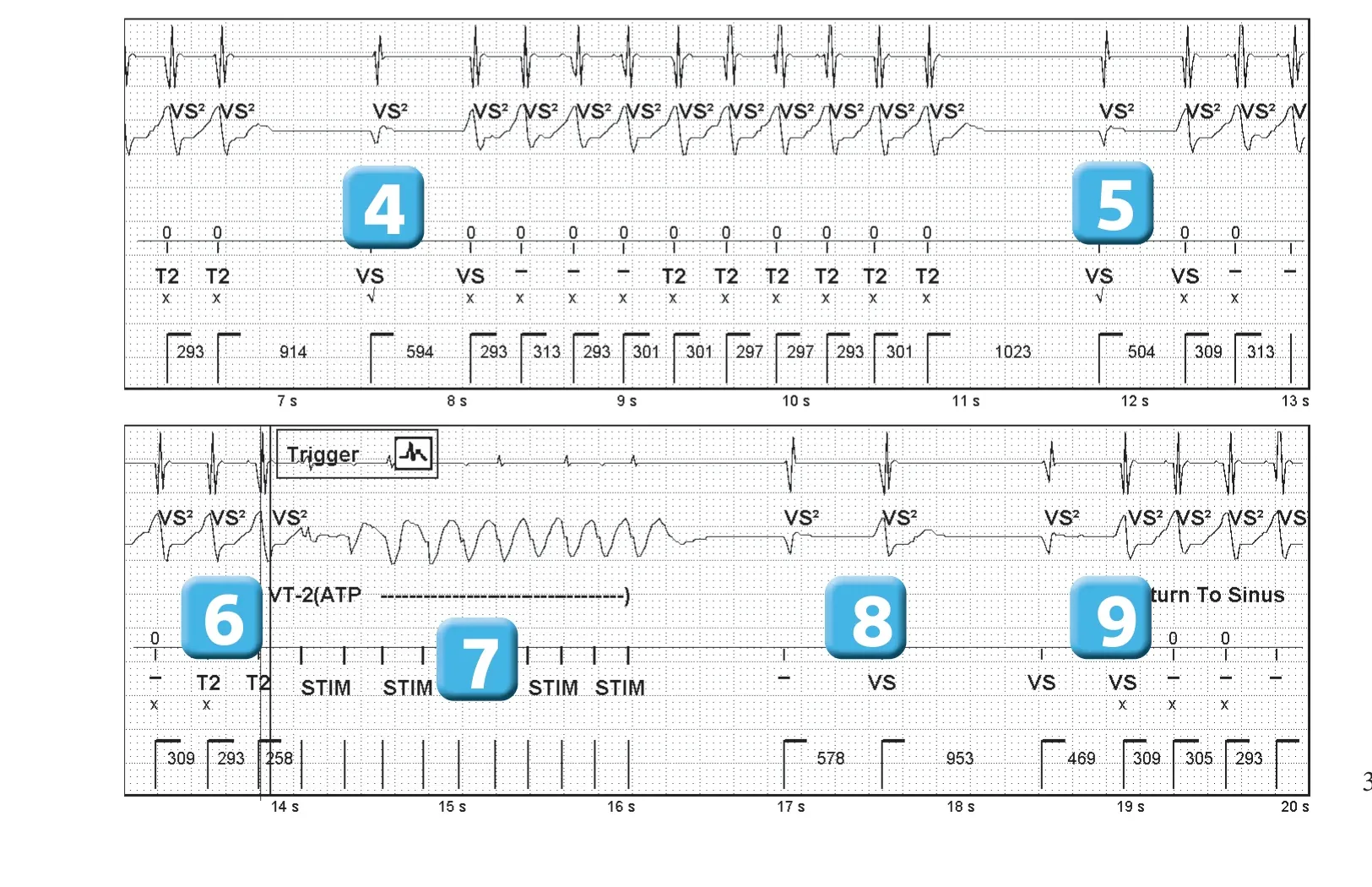
- New spontaneous reduction, but the sinus return counter is not complete
- The VT2 counter is completed
- ramp
- arrhythmia reduction
- in the third VS cycle, sinus return counter completed then restart of arrhythmia
From the interrogation
Points to remember
- This patient had numerous episodes of SVT with appropriate therapies (this is indeed a ventricular rhythm disorder) but avoidable (in fact, probable spontaneous reduction in the absence of device intervention).
- This trace illustrates the negative aspect of Abbott’s classification of cycles and counters for tachycardia and sinus return. a VS-classified cycle does not reset the VT or VF counters to zero; when a patient has spontaneously resolving VTNS but with very rapid restarting, the sinus return counter does not have time to be completed and the tachycardia counter gradually increases until therapies are delivered
- in this case, unlike the previous trace, it is advisable to program a sinus return counter to 3 rather than 5 or 7 to facilitate rapid diagnosis of the end of the episode, which resets the various tachycardia counters to zero
Practice out loud
Just describe the tracing. What do you think is going on? Describing the numbers can help.
00:00
0%
—
From Implantable Cardioverter Defibrillator — clinical cases based on tracings by P. Bordachar, M. Strik, A. Thiyagarajah, S. Ploux. Published by Cardiocases. Every numbered marker on a recording is explained in the list beneath it; tap a marker on the trace or an entry in the list.