
Chapter 3 · Discrimination · Case 2
Episode of sinus tachycardia and single-chamber discrimination
Patient and episode
Patient
- Simulator creation of a sinus tachycardia trace on a single-chamber Gallant defibrillator
Summary
- Diagnostic criteria for VT: morphology during exercise, stability, and sudden onset during rest. 1 programmed discrimination parameter favors VT: stability delta (10 ms) with His counter at 0; 2 programmed discrimination parameters favor SVT: morphology (number of similar cycles: 8 out of 10) and abrupt onset (max delta at 4%)
The recording
Tap a number on the trace, or an entry in the list below
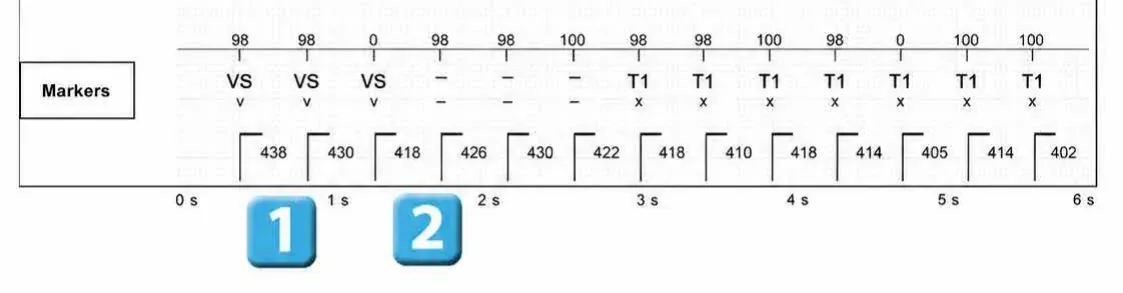
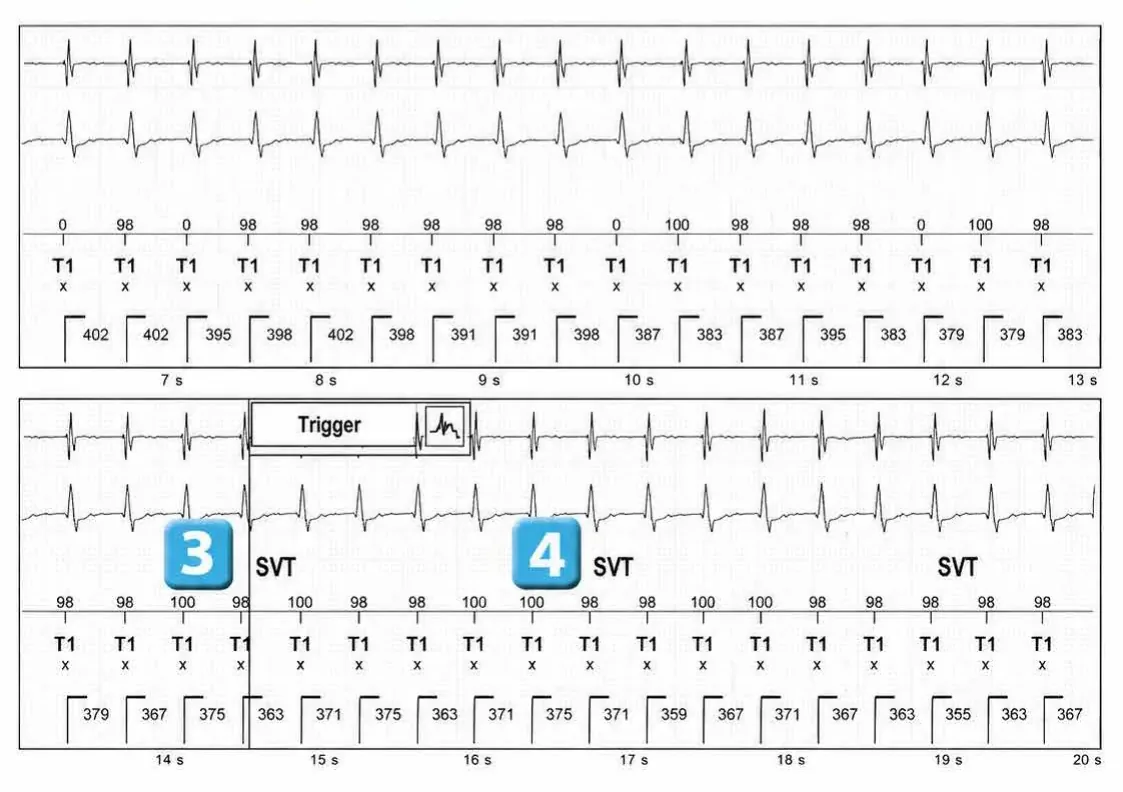
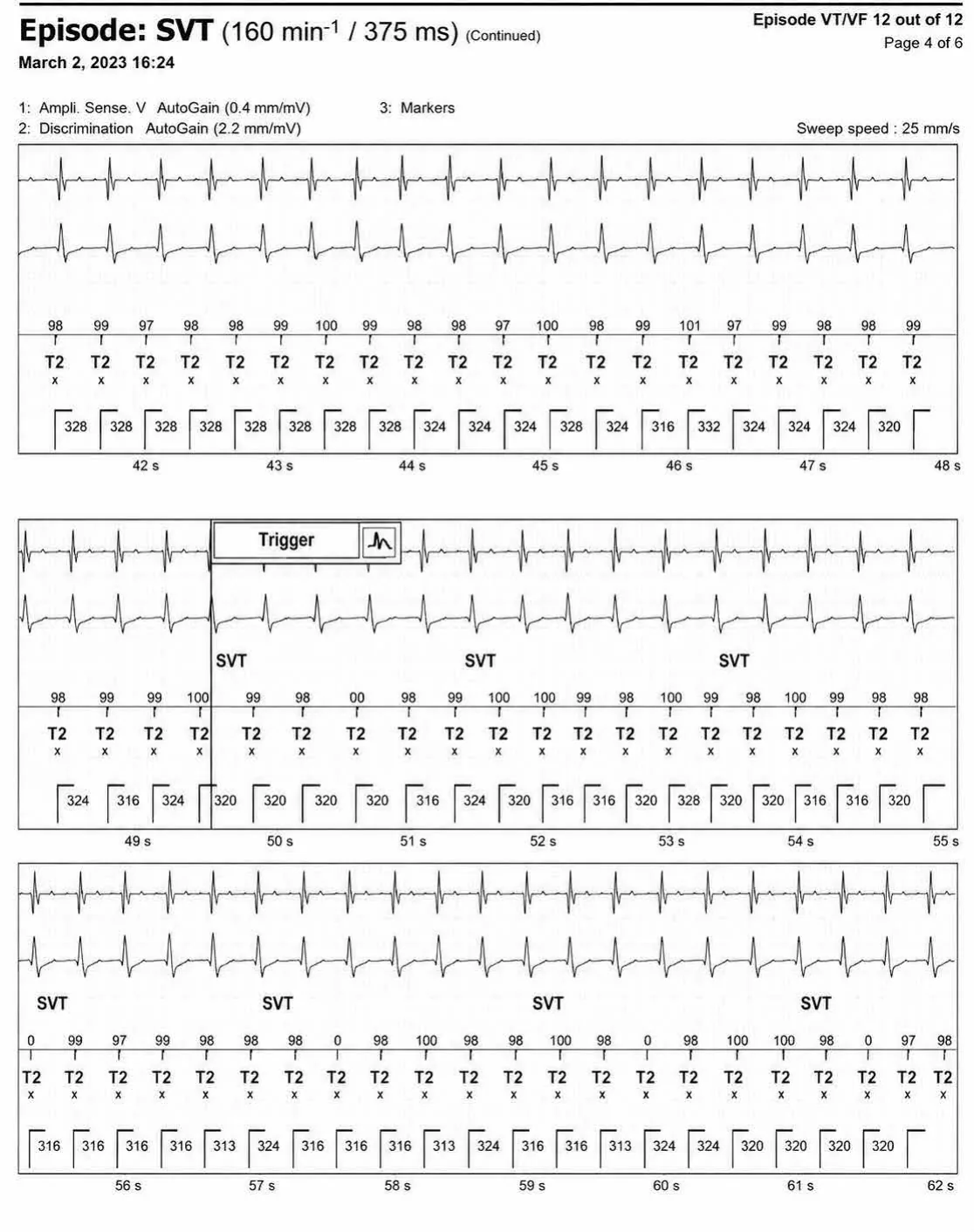
- tachycardia with a frequency below 140 beats/minute, therefore below the first programmed tachycardia zone; ventriculograms labeled VS
- Slight acceleration with no change in morphology; the concordance rate with the reference ventricular signal is greater than 95% for most ventricular cycles, which is symbolized by a v tick under each T marker
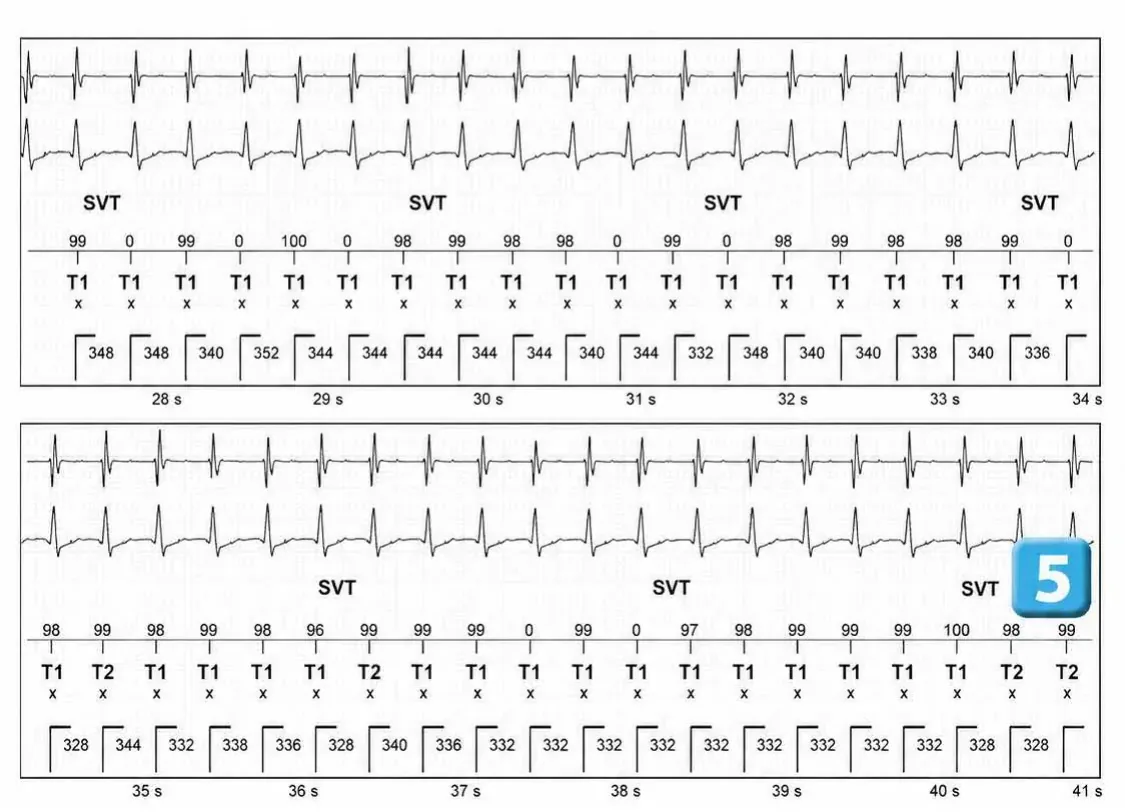
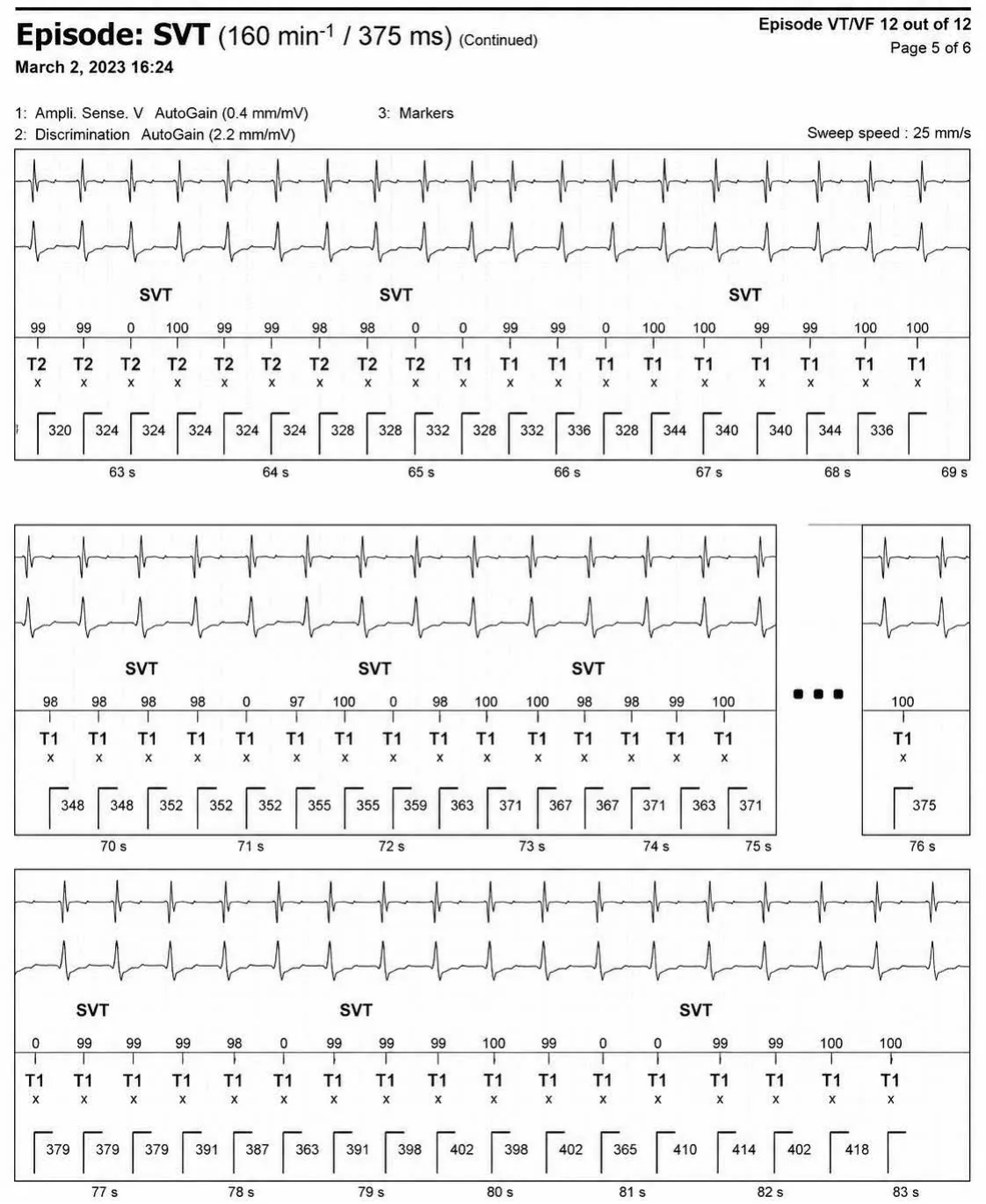
- after 30 T1 cycles, episode classified as SVT despite the positive stability criterion; in fact, the only discriminating parameter on Walk is the morphology, which favors SVT
- Confirmation of the diagnosis of SVT every 6 cycles
- acceleration in the VT2 zone
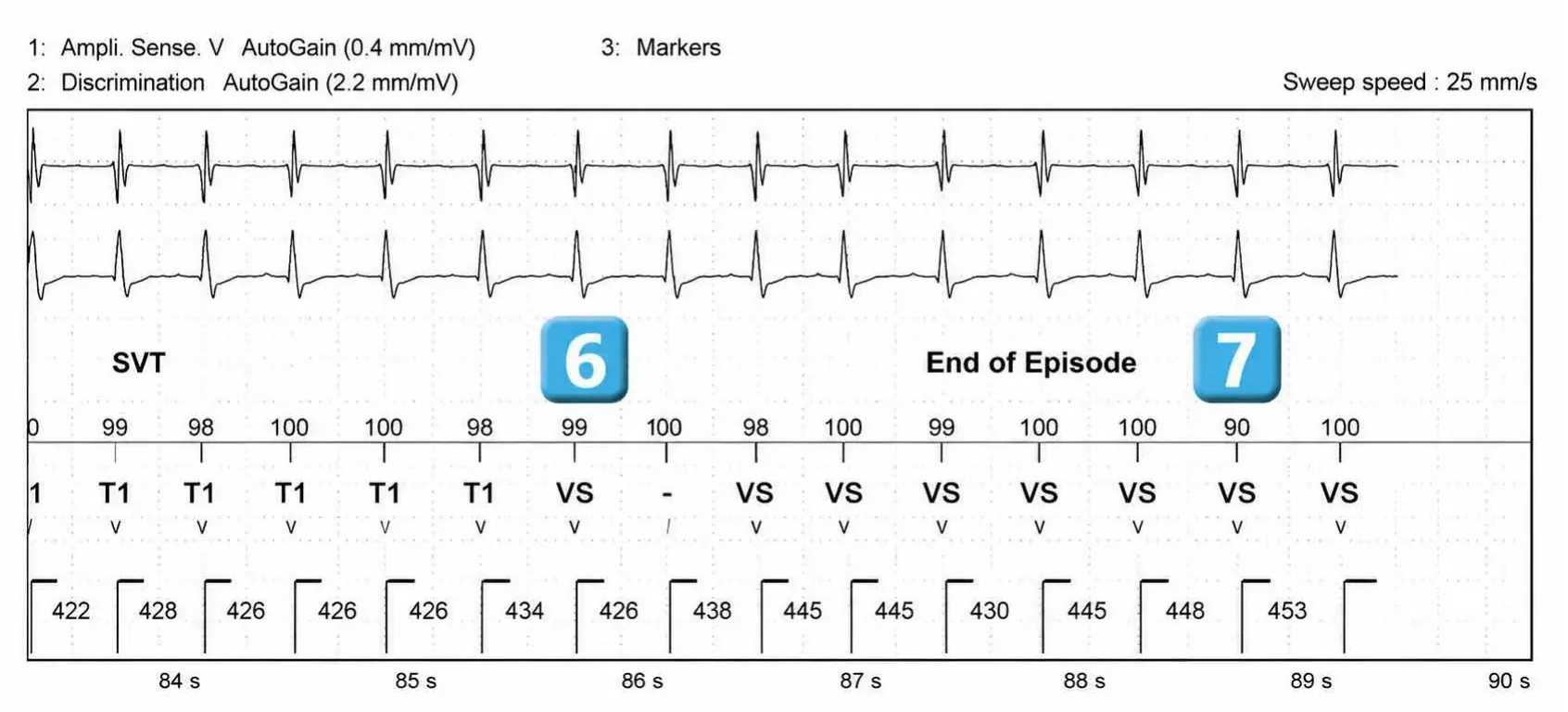
- progressive deceleration
- diagnosis of end of episode
From the interrogation
Points to remember
- Patients who benefit most from discrimination are those in whom the frequency ranges of ventricular tachycardia and supraventricular tachycardia overlap (patients with slow VT, patients susceptible to rapid AF, young patients with rapid sinus tachycardia on exertion).
- The percentage of inappropriate therapies has decreased significantly since the earliest studies in patients with implanted defibrillators, reaching an annual rate of between 1% and 5% today. The reasons for this significant decrease are multifactorial (programming of longer detection times, programming in primary intention of detection zones for tachycardias > 187 beats/minute, programming of discrimination algorithms); it is therefore difficult to isolate precisely the effect of programming discrimination algorithms
- this episode corresponds to correctly discriminated sinus tachycardia; typically, during sinus tachycardia, 2 out of 3 criteria indicate SVT; in fact, there is most often a gradual onset (SVT), a stable rhythm (VT), and a similar morphology (SVT); programming discrimination based solely on morphology or 2/3 programming therefore allows effective discrimination of sinus tachycardia episodes
- The sudden onset criterion allows sinus tachycardia (gradual onset) to be differentiated from ventricular tachycardia (sudden onset). However, this parameter does not allow ventricular tachycardia to be effectively discriminated from atrial fibrillation/atrial flutter, where the onset is often sudden.
- The sudden onset delta is defined as the difference between the average RR interval, calculated on the first cycle classified as T or F (pivot cycle), and the average interval of 4 of the 8 previous cycles (taking one interval out of every two alternately). if the sudden onset deviation is less than the programmed delta, then the onset is considered gradual and the parameter favors sinus tachycardia; otherwise, the onset is considered sudden and the parameter favors VT.
- The sudden onset can be programmed as an absolute value (nominal value 100 ms) or as a percentage (nominal value 18%).
- The sudden start criterion may be triggered in certain specific cases and may result in an erroneous diagnosis in two types of patients: 1) patients with exertional VT (ischemic cardiomyopathy, hypertrophic cardiomyopathy, long QT syndrome, or right ventricular dysplasia), where there may not be a clear break between the sinus tachycardia rate preceding the tachycardia and the VT rate; 2) patients in whom the VT frequency fluctuates around the lower limit of the VT range
- sudden onset will lead to a diagnosis of VT in the presence of AT, flutter, and sometimes AF
Practice out loud
Just describe the tracing. What do you think is going on? Describing the numbers can help.
00:00
0%
—
From Implantable Cardioverter Defibrillator — clinical cases based on tracings by P. Bordachar, M. Strik, A. Thiyagarajah, S. Ploux. Published by Cardiocases. Every numbered marker on a recording is explained in the list beneath it; tap a marker on the trace or an entry in the list.