
Chapter 3 · Discrimination · Case 5
Single-chamber discrimination and optimization of the criterion based on morphology
Patient and episode
Patient
- Man implanted with a single-chamber Ellipse VR defibrillator as part of primary prevention for dilated cardiomyopathy
Summary
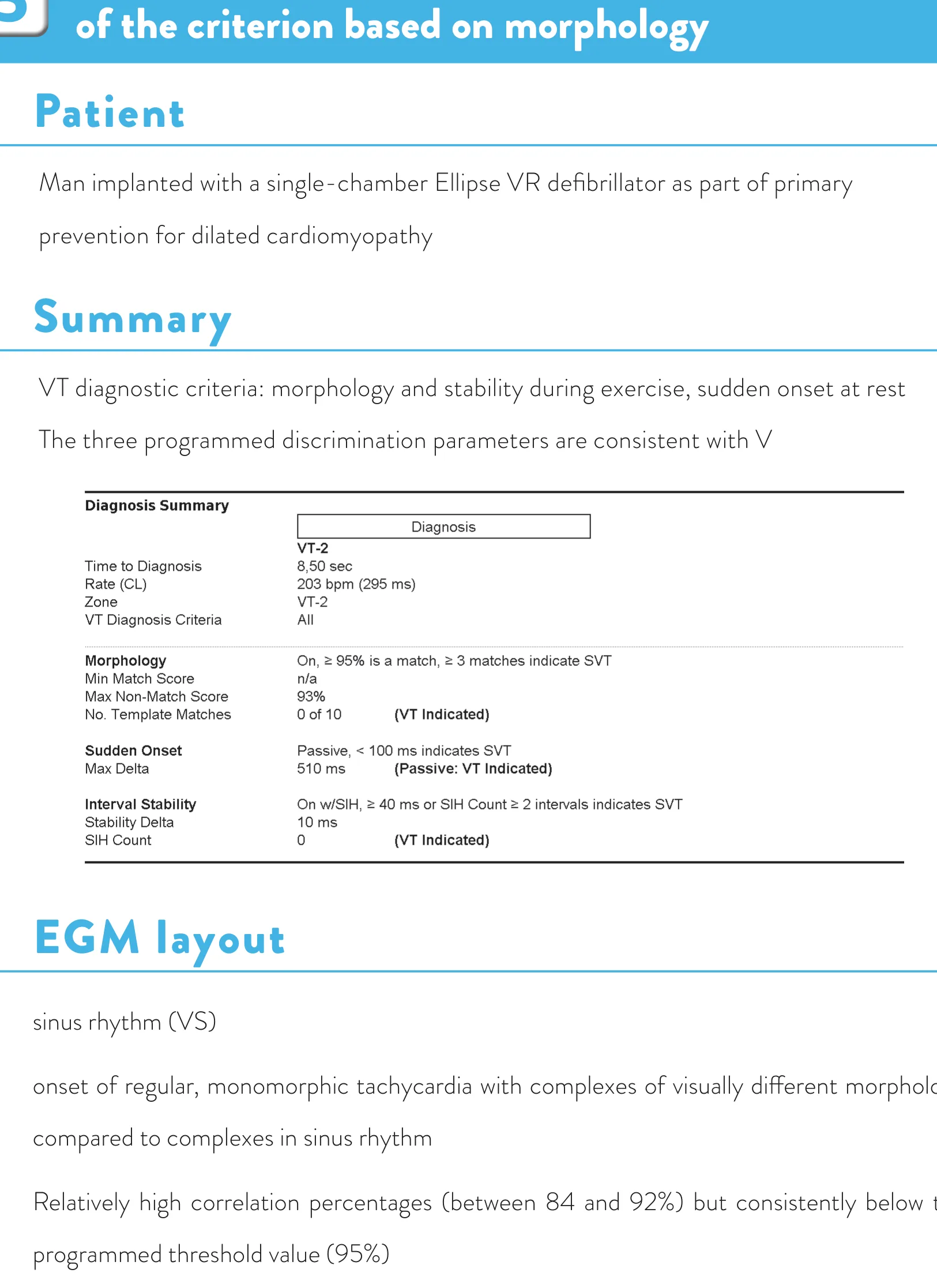
- VT diagnostic criteria: morphology and stability during exercise, sudden onset at rest The three programmed discrimination parameters are consistent with V
The recording
Tap a number on the trace, or an entry in the list below
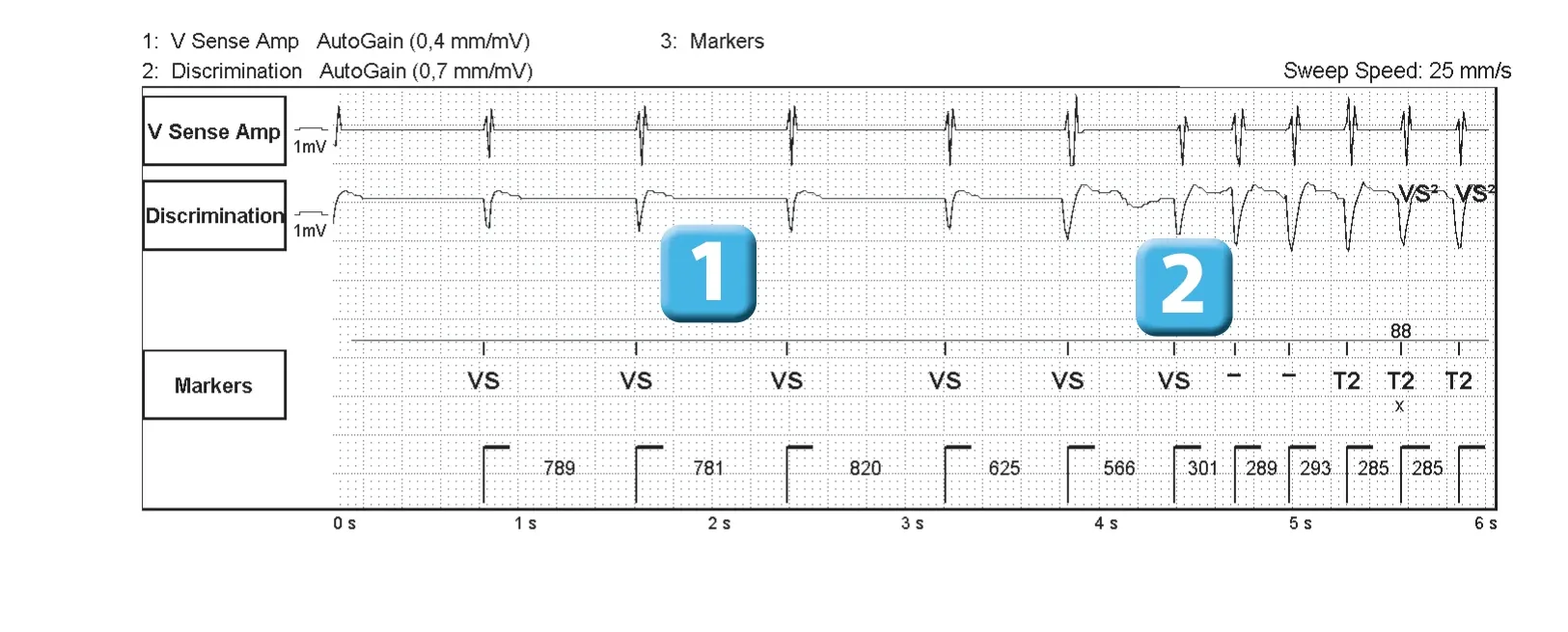
- sinus rhythm (VS)
- onset of regular, monomorphic tachycardia with complexes of visually different morphology compared to complexes in sinus rhythm
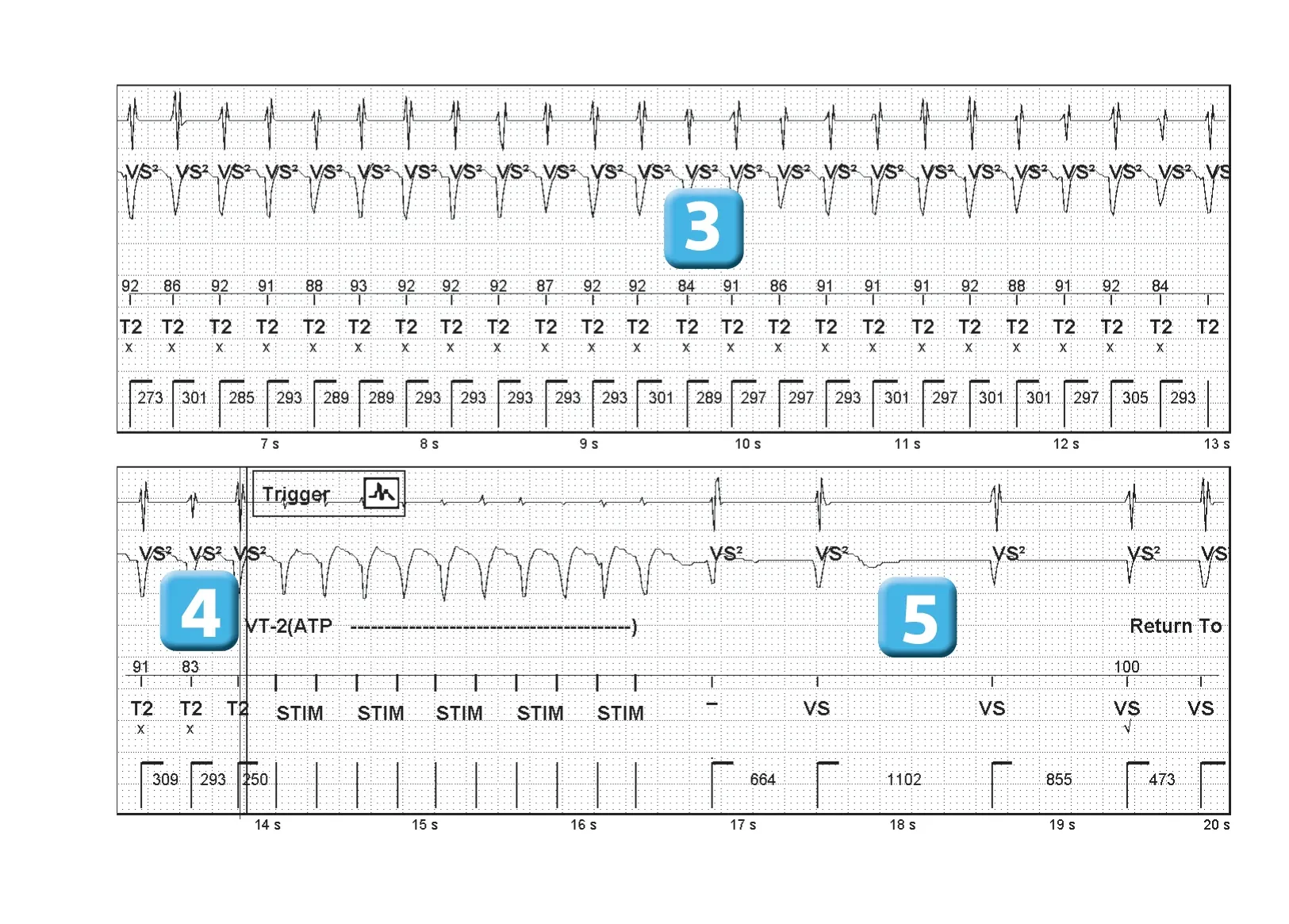
- Relatively high correlation percentages (between 84 and 92%) but consistently below the programmed threshold value (95%)
- VT2 counter completed; VT and burst diagnosis delivered
- Effective burst and sinusoidal return diagnosis
From the interrogation
Points to remember
- In this example of appropriate therapy for septal VT, the morphological difference between ventricular complexes in sinus rhythm and ventricular complexes in tachycardia is not very obvious; the correlation percentages are relatively high, with values exceeding 90%.
- in this patient, the nominal threshold value had been modified (95%, the maximum programmable value), which made it possible to maintain 100% sensitivity for the diagnosis of VT
- A recent study has shown that for nominal values (90%, minimum of 3 out of 10 correlated), sensitivity and specificity values are high; therefore, probably no point in changing these values as a first step; however, in certain specific cases, it may be necessary to adjust the correlation percentage to make the device more sensitive (increase the percentage) or, conversely, more specific (decrease the percentage)
Practice out loud
Just describe the tracing. What do you think is going on? Describing the numbers can help.
00:00
0%
—
From Implantable Cardioverter Defibrillator — clinical cases based on tracings by P. Bordachar, M. Strik, A. Thiyagarajah, S. Ploux. Published by Cardiocases. Every numbered marker on a recording is explained in the list beneath it; tap a marker on the trace or an entry in the list.