
Chapter 2 · Therapies · Case 5
Anti-tachycardia pacing during or before charging in the VF zone
Patient and episode
Patient
- 57-year-old male with ischemic cardiomyopathy and episodes of sustained syncopal VT implanted with a Fortify single-chamber defibrillator; consultation for electric shock
Summary
- Episode of VF with ATP during charging and abandonment of electric shock
- episode of VF with ATP during loading, followed by a 36-joules electric shock
- VF episode treated with a burst
- episode of VF treated with a 30-joules electric shock burst 30 joules electric shock
The recording
Tap a number on the trace, or an entry in the list below
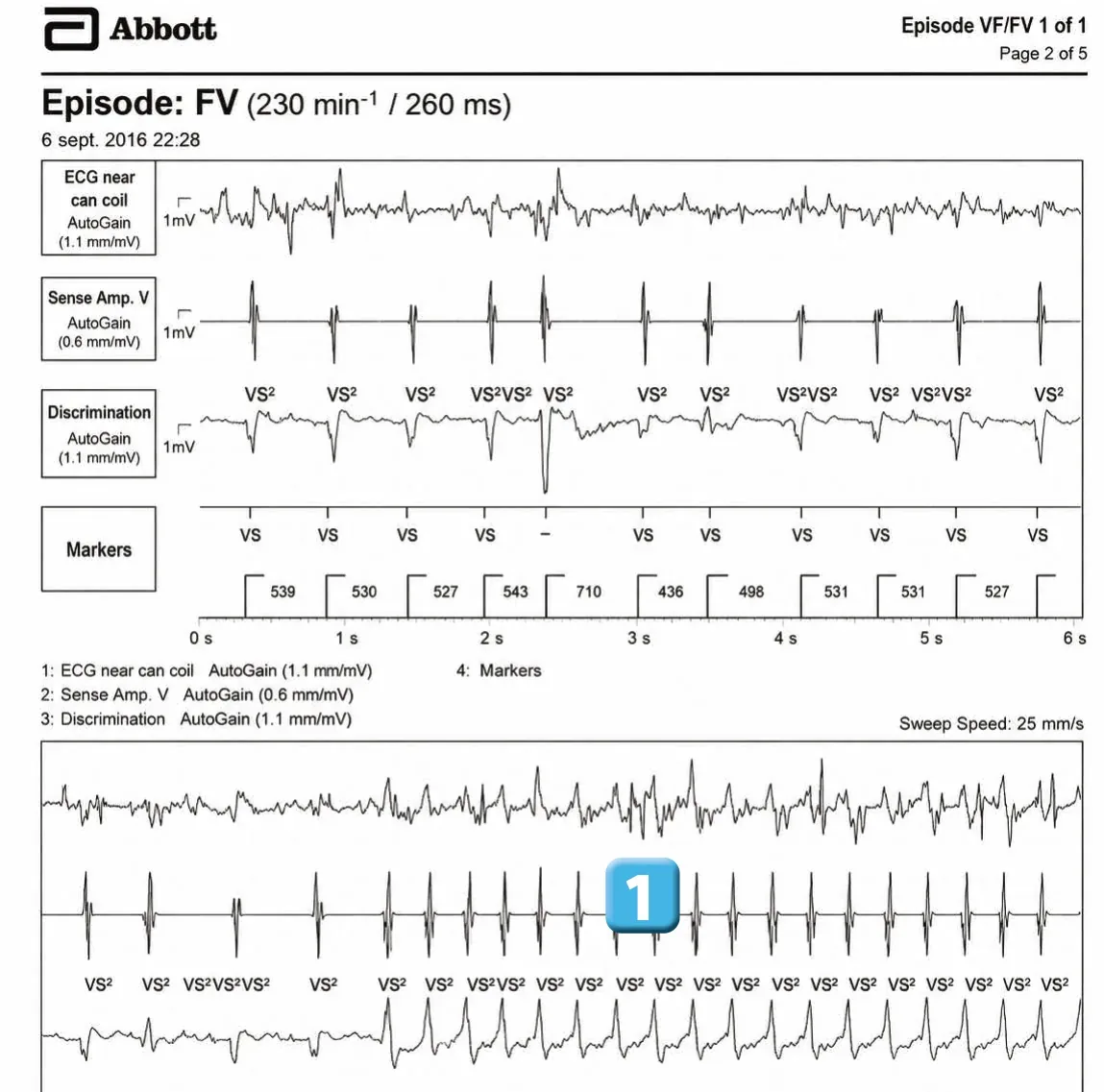
Episode 1
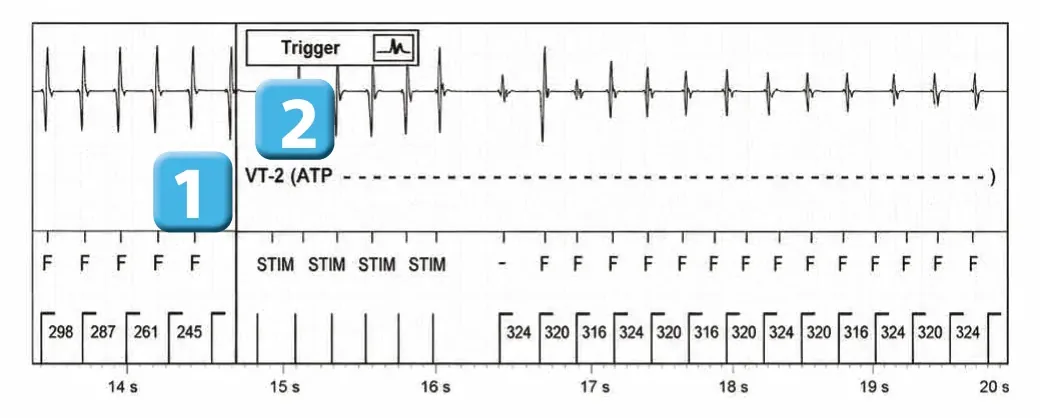
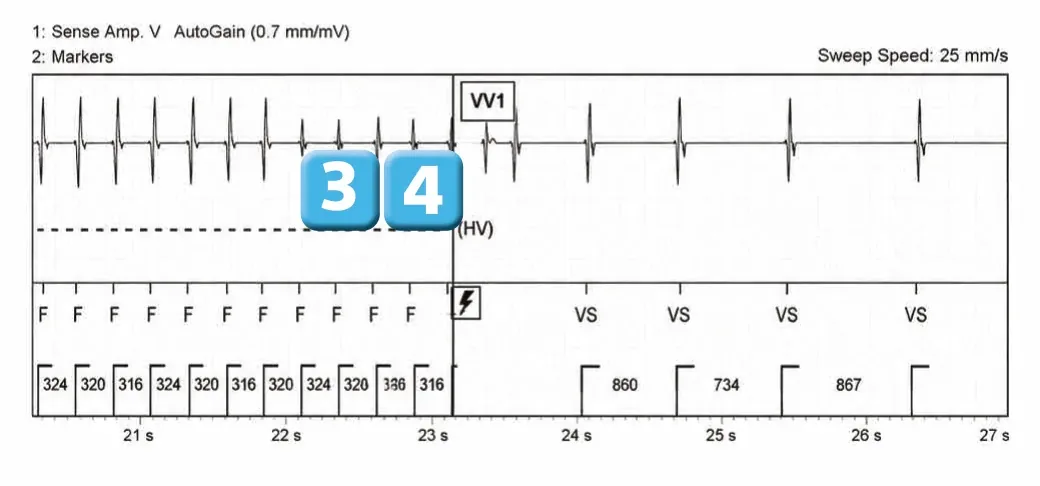
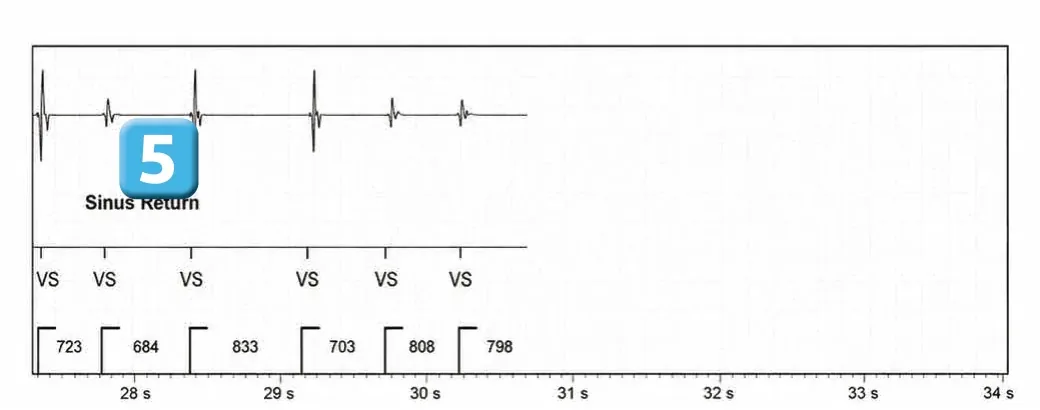
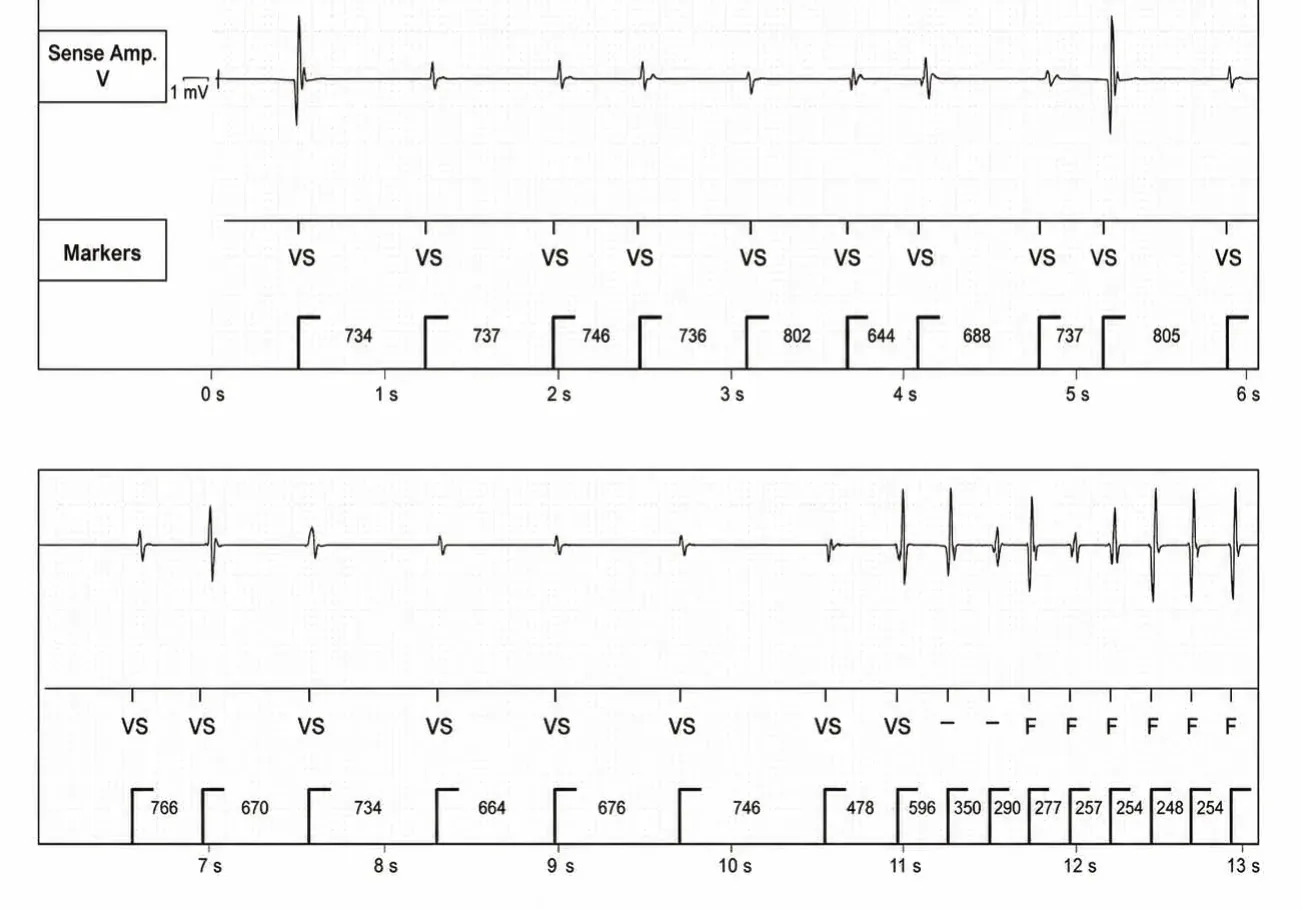
- ventricular extrasystole
- Rapid tachycardia detected in the VF zone; diagnosis of VF after 12 F cycles
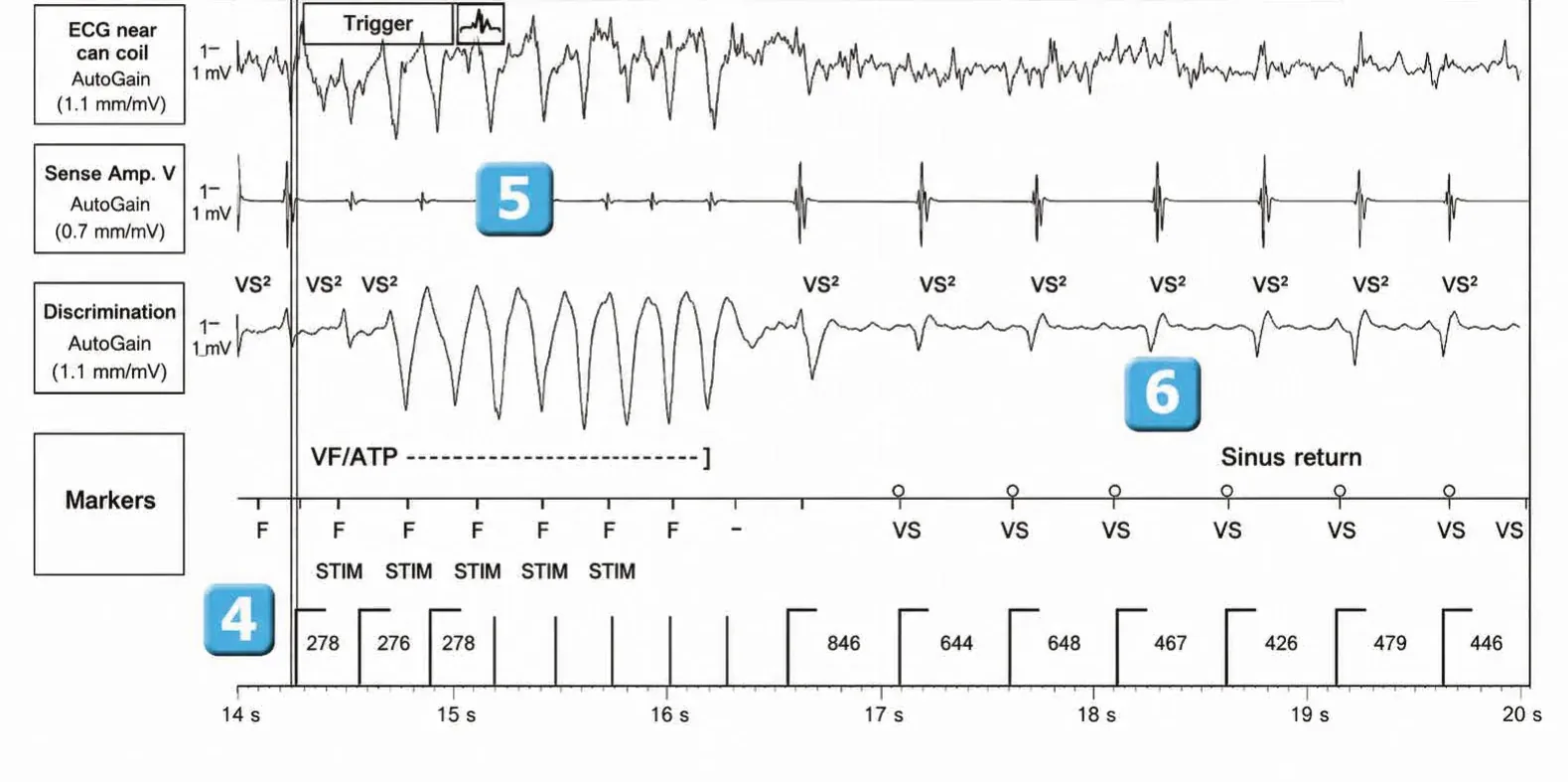
- Start of capacitor charging and simultaneous emission of a burst of 8 complexes at a fixed frequency
- termination of arrhythmia
- diagnosis of return to sinus rhythm (after 5 VS cycles without intercalated T or F cycles) and interruption of capacitor charging (5 seconds after the start of charging)
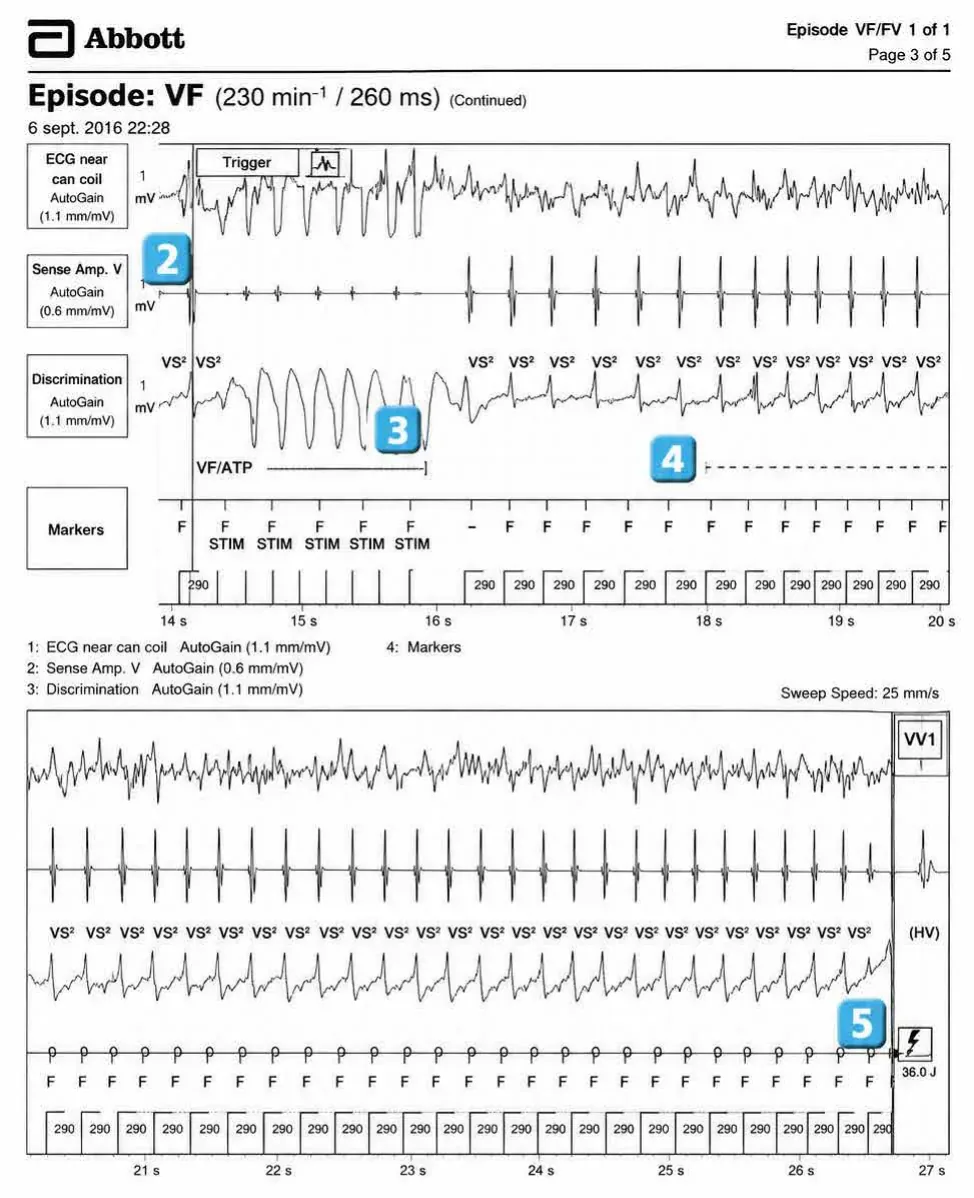
Episode 2
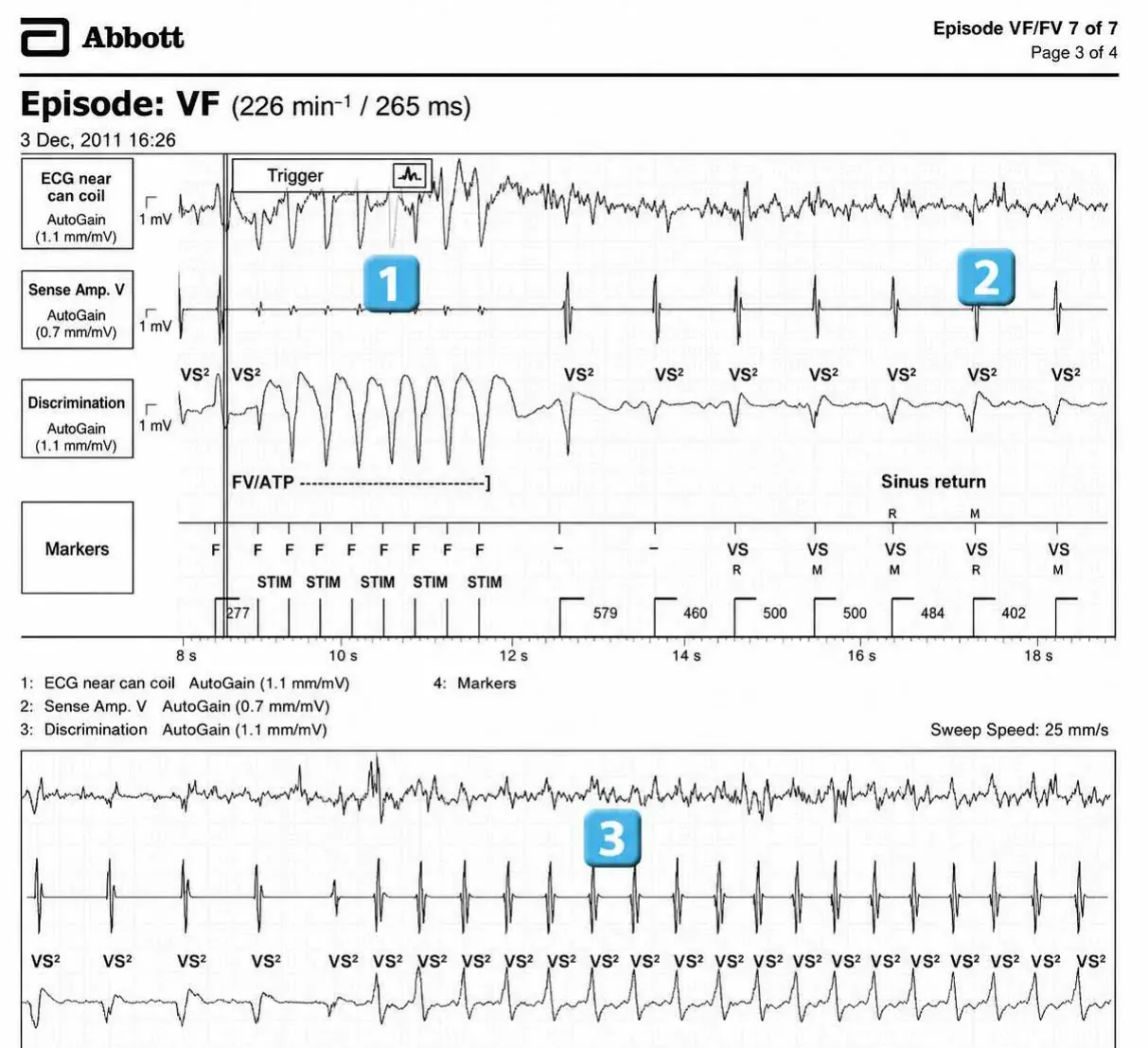
- New episode of arrhythmia similar to the previous one
- burst during charging + start of capacitor charging
- failure of the burst, persistence of arrhythmia and continuation of charging
- at the end of charging, confirmation and 36 joules electric shock
- arrhythmia interruption and sinus return diagnosis
Episode 3
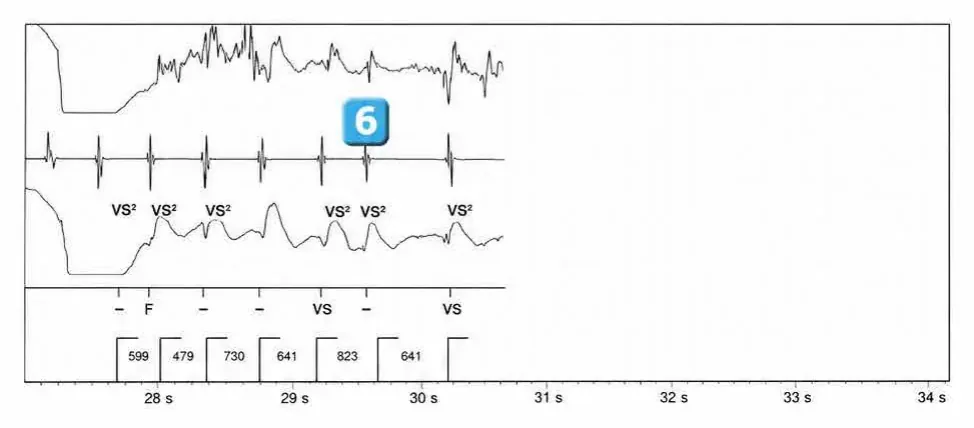
- burst before the load (corresponding to the previous episode)
- effective burst and diagnosis of sinus return
- onset of monomorphic, regular tachycardia detected in the VF zone
- after 20 cycles classified as F, diagnosis of VF
- burst before the charge (the charge does not start)
- effective burst, termination of arrhythmia and diagnosis of sinus return
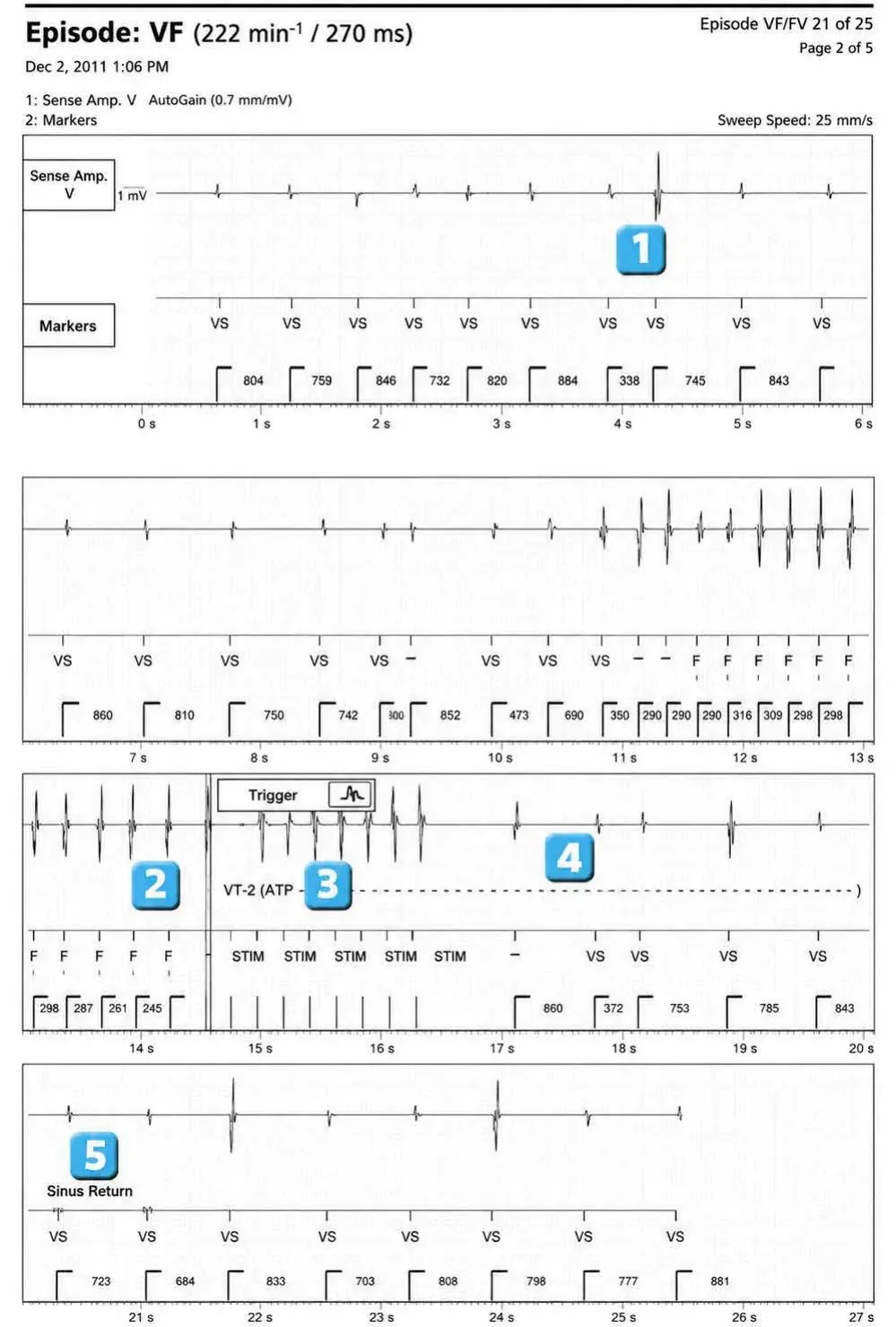
Episode 4
- onset of monomorphic, regular tachycardia detected in the VF zone
- after 20 cycles classified as F, diagnosis of VF
- burst before charging (charging does not start)
- ineffective burst, after 6 cycles classified as F, redetection of a VF episode; start of capacitor charging (3 seconds after diagnosis of VF)
- electrical shock at the end of charging
- termination of arrhythmia
From the interrogation
Points to remember
- Although it is clear that delivering an electric shock during an episode of ventricular fibrillation is the only therapy capable of restoring a viable rhythm for the patient, optimal programming should minimize the number of shocks delivered (inappropriate or appropriate but avoidable).
- A shock is painful when delivered to a conscious patient and significantly increases energy consumption; therefore, delivering multiple shocks to the same patient is associated with a risk of premature battery wear and a significant deterioration in quality of life (numerous cases of depression or anxiety induced by a series of shocks have been reported).
- An intracavitary electric shock is accompanied by microscopic myocardial lesions, an increase in cardiac humoral markers (troponin, CPK, myoglobin) and macroscopic damage that is more severe the higher the energy delivered ( momentary decrease in left ventricular ejection fraction and cardiac output, particularly in patients with already impaired contractility).
- A significant correlation was found between mortality and the number of shocks delivered (the concept of the paradoxical effect of shock). In the Sudden Cardiac Death in Heart Failure Trial (SCD-HeFT) and MADIT II studies, and in a meta-analysis of four large studies, patients who received one or more appropriate or inappropriate electric shocks had significantly increased mortality. The main cause of death after shocks occurred was worsening heart failure. In contrast, in this meta-analysis, delivering one or more sequences of anti-tachycardia pacing did not alter the prognosis.
- The question of whether electric shocks are truly independent predictors of mortality or simply markers of the severity of the patient’s clinical condition remains controversial. However, it is now recommended (class I) to prioritize a first-line attempt at reduction through anti-tachycardia pacing.
- up to relatively high frequency ranges (230 beats/per minute); electric shocks are only recommended as a second-line treatment after failure of the anti-tachycardia pacing sequence(s), unless pacing has proven ineffective or harmful (acceleration of the arrhythmia); in fact, delivering an anti-tachycardia pacing sequence in the VF zone is often effective, painless, reduces battery wear, improves quality of life, and does not alter reduce battery wear, improve quality of life, and does not alter the prognosis.
- The PainFree II study demonstrated the effectiveness of anti-tachycardia pacing on tachycardias between 188 and 250 beats/minute in reducing the number of shocks delivered (71% lower relative risk) without a significant increase in the risk of syncope or sudden death; the Prepare and Relevant studies confirmed these results.
- It is recommended to program a burst rather than a ramp (class I) to optimize the success rate (ratio between reductions and accelerations).
- For Abbott devices, it is possible to program an ATP in the VF zone during or before the charge.
- ATP during charging allows for painless treatment of ventricular tachycardia without risking delaying shock treatment when necessary; once VF is diagnosed, charging begins and ATP is delivered simultaneously; if VF is reconfirmed after ATP, the shock is delivered; if the patient has returned to sinus rhythm, the shock is not delivered; This allows painless treatment of tachycardia if ATP is effective, without delaying the shock if ATP is ineffective. However, even if ATP is effective, there is virtually no energy savings. In this example, when ATP during charging is effective, charging is interrupted after 5 seconds and energy savings are therefore minimal.
- ATP before charging reduces energy consumption; once VF has been diagnosed, ATP is delivered; if VF is reconfirmed after ATP, capacitor charging begins; if the arrhythmia is reduced, charging is not initiated; this saves a charge if ATP is effective; however, if ATP is ineffective, it delays the delivery of the shock by 2 to 3 seconds, as in this example
Practice out loud
Just describe the tracing. What do you think is going on? Describing the numbers can help.
00:00
0%
—
From Implantable Cardioverter Defibrillator — clinical cases based on tracings by P. Bordachar, M. Strik, A. Thiyagarajah, S. Ploux. Published by Cardiocases. Every numbered marker on a recording is explained in the list beneath it; tap a marker on the trace or an entry in the list.