
Chapter 2 · Therapies · Case 6
ATP during charging and acceleration of tachycardia
Patient and episode
Patient
- Male patient implanted with a single-chamber Ellipse defibrillator for secondary prevention in the context of ischemic cardiomyopathy
Summary
- Episode of VF treated with a burst and a 36-joules electric shock
- Episode of VF treated with a burst and a 30-joules electric shock
The recording
Tap a number on the trace, or an entry in the list below
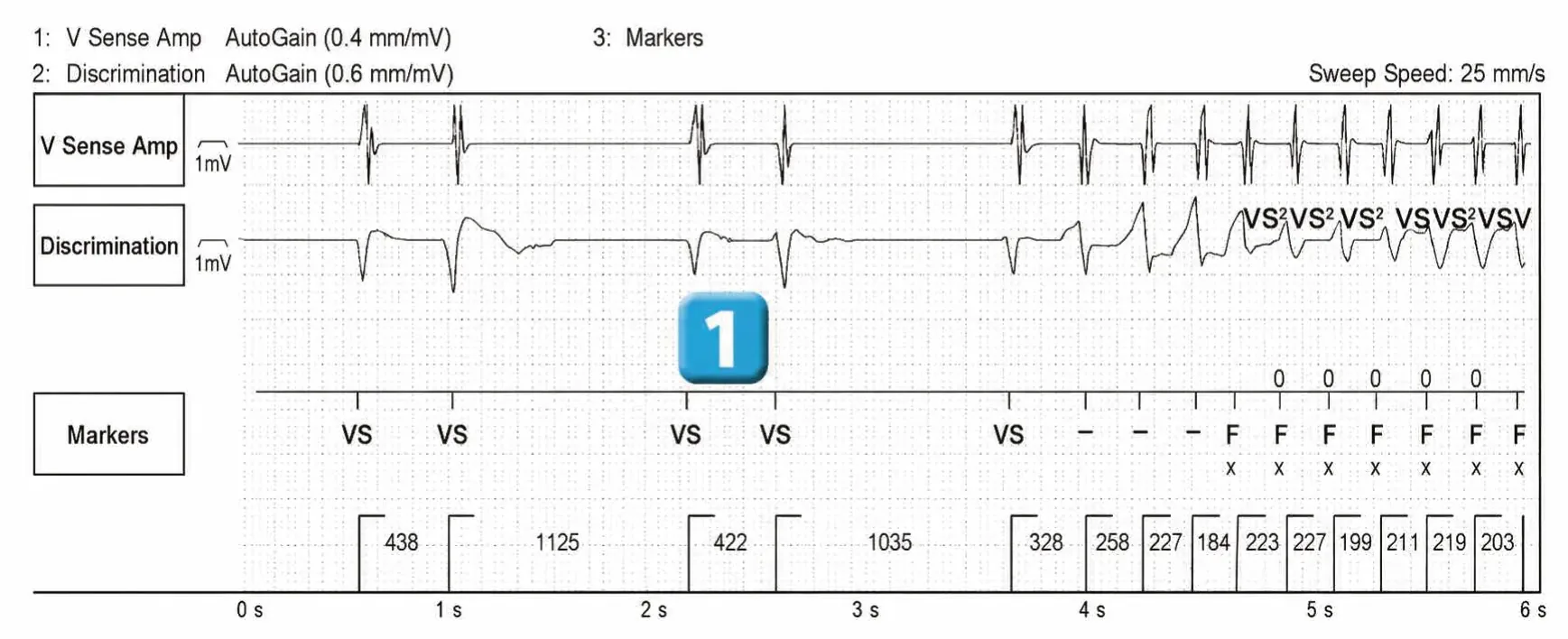
Episode 1
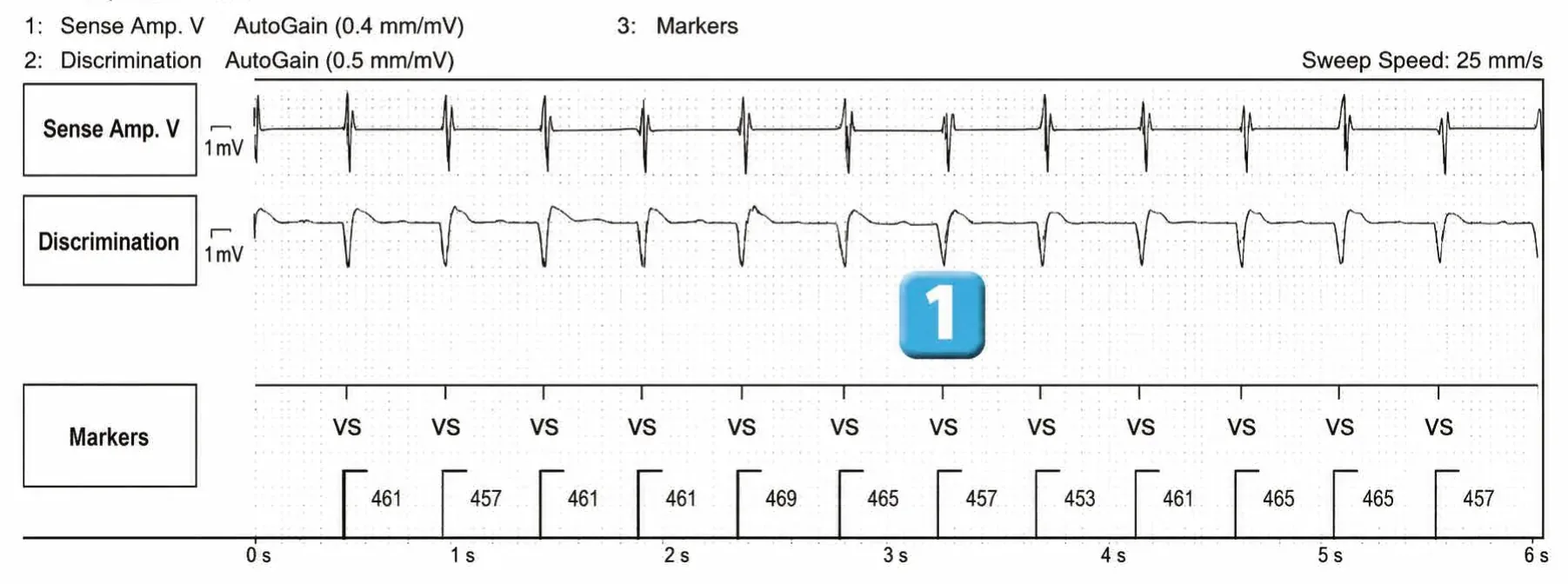
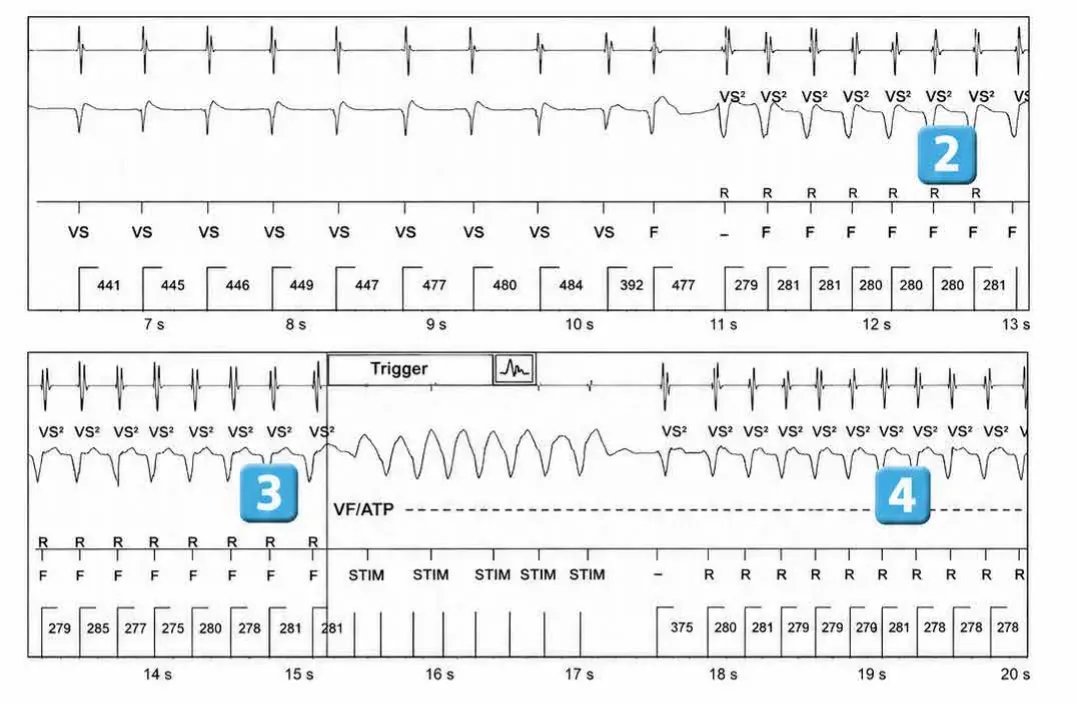
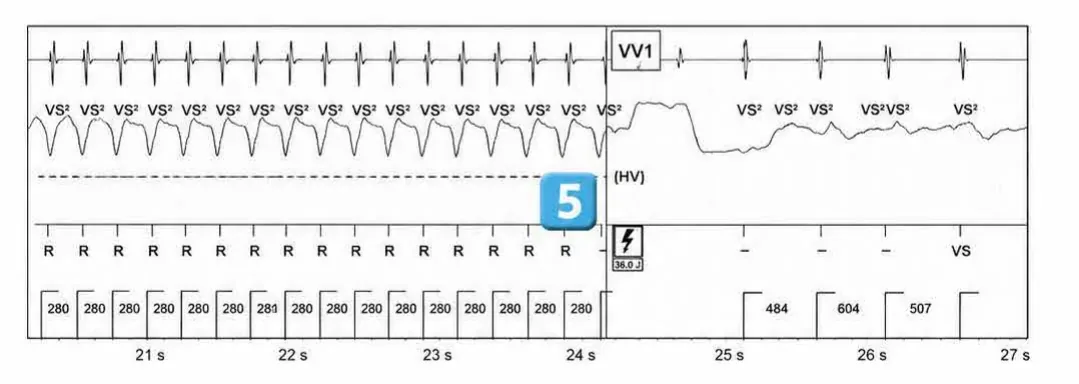
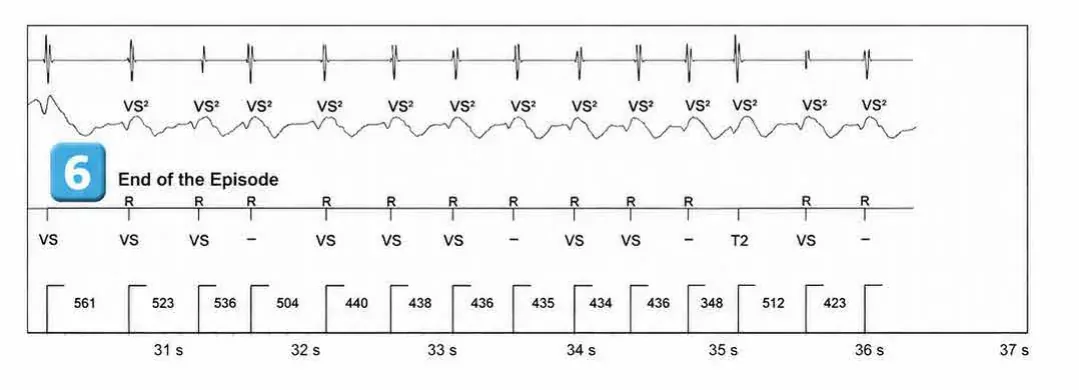
- sinus rhythm
- rapid, monomorphic tachycardia detected in the VF zone
- diagnosis of VF; start of capacitor charging and simultaneous emission of a burst of 8 complexes at a fixed frequency
- Acceleration of arrhythmia with identical morphology
- at the end of charging, confirmation followed by a 36-joules electric shock
- diagnosis of end of episode after 3 cycles classified as VS
Episode 2
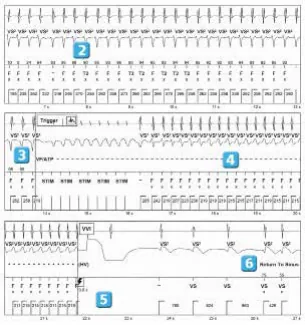
- Sinus rhythm with PVC
- Rapid tachycardia, detected alternating between the VF zone and the VT2 zone
- diagnosis of VF after 30 cycles classified as F; start of capacitor charging and simultaneous emission of a burst of 10 complexes at a fixed frequency
- acceleration of arrhythmia with different morphology
- at the end of charging, confirmation then 30 jouless electric shock
- diagnosis of sinus return after 3 cycles classified as VS
Points to remember
- Acceleration of VT and deterioration into VF are well-documented complications following a sequence of anti-tachycardia pacing, with an incidence of around 1 to 5%, justifying the absolute necessity of programming electrical shocks asbackup in the VF zone; the effectiveness and safety of anti-tachycardia pacing are inversely related; a greater number of tachycardias can be reduced with a more aggressive protocol (short pacing intervals, more cycles per sequence, more sequences) but with an increased risk of acceleration
- •Anti-tachycardia pacing can 1) accelerate the tachycardia with a morphology identical to the previous one (first example), 2) accelerate the tachycardia with a different morphology (second example), or 3)cause organized tachycardia to degenerate into VF
- To reduce the risk of accelerating the tachycardia, the maximum stimulation frequency is programmable; the characteristics of the sequence (coupling, number of stimuli) correspond to those of the sequence programmed in the VT2 zone
- ATP before or during the load will not be delivered after treatment in another zone (e.g., accelerated VT2 in the VF zone).
Practice out loud
Just describe the tracing. What do you think is going on? Describing the numbers can help.
00:00
0%
—
From Implantable Cardioverter Defibrillator — clinical cases based on tracings by P. Bordachar, M. Strik, A. Thiyagarajah, S. Ploux. Published by Cardiocases. Every numbered marker on a recording is explained in the list beneath it; tap a marker on the trace or an entry in the list.