
Chapter 3 · Discrimination · Case 6
Dual chamber discrimination and V>A
Patient and episode
Patient
- 74-year-old male with ischemic cardiomyopathy; implanted with triple-chamber defibrillator
Summary
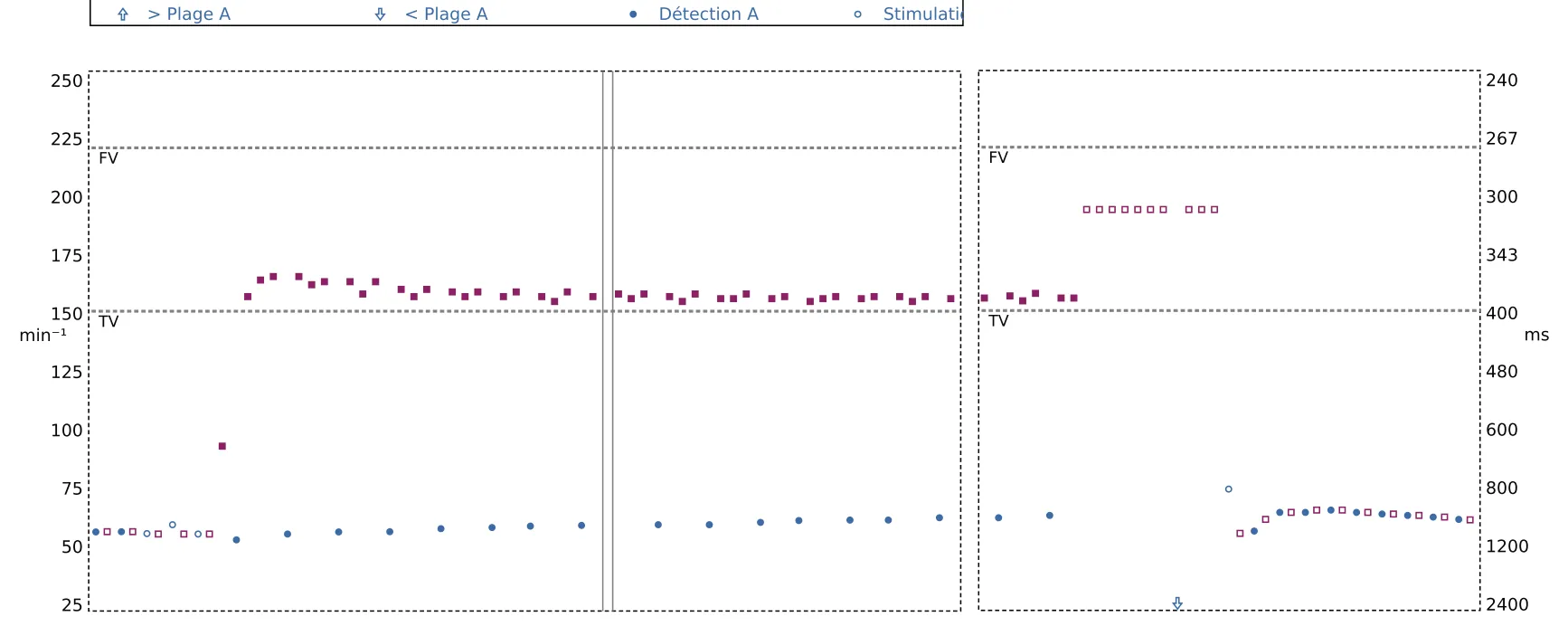
- Episode of VT at 156 beats/min requiring a burst of ATP
- At initial detection, discrimination is based on the Rythm ID algorithm
- Rate V > A: true
The recording
Tap a number on the trace, or an entry in the list below
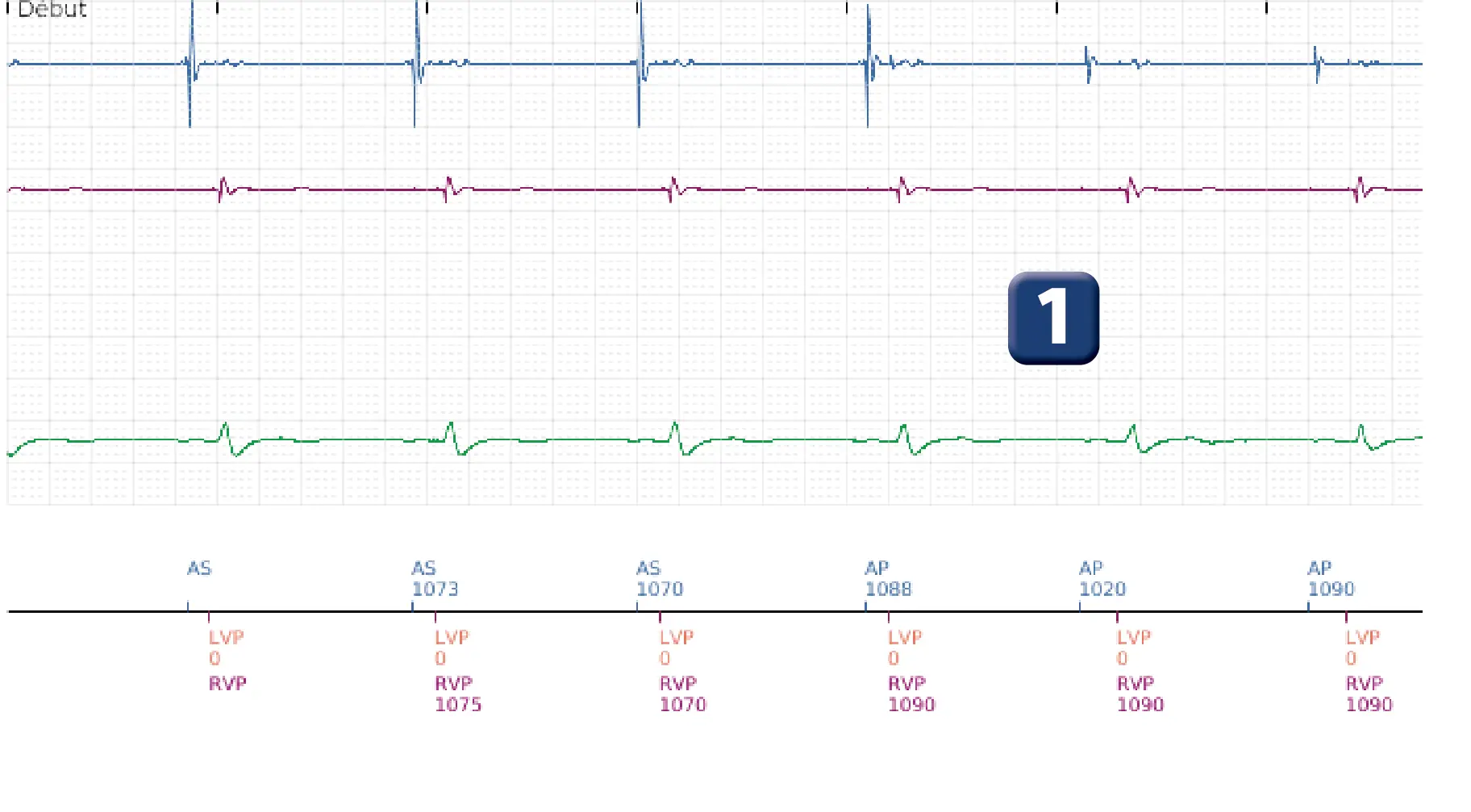
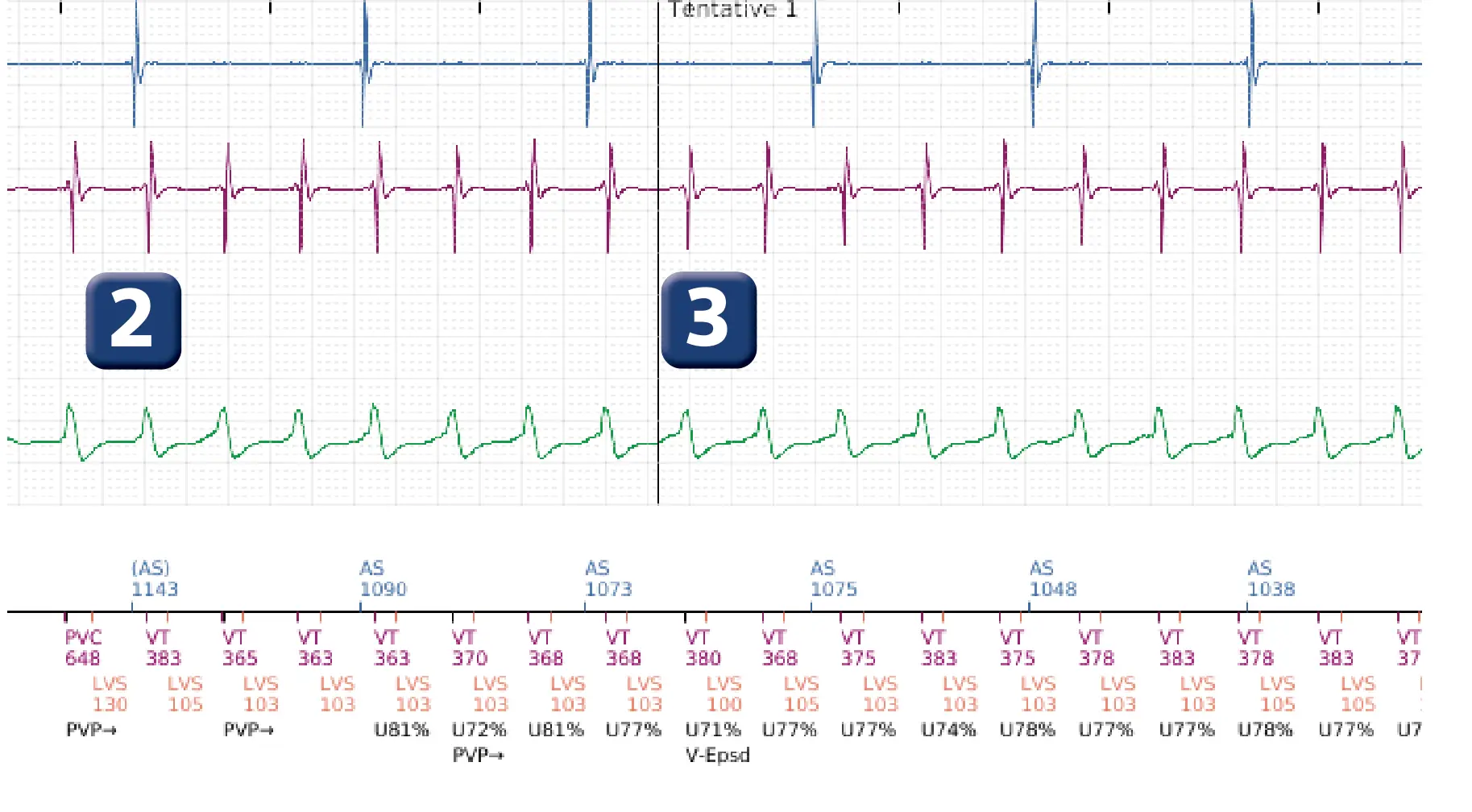
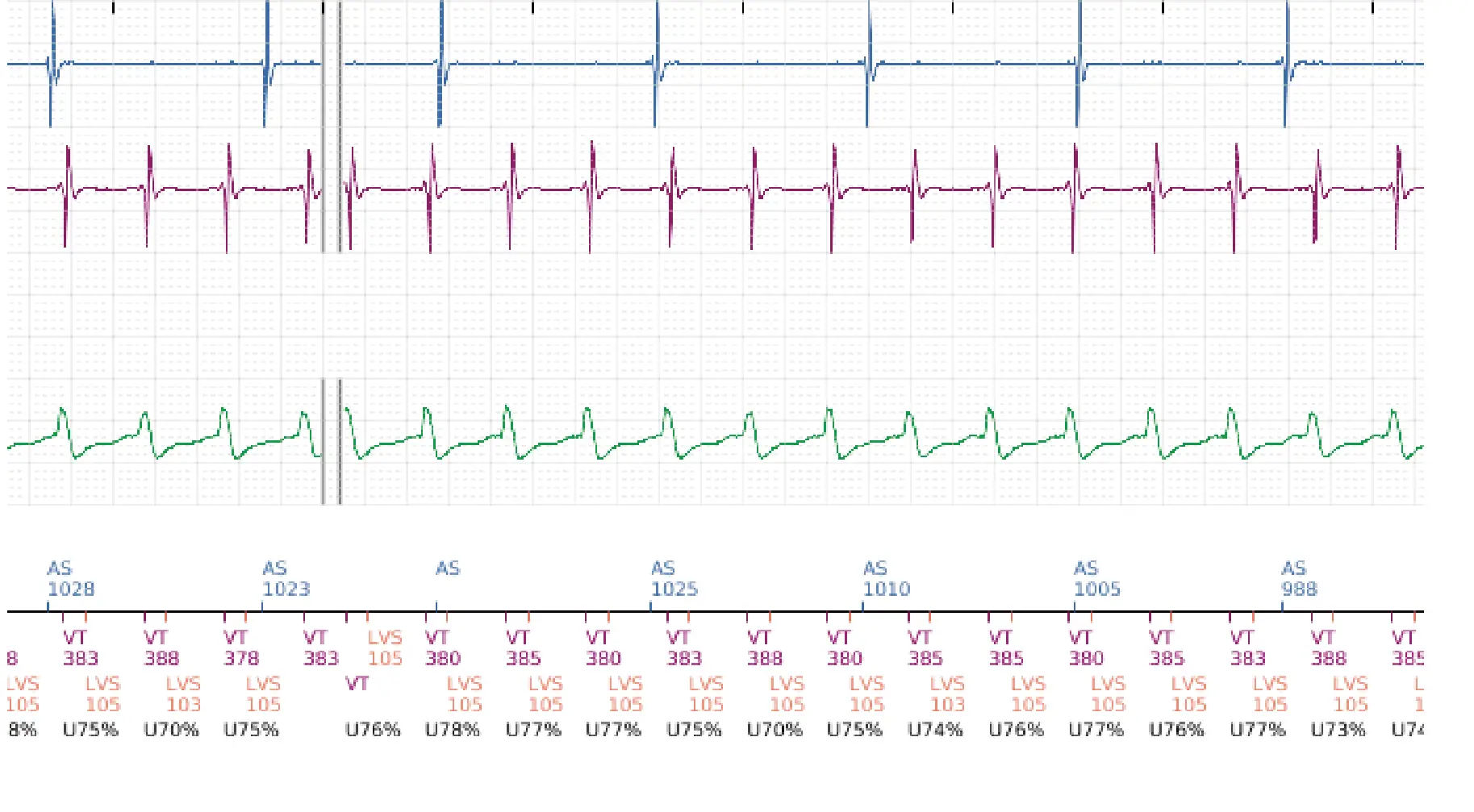
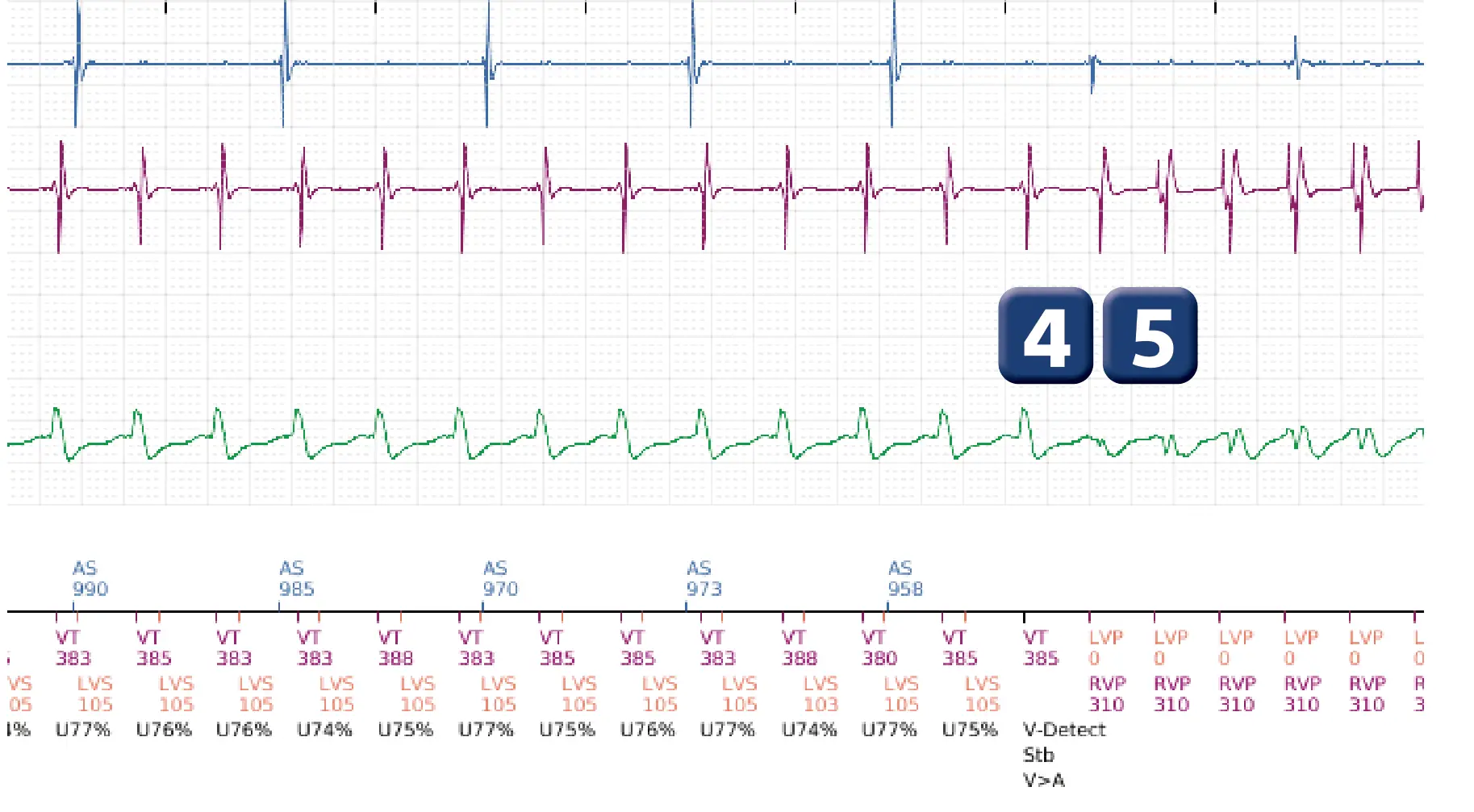
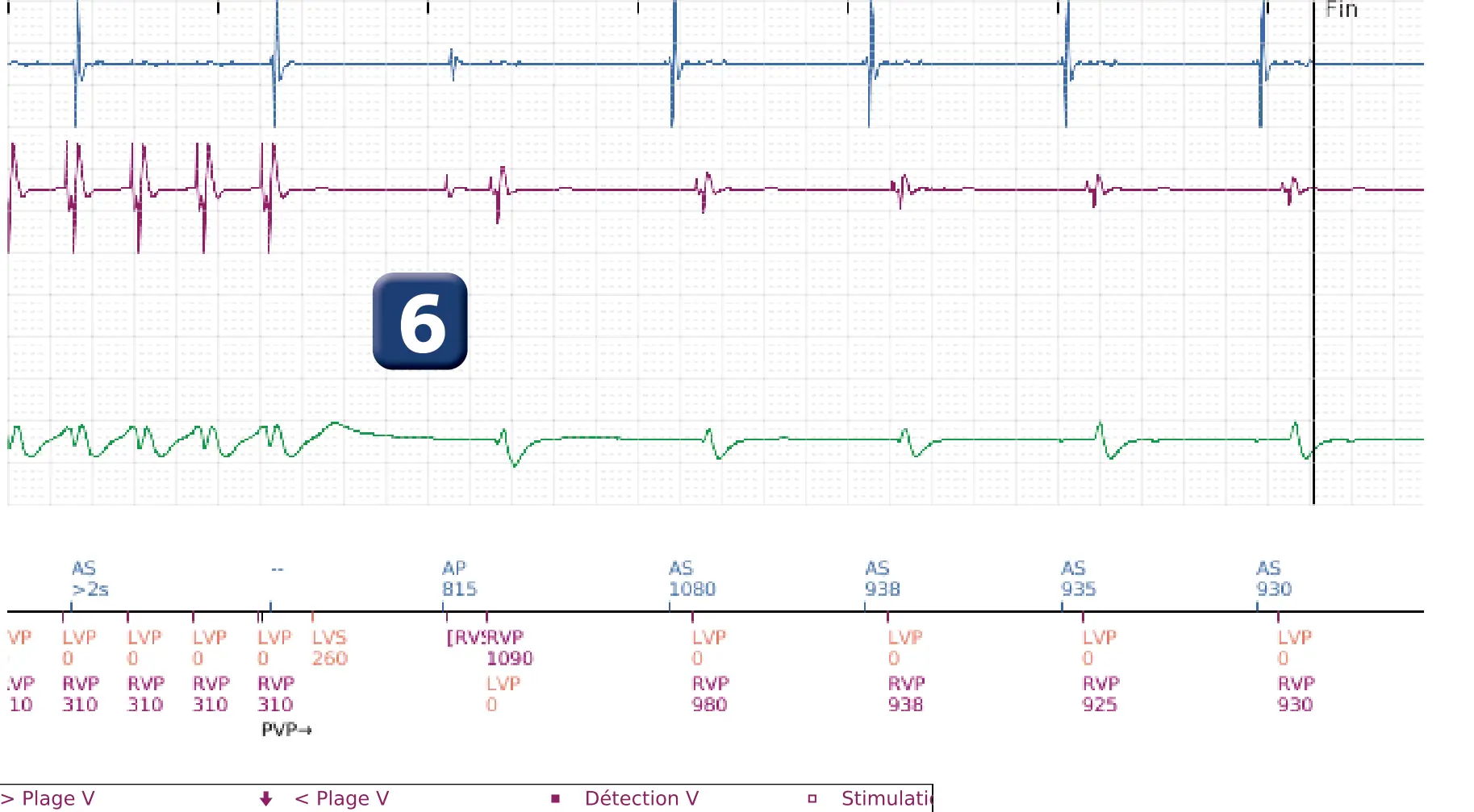
- Spontaneous rhythm in the atrium and biventricular pacing
- Abrupt onset of regular tachycardia, with atrioventricular dissociation (more ventricles complexes than atrial complexes, indicating a ventricular origin for the arrhythmia)
- Criterion 8/10 fulfilled (V-Epsd); QRS complexes judged to be uncorrelated (U, correlation percentage below the programmed threshold percentage of 94%)
- V>A criterion verified: diagnosis of VT (V-Detect)
- ATP burst
- Efficient burst and arrhythmia termination
Points to remember
- A dual-chamber defibrillator allows comparison of atrial and ventricular rates; for both the clinician and the defibrillator, the presence of a ventricular rate faster than the atrial rate confirms the ventricular origin of the tachycardia
- The V rate > A rate criterion can be programmed on a dual- or triple-chamber defibrillator by selecting the Rhythm ID or Onset/Stability option; this criterion takes precedence over the other associated discrimination criteria, which means that if this condition is true (V>A), it supersedes all the other programmed discriminators and the diagnosis of VT is made.
- The analysis is performed by comparing the mean rate of the last 10 ventricular intervals preceding the end of the duration with the mean rate of the last 10 atrial intervals preceding the end of the duration
- If the mean ventricular rate exceeds the mean atrial rate by at least 10 beats/minute, it is considered to be faster than the atrial rate (indicated as True in the Episode Details report), and treatment may be initiated.
- If the mean ventricular rate is not higher than the mean atrial rate by at least 10 beats/minute (indicated as False in the Episode Detail report), treatment may be inhibited if the other discriminants favor of SVT
- In this patient, the difference in rate between the atria (62 beats/minute) and the ventricles (156 beats/minute) is obvious, justifying the diagnosis of VT
Practice out loud
Just describe the tracing. What do you think is going on? Describing the numbers can help.
00:00
0%
—
From Boston Scientific ICD — clinical cases by P. Bordachar, M. Strik, A. Thiyagarajah, S. Ploux. Published by Cardiocases. Every numbered marker on a recording is explained in the list beneath it; tap a marker on the trace or an entry in the list.
Order hardcopyon Amazon