
Chapter 3 · Discrimination · Case 5
Single-chamber discrimination, Rhythm ID and SRD
Patient and episode
Patient
- 71-year-old male with ischemic cardiomyopathy; implanted with an Incepta single-chamber defibrillator
Summary
- Discrimination based on Rhythm ID (threshold programmed at 94%)
- Tachycardia at 153 beats/minute
- Initially untreated episode (Rhythm ID correlated: True)
- Episode treated because sustained rate duration (SRD) was satisfied
- 5 shocks delivered
The recording
Tap a number on the trace, or an entry in the list below
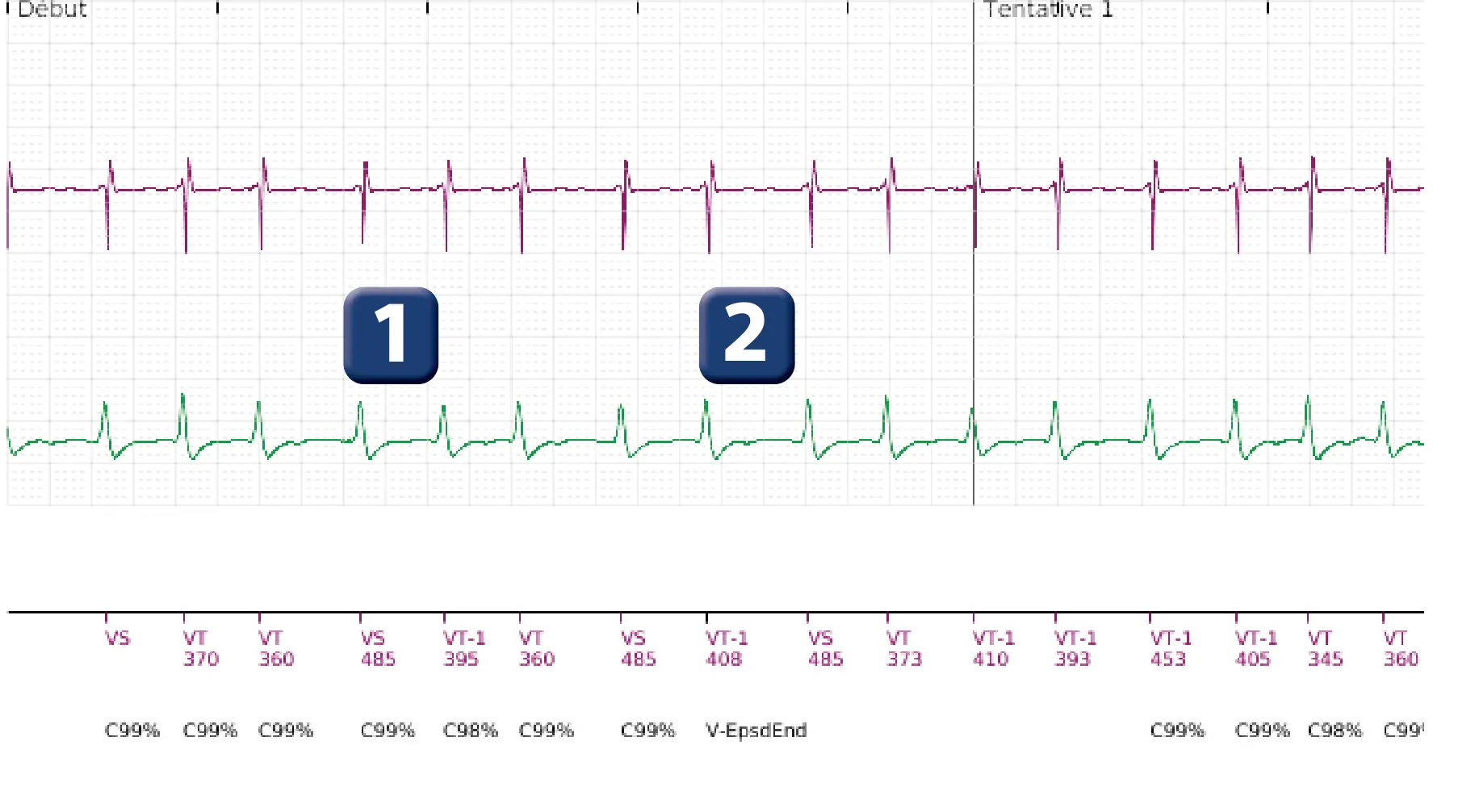
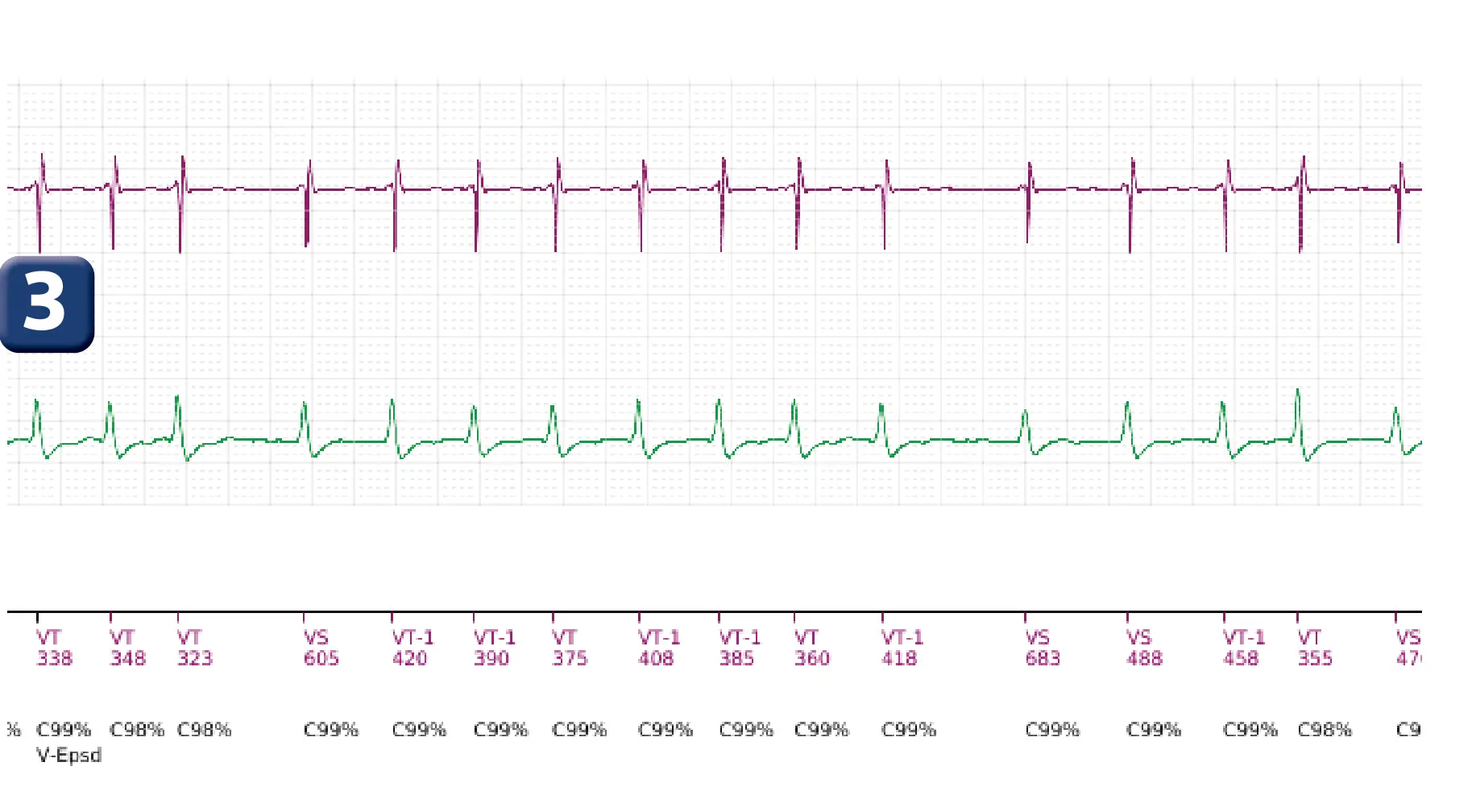
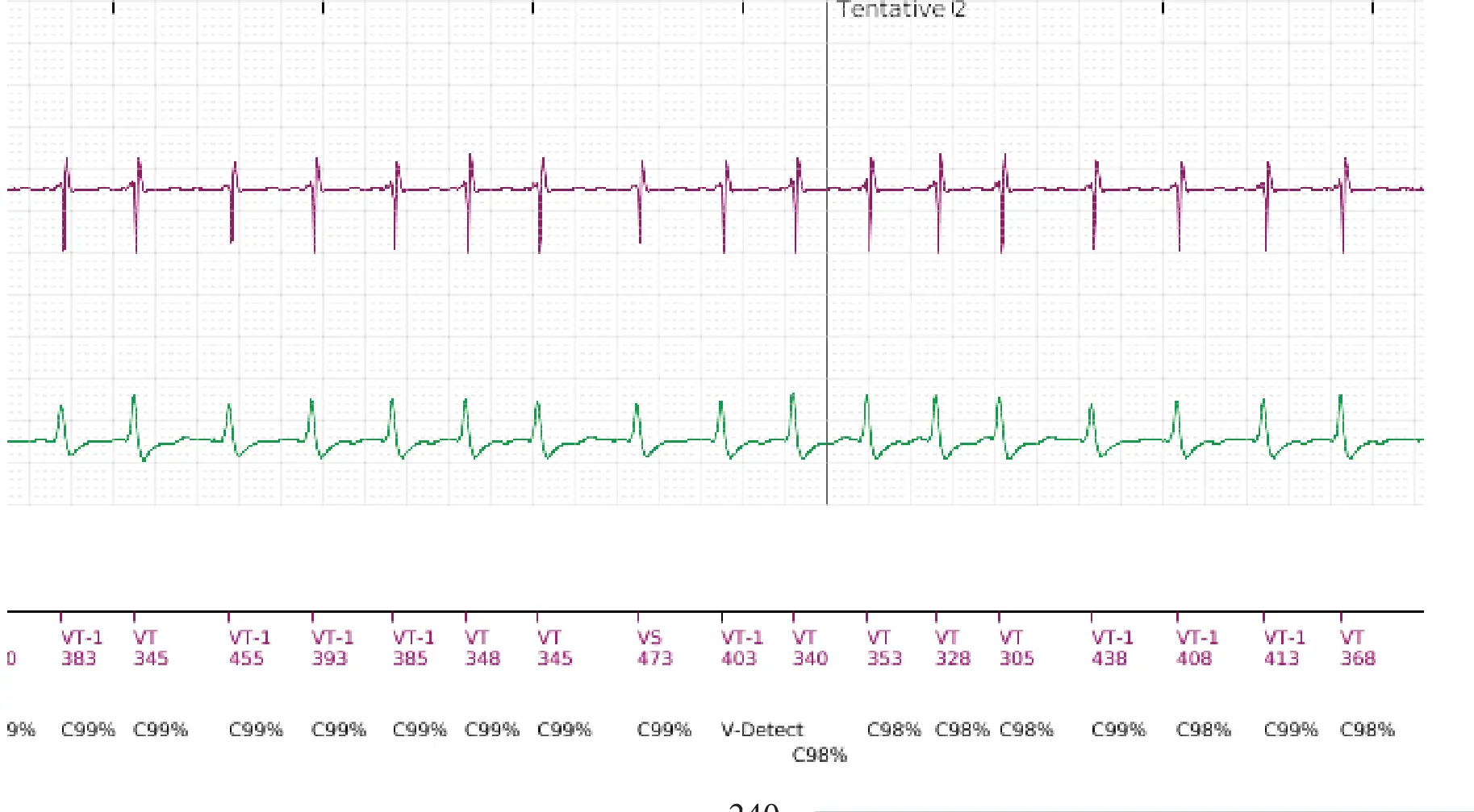
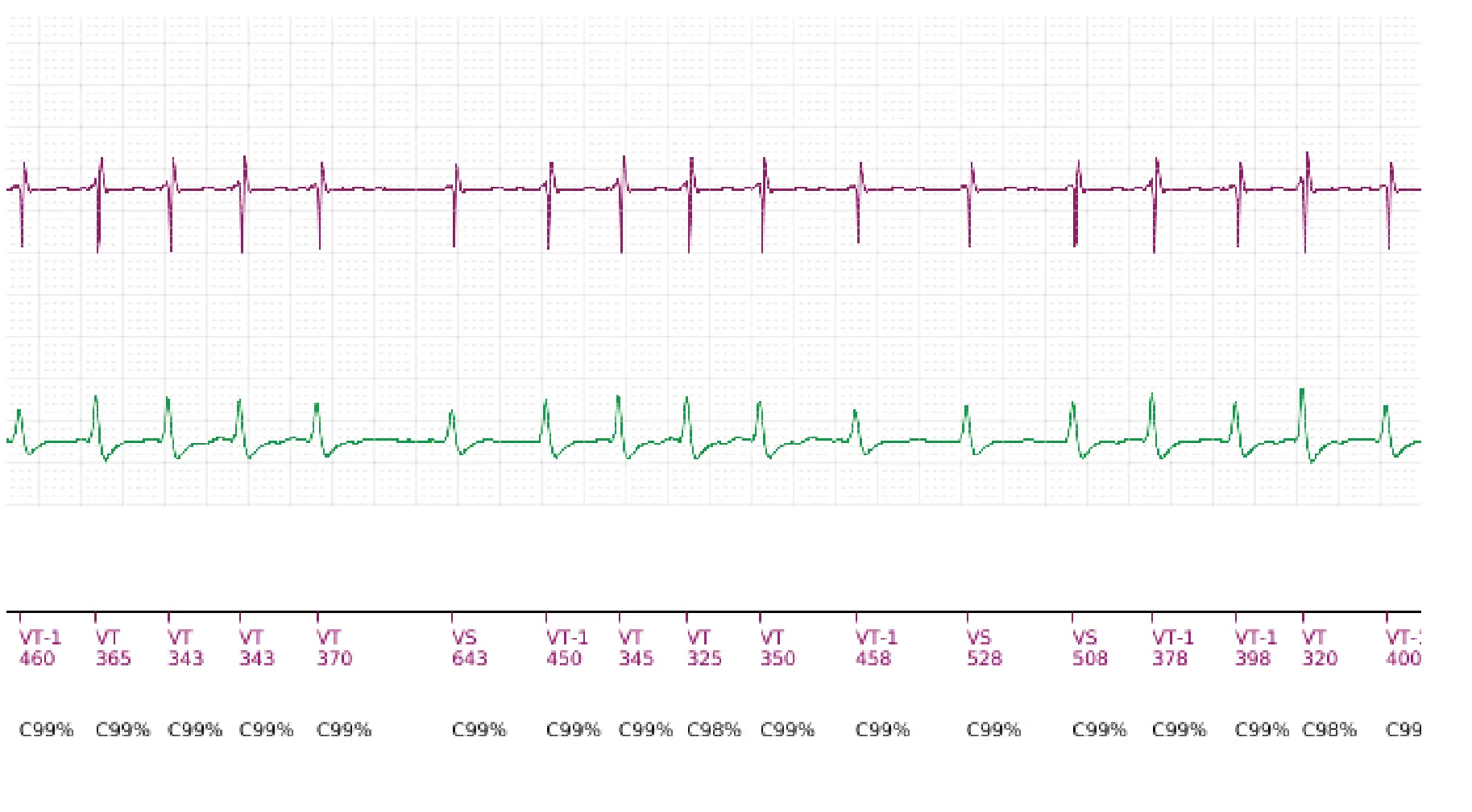
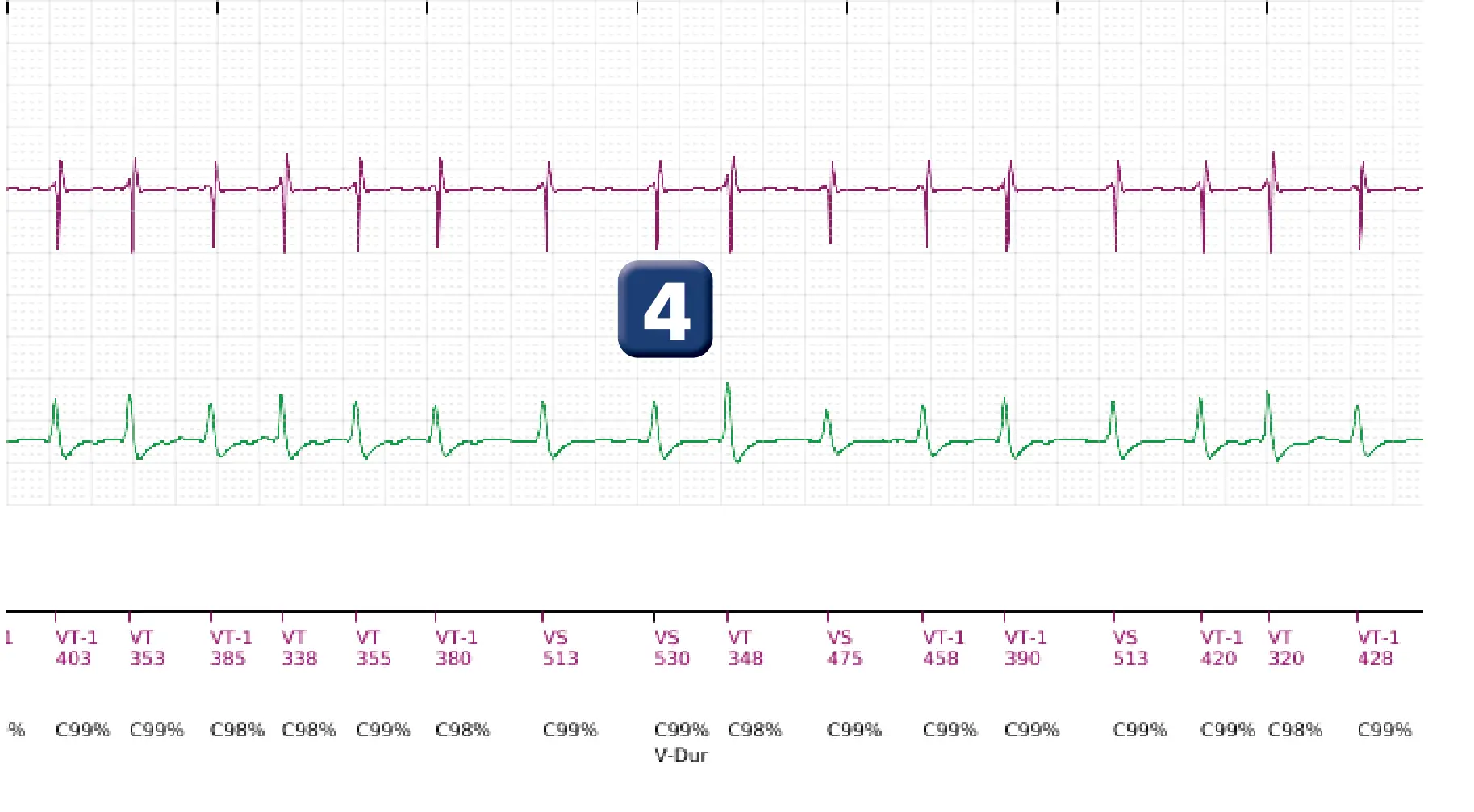
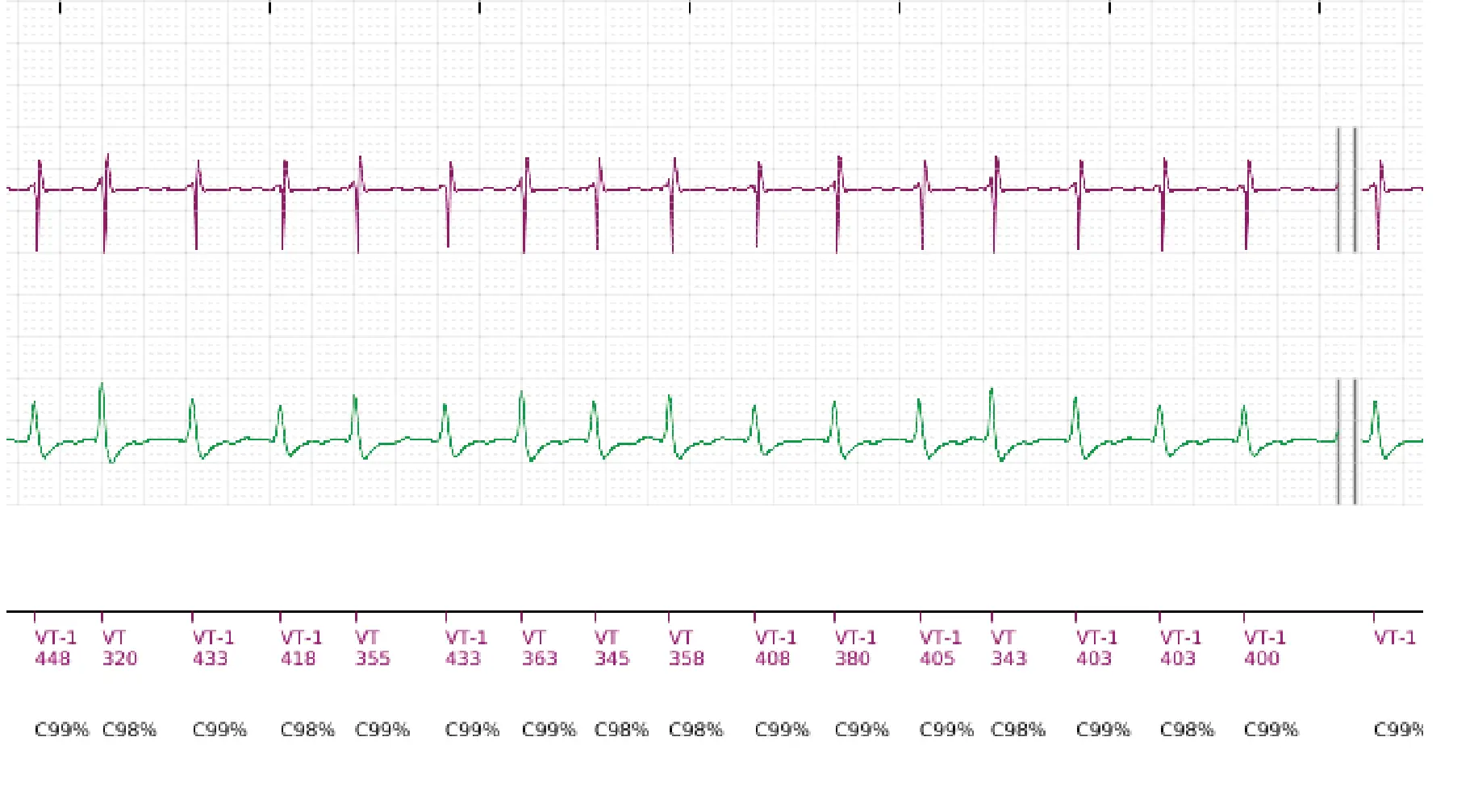
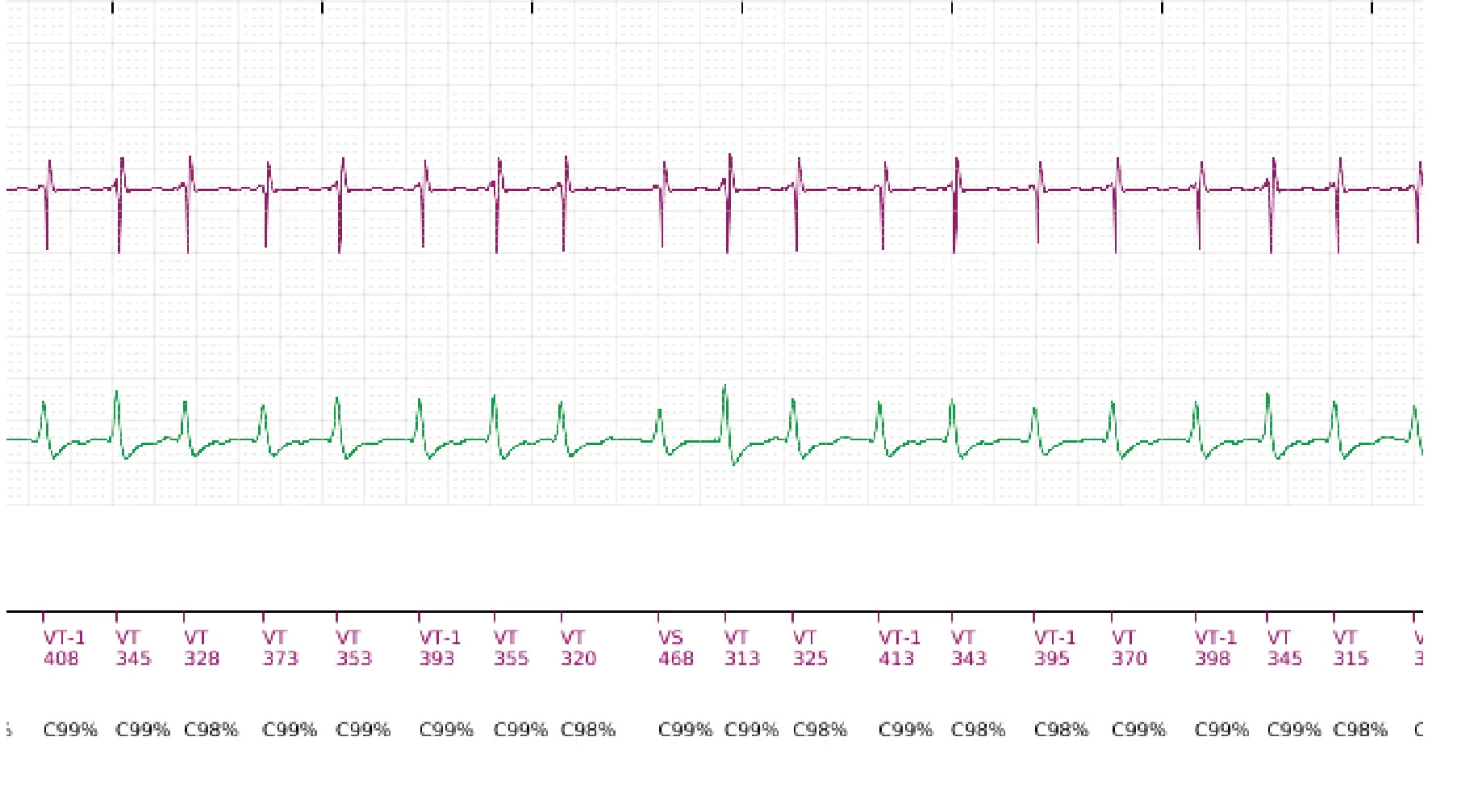
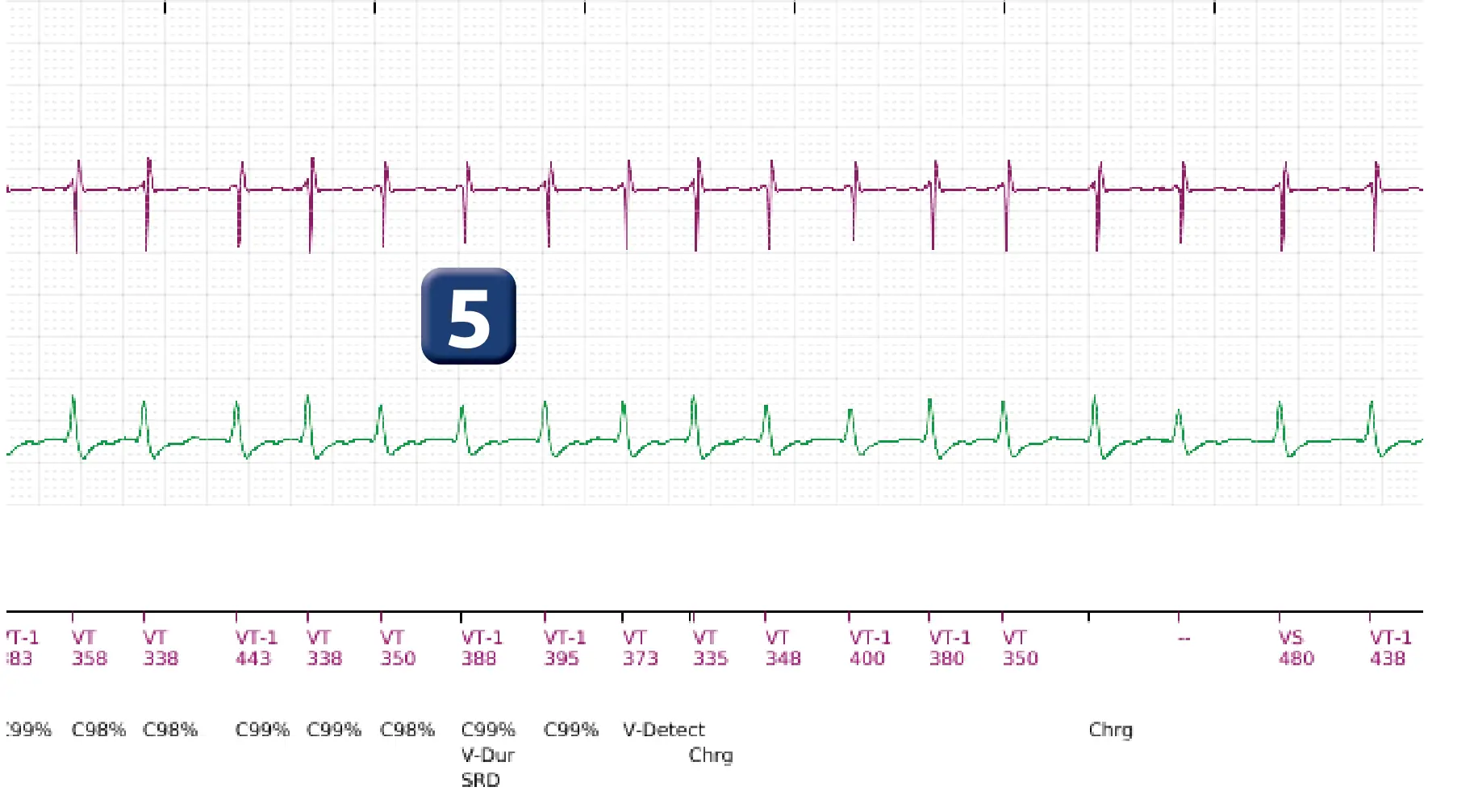
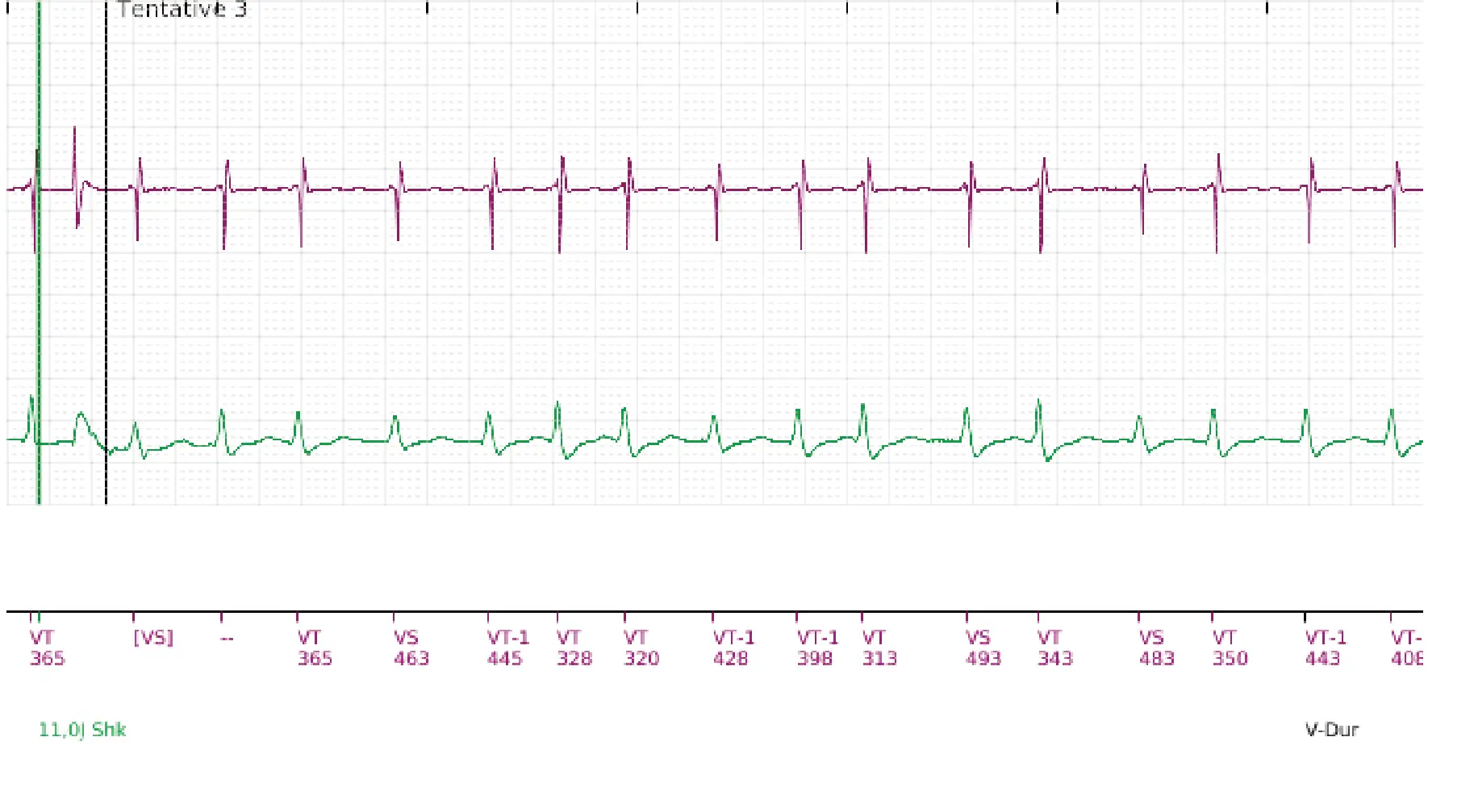
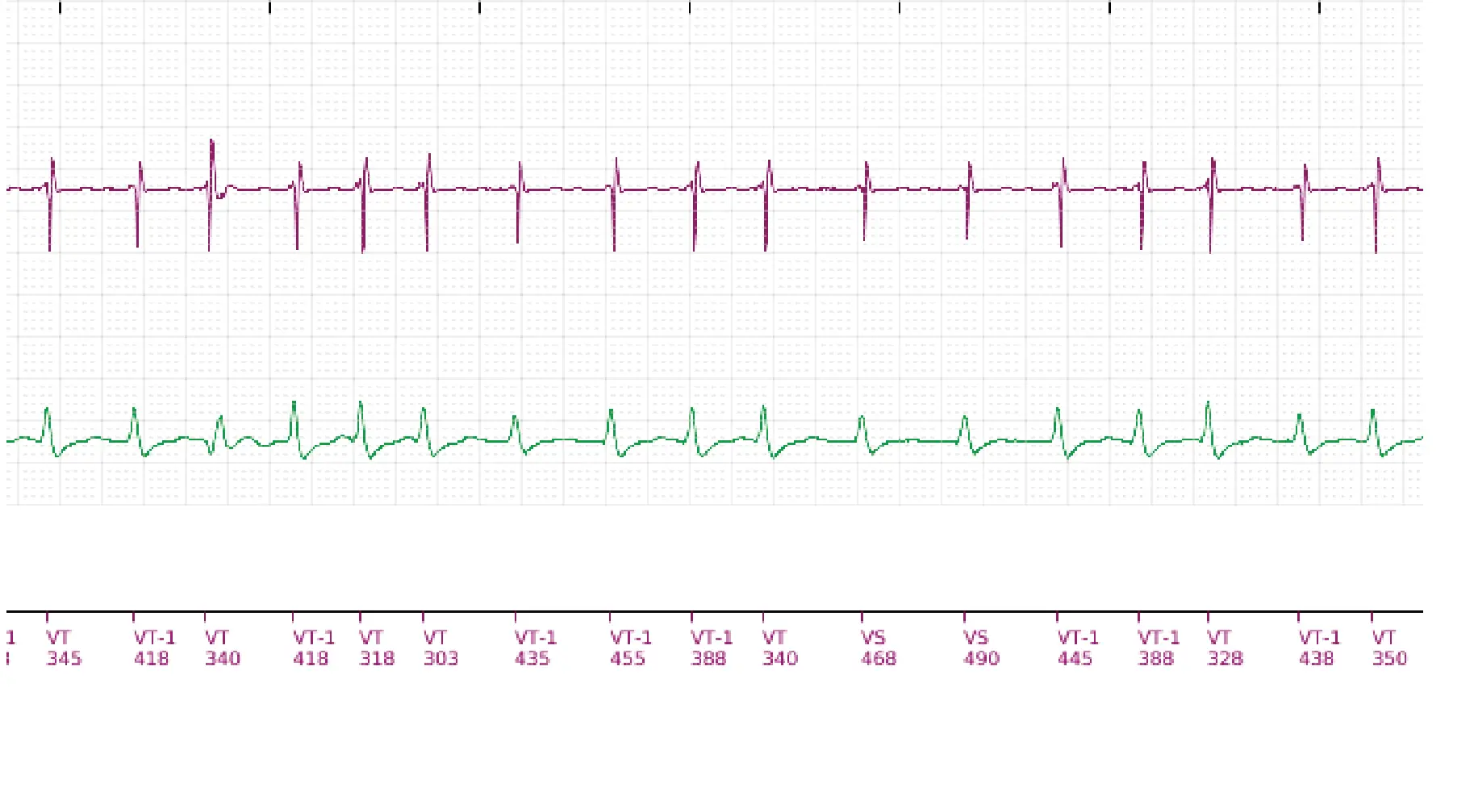
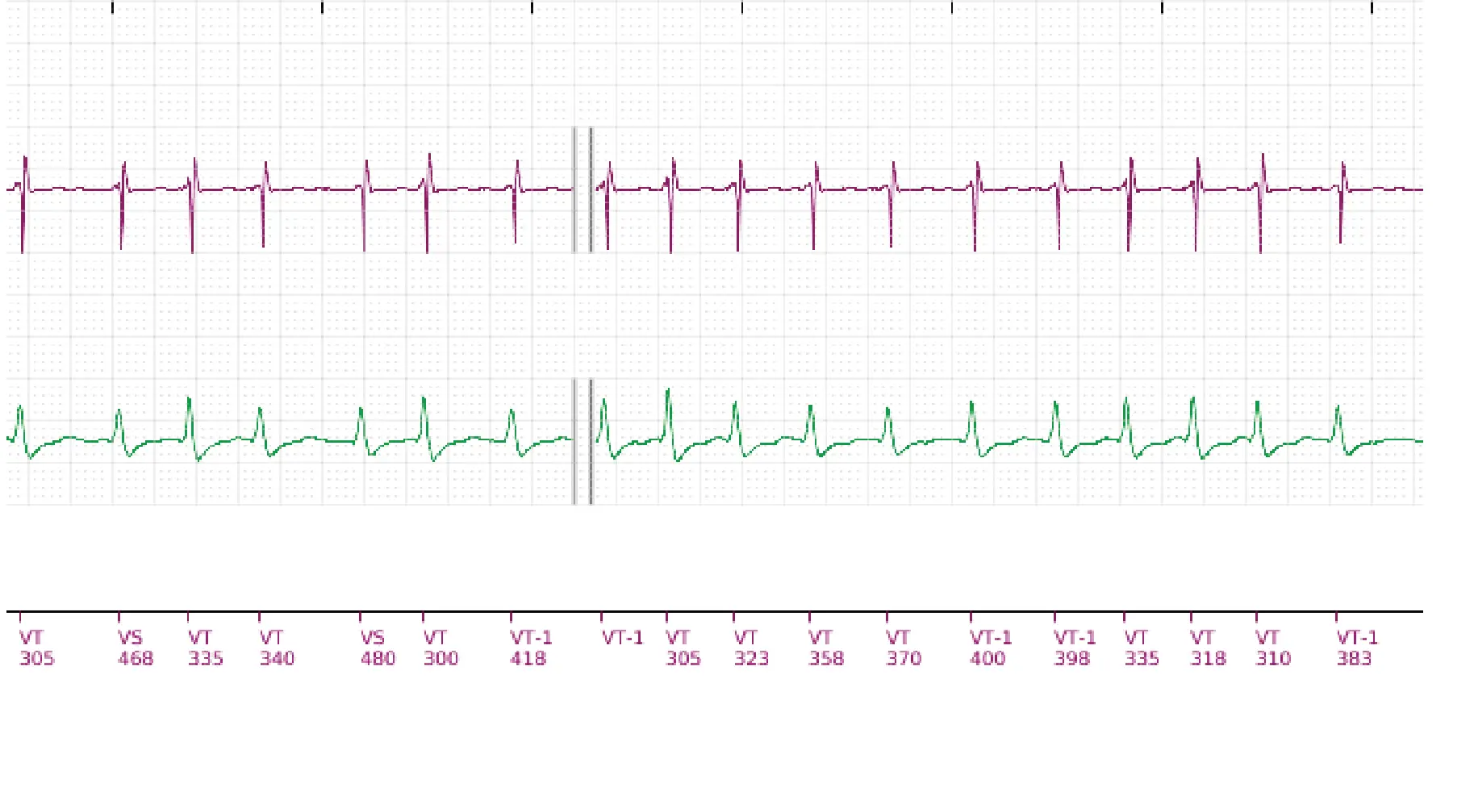
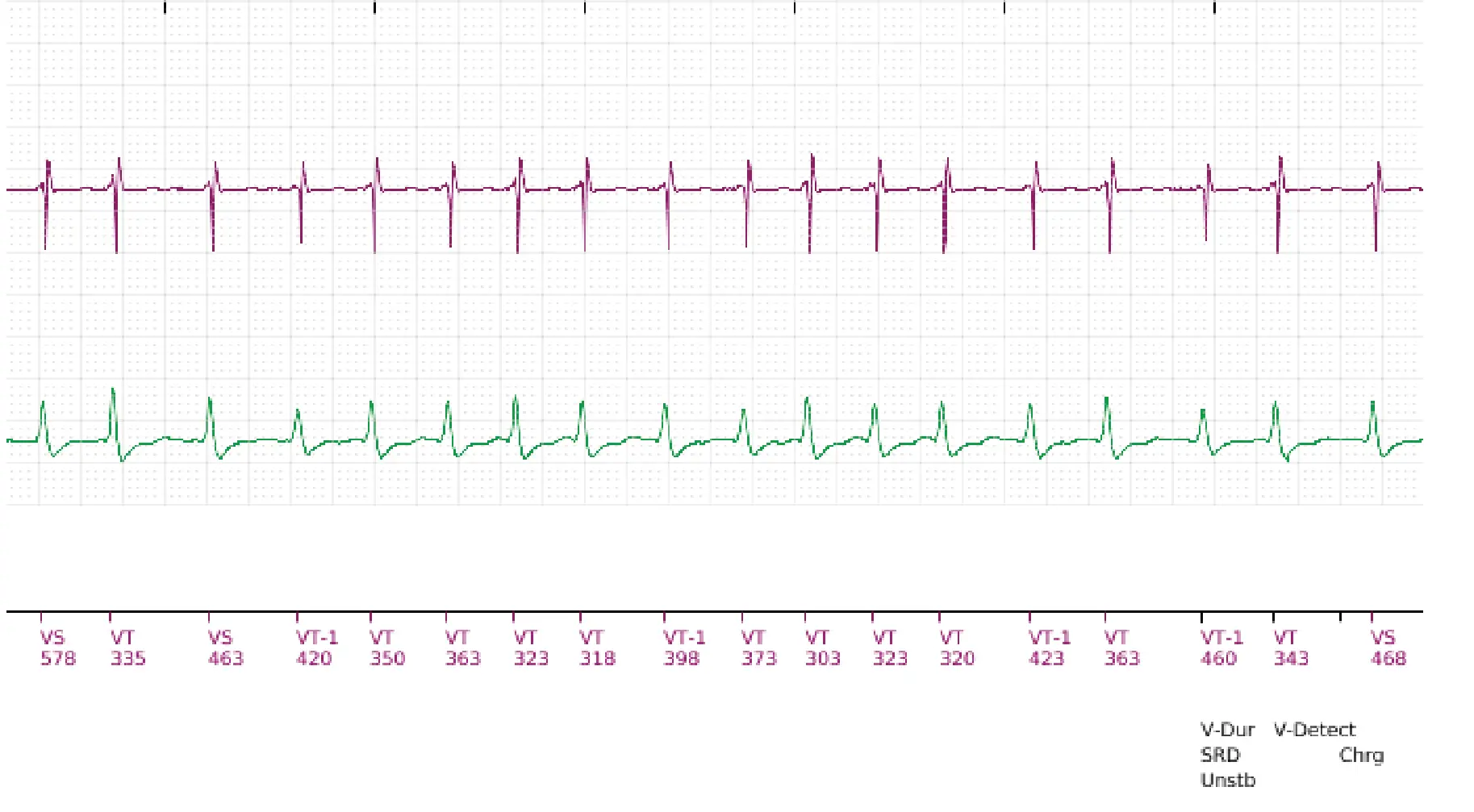
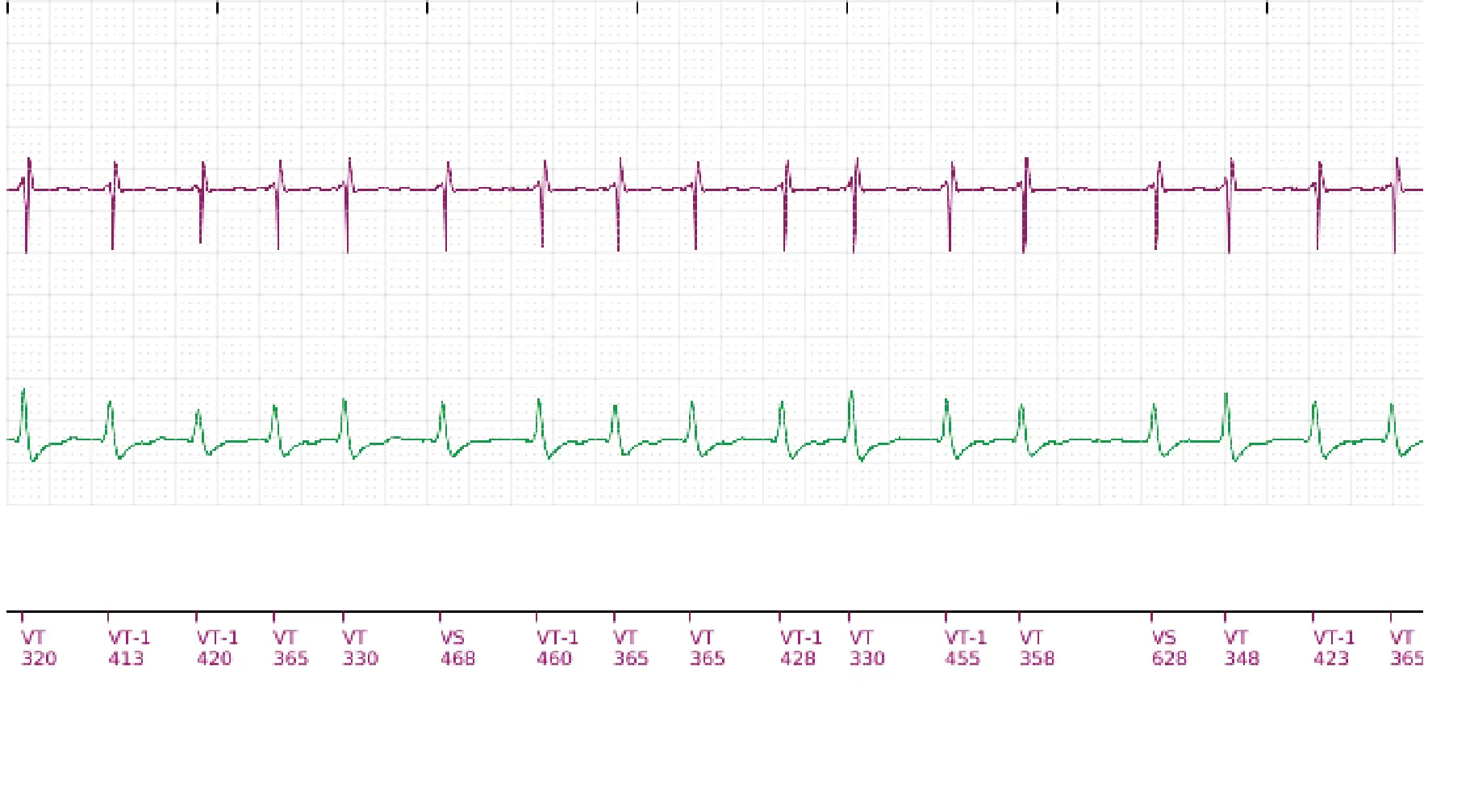
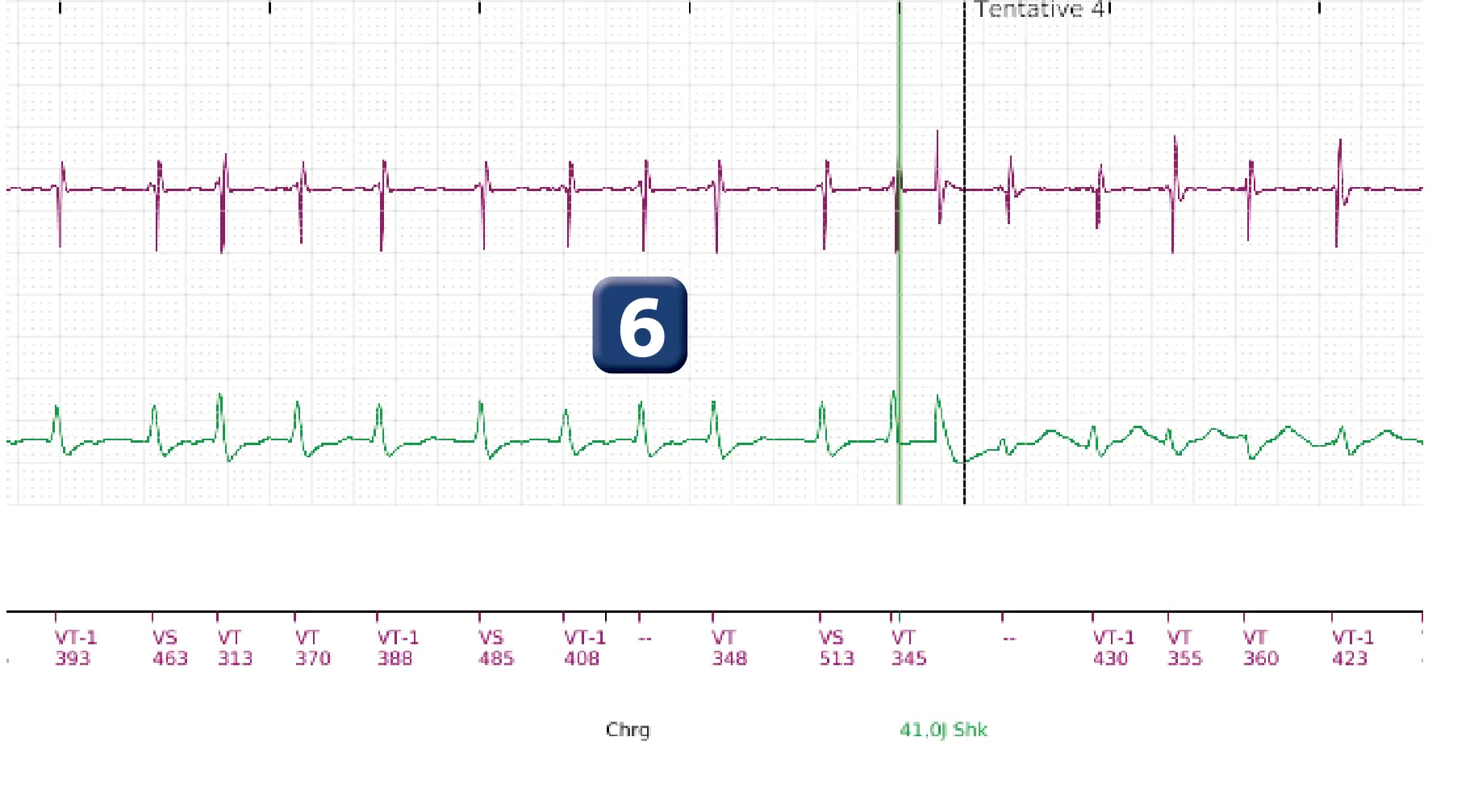
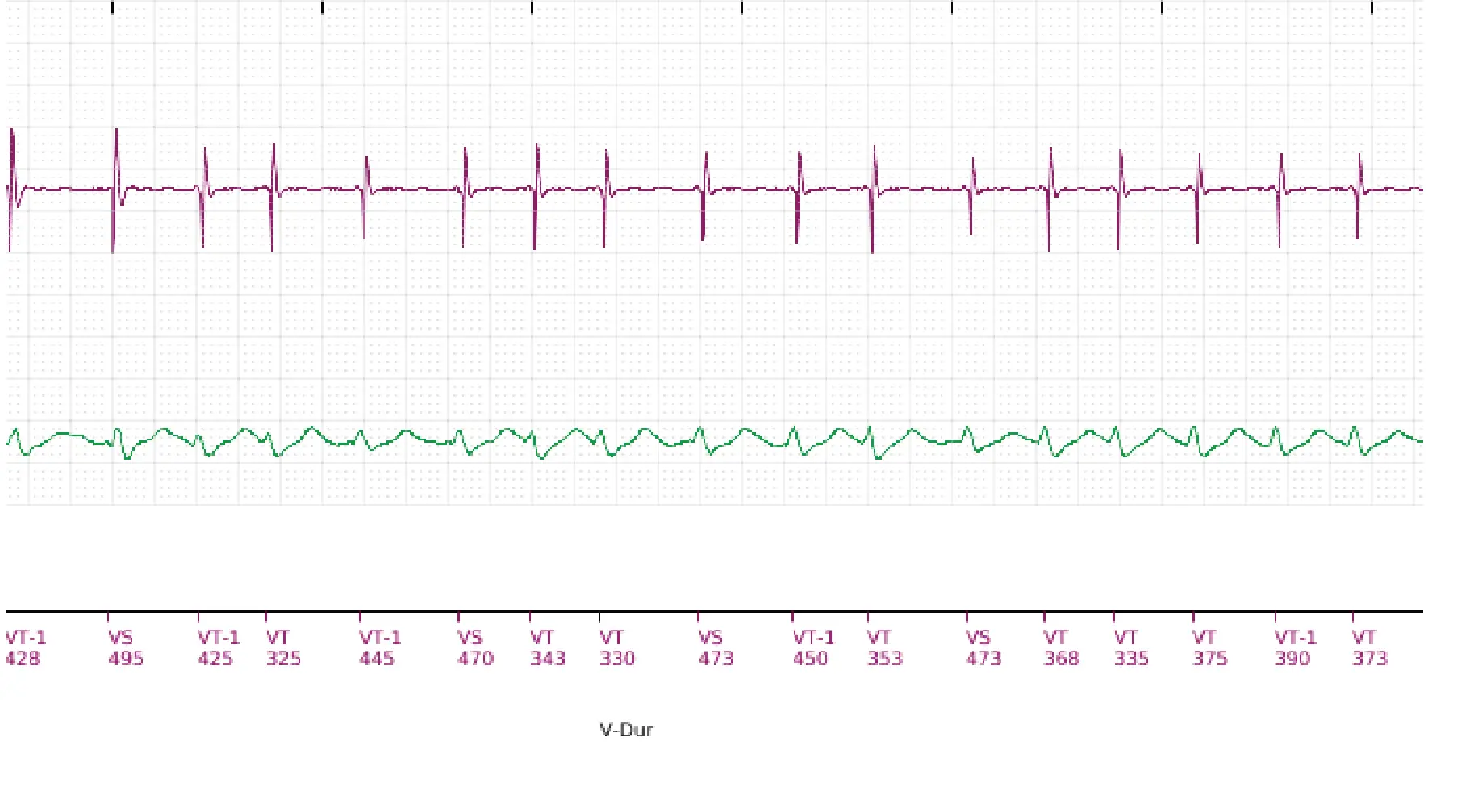
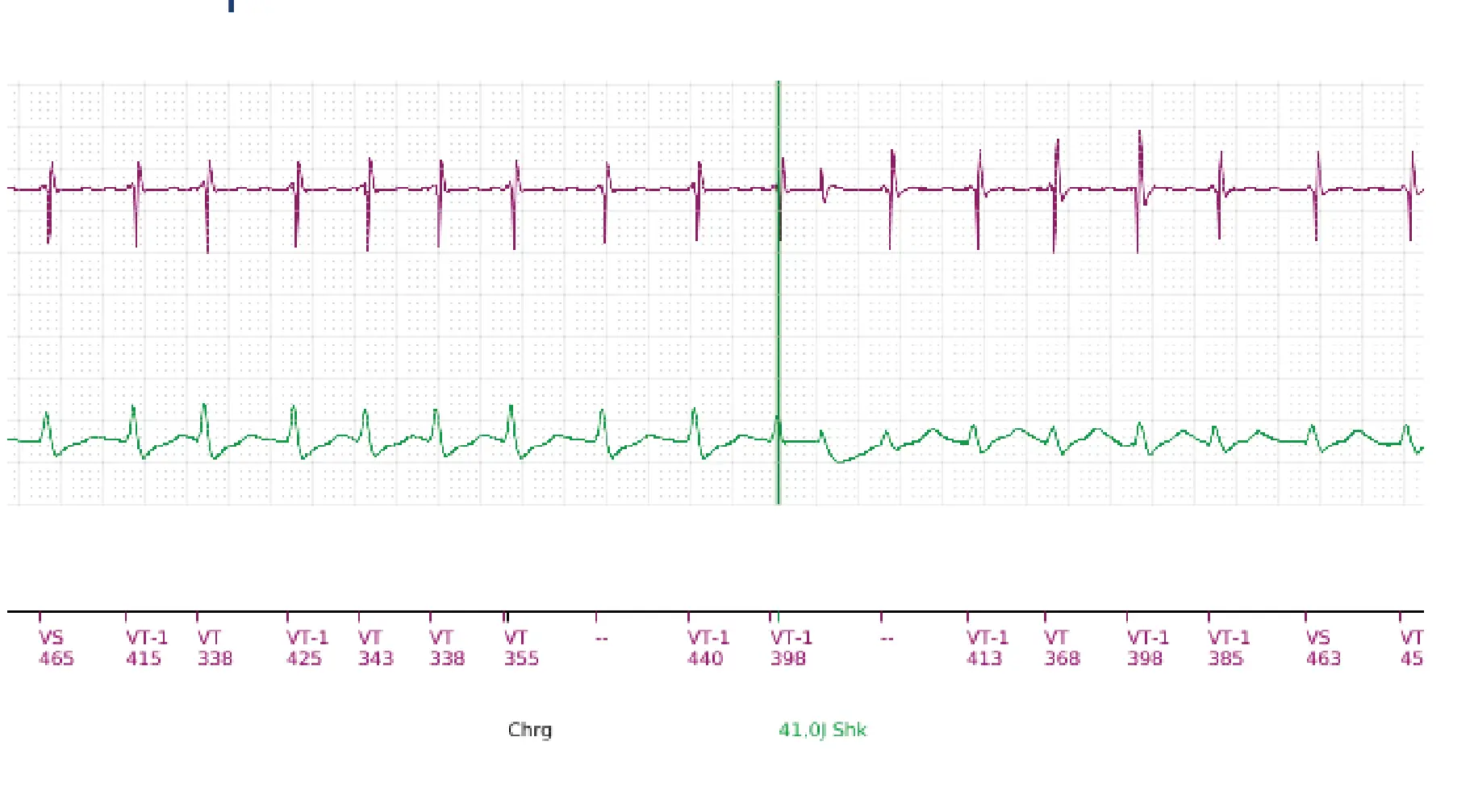
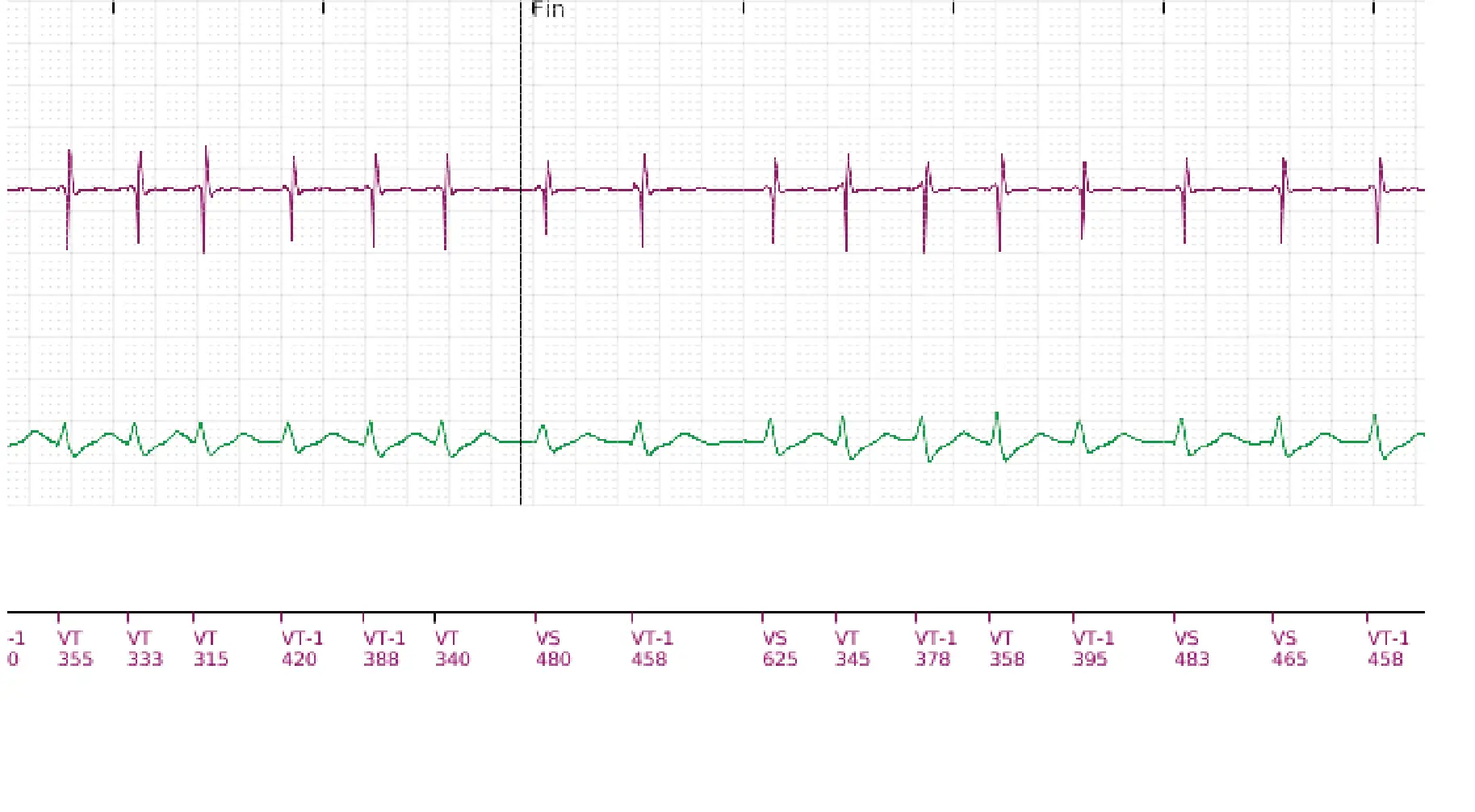
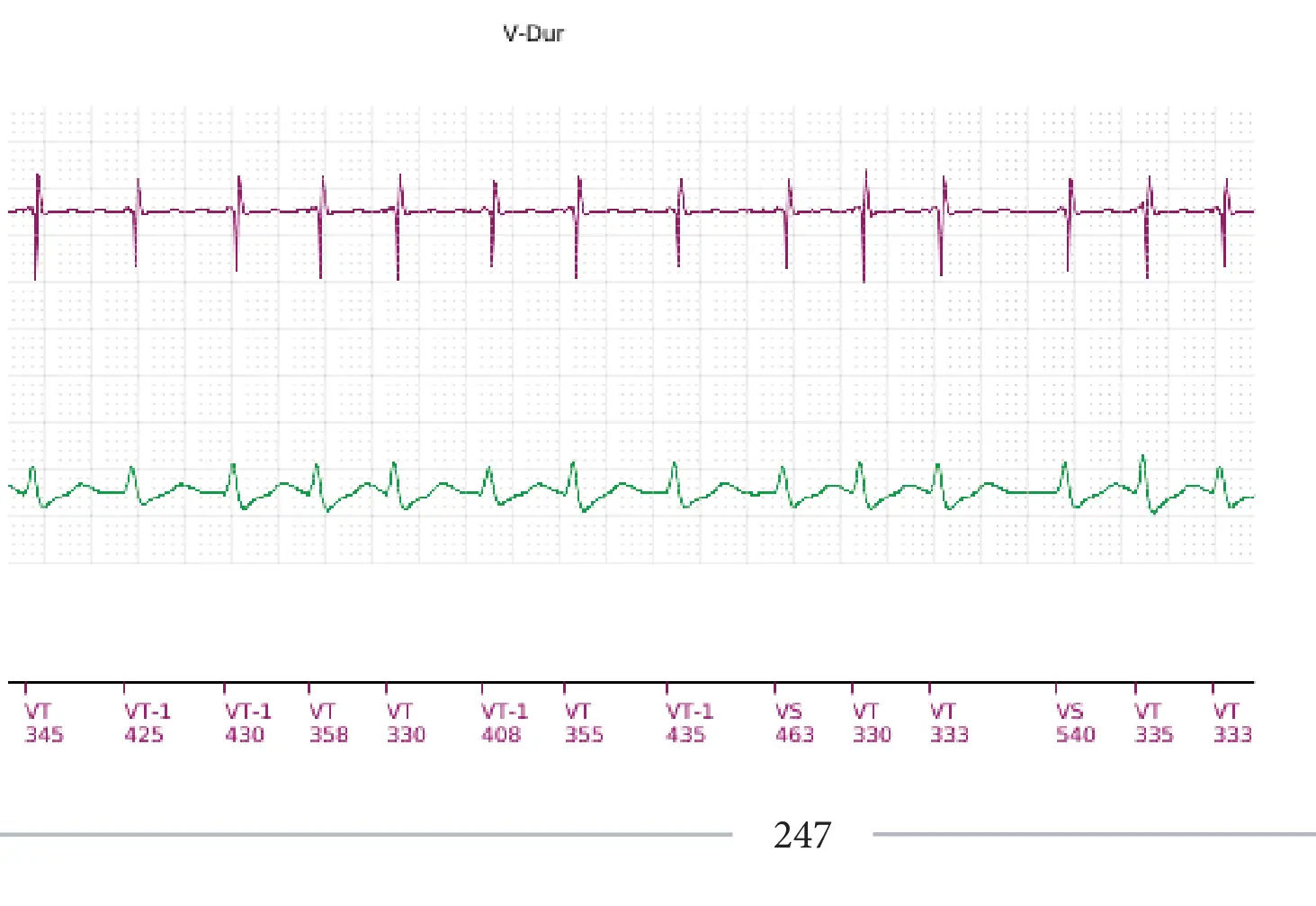
- Irregular tachycardia with ventricular electrograms appearing narrow on the shock channel; alternation between cycles classified as VT-1 and VS; correlation (C = correlated) of all cycles with reference morphology (percentage above the programmed threshold of 94%).
- End-of-episode marker V-EpsdEnd (corresponding to the previous episode not visualized on this plot), criterion 8/10 not having been satisfied.
- V-Epsd marker after 8 out of 10 cycles classified as VT-1 or VT
- End of duration (V-dur marker); discrimination favors SVT; for at least 3 beats/10 (rolling window), the vector is correlated with the reference vector (the last 10 ventricular complexes before the end of duration are correlated).
- On this cycle, the SRD is satisfied (SRD marker) and, despite a morphology in favor of SVT, therapies for the VT zone begin.
- Continuation of various VT zone therapies
Points to remember
- This patient’s AF episode is initially well discriminated through morphology analysis and correlation with the reference ventricular electrogram; unfortunately, the defibrillator then inappropriately delivers all the therapies in the VT zone, due to programming of the sustained rate duration (SRD) criterion
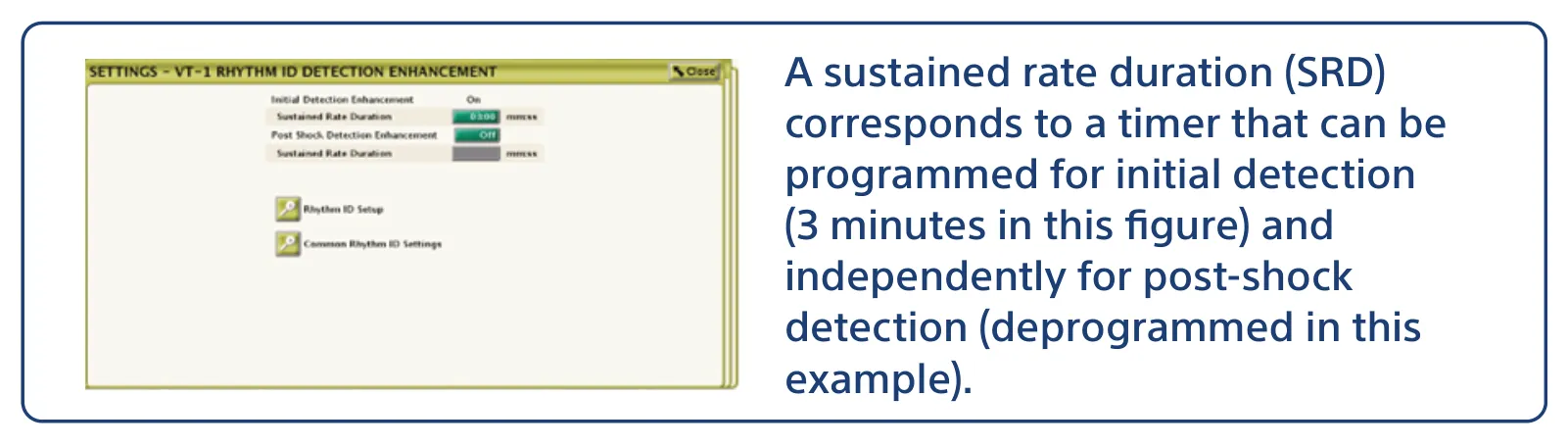
- The SRD is a timer which leads to delivery of therapies after a programmable time interval, even if discriminators are in favor of a supra-ventricular origin for the arrhythymia and have initially inhibited the therapies
- SRD is programmable on single, dual and triple chamber defibrillator platforms after selecting the Rhythm ID option or the Onset/Stability option.
- The principle of this timer is based on the fact that the quality of discrimination may be imperfect (diagnosis of SVT for an episode of VT) and that in most sinus tachycardias, the rate remains higher than the arrhythmia detection rate for only a limited time.
- SRD can be programmed separately for VT and VT-1 zones; an independent post-shock SRD value can be programmed
- There is limited data in the literature validating this type of programming; in a study with a timer programmed to 3 minutes, 10% of inappropriate therapies for SVT were observed
- In guidelines recommendations, deprogramming these types timers is advised or programming them over several minutes; in clinical practice, these timers are generally deprogrammed in the first instance and programmed only under certain very specific circumstances (discrimination error, etc.).
Practice out loud
Just describe the tracing. What do you think is going on? Describing the numbers can help.
00:00
0%
—
From Boston Scientific ICD — clinical cases by P. Bordachar, M. Strik, A. Thiyagarajah, S. Ploux. Published by Cardiocases. Every numbered marker on a recording is explained in the list beneath it; tap a marker on the trace or an entry in the list.
Order hardcopyon Amazon