
Chapter 4 · Discrimination · Case 11
Dual-chamber defibrillator and atrioventricular dissociation
Patient and episode
Patient
- Male implanted with a dual-chamber defibrillator (Cobalt DR) for hypertrophic cardiomyopathy.
The recording
Tap a number on the trace, or an entry in the list below
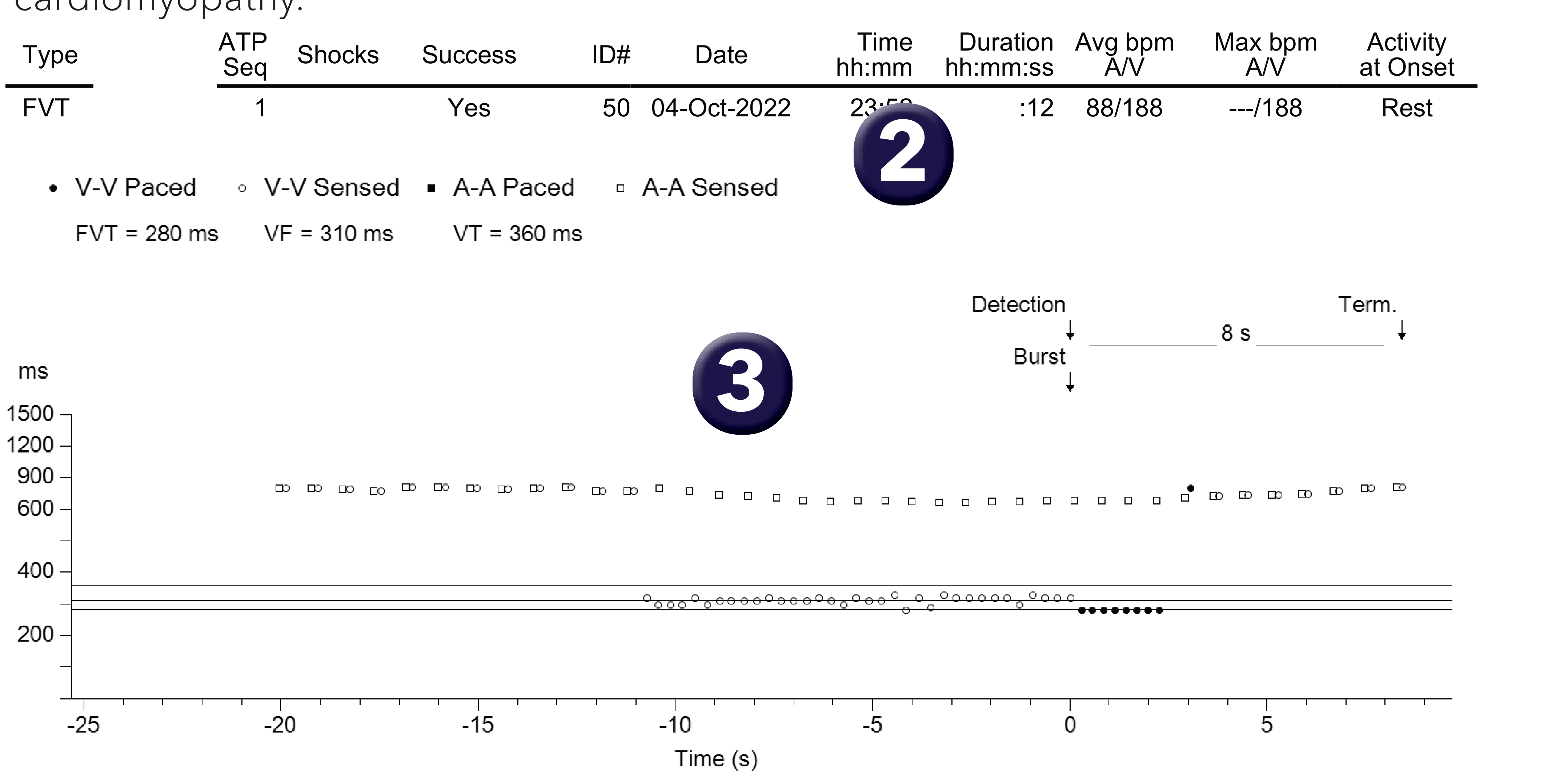
Rate / interval plot
EGM

From the interrogation
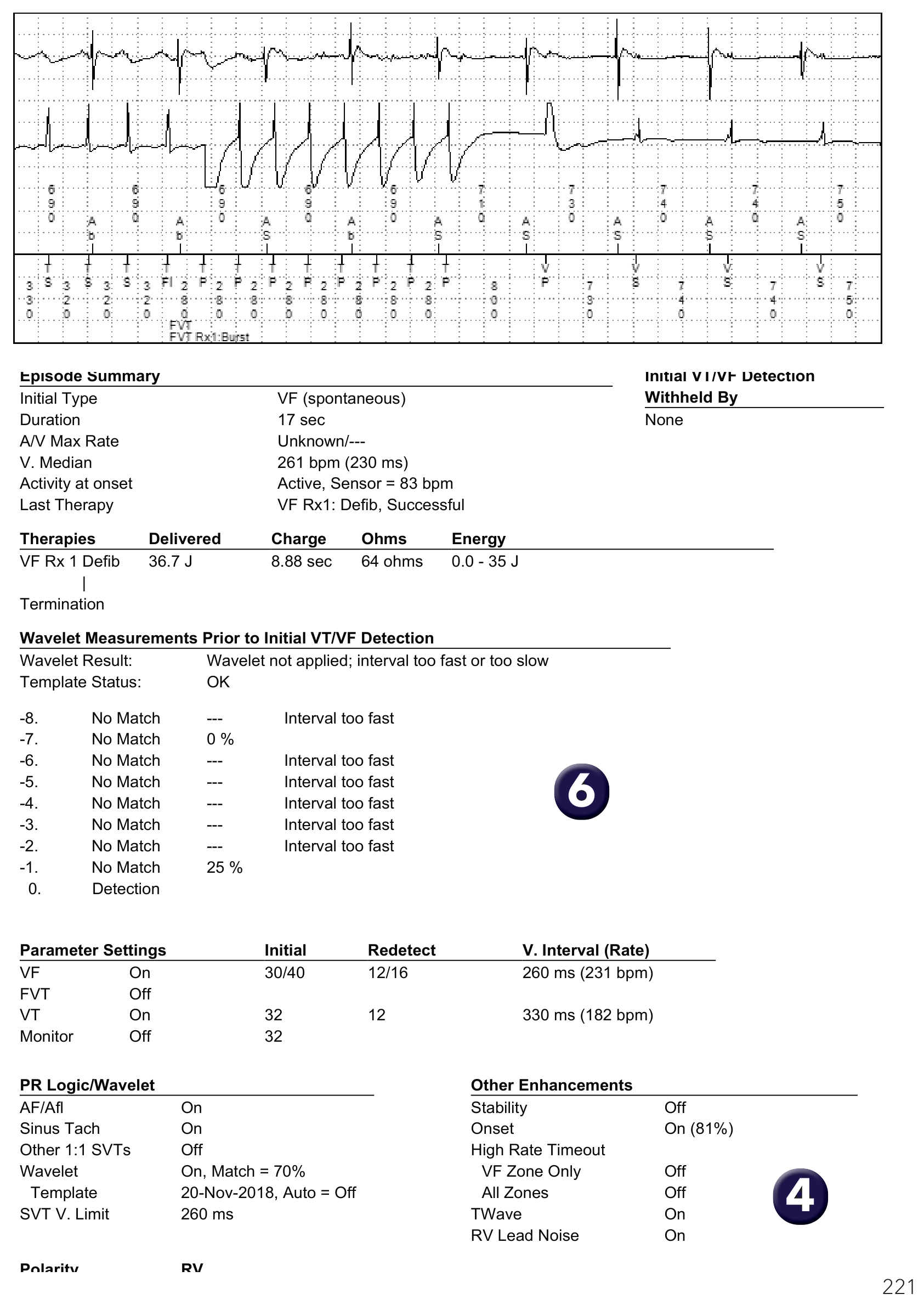
- What was the diagnosis made by the defibrillator for this episode? This episode has been classified FVT by the device.
- How many detection zones are programmed? Three detection zones have been programmed.
- What diagnosis does the interval plot suggest? The graph suggests a diagnosis of VT with atrioventricular dissociation (ventricular rhythm faster than the atrial rhythm); the burst allows reduction.
- How many discrimination parameters are programmed? The discrimination parameters (PR Logic and Wavelet) are programmed with a SVT V.limit of 260 ms.
- What is your diagnosis? The diagnosis of VT is obvious with atrioventricular dissociation.
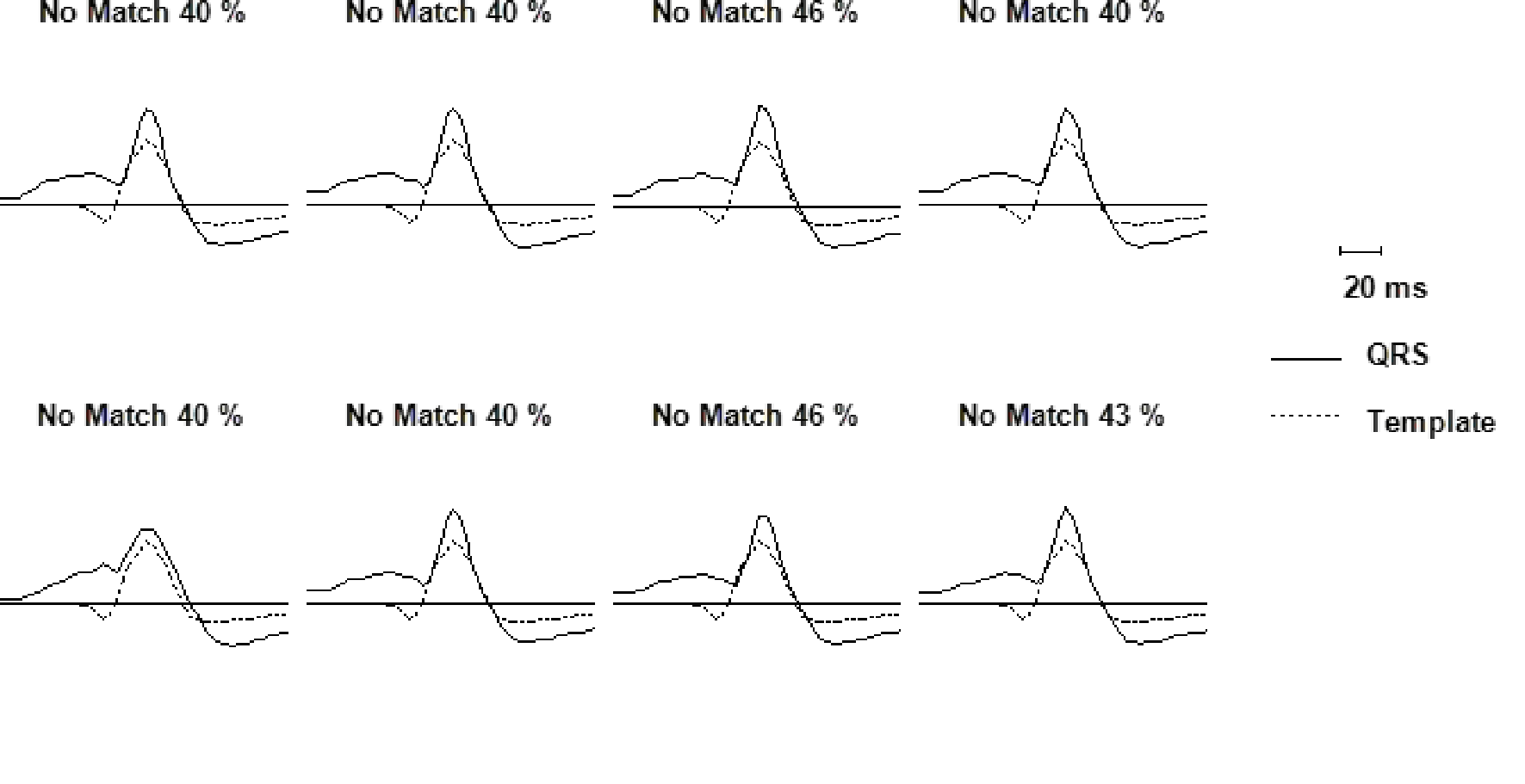
- What are the results of Wavelet? Wavelet supports the diagnosis of VT, with none of the QRS complexes analysed judged to be similar to the reference template.
Points to remember
- A double or triple-chamber defibrillator can be used to compare the atrial and ventricular rates; for both the clinician and defibrillator, the presence of a ventricular rate faster than the atrial rate confirms the ventricular origin of the tachycardia.
- In a dual or triple chamber defibrillator, the PR Logic algorithm is used to discriminate the origin of the tachycardia and differentiate between ventricular and supra-ventricular tachycardias by studying the relationship between atrial and ventricular activity and comparing the 2 respective rates.
- Discrimination by PR Logic only applies during the initial detection phase and not during the re-detection phase; PR Logic only works for heart rates below the programmed limit of supra-ventricular tachycardia and can therefore be active in the VF zone depending on programming.
- PR Logic gives its diagnosis once the initial VT or VF counter has been filled.
- PR Logic discrimination is based on the continuous and simultaneous assessment of 6 criteria, which can sometimes make it difficult to explain in detail how it works.
- In this example, the diagnosis of VT is obvious to the doctor because of atrioventricular dissociation, which is most frequently the case; in fact, during an episode of VT, the demonstration of a ventricular rate faster than the atrial rate is much more common than the observation of a 1/1 ratio (retrograde conduction) or a bi-tachycardia.
- Diagnosis is also straightforward with PR Logic; one of the essential steps in diagnosis using PR Logic is a comparison between ventricular and atrial rates (measurement of the median value of RR intervals and PP intervals over the last 12 cycles); when the ventricular rate is judged to be faster than the atrial rate, the device concludes that VT has occurred without further analysis.
Practice out loud
Just describe the tracing. What do you think is going on? Describing the numbers can help.
00:00
0%
—
From Medtronic ICD — clinical cases by P. Bordachar, A. Thiyagarajah, L. Fontagne, M. Strik, S. Ploux. Published by Cardiocases. Every numbered marker on a recording is explained in the list beneath it; tap a marker on the trace or an entry in the list.
Order hardcopyon Amazon