
Chapter 1 · Counters · Case 3
Competing counters
Patient
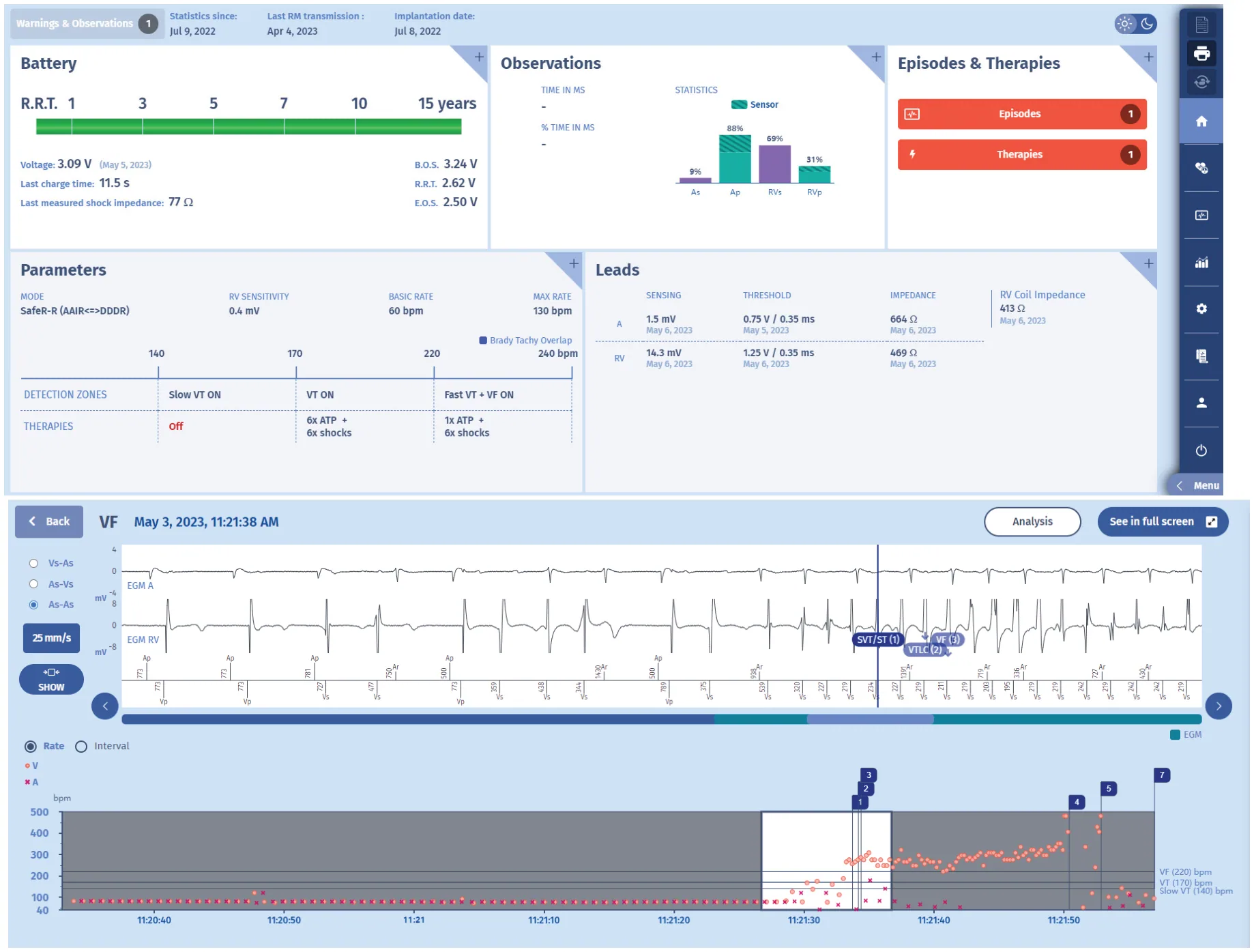
- A 70-year old patient is implanted with a dual chamber ICD (ULYS DF4) in the context of secondary prevention (VF) in ischemic cardiomyopathy. You interrogate the device in the emergency department after sensation of a shock.
Your turn
Why are there three markers (SVT, VT and FV) before the diagnosis is made ?
- Because there is intermittent undersensing, which delays the diagnosis of VF
- Because it is a supraventricular tachycardia, initially correctly diagnosed (SVT) but then the diagnosis changed inappropriately to VF.
- Because it’s how the counters work: first VT zone but irregular (SVT marker), then VT zone and stable (VT marker) and then in VF zone (VF marker).
- Because there is oversensing of the VT which fills the VF counter.
Interpretation
This is a typical example of a tachycardia in the VF zone which shows multiple markers before the final diagnosis is made.

The interval plot shows a stable atrial and ventricular rhythm (probably paced as the intervals seem fixed) with a sudden acceleration of ventricular events, beginning with extrasystoles and continuing with a more organized tachycardia in the VF zone. After the shock (marker 4), there are again a few extrasystoles before the return to slow rhythm).
EGM
The beginning of the tachycardia is very typical with first extrasystoles disturbing the rhythm and then an organized ventricular arrhythmia which speeds up and becomes more organized after a few cycles. This is called “warming-up” and is often seen in the beginning stage of a fast ventricular tachycardia.
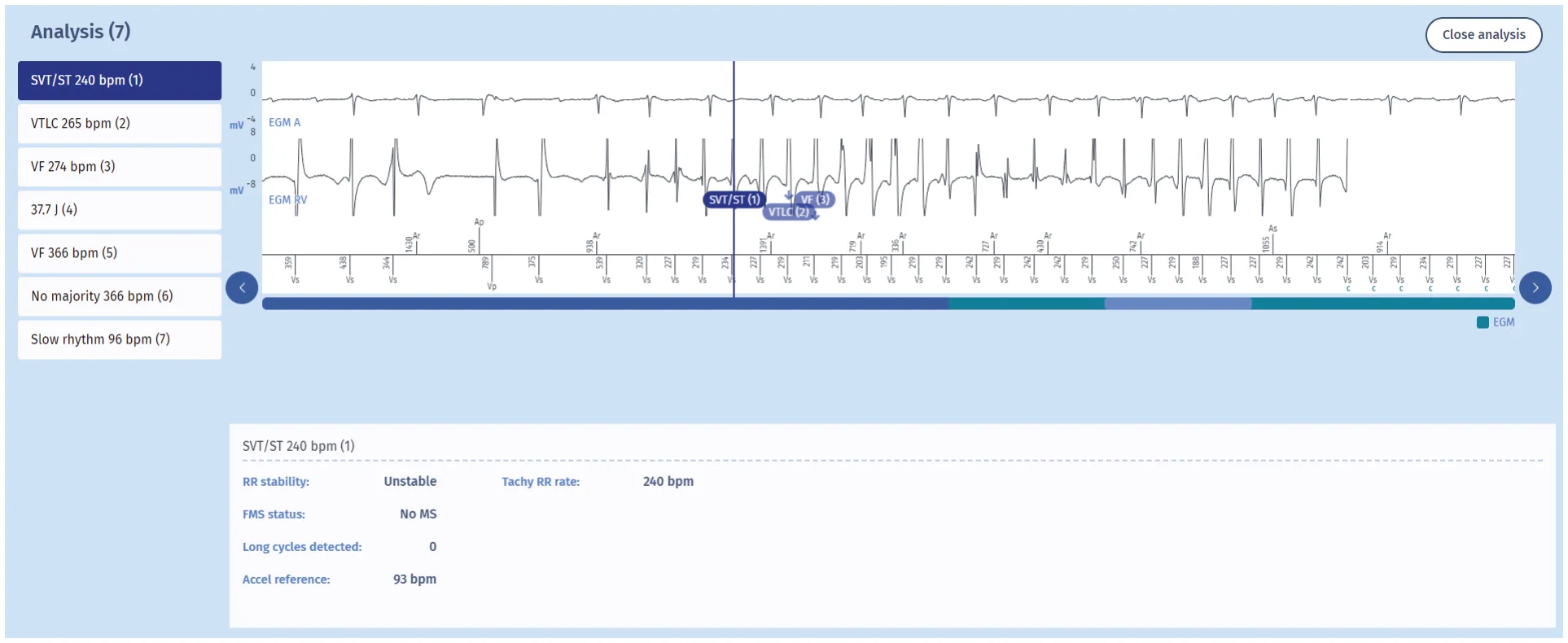
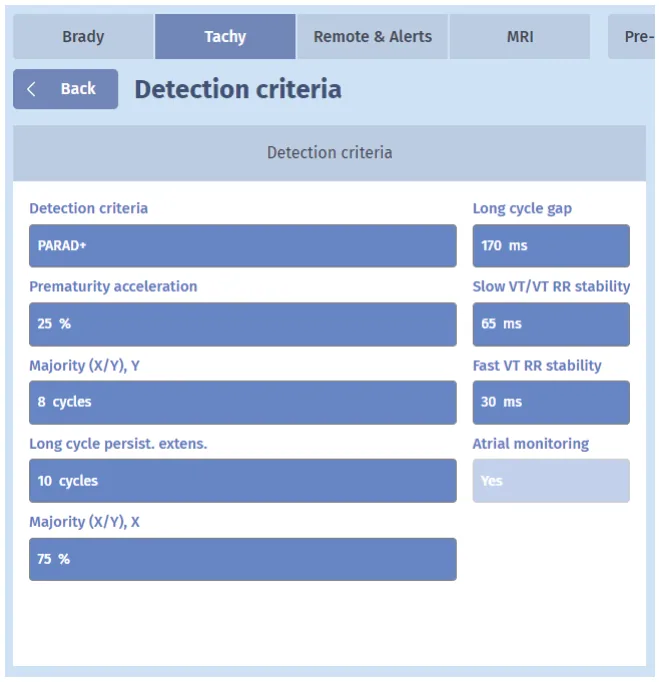
As MicroPort ICDs use a very fast counter (6 out of 8), we often see an early SVT marker during this period as there are 6 cycles in the VT zone (including 2 extrasystoles) but these cycles are unstable and therefore the discrimination algorithm classifies the events as “supraventricular” (SVT). When we click on the marker, in the window we find the word: Unstable, which confirms the normal algorithm behavior.
The next marker is the VT marker which is after the 6th stable cycle in the VT zone and therefore the rhythm becomes stable and the diagnosis changes from SVT to VT. The marker is actually VTLC which means VT but with consideration of “Long Cycles”, more about this later in the Discrimination section. It is important to realize that at this moment, the VT persistence starts counting at a value of 1.
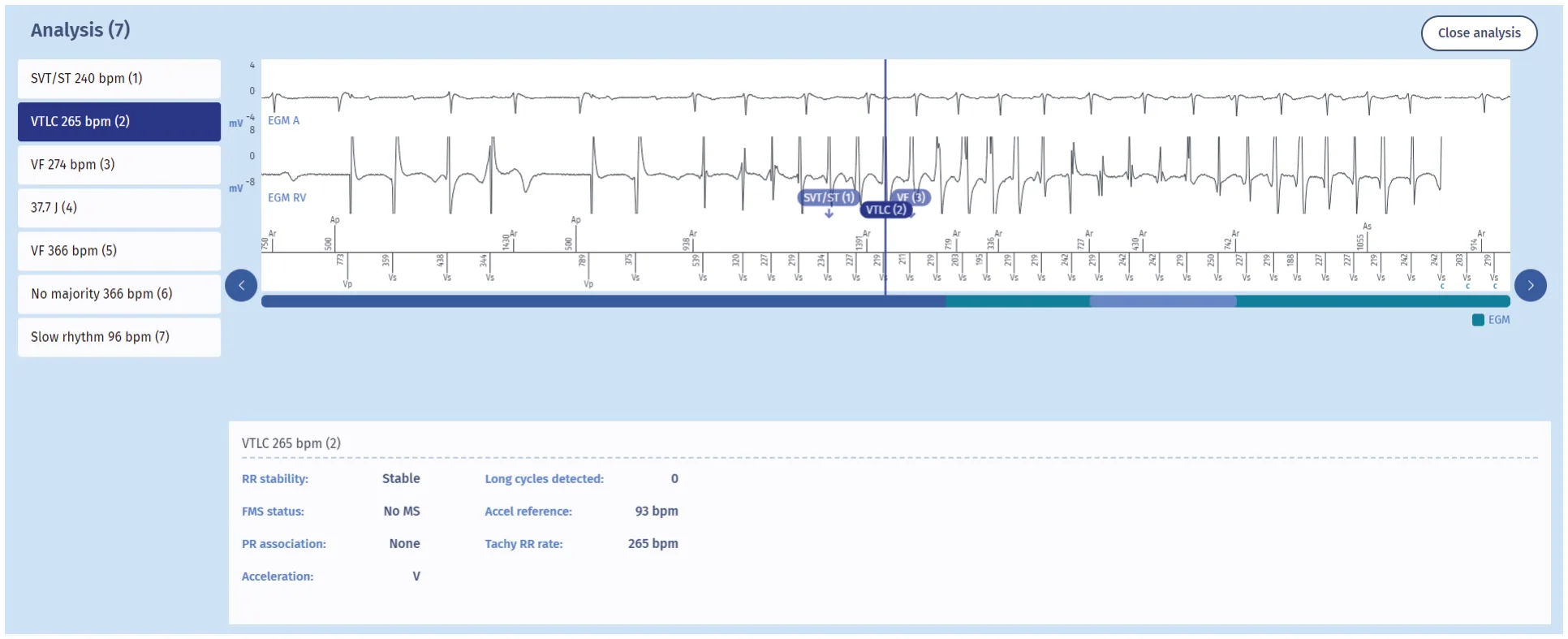
As the arrhythmia speeds up into the VF zone, there is fast appearance of the VF marker and the VF persistence starts (at a value of 1) while the VT persistence increases to 2 (it was 1 during the previous cycle at the same time as the VTLC marker). There is no discrimination in the VF zone in MicroPort ICDs so any 6/8 events in the VF zone will result in a VF marker. There is however another check of stability which is required to make the choice between Fast-VT or FV therapies but more about this later. After filling of the VF persistence (20 cycles), the charge begins.
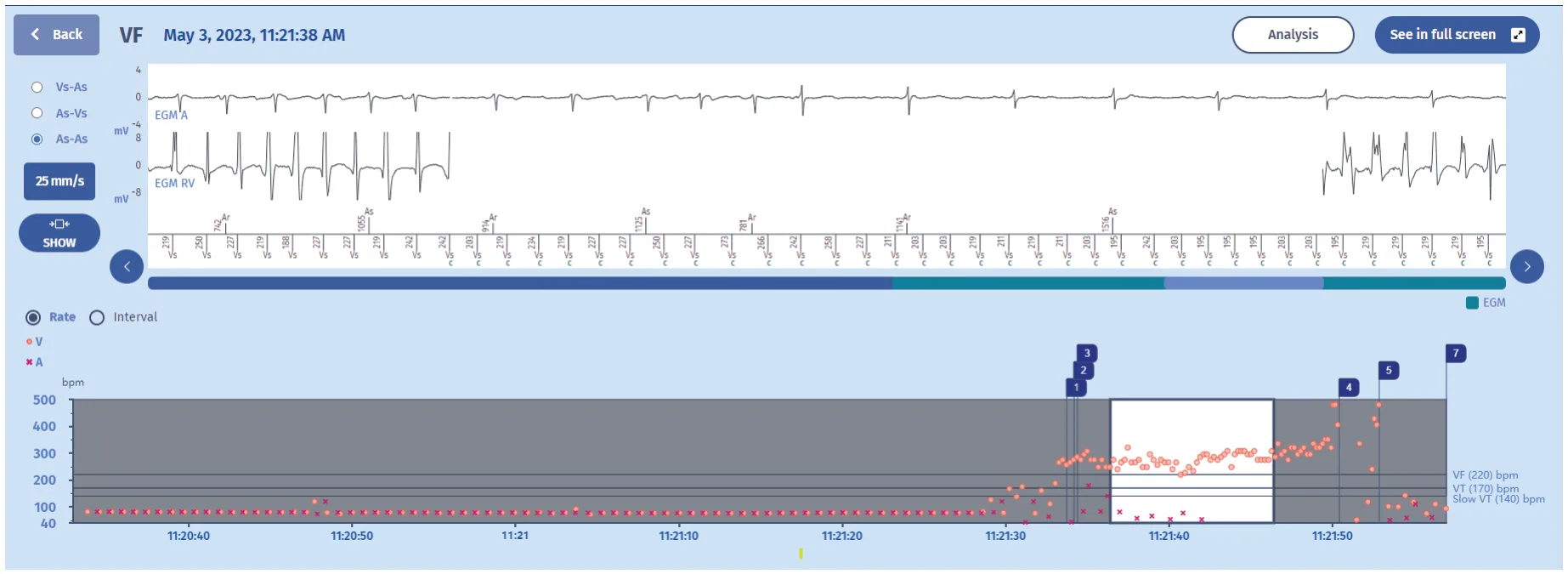
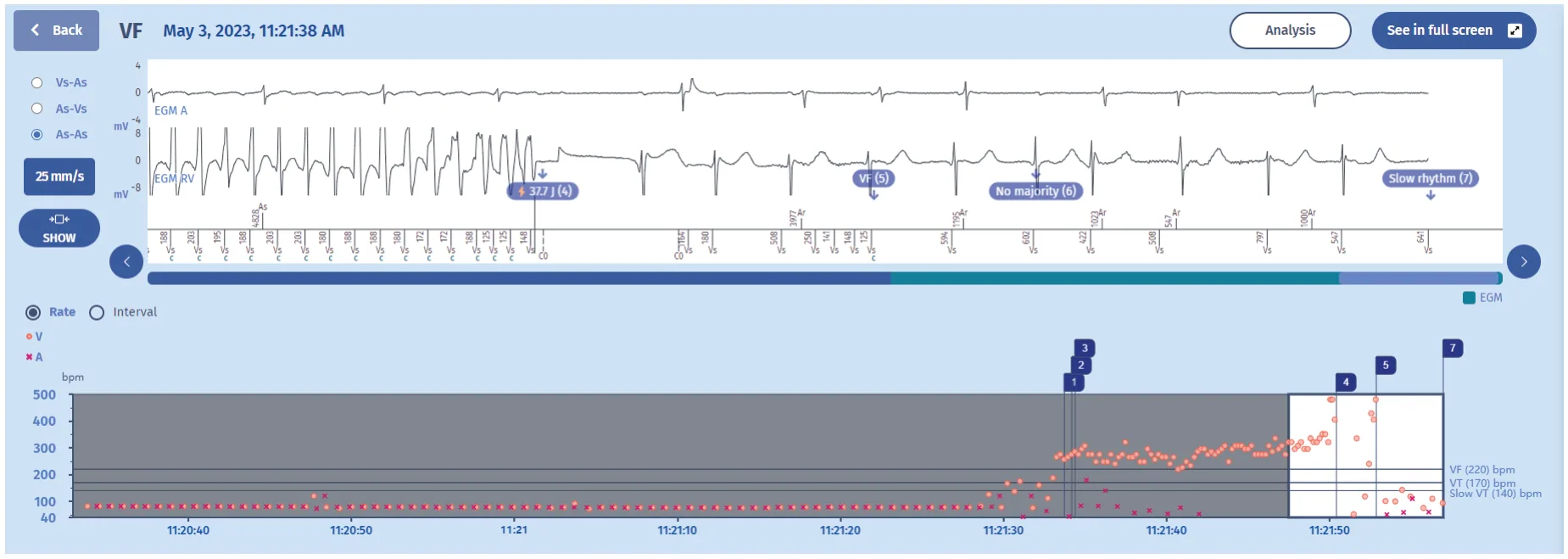
After the charge has completed, there is confirmation of the tachycardia and the shock is delivered. The shock terminates the VT. Interestingly, there is a new VF marker which is caused by some low amplitude noise on the ventricular channel, associated with some late post-shock artifacts. But the persistence is reset soon after when the VF majority is lost (No majority marker). The episode is concluded when the Slow majority is reached.
Comments
As only 6 fast events (in a window of 8 events) are required to make a diagnosis, MicroPort ICDs have the shortest counters on the market. Therefore, the ICDs delivers checks on each cycle to confirm the rhythm still has the same majority. If the majority changes, there will be a new marker displayed. It is very informative to click on “Analysis” to show more information about each marker in order to understand why the ICD has made certain decisions. And so you will often see multiple markers before the first therapies are delivered as ventricular arrhythmias start with extrasystoles, as they speed up and become stable after a few seconds. A quick fix to this could be to prolong the 6/8 counter and while this is possible to do in MicroPort ICDs, the engineers strongly advise against changing this parameter because it is the core of ICD fonctioning.
Take-home message
MicroPort ICDs have very short majority counters. As ventricular arrythmia’s often “warm-up”, we often see SVT or VT markers before the VF marker.
Practice out loud
Just describe the tracing. What do you think is going on? Describing the numbers can help.
—
From Implantable Cardioverter Defibrillator — Clinical cases from patients with MicroPort™ ICDs by M. Strik, A. Thiyagarajah, S. Ploux, P. Bordachar, P. Ritter. Published by Cardiocases. Each case is a question on real device interrogations: pick your answer, check it, then read the authors’ interpretation. Tap any figure to open it full screen.