
Chapter 1 · Counters · Case 5
Competition between the different detection counters and et spontaneous reduction
Patient and episode
Patient
- Man implanted with a single-chamber Ellipse defibrillator for ischemic cardiomyopathy; this patient consulted for palpitations
Summary
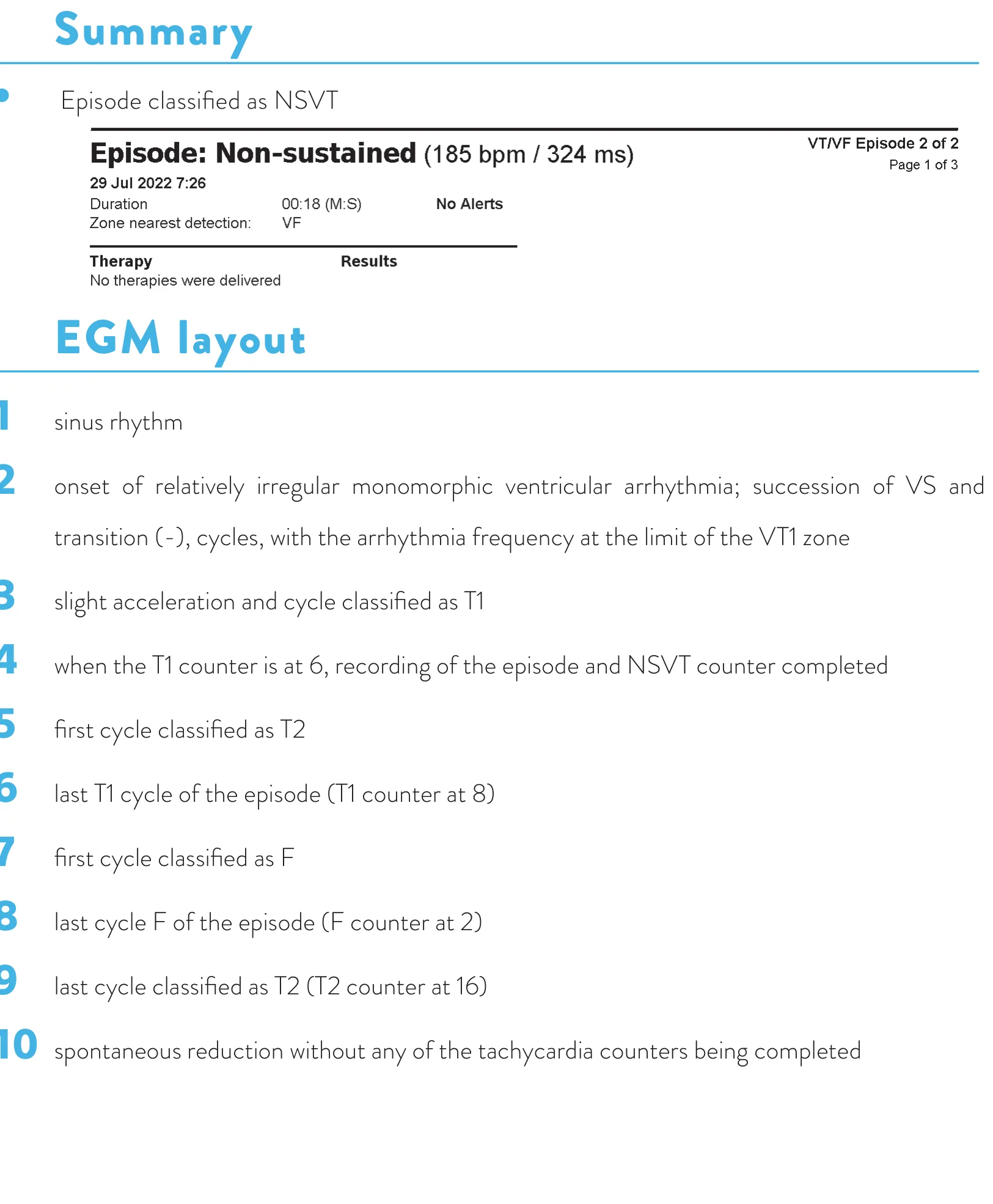
- Episode classified as NSVT
The recording
Tap a number on the trace, or an entry in the list below
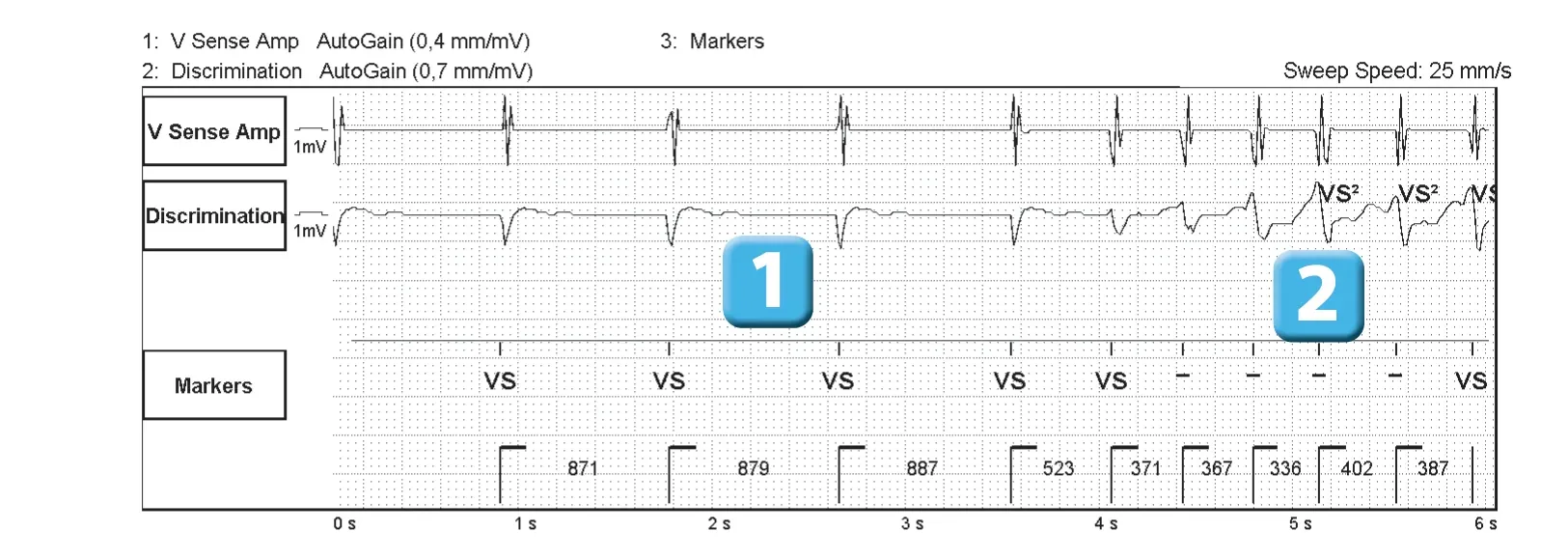
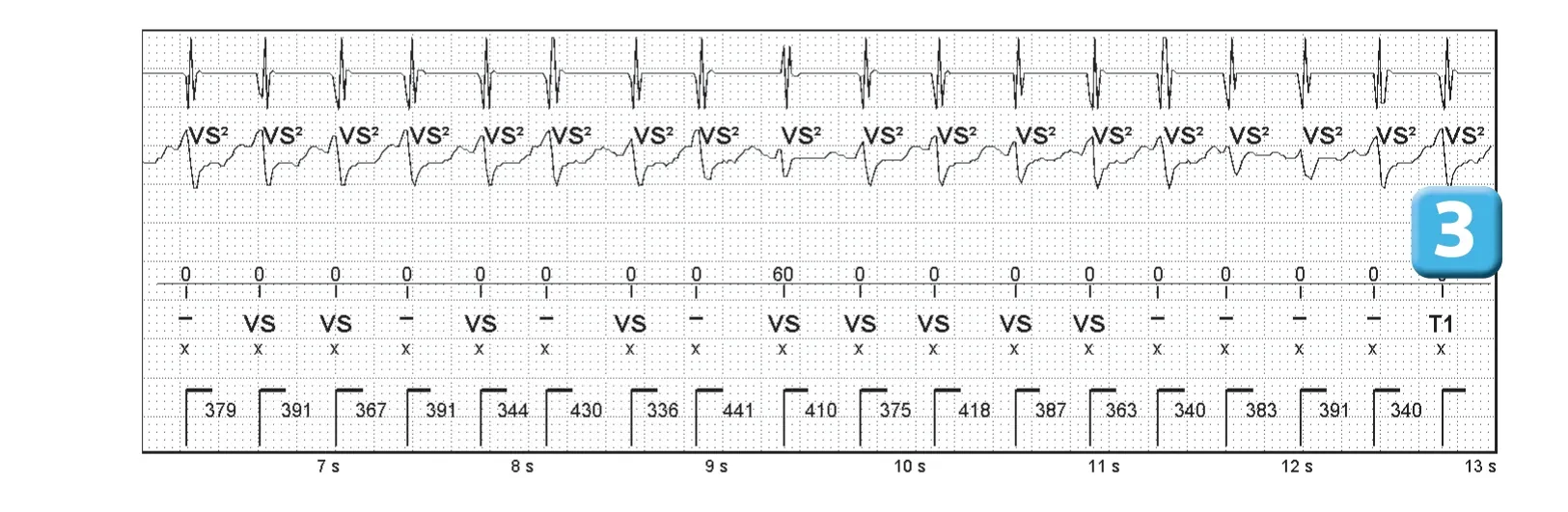
- sinus rhythm
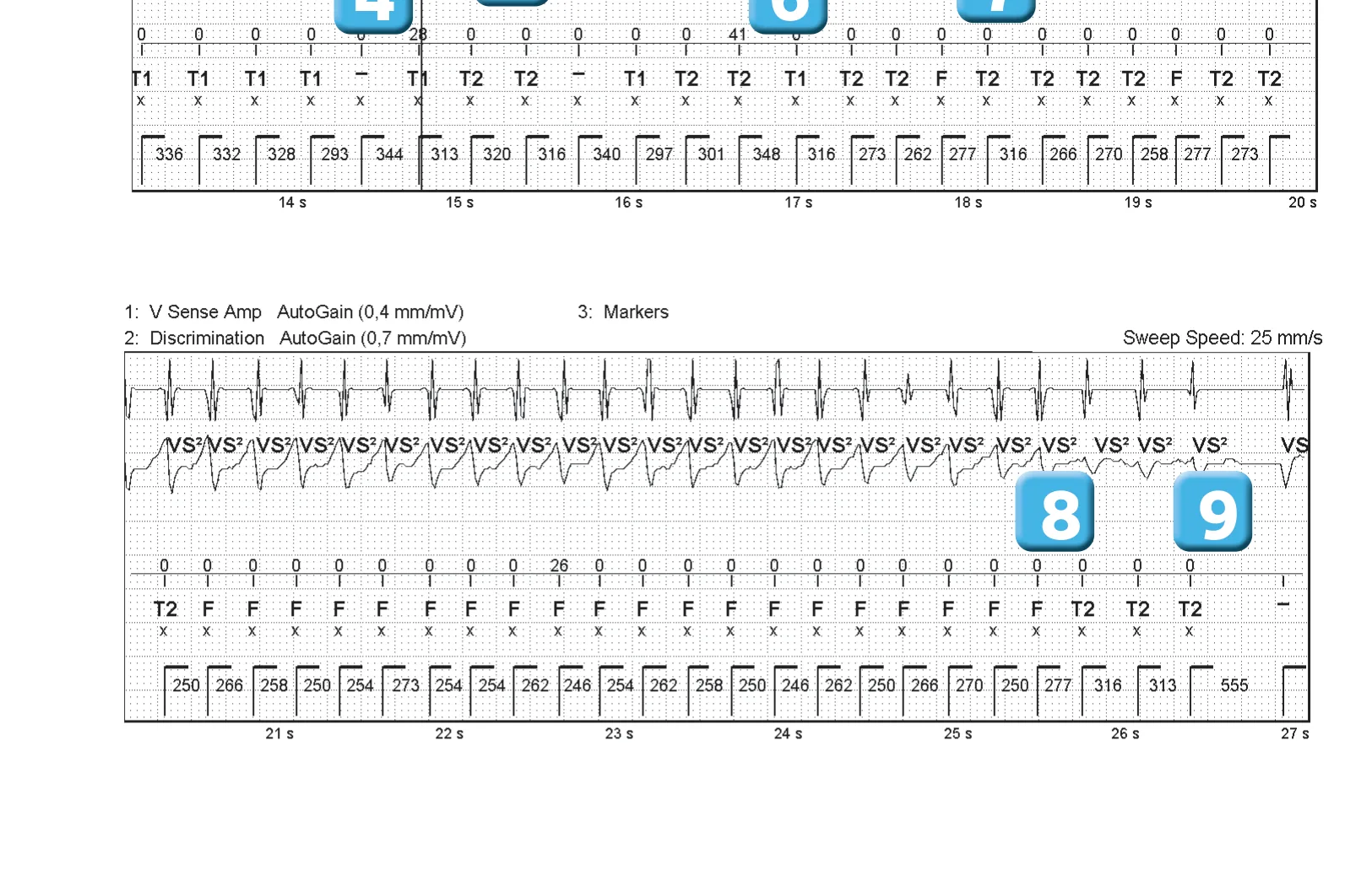
- onset of relatively irregular monomorphic ventricular arrhythmia; succession of VS and transition (-), cycles, with the arrhythmia frequency at the limit of the VT1 zone
- slight acceleration and cycle classified as T1
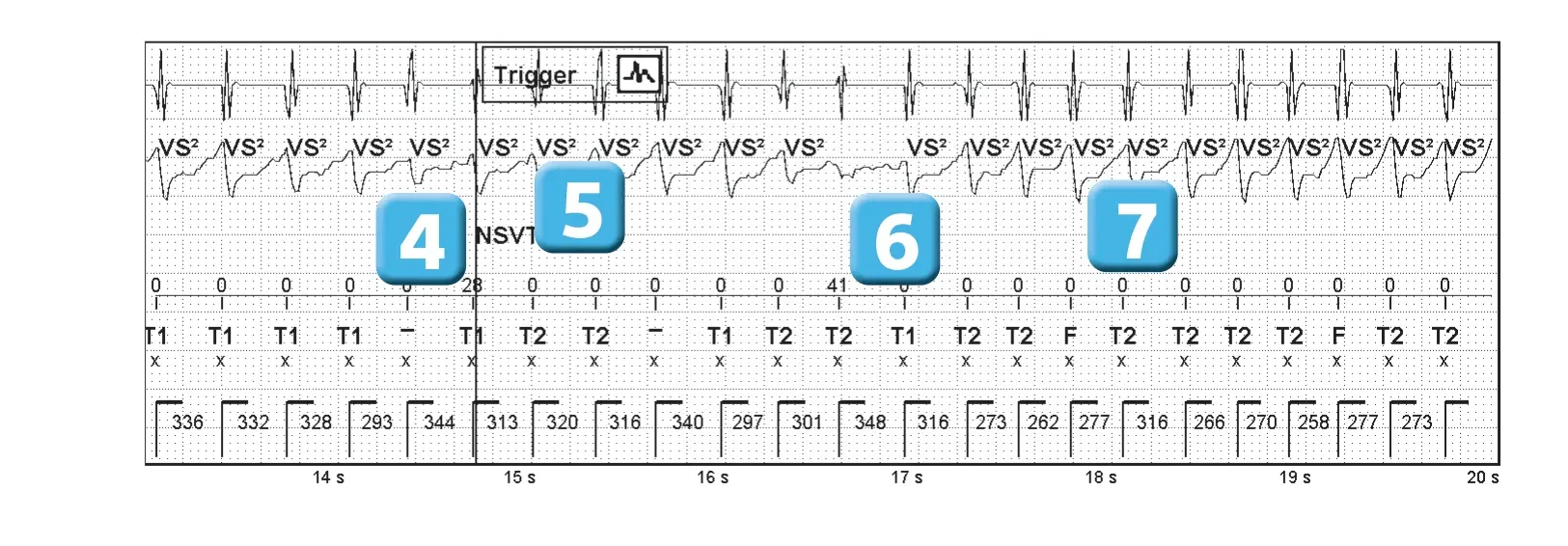
- when the T1 counter is at 6, recording of the episode and NSVT counter completed
- first cycle classified as T2
- last T1 cycle of the episode (T1 counter at 8)
- first cycle classified as F
- last cycle F of the episode (F counter at 2)
- last cycle classified as T2 (T2 counter at 16)
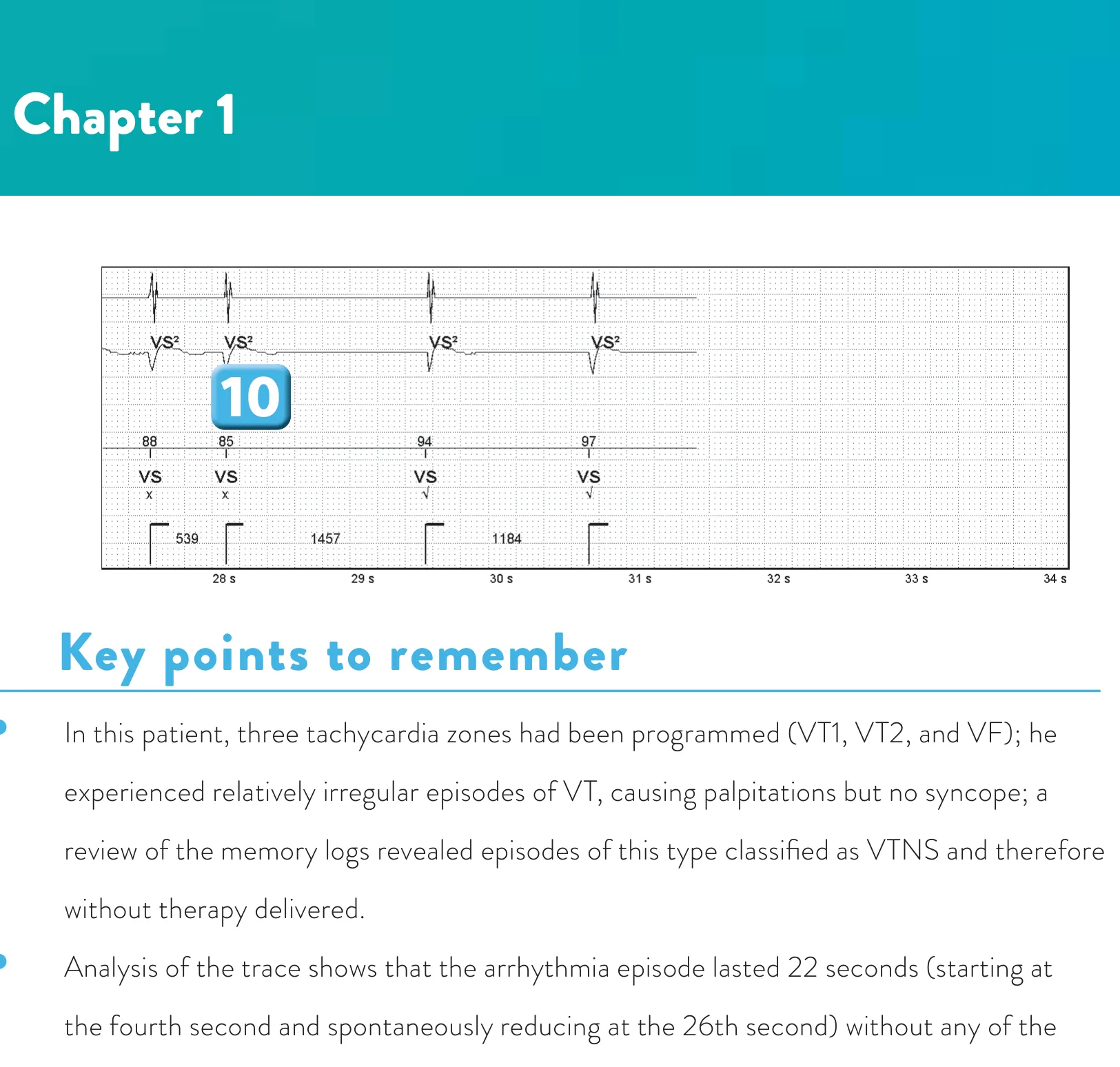
- spontaneous reduction without any of the tachycardia counters being completed
From the interrogation
Points to remember
- In this patient, three tachycardia zones had been programmed (VT1, VT2, and VF); he experienced relatively irregular episodes of VT, causing palpitations but no syncope; a review of the memory logs revealed episodes of this type classified as VTNS and therefore without therapy delivered.
- Analysis of the trace shows that the arrhythmia episode lasted 22 seconds (starting at the fourth second and spontaneously reducing at the 26th second) without any of the tachycardia counters being completed; this can be explained by the specific way in which the counters work.
- Initially, the tachycardia was detected below the first zone (cycles classified as VS); it then accelerated with cycles classified as T1 and then T2; it then accelerated significantly and was detected in the VF zone; the counters operate in parallel. ; when the heart rate is variable and cycles are detected successively in different tachycardia zones, there may be a delay in diagnosis because the counters do not interfere with each other (unlike another competitor where a cycle in the VF zone implements the VT zone counter).
- We can see that in this example, the tachycardia resolves spontaneously, which is the most favorable outcome since, even though it lasted more than 20 seconds, it was clinically well tolerated by the patient.
Practice out loud
Just describe the tracing. What do you think is going on? Describing the numbers can help.
00:00
0%
—
From Implantable Cardioverter Defibrillator — clinical cases based on tracings by P. Bordachar, M. Strik, A. Thiyagarajah, S. Ploux. Published by Cardiocases. Every numbered marker on a recording is explained in the list beneath it; tap a marker on the trace or an entry in the list.