
Chapter 1 · Counters · Case 3
Operating principles, intial detection and redetection
Patient and episode
Patient
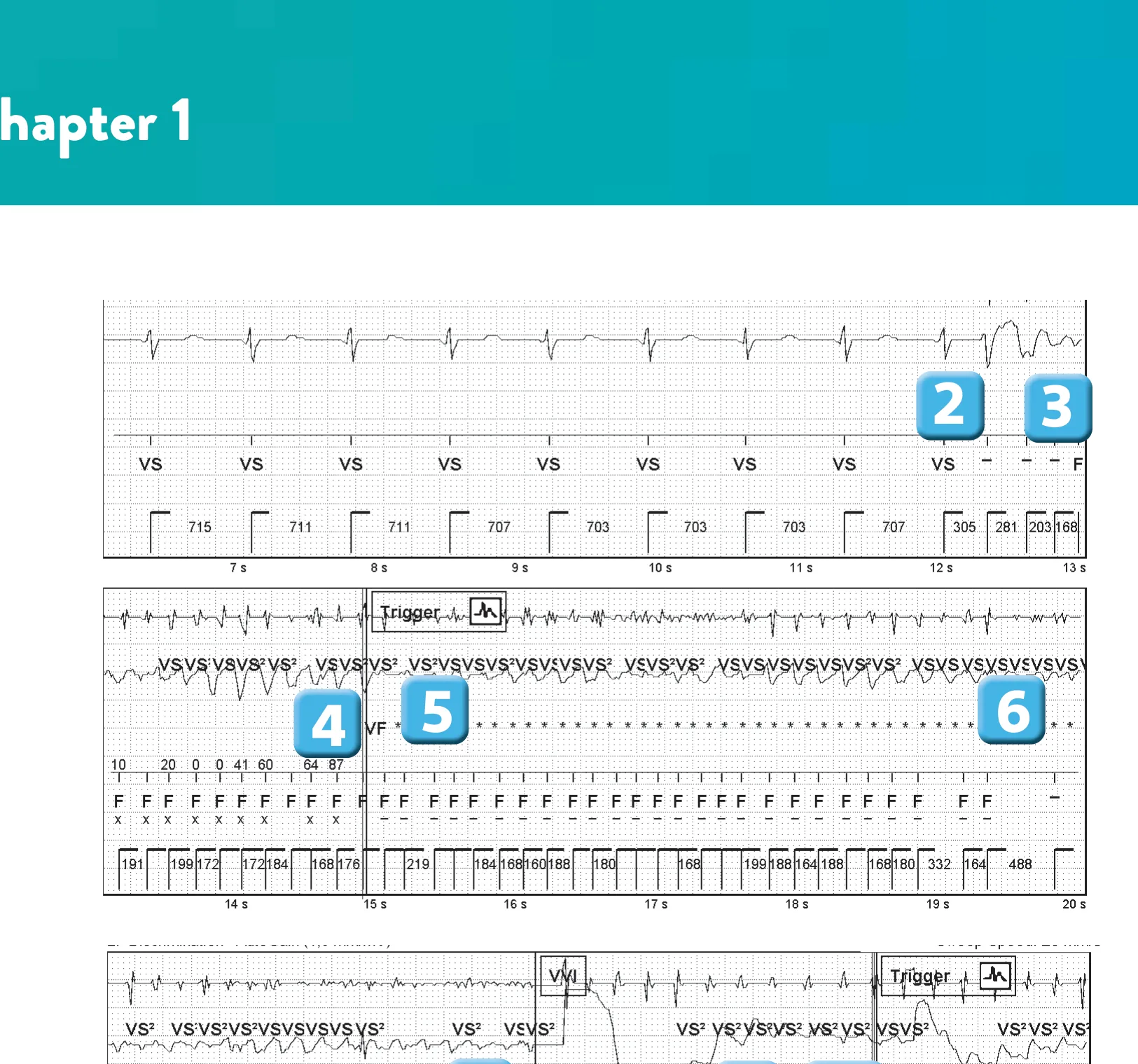
- Male implanted with a single-chamber Ellipse ICD who experienced syncope with two electric shocks. This trace illustrates device function following an electric shock
Summary
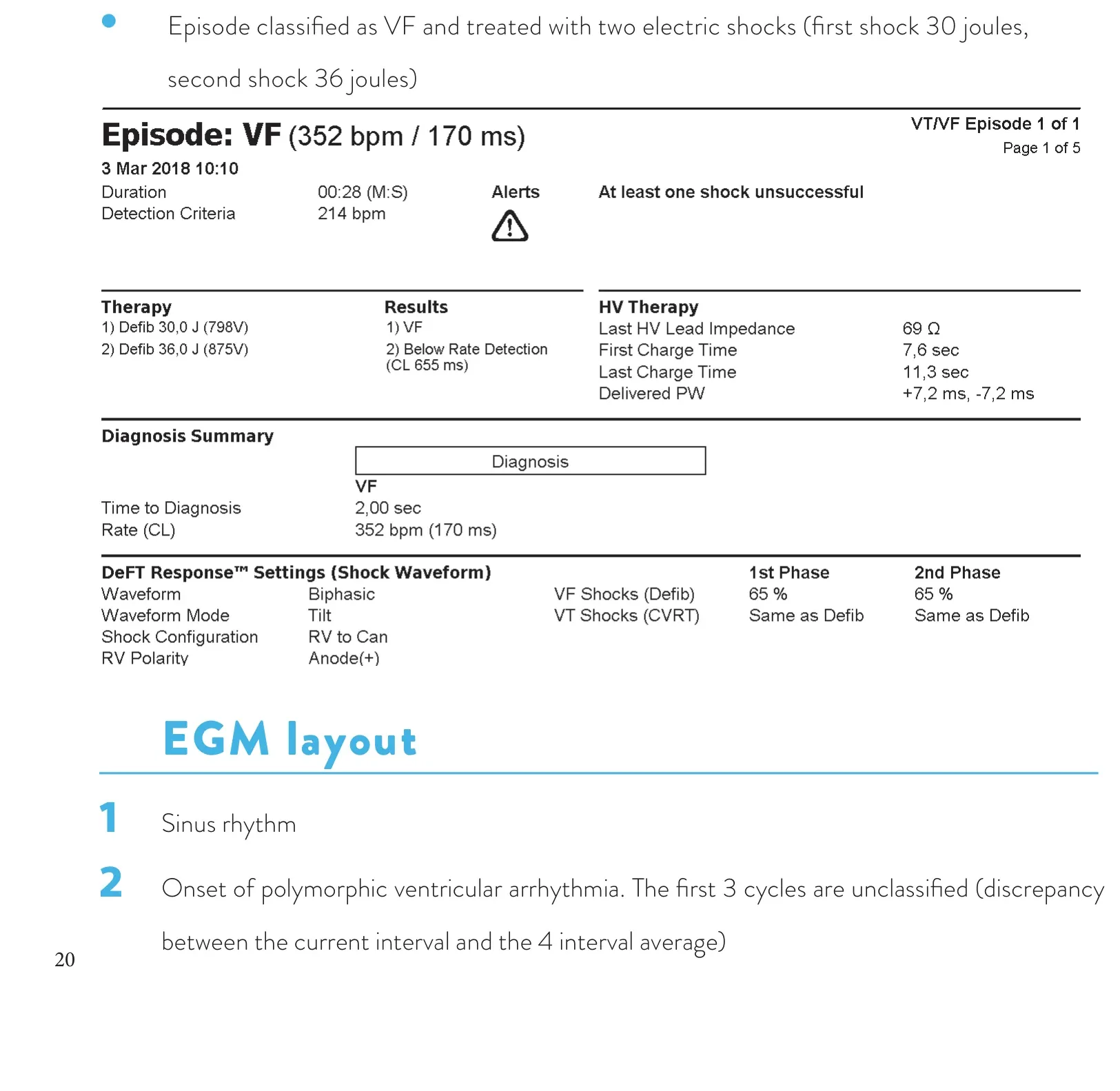
- Episode recorded in March 2018 Episode classified as VF and treated with two electric shocks (first shock 30 joules, second shock 36 joules)
The recording
Tap a number on the trace, or an entry in the list below

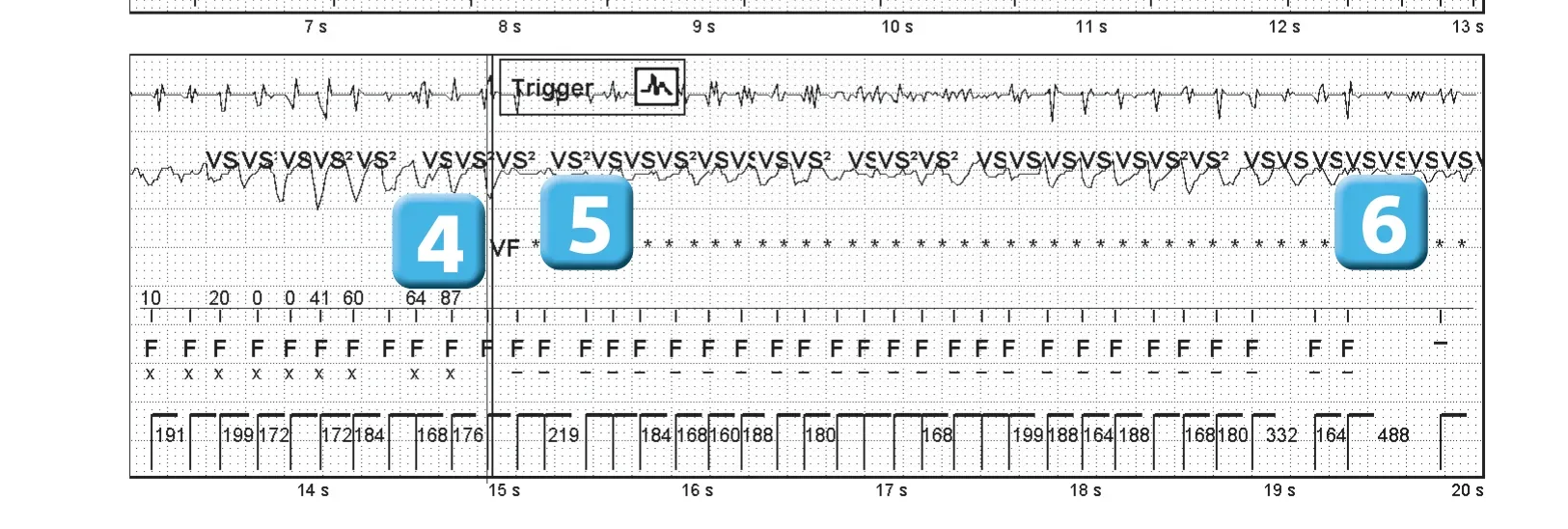
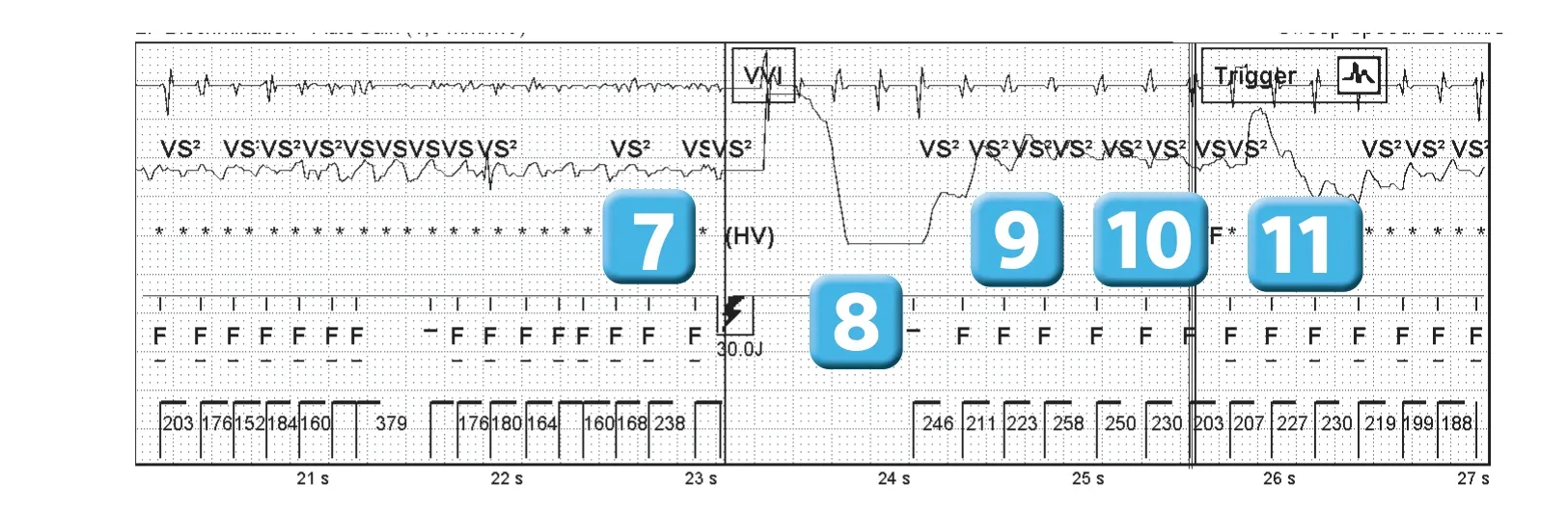
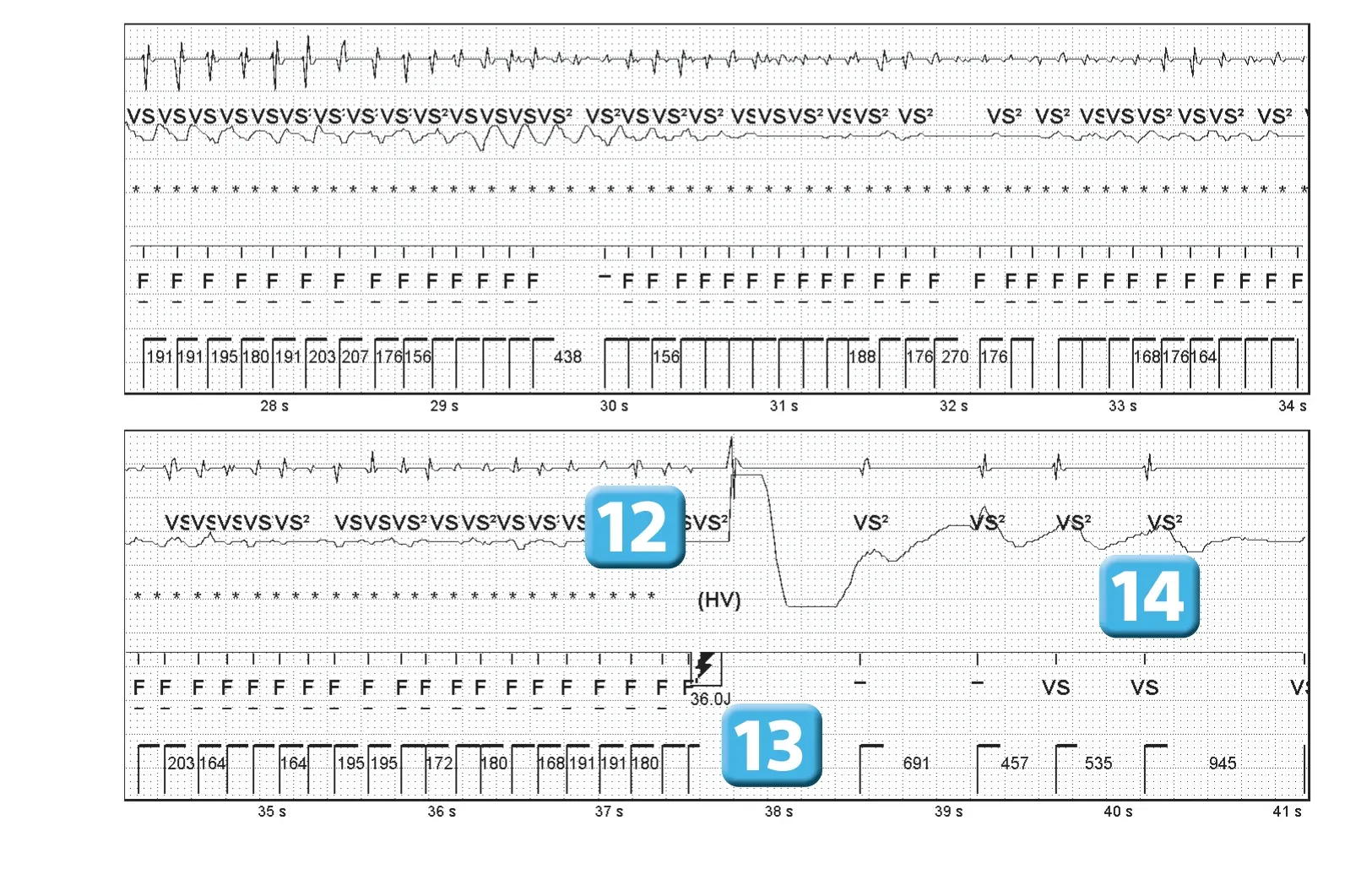
- Sinus rhythm
- Onset of polymorphic ventricular arrhythmia. The first 3 cycles are unclassified (discrepancy between the current interval and the 4 interval average)
- First cycle classified as ‘F’ (concordance between the current cycle and the average of the 4 preceding cycles)
- After 12 cycles classified as ‘F’ an episode of VF is detected
- Start of capacitor charging
- Undersensing. The following cycle is unclassified (-)
- 30 joules electric shock
- One second blanking period
- Ineffective electric shock
- After 6 cycles classified as ‘F’ the redetection counter is filled
- Capacitor charging
- Confirmation at end of charging. An electric shock is not delivered on the cycle immediately following the end of charging
- 36 joules shock
- Effective shock with arrhythmia reduction
From the interrogation
Points to remember
- This diagram illustrates how the device works at the end of charging and once an electric shock has been delivered.
- For the shock to be delivered at the end of the charge, 1) the charge must be complete, 2) arrhythmia be reconfirmed during the charge; a minimum of 6 rapid cycles is required.; these 6 cycles are usually detected during charging unless the charge is very short, 3) the detected event on which the electric shock is synchronized cannot be the one following the end of charging; the shock occurs on the second cycle following the end of the load, 4) the current interval and the average interval of the detected event on which the electric shock is synchronized must be non-sinusoidal (no shock on a slow cycle).
- Six electric shocks can be delivered for a single episode; the four criteria apply to all six shocks at the end of the charge (all shocks are confirmed); this is a specific feature of Abbott devices, as most other manufacturers usually only confirm the first shock in the series.
- The amplitude of the different shocks is programmable; it should be noted that for a device capable of delivering a maximum of 36 joules, the amplitude of the first shock cannot exceed 30 joules (36 joules for a maximum capacity of 40 joules) so that the charge time of this first shock is not too long.
- an electrical shock is followed by a 1-second blanking period during which no detection is possible in order to avoid oversensing of post-polarization following the shock; following this blanking period, the device cannot deliver stimulation for an additional second
- • Following blanking, the redetection counter and the sinus return counter compete; the number of cycles required for redetection is programmable in the VT zone (6 by default) but is not programmable in the VF zone (6) or after a SVT diagnosis (6); the number of cycles for sinus return diagnosis 23 or end of episode (Gallant platform) is programmable (3, 5, 7; nominal value of 5)
Practice out loud
Just describe the tracing. What do you think is going on? Describing the numbers can help.
00:00
0%
—
From Implantable Cardioverter Defibrillator — clinical cases based on tracings by P. Bordachar, M. Strik, A. Thiyagarajah, S. Ploux. Published by Cardiocases. Every numbered marker on a recording is explained in the list beneath it; tap a marker on the trace or an entry in the list.