
Chapter 4 · Oversensing · Case 6
New device, post-stimulation T wave oversensing, and SecureSense™ algorithm
Patient and episode
Patient
- Male patient implanted with an Abbott triple-chamber defibrillator; episodes of unsustained V oversensing recorded in memory; SecureSense™ algorithm ON (VD coil to housing)
Summary
- Episode of non-sustained ventricular oversensing
The recording
Tap a number on the trace, or an entry in the list below
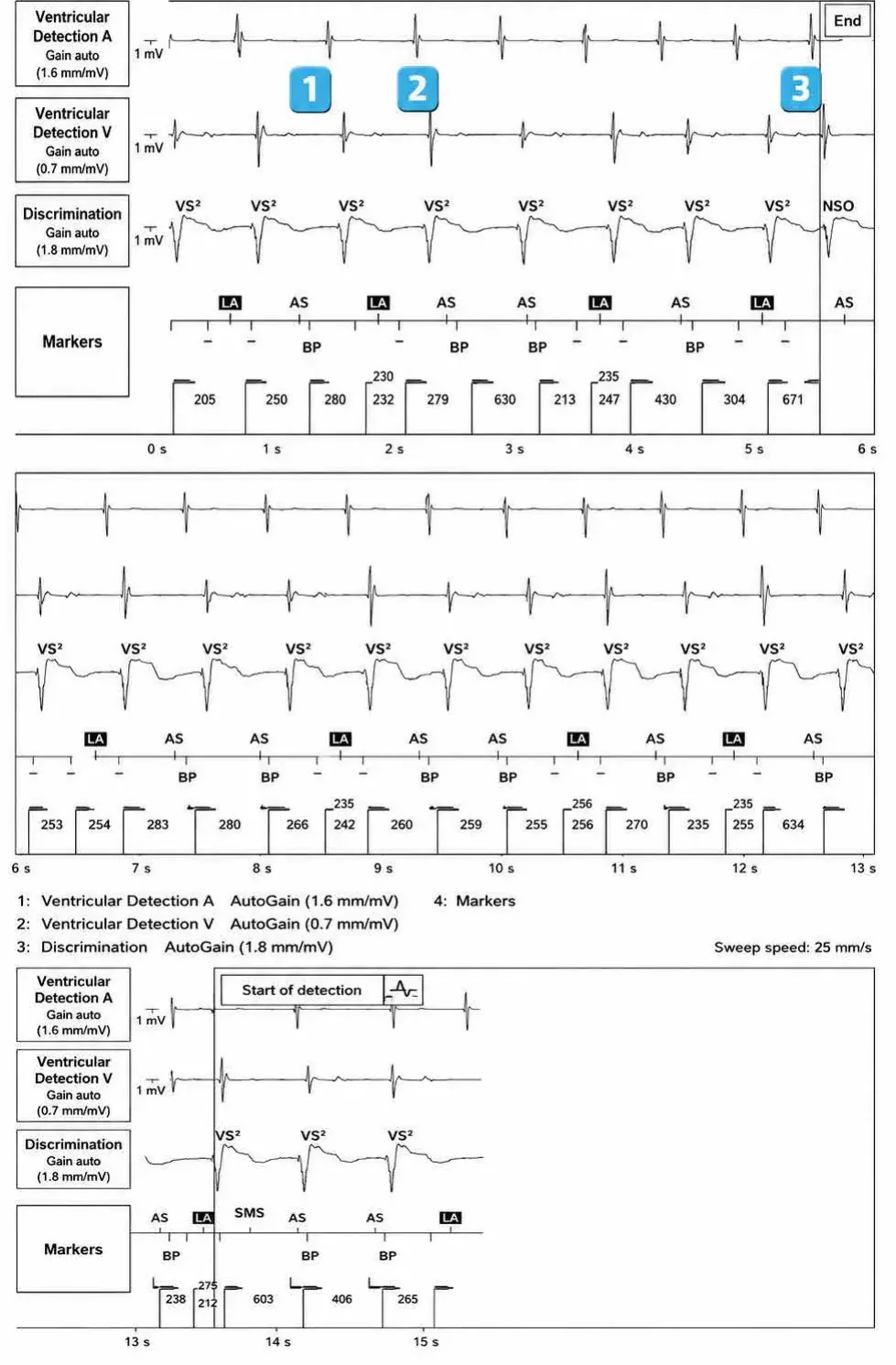
- Atrial sensing and biventricular pacing (AS-BP); oversensing of the post-biventricular pacing T wave on the bipolar channel and not on the discrimination channel; short cycle incrementing the noise counter
- the following ventricular cycle is spontaneous (VS), ventricular pacing following atrial activity is not possible because the atrial activity detected in the PRAPV triggered by T wave oversensing cannot trigger an AV delay
- the noise counter is at 10 (10 short cycles on the bipolar channel, some of which are not visible on this trace) while the VF or VT counter is not full; diagnosis of nonsustained V oversensing (SNS)
Points to remember
- This resynchronized patient showed an imperfect clinical response with a reduced stimulation percentage (70%).
- The recording of episodes diagnosed as non-sustained RV oversensing enabled
- diagnose post-stimulation T-wave oversensing, explaining the intermittent loss of biventricular pacing with alternation between a paced ventricle and a sensed ventricle.
- While the SecureSense™ algorithm can diagnose T-wave oversensing, it does not eliminate it or its consequences in terms of pacing (inhibition of biventricular pacing following T-wave detection).
- One of the advantages of Abbott devices is the ability to program different detection parameters for post-ventricular sensing and post-ventricular pacing, which respond to different requirements. Modifying the post-pacing sensitivity corrected oversensing and restored the percentage of biventricular pacing to close to 100%, which is essential for an optimal response to resynchronization.
Practice out loud
Just describe the tracing. What do you think is going on? Describing the numbers can help.
00:00
0%
—
From Implantable Cardioverter Defibrillator — clinical cases based on tracings by P. Bordachar, M. Strik, A. Thiyagarajah, S. Ploux. Published by Cardiocases. Every numbered marker on a recording is explained in the list beneath it; tap a marker on the trace or an entry in the list.